
No Chimney. No Combustion. Just Heat in Weweantic.
Instant, ventless warmth for homes along the Weweantic River—no chimney, no gas line, no masonry work. Find the right unit and connect with a trusted local dealer.
Every Project Starts From One of These Five Situations
Real flame, zero venting, built for the coast.
Weweantic is a small village within the Town of Wareham, sitting right along the Weweantic River near Buzzards Bay at just two feet of elevation. Winters here average lows around 22°F, with a solid stretch of real New England cold, though nowhere close to the much longer, harsher heating season you'd find further north in Caribou, Maine. It's the kind of climate where a fireplace earns its keep as supplemental zone heat rather than a full-time furnace replacement.
Salt-laden coastal air is hard on metal venting and chimney flashing over time, which is part of why wood and pellet appliances aren't the norm in a village this close to Buzzards Bay. Electric fireplaces sidestep that problem entirely—no vent pipe, no chimney, nothing exposed to salt corrosion. NSTAR Electric Company serves Weweantic homes at a residential rate of about $0.1992 per kWh, higher than the national average, which is worth factoring in if you plan to run a unit as a daily heat source rather than occasional ambiance. Because electric units need no venting or gas line, they install cleanly into additions, finished basements, and older Wareham-area cottages where opening up plaster walls for masonry or gas work isn't practical.
Three steps. No salesperson until you're ready.
Tell us about your project
Your zip code, your situation, and the fuel you're leaning toward—or let the answers point you to one.
See what's actually available
The brands dealers within 100 miles genuinely carry—real options, never a catalog mirage.
Get your dealer & Project Guide
A trusted local dealer, plus the free Project Guide & Parts List that names every component of the job.
Frequently Asked Questions
How much does it cost to install an electric fireplace in Weweantic?
A basic plug-in electric insert or freestanding stove needs nothing more than an existing outlet and typically runs $300 to $900 installed. A built-in wall-mount unit or full mantel package that requires a dedicated 20-amp circuit run by a licensed electrician usually lands between $1,500 and $4,000, depending on how far the wiring has to travel and whether the wall is open framing or finished plaster in an older Weweantic home. A local dealer can tell you which category your project falls into before you settle on a unit.
What size electric fireplace do I need for my home?
Most plug-in electric inserts and stoves are rated to comfortably heat 400 to 1,000 square feet, which covers a single living room or den. Given Weweantic's average winter lows near 22°F and a solid stretch of real New England cold, electric fireplaces here work best as zone heat for a specific room rather than a whole-house solution—pairing well with central heat pumps or oil heat for the rest of the home. A dealer consultation will match wattage output to your actual room size and insulation level.
Who installs electric fireplaces near Weweantic?
Plug-in units can often be set up by the homeowner using an existing outlet. Built-in wall-mount fireplaces that require new wiring need a licensed Massachusetts electrician, and any new circuit work typically requires a permit through the Town of Wareham Building Department. The local hearth dealers in our network coordinate with licensed electricians directly, so you're not left managing two separate trades on your own.
What's the difference between an electric insert, an electric stove, and a wall-mount unit?
An electric insert is built to slide into an existing fireplace opening or a zero-clearance frame, which suits older Weweantic cottages with a fireplace already in place. An electric stove is a freestanding unit styled like a traditional wood stove, useful where there's no existing opening. A wall-mount or linear unit hangs flush on the wall like a television and works well in newer construction or additions where a clean, modern look matters more than replicating a traditional hearth. All three plug in or wire the same way—the choice usually comes down to the room and the look you're after.
Do I need a permit for an electric fireplace in Weweantic?
A plug-in electric fireplace or stove that uses a standard existing outlet doesn't require a permit. A built-in unit that needs a new dedicated circuit does require an electrical permit through the Town of Wareham Building Department, and the wiring itself must be done by a licensed electrician. Most local dealers handle the permit paperwork as part of the installation.
What's the best electric fireplace for a coastal Massachusetts home?
Since Weweantic sits close to Buzzards Bay, look for units with sealed electronics and corrosion-resistant hardware rather than exposed metal components—brands like Dimplex, Napoleon, and Touchstone build models designed to hold up in humid, salt-air environments. Because there's no venting involved, you avoid the flashing and chimney-crown corrosion issues that salt air causes for combustion appliances. Ask a local dealer about flame-effect quality and heater wattage together, since the two are sold separately on some models.
How much does it cost to run an electric fireplace on NSTAR rates?
At NSTAR's residential rate of roughly $0.1992 per kWh, a typical 1,500-watt heater draws about 1.5 kWh per hour, or roughly $0.30 an hour on high heat. Running it for five hours a night through a cold month adds up to around $45. Using the unit for flame effect only, with the heater off, costs only a few cents an hour since the LED flame draws minimal power—a real option if you want ambiance most nights and heat only on the coldest ones.
Will my electric fireplace work during a power outage?
No—electric fireplaces need household power to run the heater, blower, and flame effect, so they go dark along with everything else in an outage. Weweantic's exposure to nor'easters and coastal storms off Buzzards Bay means outages do happen here. If reliable heat during storms is a priority, some homeowners pair an electric fireplace with a generator hookup, or choose gas for at least one room as a backup heat source. A local dealer can talk through both options.
Electric vs. gas—which is right for my Weweantic home?
Gas fireplaces are a solid option in this area too and can run during a power outage with a battery-backup ignition system, but they require either a natural gas line or a propane tank, plus proper venting—a bigger project in an older village home. Electric fireplaces skip the gas line and venting entirely, install almost anywhere with access to a circuit, and avoid the salt-air corrosion concerns that come with any vented appliance this close to the bay. For a home already on natural gas or propane where outage backup matters, gas often makes sense. For simpler installs, finished basements, or homes without easy gas access, electric is usually the more practical fit. Many homeowners in the area end up with gas in the main living space and electric elsewhere.
Can I put a TV above my fireplace?
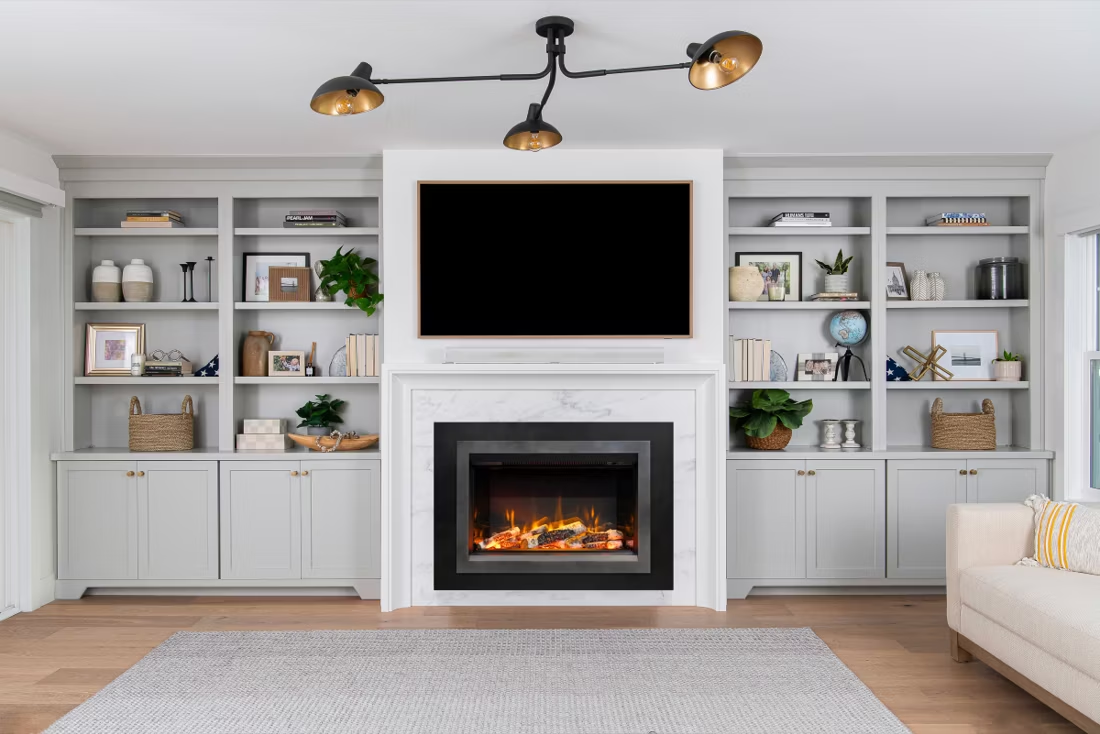
Yes—with an asterisk. Fireplaces are hot and TVs don't like heat. Either put a mantel between them to deflect rising warmth, or choose a fireplace with heat-management technology that creates a cool zone on the wall above—the wall stays around 125 degrees, barely warm, while the room still gets full heat. If you like clean lines and don't want a mantel, heat management is the answer.
Do electric fireplaces actually produce heat?
Yes—most put out around 4,800–5,000 BTUs from a standard outlet, which comfortably warms a bedroom, office, or den as a comfort-zone heater. What they won't do is carry a whole house the way wood, gas, or pellet can. Think of electric as ambiance-first with honest supplemental heat: flames on with no heat in July, flames plus warmth in January.
Does a fireplace add value to my home?
On average, a fireplace adds back to the home about the same amount you spent installing it. Add the monthly savings from heating the rooms you actually use instead of the whole house—often hundreds of dollars a year—and the value case is strong before you even count what a fire does for how your family uses the room.
How much should I budget for a fireplace?
For an average home—covering the fireplace, the vent pipe, and basic installation—a budget between $3,900 and $5,500 gives you a lot of options across wood, gas, and pellet. By the time you add finish work, gas line, and electrical, the average complete installation lands between $5,000 and $12,000 all-in. In a remodel or new build, a good rule is to put about 2.5% of the total project cost toward the fireplace.
Nearby Dealers
Hearth shops serving Weweantic and the surrounding area. Every listing shows whether it is a WhyFire partner, a dealer we have verified as authorized for the brands we recommend, or a local business carrying hearth products. No manufacturer pays for placement. How we verify dealers →
August West Chimney Co. & Fireplace Conc
Hearth Heating, Inc
Flue Brothers Chimney Sweeps
Acushnet Alternative Heating
Mr. Chimney Woodstoves & Fireplaces
Woodstove & Fireplaces Unlimited
Mr. Chimney's Stove Shoppe
Stonewood Products
Plymouth Fireplace
Bow & Arrow Stove Company
South Shore Fireplace Inc
The Fireplace Store @ Aspinwall Plumbing - Marshfield
Backyard Living
Electric Service in Weweantic
An electric fireplace's heater draws about 1,500 watts—pennies per hour at local rates.
Nstar Electric Company
Find your electric fireplace in Weweantic.
Tell us about your home and we'll match you with a trusted local dealer and a free Project Guide & Parts List—sized to your space and ready for whichever electric fireplace, insert, or wall-mount unit fits your Weweantic home.
Find Your Fireplace →