
Instant heat for Buzzards Bay's damp winters.
Clean, on-demand warmth for the older Cape homes and waterfront cottages of Wareham Center. Get matched with a trusted local dealer who knows the propane and gas realities of this stretch of Plymouth County.
Every Project Starts From One of These Five Situations
Clean heat built for a village on the water.
Wareham Center sits at just 10 feet of elevation where the Weweantic River meets Buzzards Bay, in a climate zone (5A) that sees a solidly cold New England winter season—real New England cold, though milder and damper than the deep interior chill of a place like Burlington, VT. Average winter lows hover around 22°F, but the coastal humidity here makes that cold feel sharper indoors, especially in the village's older colonial and Cape-style homes with their original masonry fireplaces.
Natural gas mains don't run through most of residential Wareham Center, so when homeowners here say 'gas fireplace,' they usually mean propane. NSTAR (Eversource) handles electric service at roughly 19.9 cents per kWh, which keeps whole-room electric heat pricier than it looks on the showroom floor—one reason a propane direct-vent fireplace or insert remains the go-to for reliable zone heat in a drafty antique home or a seasonal cottage near the water, especially when a nor'easter knocks the power out for a few days.
Three steps. No salesperson until you're ready.
Tell us about your project
Your zip code, your situation, and the fuel you're leaning toward—or let the answers point you to one.
See what's actually available
The brands dealers within 100 miles genuinely carry—real options, never a catalog mirage.
Get your dealer & Project Guide
A trusted local dealer, plus the free Project Guide & Parts List that names every component of the job.
Frequently Asked Questions
How much does a gas fireplace installation cost in Wareham Center?
Most gas fireplace and insert installations in Wareham Center run $4,500 to $10,000, and because natural gas mains are limited on most residential streets here, the vast majority of these installs run on propane rather than piped gas. A propane insert dropped into an existing masonry fireplace with a stainless liner sits toward the lower end; a new direct-vent fireplace in a remodel—with framing, venting, and a new propane line run from an outdoor tank—sits toward the higher end. If your home doesn't already have a propane tank, budget extra for the tank installation and setup through a local propane supplier.
Can I convert my old masonry fireplace to gas?
Yes, and it's a common project in this part of Wareham given how many homes in the village center are colonial or Cape-style construction with an original brick fireplace. A propane insert with a stainless steel liner run up your existing chimney is the standard approach, typically running $4,500 to $9,000 depending on the insert and whether a new propane line or tank is needed. The conversion keeps the look of your original hearth while eliminating ash, drafts through an open damper, and the maintenance a wood-burning masonry fireplace demands near the salt air of the bay.
Do I need natural gas, or does propane work for a fireplace here?
Propane is the standard choice for most Wareham Center homes, since municipal natural gas service doesn't extend through much of this part of Plymouth County. Regional propane suppliers such as Suburban Propane and Downeast Energy deliver throughout the area and can set up a new tank or fill an existing one. Nearly every gas fireplace model on the market today can be configured to run on either propane or natural gas—your installer sets the correct orifice and regulator for whichever fuel you have, so fuel type shouldn't limit which unit you choose.
Will my gas fireplace still work if the power goes out?
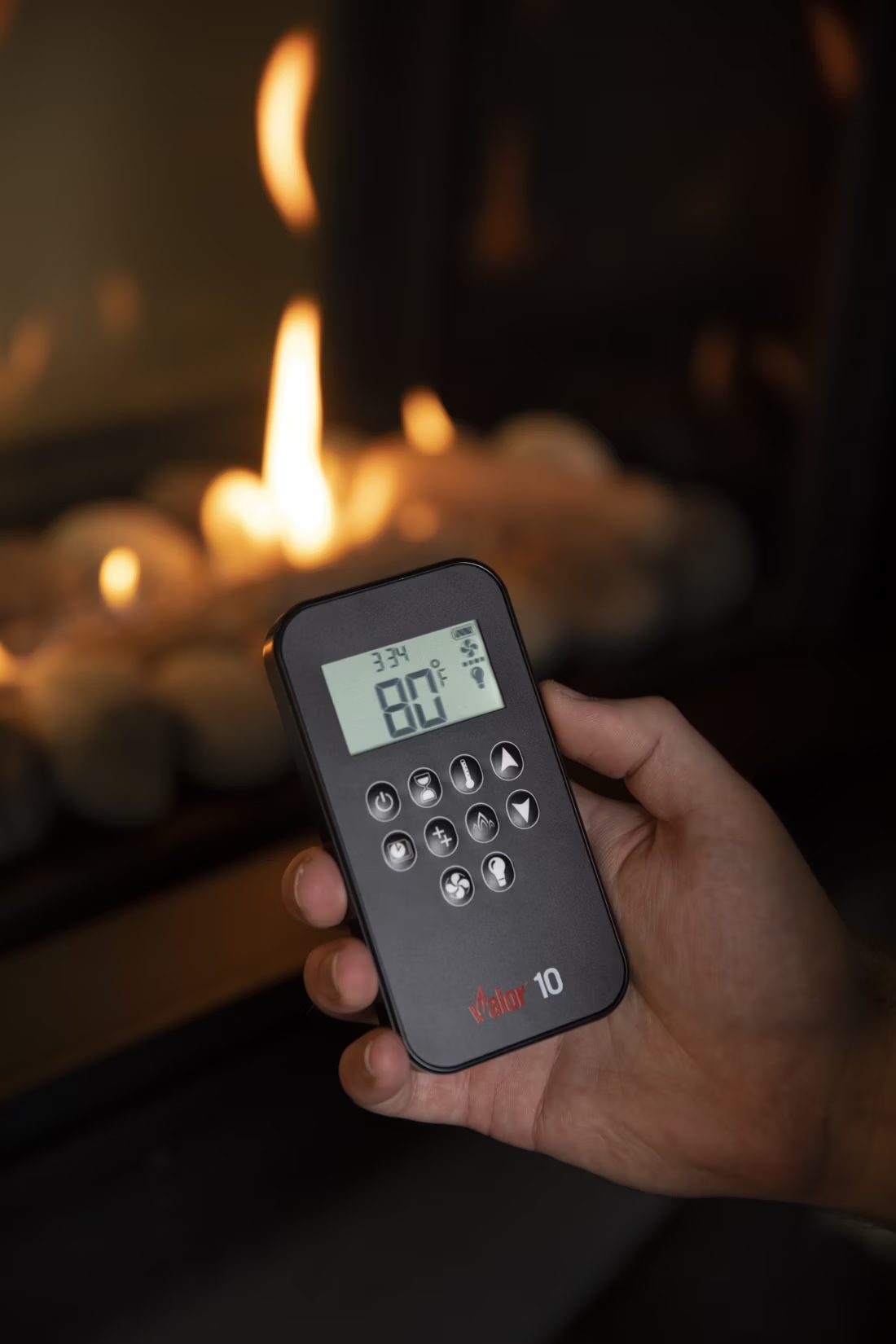
Most modern gas fireplaces will, which matters in a coastal village like Wareham Center where nor'easters and summer storms off Buzzards Bay knock power out more often than the regional average. Units with intermittent pilot ignition (IPI) run on a small battery backup that kicks in automatically when the grid drops, so the fireplace lights and operates normally off batteries. Valor fireplaces take it a step further—their pilot generates its own electricity through a thermocouple, so there's no battery to remember or replace. Ask your local dealer which ignition system a given model uses before you decide.
Gas fireplace, insert, or gas stove—which fits an older Wareham home?
A gas insert is usually the right call for the village's older colonial and Cape homes, since it fits directly into an existing masonry firebox and uses the chimney you already have as the vent path. A built-in gas fireplace is better suited to new construction or a full remodel where you're framing a fresh hearth wall. A freestanding gas stove is a good option for a sunroom, converted garage, or waterfront cottage that has no chimney at all—it just needs a through-wall direct-vent termination, which is often simpler than running a full chimney liner.
Do I need a permit to install a gas fireplace in Wareham Center?
Yes. The Town of Wareham Building Department requires a building permit for the fireplace installation and a separate gas permit for any propane line work, and Massachusetts requires that line to be run by a licensed gas fitter—a homeowner can't legally do this part themselves. Most local hearth dealers coordinate both permits and the licensed trade work as part of the installation, so you're not left managing separate contractors for the carpentry, the gas line, and the inspection.
Can I install a vent-free gas fireplace in Massachusetts?
No—Massachusetts state fire code (527 CMR) prohibits vent-free, unvented gas fireplaces and log sets in residential use, a stricter stance than many states take. Every gas fireplace installed in Wareham Center needs to be a vented unit, almost always direct-vent, which draws combustion air from outside and exhausts it back outside through a sealed pipe. This isn't a drawback in practice—direct-vent units are the most common, most efficient, and best-performing category on the market, and it's what nearly every local dealer will show you first.
How often does a gas fireplace need to be serviced?
Plan on an annual inspection, ideally in early fall before the heating season starts. A technician checks the burner, pilot assembly, venting, and gas connections, and cleans the glass and interior—important near Buzzards Bay, where salt air can accelerate corrosion on metal components faster than it would inland. Local propane service providers and hearth dealers typically charge $150 to $250 for this visit, and it's worth keeping current since most manufacturer warranties require documented annual service.
Why doesn't Wareham Center see many wood or pellet stoves?
They're not off the table, but they're genuinely uncommon here compared to gas and electric options. Wareham Center's mild coastal winters (a notably shorter, lighter heating season than colder New England towns face), small in-village lot sizes, and lack of nearby public forest land for cutting permits all push most homeowners toward propane or electric heat instead. A handful of properties—especially larger lots outside the village core—still burn oak, maple, or ash in a wood stove for backup heat or ambiance, and pellet stoves using regional brands like New England Wood Pellet remain an option too. For most Wareham Center homes, though, a propane gas insert delivers more heat with far less hassle.
Why is my open fireplace making my house colder?
Open fireplaces suck—literally. As the fire burns, it consumes air your furnace already paid to heat and pulls it out through the chimney, so the house is actually colder after the fire goes out than before you lit it. An insert fixes this: it seals the chimney, puts fixed glass across the front, and turns that hole in your house into a real heat source.
Is my gas fireplace wasting gas?
If it was installed more than 15 years ago, probably. Older gas fireplaces keep a standing pilot light burning all the time, and that little flame can cost a couple hundred dollars a year. Newer models use pilot-on-demand ignition—the pilot lights only when you use the fireplace and goes out when you turn it off.
Does a fireplace add value to my home?
On average, a fireplace adds back to the home about the same amount you spent installing it. Add the monthly savings from heating the rooms you actually use instead of the whole house—often hundreds of dollars a year—and the value case is strong before you even count what a fire does for how your family uses the room.
How much should I budget for a fireplace?
For an average home—covering the fireplace, the vent pipe, and basic installation—a budget between $3,900 and $5,500 gives you a lot of options across wood, gas, and pellet. By the time you add finish work, gas line, and electrical, the average complete installation lands between $5,000 and $12,000 all-in. In a remodel or new build, a good rule is to put about 2.5% of the total project cost toward the fireplace.
Nearby Dealers
Hearth shops serving Wareham Center and the surrounding area. Every listing shows whether it is a WhyFire partner, a dealer we have verified as authorized for the brands we recommend, or a local business carrying hearth products. No manufacturer pays for placement. How we verify dealers →
August West Chimney Co. & Fireplace Conc
Flue Brothers Chimney Sweeps
Hearth Heating, Inc
Acushnet Alternative Heating
Mr. Chimney Woodstoves & Fireplaces
Woodstove & Fireplaces Unlimited
Stonewood Products
Mr. Chimney's Stove Shoppe
Plymouth Fireplace
Bow & Arrow Stove Company
South Shore Fireplace Inc
The Fireplace Store @ Aspinwall Plumbing - Marshfield
Backyard Living
Find your gas fireplace in Wareham Center.
Tell us about your home and we'll put together a free Project Guide & Parts List—the right unit, the vent kit, and a trusted local dealer who installs gas and propane hearths near Buzzards Bay.
Find Your Fireplace →