
Warm Up The Pinehills Without the Wood Pile.
With winter lows near 20°F and a community built around covenants that keep chimneys and cordwood out of the picture, gas is the default way Pinehills homeowners add real heat and ambiance. We'll match you with a local dealer who knows the neighborhood.
Every Project Starts From One of These Five Situations
Clean, code-friendly heat for a community built without chimneys.
The Pinehills is a planned village community in Plymouth, built out over the past two decades with strict design covenants that steer homeowners away from traditional wood-burning chimneys and toward cleaner, lower-maintenance heat sources. At 194 feet elevation near Cape Cod Bay, winters here bring a solid heating season with average lows around 20°F—cold enough that a real secondary heat source matters, but not the deep-freeze territory of interior New England towns like Burlington, VT. Gas fills that role well: instant on, no ash, no wood storage, and a look that fits the community's polished cottage-and-village aesthetic.
Because Pinehills sits outside the older Plymouth village center's gas main footprint, most homes here run on propane rather than piped natural gas—tanks are typically supplied by regional providers like Suburban Propane or Dead River Company rather than a municipal utility. Electric service comes from NSTAR (Eversource) at a residential rate near 19.9 cents per kWh, which is on the higher side for New England and one reason gas often wins out over electric for anyone burning a fireplace regularly rather than occasionally. Either way, a correctly sized, correctly vented gas unit is the standard path to real heat here—not a workaround.
Three steps. No salesperson until you're ready.
Tell us about your project
Your zip code, your situation, and the fuel you're leaning toward—or let the answers point you to one.
See what's actually available
The brands dealers within 100 miles genuinely carry—real options, never a catalog mirage.
Get your dealer & Project Guide
A trusted local dealer, plus the free Project Guide & Parts List that names every component of the job.
Frequently Asked Questions
How much does a gas fireplace installation cost in The Pinehills?
Most gas fireplace installations in The Pinehills run $4,500 to $11,000, with the spread driven by whether you're adding a direct-vent unit to a home that already has a built-in firebox chase, or starting from scratch with new framing and venting. Because most Pinehills homes rely on propane rather than piped gas, budget also depends on whether a propane line already runs to the planned fireplace location or a new run is needed from the tank. Homes with an existing gas stub from the builder tend to land on the lower end; new construction-style installs with venting through an exterior wall or roof run higher.
Can I convert my fireplace to gas, or is it already set up for one?
Many Pinehills homes were built with a factory-built firebox or gas stub already roughed in, since these newer builds rarely include true masonry fireplaces. If that's your situation, adding a gas insert or log set is usually a straightforward, lower-cost project. If your home has no existing firebox at all, a local installer will need to frame a chase and run venting—closer to a new-construction install than a conversion. Either way, an in-home visit from a certified dealer is the only reliable way to know which category your house falls into before you get a quote.
Does The Pinehills have natural gas, or is it propane?
Pinehills homes are almost entirely on propane rather than municipal natural gas, since the development sits outside the older gas main network that serves downtown Plymouth. Propane is delivered and stored in a tank on the property—buried or screened tanks are common given the community's design guidelines—through regional suppliers like Suburban Propane or Dead River Company. This doesn't limit your fireplace options; nearly every gas fireplace, insert, and stove on the market can be configured to run on propane with the correct orifice and regulator setup.
Will my gas fireplace still work if the power goes out?
Most direct-vent gas fireplaces with intermittent pilot ignition (IPI) include a battery backup that keeps the unit operational during a power outage—useful given that coastal Plymouth County sees its share of nor'easter-driven outages. Valor units go a step further: their pilot assembly generates its own electricity through the thermocouple, so there's no battery to remember to replace. Worth asking your local dealer about specifically if backup heat during storm season is a priority for your household.
Fireplace, insert, or stove—what fits a Pinehills home?
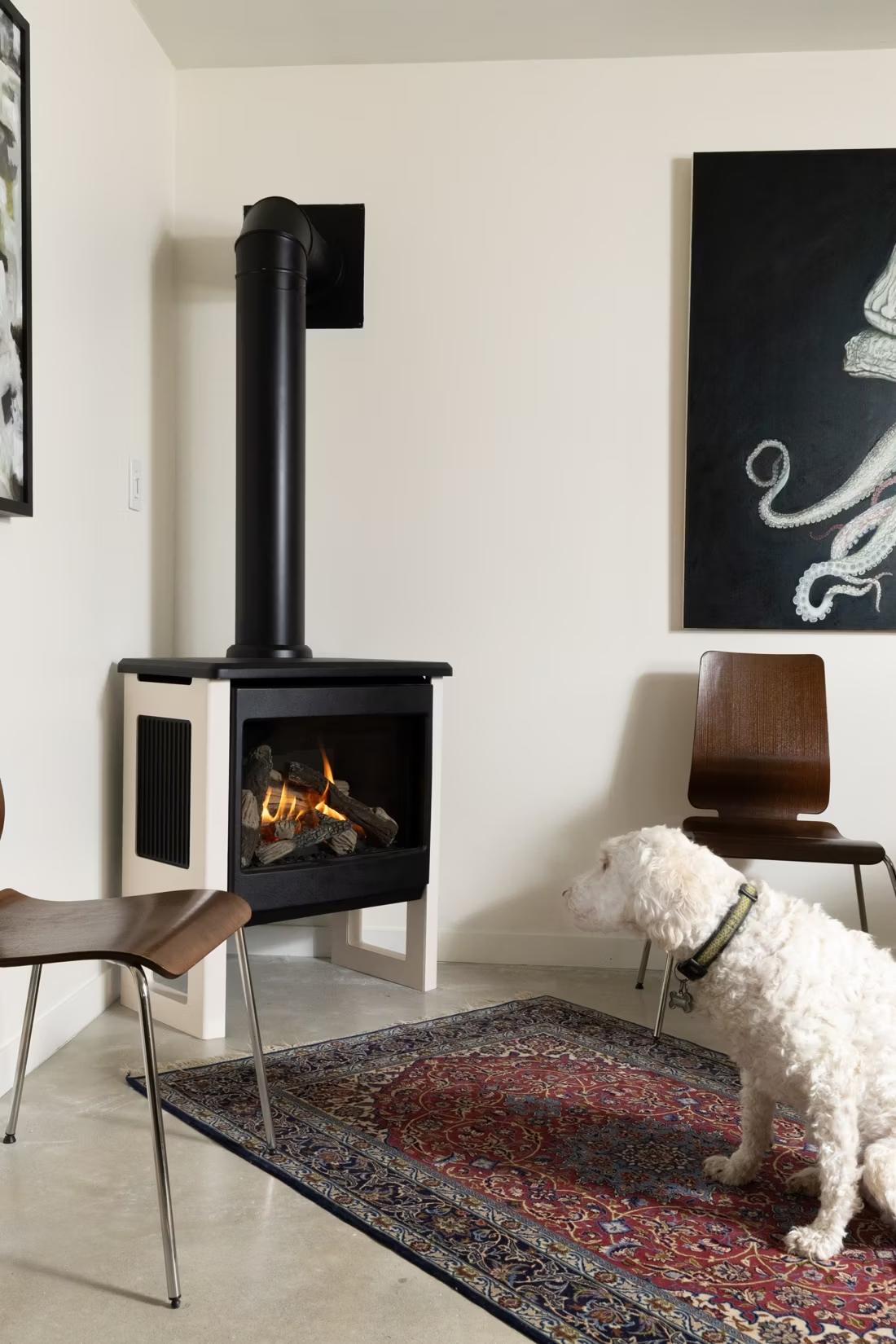
A built-in direct-vent fireplace is the most common fit for Pinehills' cottage and village-style homes, since it can be framed into a wall during a remodel or finished basement project without needing an existing masonry structure. An insert only makes sense if your home has an existing wood-style firebox you want to convert to gas. A freestanding gas stove is less common here given the community's architectural style, but works well in a den, sunroom, or converted garage space where a built-in isn't practical.
Do I need a permit to install a gas fireplace in The Pinehills?
Yes—the Town of Plymouth Building Department requires a permit for both the appliance installation and the gas line work, and a licensed gas-fitter has to sign off on the propane connection. On top of that, Pinehills' design covenants typically require review of any exterior venting changes, since visible vent terminations and rooflines are part of what the community's architectural guidelines govern. A local dealer familiar with Pinehills specifically will know to route both approvals rather than leaving you to coordinate the HOA review yourself.
Can I install a vent-free gas fireplace in The Pinehills?
No—Massachusetts is one of a handful of states that prohibits unvented (vent-free) gas fireplaces and space heaters in residential dwellings under the state fuel gas code, regardless of local HOA rules. Every gas fireplace installed in The Pinehills needs to be a direct-vent or B-vent unit that exhausts combustion byproducts outside. This isn't a downside in practice—direct-vent units are the most common, most efficient, and most widely stocked option anyway, so it doesn't limit your real choices.
How often does a gas fireplace need servicing?
Plan on an annual inspection, ideally in early fall before the heating season starts. A technician checks the burner, pilot assembly, venting, and gas connections, and cleans the glass and interior—a lighter job than wood-stove chimney sweeping but important for safety, especially on propane systems where regulator and line integrity matter. Local hearth and propane service providers in the Plymouth area typically charge $150 to $250 for this visit.
Gas fireplace or electric fireplace—which makes more sense here?
Electric fireplaces are simple to install, need no venting or gas line, and work in any Pinehills unit regardless of design covenants around exterior penetrations—but they produce far less real heat output and, at NSTAR's residential rate of roughly 19.9 cents per kWh, cost noticeably more to run for regular heating than propane does per BTU. Gas delivers real supplemental warmth, holds up during winter storm outages with the right ignition system, and gives you the ambiance of a genuine flame. For a fireplace you'll actually use as a heat source on cold nights, gas is generally the better investment; electric works well as a low-commitment option for a room where running a gas line isn't practical.
Can I put a TV above my fireplace?
Yes—with an asterisk. Fireplaces are hot and TVs don't like heat. Either put a mantel between them to deflect rising warmth, or choose a fireplace with heat-management technology that creates a cool zone on the wall above—the wall stays around 125 degrees, barely warm, while the room still gets full heat. If you like clean lines and don't want a mantel, heat management is the answer.
Why is my open fireplace making my house colder?
Open fireplaces suck—literally. As the fire burns, it consumes air your furnace already paid to heat and pulls it out through the chimney, so the house is actually colder after the fire goes out than before you lit it. An insert fixes this: it seals the chimney, puts fixed glass across the front, and turns that hole in your house into a real heat source.
Can a fireplace actually lower my heating bill?
Yes—by creating a comfort zone. A furnace heats every square foot of the house just to warm the one room you're in; a gas fireplace on low burns roughly a sixth of the gas a typical furnace does. Set the furnace around 55–60 degrees as a baseline, then heat the rooms your family actually uses. Families who heat this way commonly save $20–$60 a month.
Can I install a fireplace myself?
If you're putting a fire in your house on purpose, it's best to work with an expert. Unless you're genuinely experienced in framing, gas line, vent pipe, and the national code on clearances to combustibles, have a professional do it—and ideally the same company that sells you the fireplace, so warranty, service, and liability all live under one roof.
Nearby Dealers
Hearth shops serving The Pinehills and the surrounding area. Every listing shows whether it is a WhyFire partner, a dealer we have verified as authorized for the brands we recommend, or a local business carrying hearth products. No manufacturer pays for placement. How we verify dealers →
August West Chimney Co. & Fireplace Conc
Flue Brothers Chimney Sweeps
Plymouth Fireplace
Woodstove & Fireplaces Unlimited
The Fireplace Store @ Aspinwall Plumbing - Marshfield
Stonewood Products
South Shore Fireplace Inc
Bow & Arrow Stove Company
Hearth Heating, Inc
Acushnet Alternative Heating
Mr. Chimney Woodstoves & Fireplaces
Backyard Living
Find your gas fireplace in The Pinehills.
Tell us about your home and we'll put together a free Project Guide & Parts List—the right gas fireplace or insert, the vent kit it needs, and a trusted local dealer who installs in The Pinehills.
Find Your Fireplace →