
A Realistic Look at Pellet Heat in Somerville.
Pellet stoves are the exception in a city of triple-deckers and condos, not the rule. Here's where they still make sense, and how to find a dealer who'll tell you the truth about your specific building.
Every Project Starts From One of These Five Situations
Somerville's housing stock works against pellet heat.
Somerville packs over 80,000 people into just about four square miles, and the housing stock reflects it: triple-deckers, attached rowhouses, and converted Victorians dominate neighborhoods from Davis Square to Union Square to Assembly Row. Most units are condos or rentals with shared walls, no basement or garage of their own, and condo association rules governing anything that penetrates an exterior wall. That combination makes pellet stoves genuinely uncommon here—not because the climate can't use the heat (winter lows average 23°F and Somerville has a real New England heating season, running deep into spring) but because the practical logistics of venting, storage, and shared-building approval rarely line up.
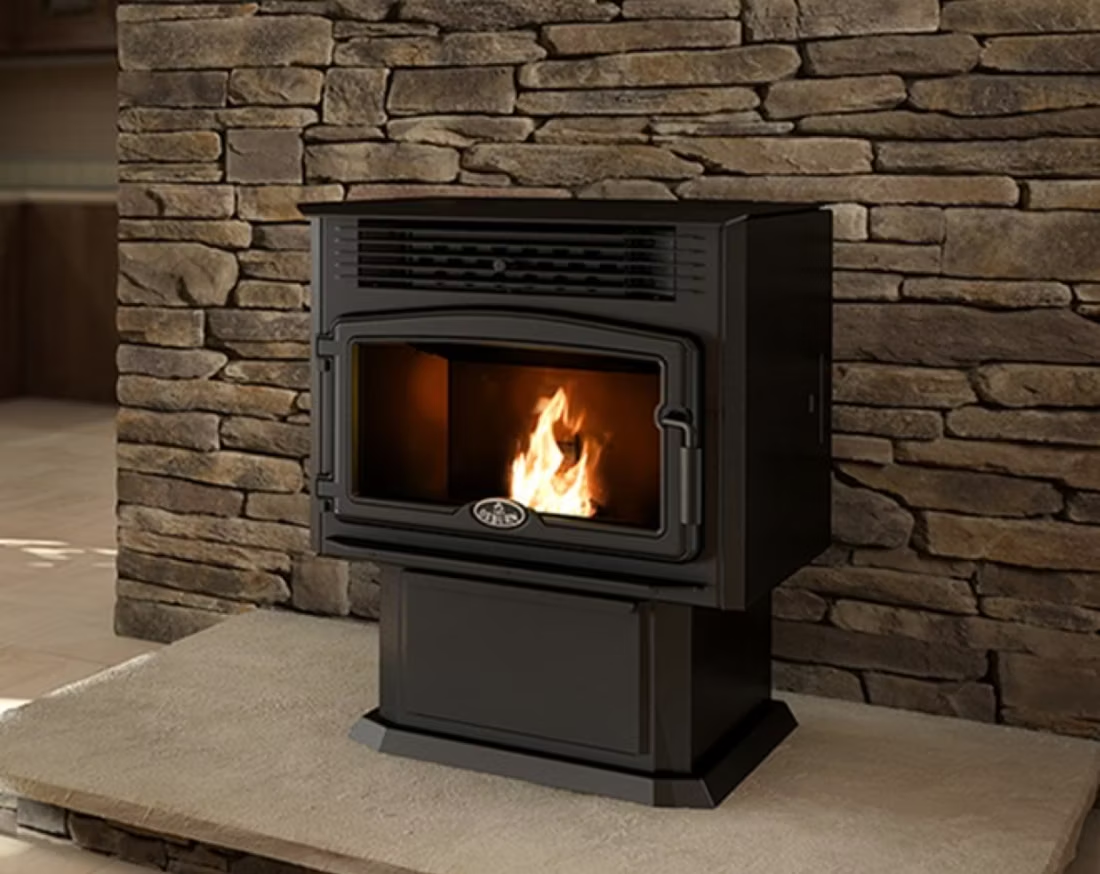
A pellet stove needs a dedicated exterior vent, a nearby outlet to run the auger and blower, and dry storage for 40-pound bags—a full ton, delivered as roughly 50 bags, from suppliers like New England Wood Pellet or Lignetics. That's a real ask in a third-floor triple-decker unit with no storage room to spare. Where it does work is the city's smaller stock of detached single-family homes in areas like Ten Hills or West Somerville, where a garage, mudroom, or basement gives a pellet stove somewhere to live. For everyone else, gas and electric heat pump options tend to be the more realistic path, which is exactly why matching with a dealer who knows your specific building type matters more here than almost anywhere else we cover.
Three steps. No salesperson until you're ready.
Tell us about your project
Your zip code, your situation, and the fuel you're leaning toward—or let the answers point you to one.
See what's actually available
The brands dealers within 100 miles genuinely carry—real options, never a catalog mirage.
Get your dealer & Project Guide
A trusted local dealer, plus the free Project Guide & Parts List that names every component of the job.
Frequently Asked Questions
Are pellet stoves actually used in Somerville?
They exist here, but they're uncommon, and it's worth being upfront about that. Somerville's housing is dominated by triple-deckers and condo conversions with shared exterior walls, tight side-yard setbacks, and no dedicated storage space—all of which make pellet stove installation harder than in a single-family home with a basement or garage. Where we do see them is in the city's smaller pocket of detached houses, workshops, and the occasional finished basement in neighborhoods like Ten Hills or West Somerville. If you live in a triple-decker or condo, a local dealer can tell you honestly whether your unit is even a candidate before you spend money on plans.
How much does a pellet stove installation cost?
Because pellet installs are relatively rare in Somerville, there isn't a deep well of hyper-local pricing data the way there is for gas conversions. Nationally, a pellet stove with wall venting, a hearth pad, and a dedicated 120V outlet for the auger and blower typically runs in the $3,500 to $7,500 range depending on the unit and how much electrical or structural work is needed. In a condo or multi-unit building, expect the number to skew higher once you factor in association approval, coordinating a wall penetration through brick or clapboard siding, and permitting through the City of Somerville's building department. A local dealer can walk your specific building type before quoting anything firm.
What size pellet stove makes sense for a Somerville home?
Most Somerville installs we'd expect to see aren't heating an entire triple-decker—they're supplementing one floor or one unit, since shared walls and separate heating zones make whole-building pellet heat impractical. A small to mid-size pellet stove (rated for 1,000–1,500 sq ft) is usually plenty for a single-floor apartment or a compact single-family home. Larger units make more sense in the handful of detached houses with open floor plans in neighborhoods like Winter Hill. Oversizing is a real risk in a well-insulated, moderate-climate city like Somerville (winter lows average 23°F, not the deep cold of northern New England)—a stove sized for a bigger space will run at a low, inefficient smolder most of the season.
Where do I buy pellets in Somerville?
Regional brands like Lignetics, New England Wood Pellet, and Maine Woods Pellet Co supply much of Massachusetts, and hearth retailers in the greater Boston area typically stock or order them by the ton. The practical challenge in Somerville isn't finding pellets—it's finding somewhere dry to keep a ton of them, since a full season's supply is around 50 bags at 40 pounds each. Homes without a garage, basement, or mudroom will find this the real limiting factor, more so than availability.
Do I need approval beyond a building permit if I live in a condo or triple-decker?
Almost certainly yes. Beyond the standard building permit for a solid-fuel appliance, most Somerville condo associations and triple-decker landlords require sign-off before anyone cuts a vent through an exterior wall, since that wall is often shared or part of the building's common structure. If you're a renter, this generally isn't your call to make at all. Owner-occupants in a condo should bring the association documents to a local dealer consultation early—they'll know what venting configurations have been approved in similar buildings and can flag deal-breakers before you invest in a quote.
Will a pellet stove keep my house warm during a power outage?
No, and this is worth knowing before you buy. Pellet stoves rely on an electric auger to feed fuel and a blower to circulate heat, so they shut down the moment the power goes out—unlike a wood stove, which burns without electricity. If backup heat during an outage is your main goal, a battery backup unit or small generator sized to the stove's draw (usually under 300 watts) is the workaround some Somerville owners use, but it's an added cost most buyers don't anticipate. NSTAR/Eversource and Fitchburg Gas & Electric both serve parts of the city, and residential rates here run roughly 20 to 24 cents per kWh, so running a backup generator for the stove's motor isn't expensive—but it is one more thing to plan for.
Pellet stove vs. gas fireplace—which fits a Somerville home better?
For most Somerville homeowners, gas wins on practicality. Gas fireplaces and inserts are push-button, don't require bag storage or ash cleanup, and fit more easily into a condo or triple-decker unit where venting through an existing chimney is often already possible. Pellet stoves offer a lower ongoing fuel cost and a more traditional flame, but they demand a place to store fuel and a household willing to load a hopper and empty an ash pan weekly. In a dense city where storage space is the scarcest resource in most units, that trade-off pushes many buyers toward gas or a ductless heat pump instead—pellet tends to be the choice of homeowners who specifically want the wood-fire experience and have the garage or basement to support it.
Which Somerville neighborhoods are actually realistic for a pellet stove?
Detached single-family homes are the best candidates, and Somerville has more of them in Ten Hills, Winter Hill, and pockets of West Somerville than in the denser triple-decker blocks near Davis Square, Union Square, or Assembly Row. A house with its own exterior wall, a basement or garage for pellet storage, and no condo association to satisfy removes most of the obstacles that make pellet stoves impractical elsewhere in the city. If you're in one of the denser neighborhoods, it's worth an honest conversation with a local dealer before assuming pellet is off the table—some triple-decker configurations with a rear addition or converted porch can still work.
Should I get a pellet stove or an electric heat pump for my Somerville home?
For most homes in this city, a ductless heat pump is the more common answer, and it's worth understanding why before committing to pellet. Somerville's climate is moderate for New England—winter lows average 23°F, well short of the brutal cold of places like Burlington, VT—which is squarely within the comfort range where heat pumps perform efficiently even in winter. Heat pumps also install without fuel storage, ash, or a wall vent tied to combustion, which matters in a condo or triple-decker. Mass Save incentives have pushed heat pump adoption hard across Massachusetts in recent years. Pellet stoves still make sense for homeowners who want a visible flame, a lower per-BTU fuel cost, and have the storage space to support it—but for pure convenience in Somerville's housing stock, electric usually wins.
Why is a fireplace insert so efficient?
An insert does two things: it seals the chimney completely, so you stop losing air you already paid to heat, and it radiates warmth into the room through the firebox and glass. Most add a heat-exchange fan that pulls cool room air underneath, wraps it around the hot firebox, and pushes it back out warm. Your home is more efficient before you've even lit the first fire.
How often does a pellet stove need cleaning?
A clean pellet stove is a happy pellet stove. Plan on cleaning the burn pot about once a week when you're burning regularly—ash and clinkers gum up the air holes just like a pellet barbecue. Most pellet stove problems trace back to skipped cleaning that nobody explained up front. Some designs make it easy with a trapdoor burn pot: pull a lever and the gunk drops into the ash pan.
Can I install a fireplace myself?
If you're putting a fire in your house on purpose, it's best to work with an expert. Unless you're genuinely experienced in framing, gas line, vent pipe, and the national code on clearances to combustibles, have a professional do it—and ideally the same company that sells you the fireplace, so warranty, service, and liability all live under one roof.
How much should I budget for a fireplace?
For an average home—covering the fireplace, the vent pipe, and basic installation—a budget between $3,900 and $5,500 gives you a lot of options across wood, gas, and pellet. By the time you add finish work, gas line, and electrical, the average complete installation lands between $5,000 and $12,000 all-in. In a remodel or new build, a good rule is to put about 2.5% of the total project cost toward the fireplace.
Nearby Dealers
Hearth shops serving Somerville and the surrounding area. Every listing shows whether it is a WhyFire partner, a dealer we have verified as authorized for the brands we recommend, or a local business carrying hearth products. No manufacturer pays for placement. How we verify dealers →
Boston Fine Home Details
Euroline Tile
M & M Chimney
Sunline Patio & Fireside
Norwood Fireplace
American Chimney Sweeps Inc. Stove Shop
Natick Fireplace
Eurosweep
West Sport Gas
Backyard Living
Hearthside Fireplace & Patio
Sweepnman Fireplace Center
Pellet Brands Stocked Around Somerville
Manufacturers will point you to the nearest stocking dealer.
Find your pellet stove fit in Somerville.
Tell us about your home—condo, triple-decker, or single-family—and we'll give you an honest read on whether pellet makes sense, plus a free Project Guide & Parts List and a match with a trusted local dealer.
Find Your Fireplace →