
Instant zone heat, no chimney required, built for Norfolk County winters.
From Quincy triple-deckers to Wellesley colonials, Norfolk County's housing stock rarely has room for a new chimney. Electric fireplaces plug in or wire into an existing circuit and still take the edge off a 5A-climate winter. Find the right unit and get matched with a trusted local dealer.
Every Project Starts From One of These Five Situations
Zone heat that fits condos, additions, and older homes alike.
Norfolk County sits squarely in climate zone 5A, with a winter heating season on par with places like Hartford, CT, and winter lows that average around 18°F—cold enough that supplemental heat matters, but nowhere near the wood-heat culture you'd find further north or west. Much of the county's housing stock is older and dense: triple-deckers in Quincy, brownstones and condos in Brookline, capes and colonials in Dedham, Norwood, and Franklin. Many of these buildings were never built with a chimney, and condo associations across the county frequently prohibit anything that vents through a shared wall or roof. That's exactly the gap electric fireplaces fill—no flue, no gas line, no combustion byproducts, just a unit that plugs into a standard outlet or wires into a dedicated circuit an electrician can run in an afternoon.
Wood stoves and pellet stoves are genuinely rare in Norfolk County, and it's worth saying plainly: this isn't a market where cutting permits, public forest land, or a wood-heat tradition exist the way they do in rural New England. Regional pellet brands like Lignetics, New England Wood Pellet, and Maine Woods Pellet Co are sold nearby, but very few local homes are set up to burn them—most of the housing stock lacks the venting and hearth space, and dense multi-family zoning makes solid-fuel installs impractical. Gas fireplaces remain the standard alternative for homeowners who want real heat output, but for renters, condo owners, and anyone adding a fireplace to a room that was never plumbed or vented, electric is often the only realistic option—and increasingly the preferred one for finished basements, primary bedrooms, and additions across the county.
Three steps. No salesperson until you're ready.
Tell us about your project
Your zip code, your situation, and the fuel you're leaning toward—or let the answers point you to one.
See what's actually available
The brands dealers within 100 miles genuinely carry—real options, never a catalog mirage.
Get your dealer & Project Guide
A trusted local dealer, plus the free Project Guide & Parts List that names every component of the job.
Frequently Asked Questions
How much does an electric fireplace installation cost in Norfolk County?
A plug-in electric fireplace or insert that runs on a standard 120-volt outlet typically costs $150 to $600 for the unit itself, with no real installation cost beyond mounting it or setting it into an existing opening. Built-in electric fireplaces or larger inserts that need a dedicated 240-volt circuit run higher—typically $1,500 to $4,000 once you factor in the unit, wall framing or fireplace conversion, and an electrician's time to run the circuit. Condo and multi-family installs in places like Quincy or Brookline sometimes need sign-off from the building or condo association before any electrical work starts, which local installers can usually help navigate.
Do electric fireplaces need a chimney or venting in Norfolk County?
No—this is the main reason electric fireplaces work so well in Norfolk County's housing stock. There's no combustion, so there's no flue, no vent pipe, and no clearance requirements tied to smoke or gas byproducts. That matters in a county where a lot of homes, especially triple-deckers and condo conversions in Quincy and Brookline, were never built with a chimney and can't easily add one. An electric insert can go straight into an existing masonry fireplace opening, or a built-in unit can be framed into a wall in a finished basement or family room addition with zero venting work.
Will an electric fireplace actually heat a room during a Norfolk County winter?
It will heat a room, but it's not designed to replace your home's primary heating system during a Norfolk County winter, where average lows sit around 18°F and the season runs long. Most electric fireplace inserts put out somewhere in the range of 5,000 to 9,000 BTUs on the heat setting—enough to comfortably warm a single room of 300 to 400 square feet, which makes them well suited as zone heat for a family room, primary bedroom, or finished basement while the furnace or boiler handles the rest of the house. Homeowners looking for whole-home supplemental heat in a Norfolk County climate typically pair an electric fireplace with existing forced-air or hydronic heat rather than relying on it alone.
Do I need a permit to install an electric fireplace in Norfolk County?
A simple plug-in electric fireplace generally doesn't require a permit—it's no different from plugging in a space heater. If your installation involves running a new dedicated circuit, adding a junction box, or any wiring work, that portion typically requires an electrical permit through your town's building department, whether that's Quincy, Dedham, Norwood, Wellesley, or elsewhere in the county. Most licensed electricians pull this permit as a routine part of the job. Condo and co-op buildings across the county often have their own approval process on top of the town permit, so it's worth checking with your association before scheduling work.
Electric vs. gas fireplace—which is right for my Norfolk County home?
Gas fireplaces are the standard choice across Norfolk County for homeowners who want real heat output and the look of a live flame, and most towns in the county have reliable natural gas or propane service to support them. Electric fireplaces trade some heat output and flame realism for a much simpler install—no gas line, no venting, no combustion inspection—which makes them the better fit for condos, rentals, upper-floor units in triple-deckers, and any space where running gas line or venting isn't practical or allowed. If you own your home, have gas service, and want a primary heat source for a room, gas is usually worth the extra install complexity. If you're in a multi-family building, adding a fireplace to a finished basement, or prioritizing a fast, low-disruption install, electric is the more realistic option.
What's the difference between an electric fireplace, an electric insert, and an electric stove?
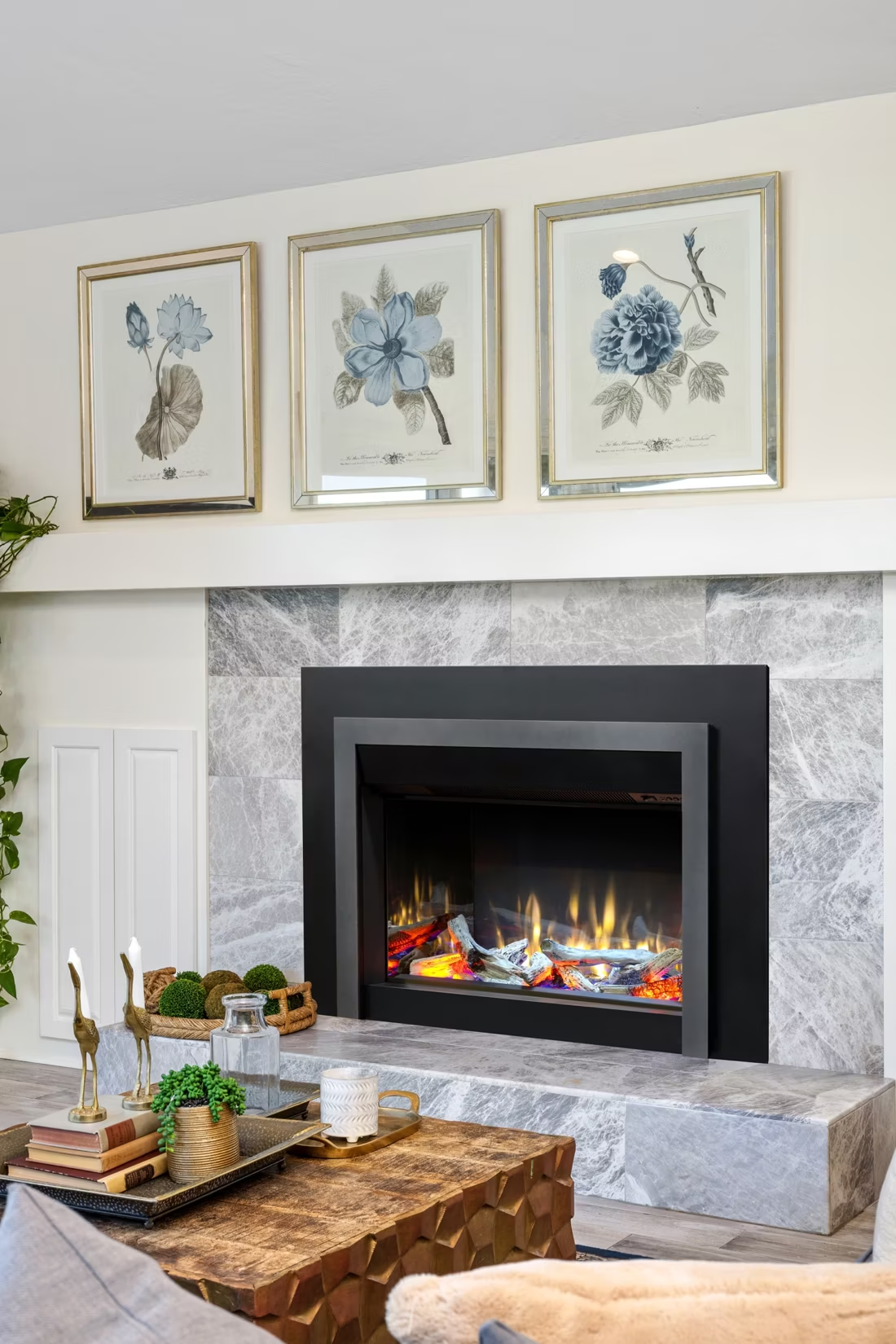
An electric fireplace is typically a built-in unit installed into a wall or existing fireplace opening, often with a mantel or surround. An electric insert is sized specifically to slide into an existing masonry fireplace, giving an old, rarely-used hearth a functional heat source without touching the chimney. An electric stove is a freestanding unit that sits on the floor and mimics the look of a wood stove, which works well in Norfolk County homes that want the aesthetic of a stove in a room with no fireplace at all. For most Norfolk County homeowners with an existing but unused masonry fireplace, an insert is the straightforward upgrade; for a bare wall or basement, a built-in fireplace or freestanding stove are the better fits.
How much does it cost to run an electric fireplace in Norfolk County?
Running cost depends on your electric rate and how often the heater element runs. Most of Norfolk County is served by Eversource, though a handful of towns—including Norwood and Wellesley—run their own municipal light departments, which often carry somewhat lower rates than Eversource's standard residential tariff. A typical electric fireplace on its heat setting draws around 1,500 watts, so running it for several hours a day during the winter adds a noticeable but modest amount to a monthly bill—generally far less than heating an equivalent space with baseboard electric resistance heat, since most units let you run the flame effect without the heater engaged at all.
Why don't more Norfolk County homes have wood or pellet stoves?
It comes down to housing type and infrastructure. Norfolk County is dense and largely suburban, with a housing stock heavy on triple-deckers, condos, and attached homes that were never built with a chimney or don't allow one to be added. There's no public forest land or cutting-permit system feeding a local wood-heat culture the way there is in rural parts of the state, and while pellet brands like Lignetics and New England Wood Pellet are sold regionally, very few local homes have the direct-vent infrastructure pellet stoves need. Wood and pellet units aren't prohibited, but they're genuinely uncommon here—electric and gas cover the overwhelming majority of hearth installs across the county.
What's the best electric fireplace for an older Norfolk County home?
For colonials and capes across Norfolk County that already have an old, rarely-used masonry fireplace, an electric insert is usually the best fit—it drops into the existing opening, needs no chimney work, and turns dead space into a functioning heat source for a family room or den. For additions, finished basements, or condo units without any fireplace opening, a built-in electric fireplace framed into a wall gives you the same flame effect and zone heat without retrofitting anything. In either case, look for a unit with a true heater element rated for the room's square footage rather than one sold primarily for its flame display—a local dealer can match wattage to your specific room size and existing heating setup.
Can I put a TV above my fireplace?
Yes—with an asterisk. Fireplaces are hot and TVs don't like heat. Either put a mantel between them to deflect rising warmth, or choose a fireplace with heat-management technology that creates a cool zone on the wall above—the wall stays around 125 degrees, barely warm, while the room still gets full heat. If you like clean lines and don't want a mantel, heat management is the answer.
Does an electric fireplace need a vent or chimney?
No—that's its superpower. An electric fireplace needs a wall and an outlet, period. No vent pipe, no gas line, no clearances to design around, which is why it works in bedrooms, offices, apartments, and walls where venting a gas or wood unit would be impractical or impossible. Installation is typically the simplest and least expensive of any fireplace type.
Does a fireplace add value to my home?
On average, a fireplace adds back to the home about the same amount you spent installing it. Add the monthly savings from heating the rooms you actually use instead of the whole house—often hundreds of dollars a year—and the value case is strong before you even count what a fire does for how your family uses the room.
How much should I budget for a fireplace?
For an average home—covering the fireplace, the vent pipe, and basic installation—a budget between $3,900 and $5,500 gives you a lot of options across wood, gas, and pellet. By the time you add finish work, gas line, and electrical, the average complete installation lands between $5,000 and $12,000 all-in. In a remodel or new build, a good rule is to put about 2.5% of the total project cost toward the fireplace.
Stove and Fireplace Dealers in Norfolk County
Hearthside - Holliston
The Fireplace Connection
Find your electric fireplace in Norfolk County.
Tell us about your home and we'll put together a free Project Guide & Parts List—the right electric fireplace or insert, the exact parts including any wiring needs, and a trusted local Norfolk County dealer to install it.
Find Your Fireplace →