
Add Real Warmth to Your Middleborough Center Home—No Chimney Required.
Zone heat and instant ambiance for Plymouth County homes, apartments, and condos that don't have a working chimney. Find the right unit and connect with a trusted local dealer.
Every Project Starts From One of These Five Situations
Instant heat for New England's older housing stock.
Middleborough Center sits along the Nemasket River in Plymouth County, where winter lows average 17°F and the town sees a long, cold New England heating season—real work for any heating system, even at a modest 86 feet of elevation. A lot of the housing stock downtown and around Center Street is older: capes, colonials, and converted multi-family buildings, many without a masonry chimney suited to venting a wood or gas appliance, or with a flue that's been capped for decades. That's exactly the situation electric fireplaces solve well.
The Town of Middleborough runs its own municipal electric utility, and residential rates here run around $0.1584 per kWh—competitive compared to the investor-owned utilities serving much of eastern Massachusetts. Because electric fireplaces and inserts need no gas line, no chimney, and no combustion venting, they're often the fastest and least invasive way to add supplemental heat and a real flame-look to a room—whether that's a finished basement, a condo above a Center Street storefront, or a bedroom that the furnace never quite reaches.
Three steps. No salesperson until you're ready.
Tell us about your project
Your zip code, your situation, and the fuel you're leaning toward—or let the answers point you to one.
See what's actually available
The brands dealers within 100 miles genuinely carry—real options, never a catalog mirage.
Get your dealer & Project Guide
A trusted local dealer, plus the free Project Guide & Parts List that names every component of the job.
Frequently Asked Questions
How much does an electric fireplace installation cost in Middleborough Center?
Most electric fireplace projects in Middleborough Center run $300 to $1,200 for a plug-in wall-mount or freestanding stove-style unit, since there's no venting or gas line to install. Built-in linear units or mantel packages that require a 240-volt hardwired circuit run higher, typically $1,500 to $3,000, once an electrician runs a dedicated line and a carpenter builds or modifies the surround. Local dealers can walk you through both paths during a home visit—the difference usually comes down to whether you want a true built-in look or a simpler plug-and-play unit.
Will an electric fireplace actually keep a Middleborough Center room warm in January?
It will keep a single room comfortable, but it's not a substitute for your furnace on a night when temperatures fall into the teens. Most electric units top out around 1,500 watts, roughly 5,000 BTU of supplemental heat—enough to take the chill off a bedroom, den, or finished basement, but not enough to heat a whole house through a long, cold New England winter. Homeowners here typically use electric units for zone heating: warming the room they're actually in and letting the central system run lower everywhere else.
Do I need a permit to install an electric fireplace in Middleborough Center?
A simple plug-in unit that runs off a standard 120-volt outlet doesn't require a permit. If you're installing a hardwired 240-volt built-in unit, Middleborough's Building Department typically requires an electrical permit, and the work needs to be done by a licensed electrician—this is standard for any new dedicated circuit, not specific to fireplaces. Local dealers who handle built-in installs are used to coordinating this and can tell you up front whether your chosen unit needs one.
How much will an electric fireplace add to my Middleborough electric bill?
At the Town of Middleborough's residential rate of about $0.1584 per kWh, running a 1,500-watt electric fireplace on high costs roughly 24 cents an hour. Most units also have a heat-off, flame-only mode that draws under 100 watts—a couple cents an hour—so you can run the visual effect all evening without meaningfully moving the needle on your bill, and reserve the heater function for the coldest stretches.
Is electric or wood a better fit for my Middleborough Center home?
It depends on your setup. Homes with an existing chimney and access to local oak, maple, birch, or ash firewood often do well with a wood stove or insert, and wood also functions as backup heat during a power outage. But a lot of Middleborough Center's older multi-family and downtown buildings simply don't have a usable chimney, and adding one is expensive and sometimes not permitted by a condo association or landlord. In those cases, electric is the practical answer—no venting, no combustion, and no chimney work required.
What's the best type of electric fireplace for a New England home like mine?
For supplemental heat in a cold-climate home, look at linear wall-mount units or stove-style inserts from brands like Dimplex or Napoleon, which pair a realistic flame effect with a real 1,500-watt heating element and a thermostat. If you're retrofitting into an existing masonry fireplace opening, an electric insert sized to that firebox is usually the cleanest option—it slides into the existing opening and plugs into a nearby outlet or a new hardwired line. A local dealer can measure your firebox or wall space and tell you which units will actually fit.
Can I install an electric fireplace in my Middleborough apartment or condo?
In most cases, yes. Plug-in electric fireplaces don't require any venting, gas line, or structural modification, which makes them one of the few heating-adjacent upgrades a renter or condo owner can typically install without landlord or condo association approval. Freestanding stove-style units and wall-mount models both fall into this category. Built-in, hardwired units are more involved and may require sign-off from a landlord or HOA since they involve electrical work, so it's worth checking your lease or bylaws before going that route.
Will my electric fireplace work during a winter power outage?
No—electric fireplaces require power to run both the heating element and the flame effect, so they'll go dark along with everything else if the Town of Middleborough's grid goes down. Nor'easters and ice storms do knock out power in Plymouth County most winters. If backup heat during outages is a priority, pair an electric unit for everyday zone heating with a wood stove, or make sure you have another heat source that doesn't depend on the electric grid.
Electric vs. pellet stove—which makes more sense for my home?
Pellet stoves burn bagged fuel from regional suppliers like New England Wood Pellet or Lignetics, produce more heat output than an electric unit, and can offset a real chunk of a heating bill in a home facing a long, cold New England winter—but they still need a vent through an exterior wall or roof, plus a hopper to refill and ash to clean out. Electric fireplaces skip all of that: no venting, no fuel storage, no ash, just supplemental warmth and ambiance in a specific room. If you're heating a whole floor economically, pellet is worth a look. If you want zero-maintenance ambiance in a bedroom, den, or condo, electric is the simpler fit.
Can I put a TV above my fireplace?
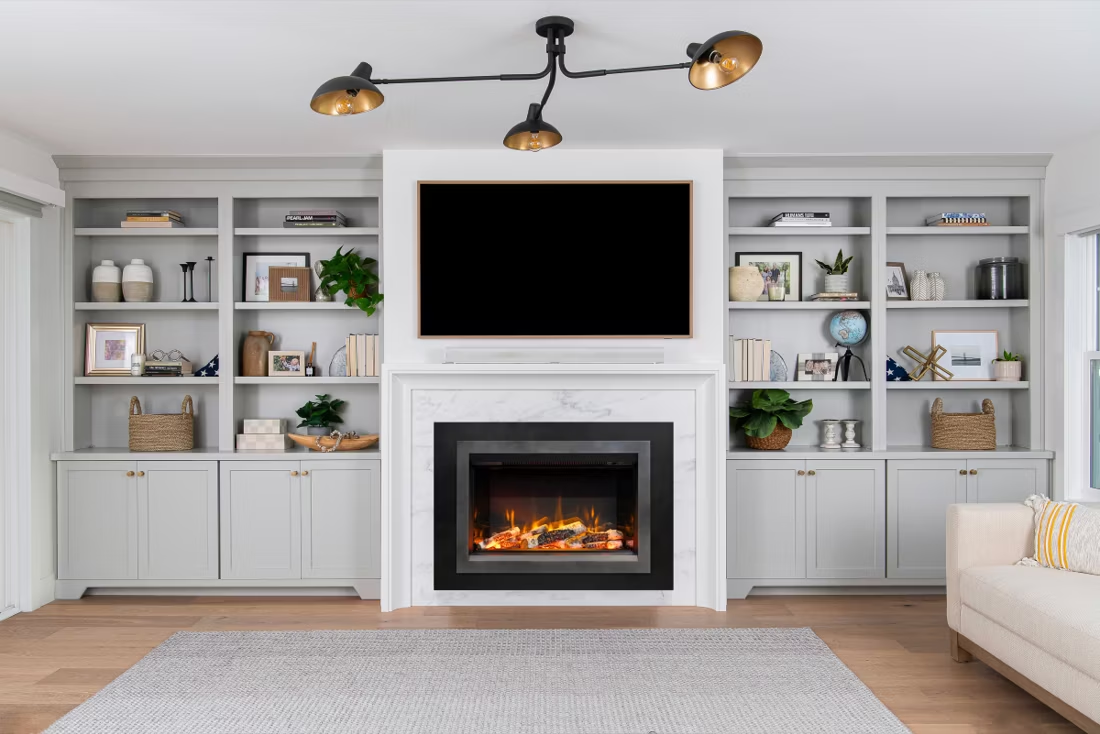
Yes—with an asterisk. Fireplaces are hot and TVs don't like heat. Either put a mantel between them to deflect rising warmth, or choose a fireplace with heat-management technology that creates a cool zone on the wall above—the wall stays around 125 degrees, barely warm, while the room still gets full heat. If you like clean lines and don't want a mantel, heat management is the answer.
Do electric fireplaces actually produce heat?
Yes—most put out around 4,800–5,000 BTUs from a standard outlet, which comfortably warms a bedroom, office, or den as a comfort-zone heater. What they won't do is carry a whole house the way wood, gas, or pellet can. Think of electric as ambiance-first with honest supplemental heat: flames on with no heat in July, flames plus warmth in January.
What is an in-home preview and do I need one?
It's a visit where a hearth professional measures your space, confirms the model you picked actually works in your home, and walks the specs—framing, gas line, venting, finish work—before anything is ordered. Some details you just can't know until you see the house. Never make a down payment without one; it's the single most-skipped step that burns buyers.
Can a fireplace actually lower my heating bill?
Yes—by creating a comfort zone. A furnace heats every square foot of the house just to warm the one room you're in; a gas fireplace on low burns roughly a sixth of the gas a typical furnace does. Set the furnace around 55–60 degrees as a baseline, then heat the rooms your family actually uses. Families who heat this way commonly save $20–$60 a month.
Nearby Dealers
Hearth shops serving Middleborough Center and the surrounding area. Every listing shows whether it is a WhyFire partner, a dealer we have verified as authorized for the brands we recommend, or a local business carrying hearth products. No manufacturer pays for placement. How we verify dealers →
August West Chimney Co. & Fireplace Conc
Woodstove & Fireplaces Unlimited
South Shore Fireplace Inc
Plymouth Fireplace
Backyard Living
Mr. Chimney Woodstoves & Fireplaces
Acushnet Alternative Heating
Hearth Heating, Inc
The Fireplace Store @ Aspinwall Plumbing - Marshfield
Flue Brothers Chimney Sweeps
Mr. Chimney's Stove Shoppe
Eurosweep
Electric Service in Middleborough Center
An electric fireplace's heater draws about 1,500 watts—pennies per hour at local rates.
Town Of Middleborough - (Ma)
Find your electric fireplace in Middleborough Center.
Tell us a bit about your home and we'll put together a free Project Guide & Parts List—the right unit, the exact parts, and a trusted local dealer to install it.
Find Your Fireplace →