
Zone heat and real ambiance—no chimney required.
From Springfield's triple-deckers to the colonials of Longmeadow and Wilbraham, electric fireplaces bring instant warmth and a real flame look to Hampden County homes without venting, gas lines, or masonry work. Find the right unit and connect with a trusted local dealer.
Every Project Starts From One of These Five Situations
The easiest upgrade for older housing stock.
Hampden County is home to over 573,000 people across Springfield, Chicopee, Holyoke, Westfield, Agawam, West Springfield, and a string of smaller mill towns along the Connecticut River. Much of the housing stock here dates to the early 1900s—triple-deckers in Springfield and Holyoke, worker cottages built around the old mills, colonials in Longmeadow and East Longmeadow. Winters run cold: an average low near 16°F and a winter heating load that puts Hampden County in the same climate zone as Burlington, Vermont. Plenty of these older homes have a fireplace opening that's either disused, boarded up, or was never hooked up to real gas or wood venting in the first place—which is exactly where electric fireplaces do their best work.
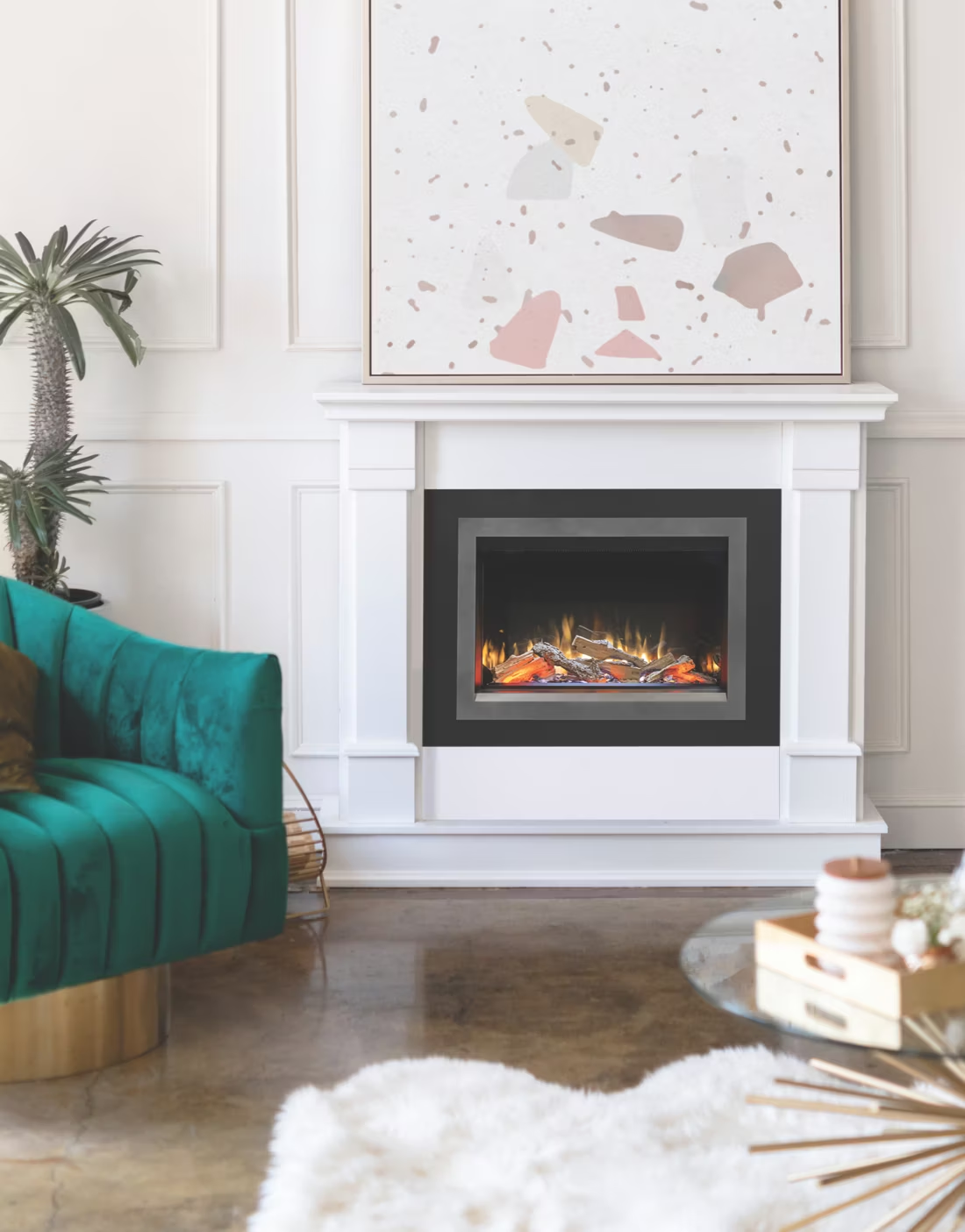
An electric insert or built-in unit drops into an existing masonry opening or a new-construction wall cavity, runs on a standard 120V outlet in most cases, and needs no permit for the appliance itself in most Hampden County cities and towns—though electricians pulling a new dedicated circuit will file with the local building department (Springfield, Chicopee, Holyoke, and Westfield each handle their own). Eversource serves electric accounts across the county, and a modern electric fireplace draws modest power for the flame effect alone, with a resistance heater that kicks in only when you want supplemental warmth in one room—not a whole-house heating bill. It's a practical fit for renters, condo owners, and anyone who wants real ambiance without opening up a chimney that hasn't drawn smoke in decades.
Three steps. No salesperson until you're ready.
Tell us about your project
Your zip code, your situation, and the fuel you're leaning toward—or let the answers point you to one.
See what's actually available
The brands dealers within 100 miles genuinely carry—real options, never a catalog mirage.
Get your dealer & Project Guide
A trusted local dealer, plus the free Project Guide & Parts List that names every component of the job.
Frequently Asked Questions
How much does an electric fireplace installation cost in Hampden County?
A plug-in electric insert that slides into an existing fireplace opening typically runs $300 to $900 installed, since there's often no wiring work involved beyond the outlet that's already there. A built-in electric fireplace or wall-mount unit that needs a new dedicated circuit and possibly some framing or trim work runs higher, often $800 to $2,500, depending on whether an electrician needs to run new line from the panel—a common scenario in older Springfield and Holyoke homes with outdated wiring. Local dealers will quote a firm number after seeing your space and your home's electrical panel.
Can I put an electric fireplace into my existing masonry fireplace?
Yes, and it's one of the most common projects in Hampden County's older neighborhoods. Many triple-deckers and pre-war colonials in Springfield, Chicopee, and Holyoke have a masonry firebox that's been closed off for years—sometimes because the chimney needs expensive repair, sometimes because the previous owner just stopped using it. An electric insert sized to the opening restores the look of a working fireplace, needs no chimney liner or venting, and can usually be plugged into an existing outlet or a new one added just behind the surround. No firebox demolition, no flue work—it's a same-day or next-day install in most cases.
Do I need a permit for an electric fireplace in Hampden County?
In most cases, no permit is required for the fireplace unit itself, since it's a plug-in or hardwired appliance rather than a combustion device. If your installer needs to add a new dedicated electrical circuit—common for larger built-in units—that work typically requires an electrical permit through your city or town's building department (Springfield, Chicopee, Holyoke, Westfield, and the smaller towns each issue their own). Most local dealers coordinate this as part of the install, so it's rarely something homeowners have to manage themselves.
Will an electric fireplace actually heat a room in a Hampden County winter?
Most electric fireplaces are built around a 4,600 to 5,200 BTU resistance heater, which is enough to noticeably warm a single room—a living room, den, or bedroom—but it's not designed to replace your furnace or boiler on a night when it's 16°F outside, which is the average winter low across the county. Think of it as effective zone heat: it can let you turn the thermostat down a couple degrees in the room you're actually using, and it delivers real, immediate warmth on cool shoulder-season evenings in September or April when firing up the main heating system feels like overkill. For whole-home heating alongside cold Hampden County winters, wood, pellet, or gas units generally carry more of the load.
Will my electric fireplace work during a power outage?
No—electric fireplaces require power to run both the heater and the flame effect, so they shut down along with everything else during an outage. That's an important distinction for Hampden County homeowners, where nor'easters and ice storms occasionally knock out Eversource service for a day or more, especially in the more wooded parts of the county like Wilbraham, Monson, and Granville. If backup heat during outages matters to your household, a wood stove or a battery-backed direct-vent gas unit is a better primary choice, with electric reserved for the ambiance and supplemental warmth it does best.
What does it cost to run an electric fireplace with Eversource rates?
Running costs depend on how much you use the heater setting versus just the flame effect. On the heater setting at roughly 1,500 watts, a unit run for a few hours a night draws a modest amount of electricity—a few cents per hour per unit at typical Eversource residential rates—and running the flame effect alone without heat costs next to nothing. Compared to burning oil or propane to heat a whole house, using an electric fireplace for zone heating in the room you're actually in is generally the cheaper way to take the edge off a cold Hampden County evening, provided you're not trying to heat the whole house with it.
Electric vs. gas fireplace—which is right for my Hampden County home?
Gas fireplaces deliver more real heat output and can be configured to run on battery backup during outages—a genuine advantage during Hampden County's occasional ice storms. But gas installation requires either natural gas service (available through most of Springfield, Chicopee, and Holyoke's core areas) or a propane tank, plus venting and a gas line permit. Electric fireplaces skip all of that: no gas line, no venting, no combustion byproducts, and a much lower installed cost. For a rental unit, a condo, an apartment above street level in downtown Springfield, or any space where running new gas line isn't practical, electric is usually the simpler and less expensive path. For a primary living room where real heat output matters most, gas is often the better long-term fit.
Electric vs. wood or pellet—which makes sense for Hampden County?
Wood stoves burning local oak, maple, birch, or ash and pellet stoves running on regional brands like Lignetics or New England Wood Pellet both put out substantially more heat than an electric unit and can serve as genuine backup heat during a power outage (pellet stoves need electricity for the auger and blower, so they're not outage-proof either, while wood stoves are). Electric fireplaces don't compete on raw heat output or storm resilience, but they win on installation simplicity, upfront cost, and cleanliness—no ash, no chimney sweep, no cutting or stacking wood. In a lot of Hampden County households, electric ends up as the fireplace in the family room or bedroom, while a wood or pellet appliance handles the harder job of heating the house.
Do electric fireplaces need any maintenance?
Very little compared to a combustion appliance. There's no chimney to sweep and no gas line to inspect. Most maintenance is limited to occasionally dusting the heating element and cleaning the glass front, and replacing the LED light strips or heater fan after years of heavy use—often a decade or more down the line. Because there's no annual inspection requirement like there is for wood or gas units, electric fireplaces are a low-maintenance option for Hampden County homeowners who want ambiance without an ongoing service routine.
Can I put a TV above my fireplace?
Yes—with an asterisk. Fireplaces are hot and TVs don't like heat. Either put a mantel between them to deflect rising warmth, or choose a fireplace with heat-management technology that creates a cool zone on the wall above—the wall stays around 125 degrees, barely warm, while the room still gets full heat. If you like clean lines and don't want a mantel, heat management is the answer.
Does an electric fireplace need a vent or chimney?
No—that's its superpower. An electric fireplace needs a wall and an outlet, period. No vent pipe, no gas line, no clearances to design around, which is why it works in bedrooms, offices, apartments, and walls where venting a gas or wood unit would be impractical or impossible. Installation is typically the simplest and least expensive of any fireplace type.
Can a fireplace actually lower my heating bill?
Yes—by creating a comfort zone. A furnace heats every square foot of the house just to warm the one room you're in; a gas fireplace on low burns roughly a sixth of the gas a typical furnace does. Set the furnace around 55–60 degrees as a baseline, then heat the rooms your family actually uses. Families who heat this way commonly save $20–$60 a month.
What is an in-home preview and do I need one?
It's a visit where a hearth professional measures your space, confirms the model you picked actually works in your home, and walks the specs—framing, gas line, venting, finish work—before anything is ordered. Some details you just can't know until you see the house. Never make a down payment without one; it's the single most-skipped step that burns buyers.
Stove and Fireplace Dealers in Hampden County
Listings include WhyFire partner dealers, dealers we have verified as authorized for the brands we recommend, and established local businesses that carry hearth products. Every listing shows which one it is. The ones marked Preferred run on WhyFire's software, so they can show you real pricing and book your appointment right here. No manufacturer pays for placement. How we verify dealers →
Olde Hadleigh Hearth & Patio
McKenney Electric Dba McKenney Hearth & Home
Squier Lumber & Hardware
Hocon Gas
Northeast Wood Stove
Amherst Farmers Supply
Done Right Chimney
High Grade Gas Service
The Fire Place
Phelps & Sons Inc.
Find your electric fireplace in Hampden County.
Tell us a bit about your home and we'll match you with the right electric fireplace or insert, plus a free Project Guide & Parts List with the exact parts and a trusted local dealer to install it.
Find Your Fireplace →