
Find the right electric fireplace for your Chicopee home.
Zone heat that pairs well with Chicopee's municipal electric rates. Find the right insert or built-in unit, and connect with a trusted local dealer.
Every Project Starts From One of These Five Situations
Electric heat backed by one of the region's lowest power rates.
Chicopee sits along the Connecticut and Chicopee Rivers in the Pioneer Valley, a former mill city where dense triple-deckers and early-1900s two-family homes sit alongside newer construction toward the Westover and Fairview neighborhoods. Winters here are genuinely cold—the average January low is 16°F and the city has a long, demanding heating season, putting Chicopee in climate zone 5A, in the same league as Burlington, Vermont, even though it sits a couple hundred miles farther south.
What sets Chicopee apart from most of Massachusetts is who supplies the electricity: the city runs its own municipal utility, Chicopee Electric Light, and residential rates here run about $0.1616 per kWh—well under the $0.25-plus that National Grid and Eversource customers pay elsewhere in the state. That gap is real money for anyone considering an electric fireplace or wall insert to zone-heat a den, finished basement, or bonus room without touching the furnace. It won't replace a boiler through a winter this demanding, but as supplemental heat in the rooms people actually live in, electric pencils out better here than almost anywhere else in Western Mass.
Three steps. No salesperson until you're ready.
Tell us about your project
Your zip code, your situation, and the fuel you're leaning toward—or let the answers point you to one.
See what's actually available
The brands dealers within 100 miles genuinely carry—real options, never a catalog mirage.
Get your dealer & Project Guide
A trusted local dealer, plus the free Project Guide & Parts List that names every component of the job.
Frequently Asked Questions
How much does an electric fireplace installation cost in Chicopee?
A plug-in electric insert or freestanding stove typically runs $300-$1,000 for the unit with no installation cost beyond a standard outlet. A built-in wall unit or mantel-surround insert that needs a dedicated 20-amp circuit usually lands between $1,200 and $3,500 installed, including the electrician's time to run the new circuit and, in some of Chicopee's older triple-deckers, a panel assessment if the existing service is undersized. Full linear or fully-recessed built-ins with custom framing and finish work can run higher. Because there's no venting or chimney involved, electric installs are consistently the least expensive fireplace project a Chicopee homeowner can take on.
Do I need a permit to install an electric fireplace in Chicopee?
A simple plug-in unit that draws from an existing standard outlet doesn't require a permit. If your installer needs to run a new dedicated circuit—common for larger built-in inserts or wall units pulling 1,500 watts continuously—that electrical work requires a permit through the City of Chicopee Building Department and must be done by a licensed electrician. Most local dealers coordinate this as part of the installation, so you're not left tracking down the permit yourself.
Will an electric fireplace actually lower my heating bill?
It depends on how you use it. Chicopee's municipal electric rate of $0.1616 per kWh is genuinely low for Massachusetts, which makes electric zone heating more cost-effective here than in Springfield or Worcester. Used to heat a single room you're occupying—instead of running the furnace to warm the whole house—an electric fireplace can meaningfully cut costs. Used as a whole-home heat source through a long, cold Chicopee winter, resistance electric heat gets expensive fast even at this rate. The best return comes from treating it as supplemental zone heat, not a furnace replacement.
What's the difference between an electric fireplace, insert, and stove?
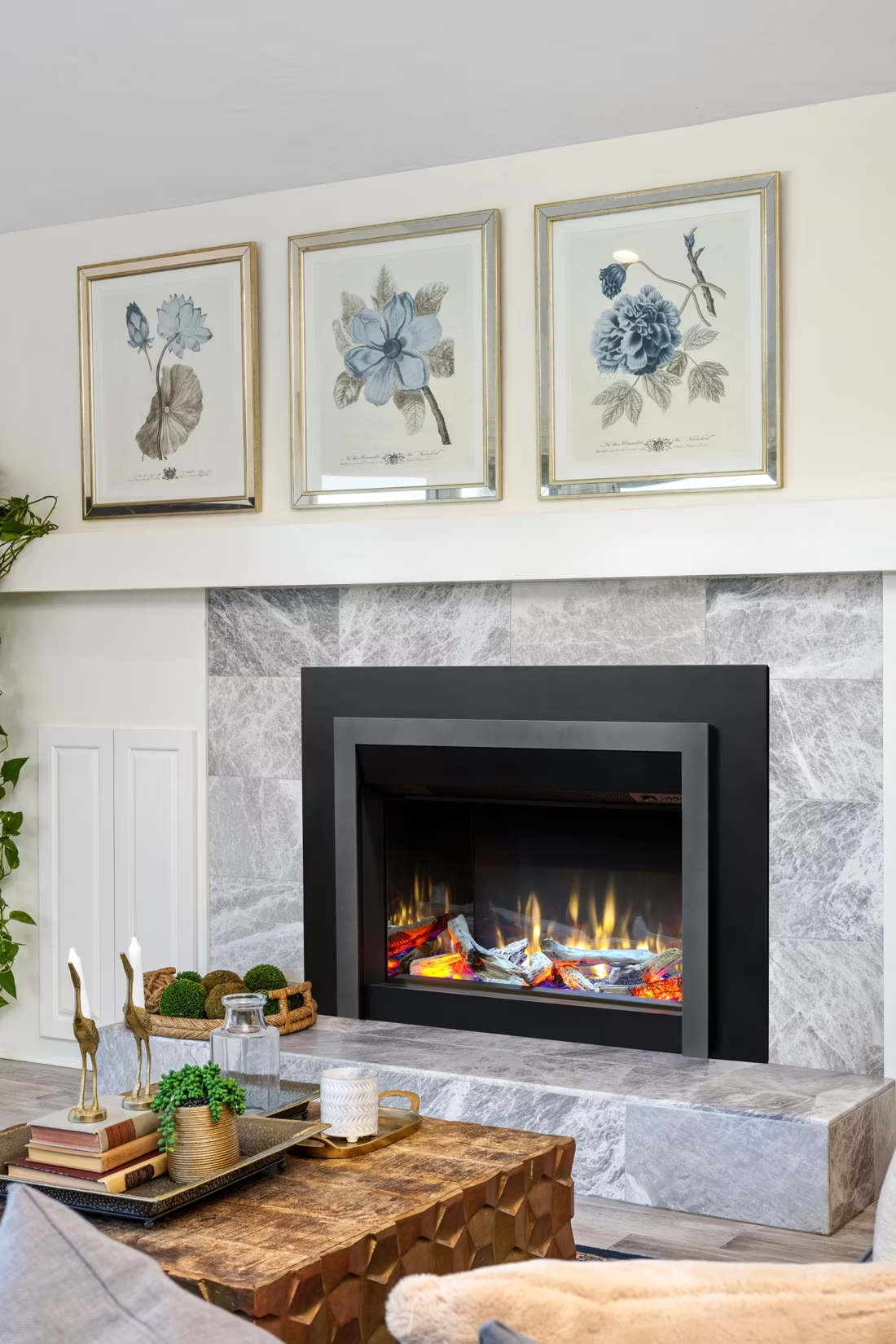
An electric fireplace is typically a built-in unit set into a wall or mantel surround, often with a flush, TV-mount-friendly profile. An electric insert is sized to slide into an existing masonry or wood-burning fireplace opening, giving old Chicopee homes with an unused hearth a working heat source again without any venting work. An electric stove is a freestanding cabinet-style unit that mimics a wood stove's look and can go almost anywhere there's an outlet. For a triple-decker with an existing fireplace opening, an insert is usually the cleanest retrofit; for a new build or a room with no chimney, a built-in or stove makes more sense.
Will my electric fireplace work if the power goes out?
No—electric fireplaces require power to run the heating element, fan, and flame effect, so they shut down during an outage just like the rest of your electric appliances. That's a real consideration in Chicopee, where winter nor'easters and ice storms can knock out power for hours or, occasionally, days. Homeowners who want heat that survives an outage typically pair an electric fireplace for everyday zone heating with a wood stove or vented gas unit elsewhere in the house as a backup. If backup heat is the priority, electric shouldn't be your only appliance.
Can my home's wiring handle a larger electric fireplace?
It depends on the home. Many of Chicopee's early-1900s triple-deckers and two-families were built with 60- or 100-amp electrical service, which can be tight once you add a dedicated 20-amp circuit for a larger insert or built-in unit. A licensed electrician should check your panel capacity before installation—this is standard practice for any local dealer quoting a hardwired unit. Smaller plug-in units drawing 1,500 watts or less usually aren't an issue even on older panels, since they run off a standard household outlet.
What size electric fireplace do I need for my room?
Most electric fireplaces are rated in watts rather than the BTU figures used for wood and gas units, though the numbers convert directly—a standard 1,500-watt heater puts out roughly 5,100 BTU, enough to comfortably heat a 400- to 1,000-square-foot room depending on insulation and ceiling height. Unlike a wood stove, there's little downside to sizing an electric unit generously, since the built-in thermostat cycles the heating element on and off automatically rather than smoldering or overheating the way an oversized wood stove would. Local dealers can size a unit against your specific room in a few minutes.
How much maintenance does an electric fireplace need?
Very little. There's no chimney to sweep, no venting to inspect, and no annual safety inspection required by code the way there is for wood or gas appliances. Most upkeep is limited to occasionally dusting the heating element and fan, replacing the LED flame bulbs after several years of use if your model uses them, and checking that the unit's air intake stays clear of furniture or drapes. Most quality units from brands carried by regional dealers last 10 to 15 years with essentially no service calls.
Electric vs. wood or gas—which makes sense for a Chicopee home?
Wood and gas remain the more common primary heat sources in Chicopee's older housing stock, especially homes already plumbed for gas or with an existing masonry chimney suited to burning local oak, maple, birch, or ash. Electric fireplaces don't compete on raw heat output or storm-outage reliability, but they win on installation simplicity—no venting, no gas line, no permit in most cases—and, thanks to Chicopee Electric Light's below-market rate, on running cost for zone heating specific rooms. A lot of local homeowners end up with a gas or wood appliance in the main living space and an electric insert or built-in in a secondary room, bedroom, or finished basement where running a full chimney or gas line doesn't make sense.
Can I put a TV above my fireplace?
Yes—with an asterisk. Fireplaces are hot and TVs don't like heat. Either put a mantel between them to deflect rising warmth, or choose a fireplace with heat-management technology that creates a cool zone on the wall above—the wall stays around 125 degrees, barely warm, while the room still gets full heat. If you like clean lines and don't want a mantel, heat management is the answer.
What fireplace styles should I know before shopping?
Four cover most of the market: screen-front traditional (mesh front, open feel, fits craftsman homes), traditional door set (the classic look you grew up with), modern linear (wide, low, the statement piece for entertaining), and clean face contemporary (no trim—your tile or stone runs right to the fire's edge). Walk in knowing those four terms and you're ahead of most buyers.
Does a fireplace add value to my home?
On average, a fireplace adds back to the home about the same amount you spent installing it. Add the monthly savings from heating the rooms you actually use instead of the whole house—often hundreds of dollars a year—and the value case is strong before you even count what a fire does for how your family uses the room.
Can I install a fireplace myself?
If you're putting a fire in your house on purpose, it's best to work with an expert. Unless you're genuinely experienced in framing, gas line, vent pipe, and the national code on clearances to combustibles, have a professional do it—and ideally the same company that sells you the fireplace, so warranty, service, and liability all live under one roof.
Nearby Dealers
Hearth shops serving Chicopee and the surrounding area. Every listing shows whether it is a WhyFire partner, a dealer we have verified as authorized for the brands we recommend, or a local business carrying hearth products. No manufacturer pays for placement. How we verify dealers →
Olde Hadleigh Hearth & Patio
McKenney Electric Dba McKenney Hearth & Home
Amherst Farmers Supply
Squier Lumber & Hardware
Done Right Chimney
Hocon Gas
Northeast Wood Stove
The Fire Place
High Grade Gas Service
Phelps & Sons Inc.
Electric Service in Chicopee
An electric fireplace's heater draws about 1,500 watts—pennies per hour at local rates.
City Of Chicopee - (Ma)
Find your electric fireplace in Chicopee.
Tell us a bit about your home and we'll match you with the right electric fireplace, insert, or built-in unit—plus a free Project Guide & Parts List and a trusted local dealer to install it.
Find Your Fireplace →