
Steady heat for Martha's Vineyard, without the ferry runs for firewood.
Automated, hopper-fed heat for the island's 5,819 heating-degree-day winters—from Edgartown to Aquinnah. Find the right pellet stove or insert and get matched with a trusted local dealer.
Every Project Starts From One of These Five Situations
Convenience matters more when everything arrives by boat.
Dukes County is Martha's Vineyard—Edgartown, Oak Bluffs, Tisbury, West Tisbury, Chilmark, and Aquinnah—with a year-round population of about 3,888 that swells many times over each summer and thins out to a quiet, wind-scoured island every winter. Climate zone 5A, 5,819 heating degree days, and average winter lows around 23°F mean real cold, even if it doesn't rival inland New England. Oak, maple, birch, and ash forests cover much of the island, and plenty of Vineyard homes still burn cordwood—but firewood, like almost everything else here, has to come over on the Steamship Authority or be cut from the owner's own woodlot.
That logistics reality is exactly why pellet heat has a real foothold on the island. There's no non-attainment status or winter burn-ban risk here—Dukes County has no listed air quality concerns—so the appeal of pellet stoves is less about emissions and more about convenience: a hopper that runs for a day or more on a thermostat, no splitting or stacking, and no need to coordinate firewood deliveries around ferry schedules. That matters even more for the island's many seasonal and caretaker-managed homes, where a pellet stove can hold a steady background temperature in a closed-up house through the winter. Regional bagged pellets from Lignetics, New England Wood Pellet, and Maine Woods Pellet Co. are the common brands island retailers stock or special-order, typically arriving by the pallet on the same freight boats that bring building materials and groceries.
Three steps. No salesperson until you're ready.
Tell us about your project
Your zip code, your situation, and the fuel you're leaning toward—or let the answers point you to one.
See what's actually available
The brands dealers within 100 miles genuinely carry—real options, never a catalog mirage.
Get your dealer & Project Guide
A trusted local dealer, plus the free Project Guide & Parts List that names every component of the job.
Frequently Asked Questions
How much does a pellet stove installation cost on Martha's Vineyard?
Pellet stove and insert installations typically run in the $3,000 to $6,000 range on the mainland, and that's a reasonable starting point for Dukes County—but expect the total to run a bit higher here. Getting the unit, a dedicated electrical circuit if one's needed, and a technician's time onto the island adds ferry freight and travel costs that inland New England towns don't deal with. Homes without an existing chimney or masonry fireplace for insert conversion will also need a new through-wall vent kit, which adds to the job. A local Vineyard-based or Cape-based dealer who regularly works the island can give you a firm number after an in-home look.
What size pellet stove do I need for an island cottage?
A lot of Vineyard housing stock is older shingle-style cottages with modest square footage, low ceilings, and inconsistent insulation—closer to a supplemental-heat situation than a whole-home load in many cases. Small pellet stoves (up to around 1,000 sq ft) suit a single great room or seasonal cottage; medium units (1,000–2,000 sq ft) cover most year-round island homes. If the goal is keeping a closed-up seasonal property from freezing all winter rather than heating occupied living space daily, your dealer can size toward efficient low-burn cycling rather than maximum output.
Where can I find a certified pellet stove installer near me on the island?
NFI (National Fireplace Institute) certification is the credential to look for, and because the island's year-round population is small, the pool of hearth specialists based directly on Martha's Vineyard is limited—many homeowners work with a Cape Cod-based installer who schedules regular ferry trips over for Vineyard jobs. Ask upfront whether the dealer regularly services Dukes County; that affects both lead time and whether a warranty repair means a quick local visit or another ferry booking. Building season on the island runs tight in spring and fall, so scheduling early matters more here than almost anywhere else on this list.
What's the difference between a pellet stove and a pellet insert?
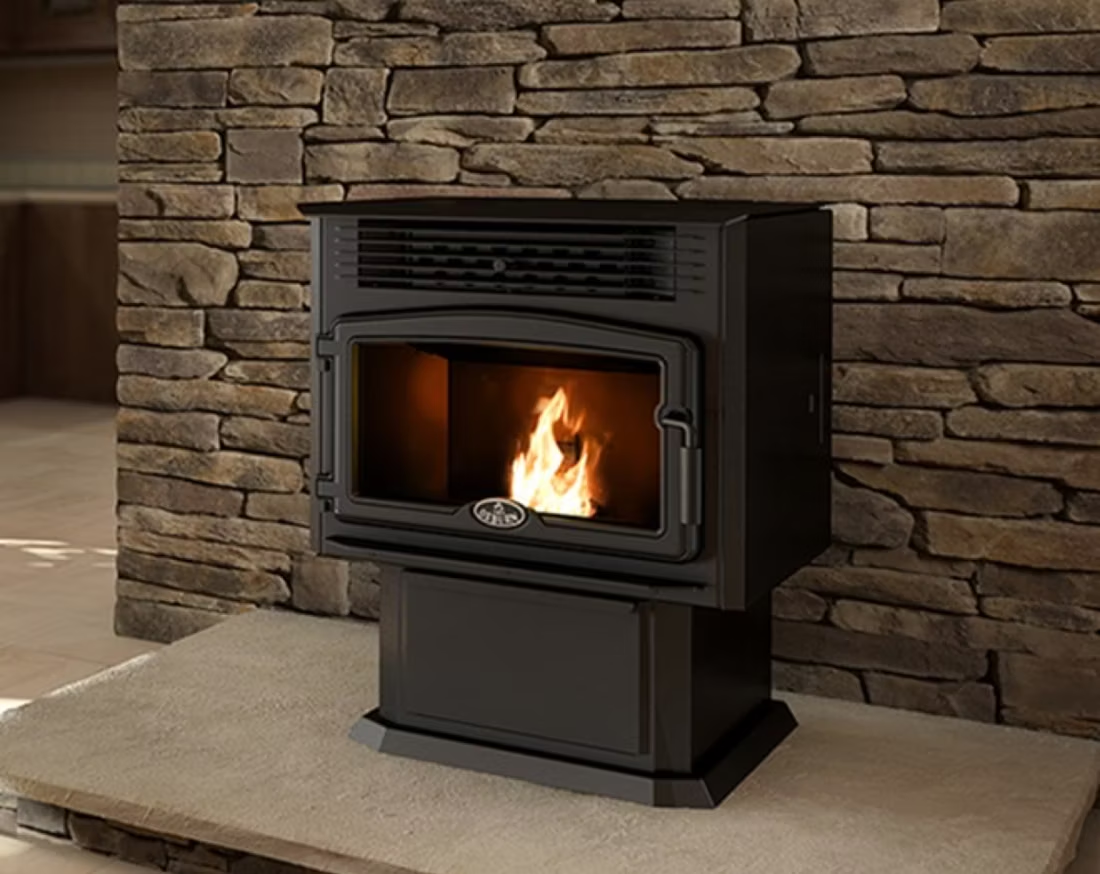
A pellet stove is a freestanding, hopper-fed unit that vents through a wall or existing chimney and can go almost anywhere with proper clearances. A pellet insert slides into an existing masonry fireplace opening, using a stainless liner run up the old chimney, and is a natural fit for the many older Vineyard homes with a working fireplace that's rarely used for its heat output. If your cottage has an existing hearth, an insert usually makes more sense than tearing into a wall for new venting.
Do I need a permit to install a pellet stove in Dukes County?
Yes—each of the island's six towns issues its own building permits, so whether you're in Edgartown, Oak Bluffs, Tisbury, West Tisbury, Chilmark, or Aquinnah, the permit goes through that town's building department rather than a single county office. Most established hearth dealers who work the island regularly know each town's process and will pull the permit as part of the installation. Since Dukes County has no air quality non-attainment designation, there's no burn-ban or curtailment concern layered on top the way there is in some Western states.
What's the best pellet stove for a Martha's Vineyard winter?
With average winter lows around 23°F and just under 5,819 heating degree days, most island homes don't need the largest hopper on the market—but hopper capacity still matters if you want a stove to run 24 to 48 hours unattended, which is useful for a caretaker-managed seasonal property. Look at mid-size units from established pellet stove manufacturers with a strong hopper-to-BTU ratio, and confirm the model is compatible with the bagged pellet brands actually available on-island, since New England Wood Pellet and Lignetics tend to be what local retailers stock or can order without a long freight wait.
How does pellet delivery and storage work on the island?
Bagged pellets come over on the same freight ferries as most other bulk goods, which means island retailers generally stock through the fall and encourage customers to buy early rather than wait for a January cold snap when boat schedules tighten and demand spikes. A ton of pellets (roughly fifty 40-lb bags) is a typical season's supply for steady use and needs a dry, mouse-proof storage spot—a garage or shed works, but bags stacked directly on a damp basement floor won't hold up through an island winter. Order in September or October if you can; it takes the ferry-schedule pressure off later.
How often does a pellet stove need to be serviced?
Plan on a full annual cleaning—hopper, auger, burn pot, exhaust motor, and venting—ideally in late summer before the burning season and before island service techs get booked solid for fall projects. Daily ash removal and a weekly deeper clean of the burn pot keep the stove running efficiently between full services. Given how few pellet-stove technicians are based directly on the Vineyard, booking your annual service well ahead of the first cold snap avoids waiting on a ferry-dependent tech during peak season.
Pellet stove vs. wood stove—which makes more sense on Martha's Vineyard?
Wood stoves can run on split oak, maple, birch, or ash sourced from island woodlots or brought over by ferry, and they keep working during a power outage—a real consideration given how often nor'easters knock out island power for days at a stretch. Pellet stoves need electricity to run the auger and blower, so without a generator or battery backup, they go dark exactly when you might need heat most. For year-round primary residences that experience outages, wood is the safer backup; for seasonal or caretaker-managed properties where automated, low-maintenance heat and clean burning matter more than storm resilience, pellet is usually the better fit. Some island homeowners keep both—a pellet stove for daily convenience, a wood stove or fireplace as the outage fallback.
Why is a fireplace insert so efficient?
An insert does two things: it seals the chimney completely, so you stop losing air you already paid to heat, and it radiates warmth into the room through the firebox and glass. Most add a heat-exchange fan that pulls cool room air underneath, wraps it around the hot firebox, and pushes it back out warm. Your home is more efficient before you've even lit the first fire.
How often does a pellet stove need cleaning?
A clean pellet stove is a happy pellet stove. Plan on cleaning the burn pot about once a week when you're burning regularly—ash and clinkers gum up the air holes just like a pellet barbecue. Most pellet stove problems trace back to skipped cleaning that nobody explained up front. Some designs make it easy with a trapdoor burn pot: pull a lever and the gunk drops into the ash pan.
Can a fireplace actually lower my heating bill?
Yes—by creating a comfort zone. A furnace heats every square foot of the house just to warm the one room you're in; a gas fireplace on low burns roughly a sixth of the gas a typical furnace does. Set the furnace around 55–60 degrees as a baseline, then heat the rooms your family actually uses. Families who heat this way commonly save $20–$60 a month.
How much should I budget for a fireplace?
For an average home—covering the fireplace, the vent pipe, and basic installation—a budget between $3,900 and $5,500 gives you a lot of options across wood, gas, and pellet. By the time you add finish work, gas line, and electrical, the average complete installation lands between $5,000 and $12,000 all-in. In a remodel or new build, a good rule is to put about 2.5% of the total project cost toward the fireplace.
Stove and Fireplace Dealers in Dukes County
Pellet Brands Stocked Around Dukes County
Manufacturers will point you to the nearest stocking dealer.
Find your pellet stove in Dukes County.
Tell us about your home on the Vineyard and we'll put together a free Project Guide & Parts List—the right pellet stove or insert, the vent kit you'll need, and a trusted local dealer who actually works the island.
Find Your Fireplace →