
Reliable heat for every town on the Cape.
Clean, low-maintenance heat for Barnstable County's maritime winters—from Hyannis to Provincetown, and every one of the Cape's fifteen towns in between. Find the right pellet stove or insert, and connect with a trusted local dealer.
Every Project Starts From One of These Five Situations
Low-maintenance warmth for a maritime climate.
Barnstable County is the Cape—sandy soil, scrub oak and pitch pine woodlands, and a peninsula climate that runs milder than inland Massachusetts thanks to the surrounding Atlantic. At Climate Zone 5A with roughly 5,518 heating degree days and winter lows averaging in the mid-20s, the Cape still needs a real heating season, just a gentler one than Worcester County or the Berkshires. The county's year-round population of just over 90,000 swells many times over in summer, and a huge share of Cape housing stock is second homes and seasonal rentals—a market where owners want dependable, low-fuss heat that doesn't require someone splitting and stacking wood between visits.
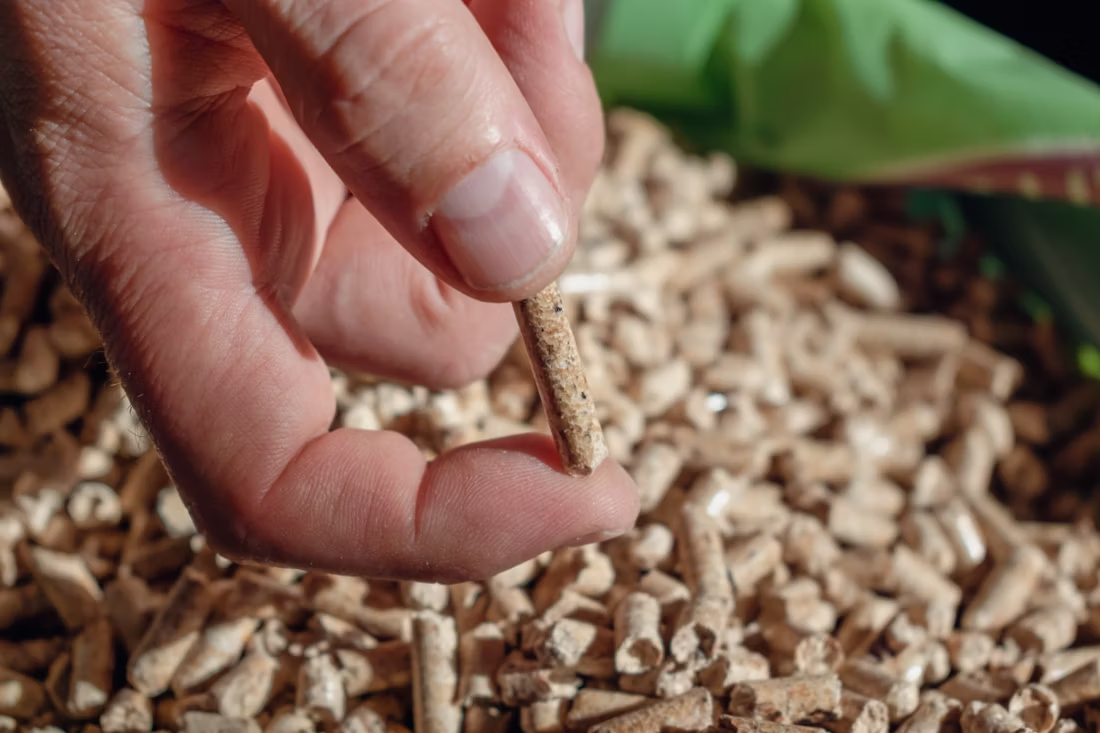
That's a big part of why pellet stoves have taken hold across the Cape. New England is pellet country—Lignetics, New England Wood Pellet, and Maine Woods Pellet Co. all mill hardwood pellets within a short drive or ferry ride of Barnstable County, made from the same oak, maple, birch, and ash that fill local woodlots. There are no air quality restrictions or wood-burning curtailment periods on the Cape today, which keeps the permitting side straightforward—though it's worth knowing that each of the county's fifteen towns, from Barnstable and Falmouth to Chatham and Truro, runs its own building department, so the exact permit process varies by town. A pellet stove or insert gives Cape homeowners a thermostatically controlled, hands-off heat source that fits both full-time living and the realities of a part-time vacation property.
Three steps. No salesperson until you're ready.
Tell us about your project
Your zip code, your situation, and the fuel you're leaning toward—or let the answers point you to one.
See what's actually available
The brands dealers within 100 miles genuinely carry—real options, never a catalog mirage.
Get your dealer & Project Guide
A trusted local dealer, plus the free Project Guide & Parts List that names every component of the job.
Frequently Asked Questions
How much does a pellet stove installation cost in Barnstable County?
A freestanding pellet stove installation on Cape Cod typically runs $3,000 to $6,500, depending on the model, whether venting runs through an exterior wall or an existing chimney chase, and any electrical work needed for the hopper and blower circuit. Converting an existing masonry fireplace to a pellet insert usually falls in a similar range, sometimes higher if a chimney liner is required. Older Cape homes and cottages—especially those with additions built over the decades—can add modest cost if wall framing or clearances need adjustment. Local dealers provide firm quotes after an in-home look at your chimney or wall configuration.
What size pellet stove do I need for my home?
Sizing depends on square footage, ceiling height, insulation, and whether the stove is your main heat or a supplemental source. Many Cape Cod homes are older capes and ranches with additions bolted on over the years, which means uneven insulation from room to room—a stove sized for the whole house on paper may still leave a converted sunporch or bonus room cold. As a starting point, smaller units (up to 1,000 sq ft) suit a single addition or open-concept living area, while mid-size units (1,000–2,000 sq ft) handle most year-round Cape homes. A local dealer can walk your specific floor plan and recommend a hopper size and BTU output that matches your layout rather than a generic square-footage chart.
Where can I find certified pellet stove installers near me?
Look for NFI (National Fireplace Institute) certified technicians, which indicates specific training on pellet appliance venting and electrical requirements—pellet stoves have wiring and combustion-air needs that differ from wood stoves. Trusted local dealers serving Barnstable County cover the Cape from the Sagamore Bridge out to Provincetown, and most will note a modest travel charge for installs on the Outer Cape given the distance from their shop. Because pellet stoves need both a proper vent run and a dedicated electrical circuit, this isn't a project for a general handyman—improper venting or an undersized circuit is the most common source of nuisance shutdowns and service calls.
What's the difference between a pellet stove and a pellet insert?
A pellet stove is a freestanding unit that sits on a hearth pad and vents through a wall or existing chimney chase—it can go almost anywhere with the right clearances, which makes it a good fit for additions and rooms without an existing fireplace common in Cape Cod's older housing stock. A pellet insert is built to slide into an existing masonry fireplace opening, turning a decorative or rarely-used wood fireplace into an efficient, thermostat-controlled heat source. For Cape homes with an existing brick fireplace that mostly sits unused outside of ambiance, an insert is usually the more cost-effective upgrade. For rooms with no chimney at all, a freestanding stove is the way to go.
Do I need a permit to install a pellet stove in Barnstable County?
Yes, and where you apply depends on which of the Cape's fifteen towns you're in—Barnstable County itself doesn't issue building permits; each town, from Falmouth and Mashpee to Orleans and Wellfleet, runs its own building department with its own inspection schedule. Most local pellet stove dealers handle the permit application and inspection scheduling as part of the installation, which is one of the real advantages of working with an established local retailer rather than ordering a unit online and hiring separate installers. There are no wood-burning curtailment periods on the Cape, so once installed, there's no seasonal restriction on when you can run the stove.
What's the best pellet stove for Barnstable County's climate?
Cape Cod's Zone 5A climate is milder than most of inland New England—winter lows average in the mid-20s rather than the single digits you'd see in Burlington, VT—so most homes do well with a mid-output pellet stove rated for 1,500 to 2,000 square feet rather than the largest units on the market. Look for units with a large hopper capacity (40+ lbs) if you want to go a full day or more between refills, and consider a model with a battery backup option given the Cape's exposure to nor'easters and coastal power outages. Brands carried by regional dealers vary, but ask specifically about hopper size, auger reliability, and whether the model has a documented track record in coastal, salt-air environments.
Will my pellet stove work during a power outage?
Not without a backup power source—this is worth understanding clearly before you buy. Pellet stoves rely on an electric auger to feed fuel and a blower to distribute heat, so they shut down when the power does. That matters on Cape Cod, where nor'easters and coastal storms regularly knock out Eversource service for hours or, in a bad storm, days. Homeowners who want pellet heat as backup or primary heat during outages typically pair the stove with a small battery backup unit or a portable generator sized to run the auger and blower—a detail worth discussing with your local dealer at the time of purchase, since not every model accepts an aftermarket backup easily.
Where can I buy pellets in Barnstable County?
Hardwood pellets from New England producers—Lignetics, New England Wood Pellet, and Maine Woods Pellet Co. among them—are widely stocked at hearth retailers and hardware stores across the Cape, typically running $250 to $350 per ton depending on brand and season. Buying early in the fall, before the first cold snap drives demand up, is the standard advice from local dealers. Because Cape Cod's air carries more salt and humidity than inland New England, pellets should be stored indoors or in a dry garage rather than in an uncovered shed—damp pellets swell, jam augers, and burn poorly.
Pellet stove vs. wood stove—which is right for my Cape home?
Wood stoves burn split cordwood, work without electricity—a real advantage during nor'easter power outages—and appeal to full-time Cape residents with the space to store and season wood cut from local oak, maple, birch, and ash. Pellet stoves are simpler to live with: load the hopper, set the thermostat, and let it run, with far less ash and no splitting or stacking. That convenience is exactly why pellet stoves are popular with part-time and seasonal Cape Cod homeowners who don't want to manage a woodpile between visits. The tradeoff is that pellet stoves need continuous power to run the auger and blower, so they're not a stand-alone option for storm-driven outages unless paired with battery backup. Many local dealers can walk through both options based on how you actually use your Cape property.
Why is my open fireplace making my house colder?
Open fireplaces suck—literally. As the fire burns, it consumes air your furnace already paid to heat and pulls it out through the chimney, so the house is actually colder after the fire goes out than before you lit it. An insert fixes this: it seals the chimney, puts fixed glass across the front, and turns that hole in your house into a real heat source.
How often does a pellet stove need cleaning?
A clean pellet stove is a happy pellet stove. Plan on cleaning the burn pot about once a week when you're burning regularly—ash and clinkers gum up the air holes just like a pellet barbecue. Most pellet stove problems trace back to skipped cleaning that nobody explained up front. Some designs make it easy with a trapdoor burn pot: pull a lever and the gunk drops into the ash pan.
Can I install a fireplace myself?
If you're putting a fire in your house on purpose, it's best to work with an expert. Unless you're genuinely experienced in framing, gas line, vent pipe, and the national code on clearances to combustibles, have a professional do it—and ideally the same company that sells you the fireplace, so warranty, service, and liability all live under one roof.
How much should I budget for a fireplace?
For an average home—covering the fireplace, the vent pipe, and basic installation—a budget between $3,900 and $5,500 gives you a lot of options across wood, gas, and pellet. By the time you add finish work, gas line, and electrical, the average complete installation lands between $5,000 and $12,000 all-in. In a remodel or new build, a good rule is to put about 2.5% of the total project cost toward the fireplace.
Stove and Fireplace Dealers in Barnstable County
Bow & Arrow Stove Company
Pellet Brands Stocked Around Barnstable County
Manufacturers will point you to the nearest stocking dealer.
Get matched with the right pellet stove for your Cape Cod home.
Tell us a bit about your home and we'll put together a free Project Guide & Parts List—the exact equipment, venting, and a trusted local Barnstable County dealer to install it.
Find Your Fireplace →