
Steady, Automated Heat for Attleboro's Long Heating Season.
Set the thermostat, fill the hopper, and let it run. Find the right pellet stove or insert for your Bristol County home, and get matched with a trusted local dealer.
Every Project Starts From One of These Five Situations
Automated heat built for a real New England winter.
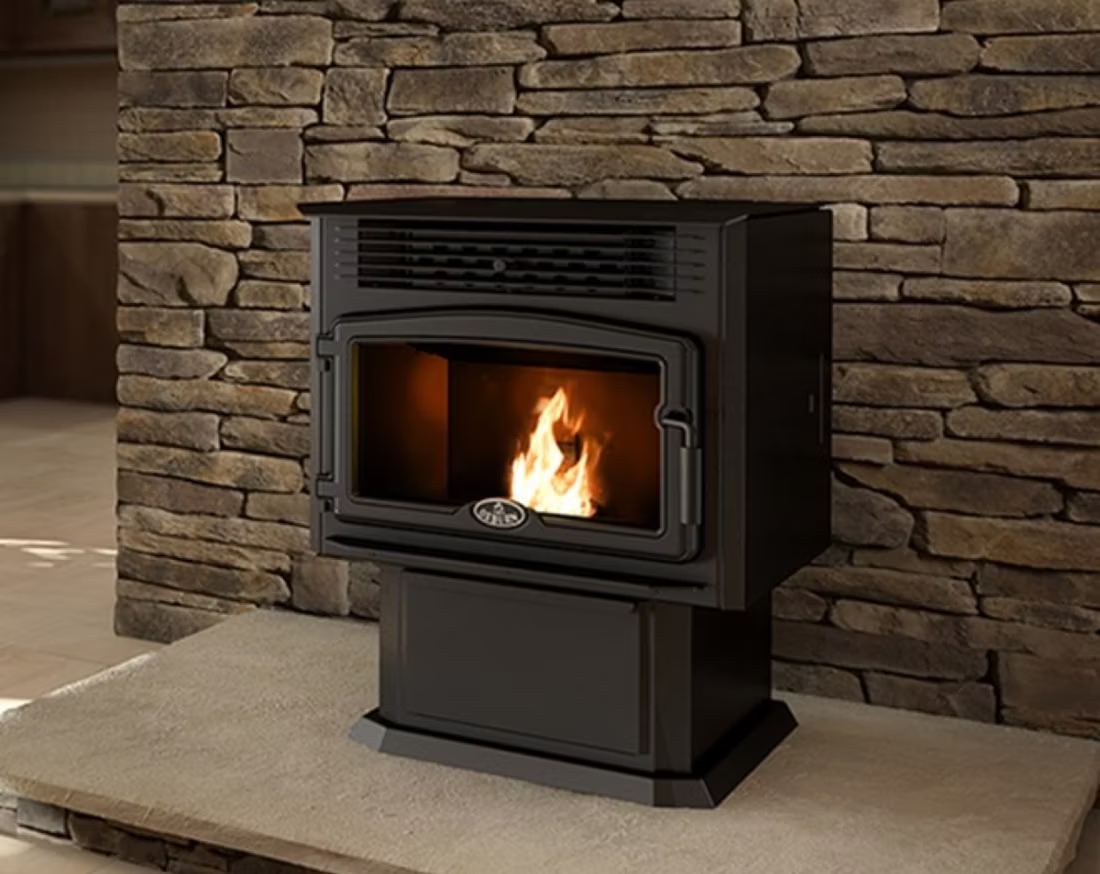
Attleboro sits near the Rhode Island line in Bristol County at about 148 feet of elevation, with an average winter low of 18 degrees and a winter heating load in the same range as Buffalo, NY. Pellet stoves have become a popular middle path for homeowners here: the radiant, fire-in-the-room feel of a wood stove, without the chainsaw, the split-and-stack routine, or the chimney sweep every fall.
Bagged pellets from regional producers like Lignetics, New England Wood Pellet, and Maine Woods Pellet Co. are readily available at hardware stores and farm supply outlets throughout the area, so fuel supply isn't a concern. One tradeoff worth understanding upfront: pellet stoves need electricity to run the auger and combustion blower. Most of Attleboro is served by Massachusetts Electric Co. (National Grid) at roughly 23 cents per kWh, while the North Attleborough section runs on the town's own municipal electric department at closer to 16 cents per kWh—either way, a pellet stove's actual electric draw is modest, but it's a real factor if you're weighing pellet against wood for storm-season backup heat.
Three steps. No salesperson until you're ready.
Tell us about your project
Your zip code, your situation, and the fuel you're leaning toward—or let the answers point you to one.
See what's actually available
The brands dealers within 100 miles genuinely carry—real options, never a catalog mirage.
Get your dealer & Project Guide
A trusted local dealer, plus the free Project Guide & Parts List that names every component of the job.
Frequently Asked Questions
How much does a pellet stove installation cost in Attleboro?
Most pellet stove installations in the Attleboro area run $3,500 to $6,500, depending on the unit and the venting path. Pellet stoves vent through a small-diameter pipe through an exterior wall rather than requiring a full masonry chimney, which keeps installs on the lower end compared to wood stoves. A pellet insert going into an existing fireplace opening typically costs more than a freestanding stove because of liner work and hearth clearance requirements. Your local dealer will confirm exact pricing after seeing the room and the wall or chimney you're venting through.
Where can I buy pellets in the Attleboro area, and what do they cost?
Bagged pellets from New England Wood Pellet (made in New Hampshire), Maine Woods Pellet Co., and Lignetics are widely stocked at hardware stores, Agway locations, and farm supply retailers throughout Bristol County and southeastern Massachusetts. Expect to pay roughly $280 to $380 per ton depending on the brand and whether you buy a pallet (typically 50 forty-pound bags) in bulk before the season or by the bag as needed. Buying a full pallet in late summer, before winter demand pushes prices up, is the most common way local owners save money.
Will my pellet stove still work during a power outage?
Not on its own—the auger that feeds pellets and the blower that pushes heat into the room both run on household electricity, so a standard pellet stove shuts down when the power goes out. This matters in Attleboro, where nor'easters and ice storms can knock out power for a day or more. Some owners pair their stove with a small battery backup unit or a portable generator sized for the stove's low wattage draw (most units use well under 500 watts). If uninterrupted heat during outages is a priority for you, ask your local dealer about battery-backup compatible models, or consider a wood stove instead, which needs no electricity at all.
What's the difference between a pellet stove and a wood stove?
A wood stove burns split cordwood—locally that typically means oak, maple, birch, or ash—and requires manual loading, a full chimney system, and periodic sweeping. A pellet stove burns compressed hardwood pellets fed automatically from a hopper, runs on a thermostat, and vents through a smaller wall pipe instead of a masonry chimney. Pellet stoves produce far less ash and don't require splitting or stacking wood, but they do need electricity and a steady supply of bagged pellets. For Attleboro homeowners who want convenience and consistent heat output without wood handling, pellet is usually the easier day-to-day choice; wood remains the better option for off-grid reliability.
Do I need a permit to install a pellet stove in Attleboro?
Yes—a new pellet stove installation requires a building permit and typically a mechanical permit through the Attleboro Building Department, since the unit involves wall penetration for venting and connection to a listed hearth appliance. Most established local hearth dealers include permitting and inspection scheduling as part of the installation price, so you generally don't need to file anything yourself. Unlike wood stoves, there's no cutting permit or forest land consideration involved since pellets are a manufactured, bagged fuel.
What size pellet stove do I need for my home?
Sizing depends on square footage, ceiling height, and how open your floor plan is. As a general guide for Attleboro's climate: smaller units (rated up to around 1,200 sq ft) suit a single large room or an addition, mid-size units (1,200–2,000 sq ft) cover most main living areas in the area's typical colonial and cape-style homes, and larger units can handle an open-concept main floor as a primary heat source. Given the area's winter heating load in the same range as Buffalo, NY, undersizing is the more common mistake—a local dealer can size your space accurately during an in-home visit.
How much maintenance does a pellet stove need?
Pellet stoves need more routine attention than gas but far less than wood. Plan on emptying the ash pan every few days during regular use, cleaning the burn pot weekly to keep it from clogging with clinkers, and wiping the glass as needed. Most manufacturers recommend a full deep-clean of the hopper, auger, and venting once a season, plus an annual professional inspection of the blower and exhaust components. Owners who run their stove as a primary heat source through a full Attleboro winter should plan on the more frequent end of that maintenance schedule.
How much electricity does a pellet stove use, and what will it cost to run?
A typical pellet stove draws somewhere between 100 and 400 watts during normal operation for the auger and combustion blower, with a brief higher draw during startup. Running one roughly 100 kWh over a month of steady winter use costs about $23 at Massachusetts Electric Co.'s (National Grid) residential rate of 23.07 cents per kWh, or closer to $16 a month if you're served by the Town of North Attleborough's municipal electric department at 15.91 cents per kWh. Either way, the electric cost is modest compared to the fuel savings pellet heat typically delivers against oil or electric resistance heat.
Pellet stove vs. gas fireplace—which makes more sense for my home?
Gas fireplaces offer instant on-off convenience and, with the right ignition system, can run without a hopper of fuel to manage. Pellet stoves burn a renewable, often locally sourced fuel, generally cost less to operate per BTU than propane (Attleboro is only partially served by natural gas, so many homes here run on propane), and give more of a real-fire look and radiant feel than most gas units. If you want the lowest-maintenance option and already have natural gas at the house, gas is hard to beat. If you like the idea of a visible flame, want to trim heating costs compared to propane, and don't mind a few minutes of upkeep a week, a pellet stove is usually the better fit. A local dealer can walk you through both side by side.
What's the difference between an insert and a zero-clearance fireplace?
An insert is a fireplace that slides into a pre-existing wood-burning fireplace—if you don't have one, there's nothing to insert it into. A zero-clearance fireplace is built into a framed wall, which makes it the answer for remodels and new construction. Simple test: existing masonry fireplace means insert; blank or framed wall means zero-clearance.
Why is a fireplace insert so efficient?
An insert does two things: it seals the chimney completely, so you stop losing air you already paid to heat, and it radiates warmth into the room through the firebox and glass. Most add a heat-exchange fan that pulls cool room air underneath, wraps it around the hot firebox, and pushes it back out warm. Your home is more efficient before you've even lit the first fire.
Does a fireplace add value to my home?
On average, a fireplace adds back to the home about the same amount you spent installing it. Add the monthly savings from heating the rooms you actually use instead of the whole house—often hundreds of dollars a year—and the value case is strong before you even count what a fire does for how your family uses the room.
What is an in-home preview and do I need one?
It's a visit where a hearth professional measures your space, confirms the model you picked actually works in your home, and walks the specs—framing, gas line, venting, finish work—before anything is ordered. Some details you just can't know until you see the house. Never make a down payment without one; it's the single most-skipped step that burns buyers.
Nearby Dealers
Hearth shops serving Attleboro and the surrounding area. Every listing shows whether it is a WhyFire partner, a dealer we have verified as authorized for the brands we recommend, or a local business carrying hearth products. No manufacturer pays for placement. How we verify dealers →
Atlas Insulation Co.
Hearthside Fireplace & Patio
Norwood Fireplace
Frederickson Farm
Backyard Living
Woodstove & Fireplaces Unlimited
South Shore Fireplace Inc
Eurosweep
Euroline Tile
Mr. Chimney Woodstoves & Fireplaces
Acushnet Alternative Heating
Mr. Chimney's Stove Shoppe
Pellet Brands Stocked Around Attleboro
Manufacturers will point you to the nearest stocking dealer.
Find your pellet stove in Attleboro.
Tell us about your home and heating goals, and we'll match you with a trusted local Attleboro-area dealer and send over a free Project Guide & Parts List—the exact stove, venting, and hearth components recommended for your space.
Find Your Fireplace →