
Pellet Heat in Suitland: What Actually Fits Here.
Suitland's mild winters and strong gas and electric infrastructure mean pellet stoves are a niche choice here, not the default. If one still fits your home, we'll connect you with a dealer who carries them.
Every Project Starts From One of These Five Situations
Pellet stoves aren't the norm here—and that's about climate, not preference.
Suitland sits in climate zone 4A just outside Washington, D.C., at about 288 feet of elevation, with an average winter low of 28°F and a winter heating season that's relatively short and mild. That's a fraction of what a pellet-heavy market like Duluth, MN or Burlington, VT sees, and it shows in how Prince George's County homes are actually built and heated: gas furnaces, heat pumps, and Pepco-served electric systems handle the vast majority of the load. Pellet stoves, which earn their keep in colder climates by running unattended for days on cheap, dense fuel, don't have the same economic case in a market where the heating season is shorter and gas service is widely available.
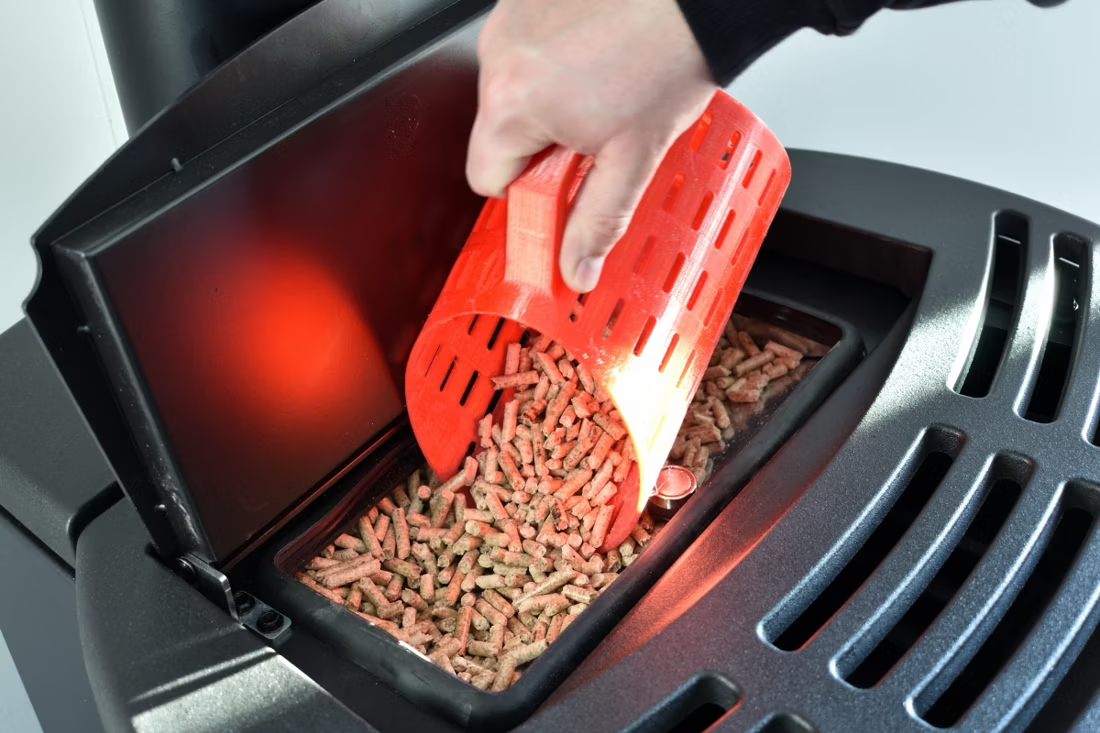
That said, a small number of Suitland homeowners still install a pellet stove or insert—often for supplemental zone heat in a converted basement or addition, for the lower particulate output compared to an open wood fire, or simply because they like the look and the set-it-and-forget-it hopper feed. Regional pellet brands like Energex, Hamer Pellet Fuel, and Greene Team Pellet Fuel are produced within trucking distance of the D.C. metro and sold through farm and home stores in the area, so fuel supply isn't the obstacle—it's finding a dealer nearby who installs and services pellet appliances regularly, since it's a smaller slice of business in this market than gas or electric. That's exactly the kind of local matching Find My Fireplace was built for.
Three steps. No salesperson until you're ready.
Tell us about your project
Your zip code, your situation, and the fuel you're leaning toward—or let the answers point you to one.
See what's actually available
The brands dealers within 100 miles genuinely carry—real options, never a catalog mirage.
Get your dealer & Project Guide
A trusted local dealer, plus the free Project Guide & Parts List that names every component of the job.
Frequently Asked Questions
Are pellet stoves actually common in Suitland, MD?
Not really, and it's worth saying plainly: pellet fuel relevance for Suitland is rated not-applicable in our local data, meaning it's a niche fit rather than a mainstream heating choice. With average winter lows around 28°F and a winter heating season that's relatively short and mild, most Prince George's County homes rely on gas furnaces or Pepco-served heat pumps as primary heat, with central HVAC doing the bulk of the work. A pellet stove can still work well as supplemental heat in a specific room or as a backup, but you're unlikely to find the density of pellet dealers and installers here that you'd see in a colder market like Duluth, MN or Burlington, VT where pellet heat is a primary fuel source for many homes.
How much does a pellet stove installation cost in Suitland?
Nationally, a typical freestanding pellet stove installation runs $3,000 to $6,000 depending on the unit, whether venting needs to be run through an exterior wall, and any hearth pad or clearance work required. Pellet inserts into an existing masonry fireplace tend to land in a similar range once the liner and venting are factored in. Because pellet-specific installers are less common in the Suitland and greater Prince George's County market than gas or electric installers, it's worth getting quotes from a dealer who installs pellet appliances regularly rather than a general contractor—venting and hopper placement details matter for long-term reliability.
Do I need a permit to install a pellet stove in Prince George's County?
Yes. New solid-fuel appliance installations, including pellet stoves and inserts, typically require a permit through the Prince George's County Department of Permitting, Inspections and Enforcement (DPIE), covering the mechanical installation and any venting penetration through an exterior wall or roof. A licensed installer will usually pull this permit as part of the job. Given how few pellet installs happen in this specific market compared to gas fireplace conversions, it's worth confirming with your installer upfront that they're familiar with the county's inspection process for solid-fuel appliances specifically.
What pellet fuel brands are available near Suitland?
Energex, Hamer Pellet Fuel, and Greene Team Pellet Fuel are the regional brands most likely to show up at farm supply and home improvement retailers serving the D.C. metro, since all three are produced within a reasonable trucking radius of the Mid-Atlantic. Availability tends to concentrate in fall and winter, so buying a season's supply early—a ton or more if you have dry, covered storage—avoids scrambling during a cold snap. Fuel supply isn't the constraint in Suitland; finding an installer who works on pellet appliances regularly is the bigger factor.
Will a pellet stove work during a power outage?
Not without a backup power source. Pellet stoves rely on an electric auger to feed fuel and a blower to distribute heat and exhaust combustion air, so a standard unit shuts down the moment Pepco power drops. Some homeowners pair a pellet stove with a small battery backup or generator specifically for this reason, but if outage-proof heat is the priority, a gas fireplace with a millivolt or IPI ignition and battery backup, or a properly vented wood-burning unit, is a more dependable choice for a Suitland home.
Pellet vs. gas—which makes more sense for a Suitland home?
Given that gas fuel relevance in Suitland is rated standard and natural gas service is well established throughout the D.C. suburbs, a gas fireplace or insert is usually the simpler, more supportable choice here—more installers, more service technicians, and instant on-off convenience without fuel storage. Pellet makes more sense if you specifically want a solid-fuel appliance for the visual of a real flame and the independence of stored fuel, without the chimney maintenance and permit season logistics that come with cordwood. Both are reasonable choices; the right one depends on whether you value gas's convenience or pellet's self-contained fuel model.
Pellet vs. electric—which costs less to run in Suitland?
At Pepco's residential rate of roughly $0.1874 per kWh, a plug-in electric fireplace or heater is cheap to install but relatively expensive to run as a primary heat source, since electric resistance heat isn't efficient at scale. A pellet stove typically costs less per BTU to operate once you're burning a ton or more of fuel per season, since bagged pellets from brands like Energex or Hamer run in the low hundreds of dollars per ton. If you're heating a single room occasionally, electric wins on simplicity and low upfront cost. If you're heating a space consistently through the winter, pellet fuel usually wins on operating cost.
What size pellet stove do I need for a Suitland home?
Because Suitland's relatively short, mild winter heating season puts it well below the load of a serious cold-climate market, most homes here only need a pellet stove for supplemental or zone heat rather than whole-house duty—a small to mid-size unit (rated for 1,000 to 1,800 square feet) is usually enough for a basement, converted garage, or single large living area. Oversizing a pellet stove in a mild climate like this one just means it cycles on low output most of the winter, which is harder on the auger and igniter over time. A local dealer can size the unit to your actual room and insulation rather than your whole home's square footage.
Where can I find a pellet stove dealer near Suitland?
This is the real challenge in the Suitland market—pellet-specific dealers are thinner on the ground here than gas or electric fireplace retailers, since demand is lower given the climate. Rather than guessing which hearth shop in the D.C. metro actually stocks and services pellet appliances well, tell us about your project and we'll match you with a trusted local dealer who installs pellet stoves regularly, even if that means looking slightly beyond Suitland's immediate zip codes to find the right fit.
What's the difference between an insert and a zero-clearance fireplace?
An insert is a fireplace that slides into a pre-existing wood-burning fireplace—if you don't have one, there's nothing to insert it into. A zero-clearance fireplace is built into a framed wall, which makes it the answer for remodels and new construction. Simple test: existing masonry fireplace means insert; blank or framed wall means zero-clearance.
Why is a fireplace insert so efficient?
An insert does two things: it seals the chimney completely, so you stop losing air you already paid to heat, and it radiates warmth into the room through the firebox and glass. Most add a heat-exchange fan that pulls cool room air underneath, wraps it around the hot firebox, and pushes it back out warm. Your home is more efficient before you've even lit the first fire.
How much should I budget for a fireplace?
For an average home—covering the fireplace, the vent pipe, and basic installation—a budget between $3,900 and $5,500 gives you a lot of options across wood, gas, and pellet. By the time you add finish work, gas line, and electrical, the average complete installation lands between $5,000 and $12,000 all-in. In a remodel or new build, a good rule is to put about 2.5% of the total project cost toward the fireplace.
Does a fireplace add value to my home?
On average, a fireplace adds back to the home about the same amount you spent installing it. Add the monthly savings from heating the rooms you actually use instead of the whole house—often hundreds of dollars a year—and the value case is strong before you even count what a fire does for how your family uses the room.
Nearby Dealers
Hearth shops serving Suitland and the surrounding area.
Pellet Brands Stocked Around Suitland
Manufacturers will point you to the nearest stocking dealer.
See if a pellet stove makes sense for your Suitland home.
Tell us about your space and we'll put together a free Project Guide & Parts List—the right pellet appliance and vent kit if it's a good fit, an honest steer toward gas or electric if it's not, and a match with a trusted local dealer either way.
Find Your Fireplace →