
Keep Your Family Warm and Safe—No Matter What
Between BGE gas and electric service reaching nearly every subdivision, wood isn't the default heat source here. But for backup power outages and Severn River lot owners with real tree cover, it still has a place.
Every Project Starts From One of These Five Situations
A hardwood region where wood heat stays in the background.
Severn sits in the flatter, milder half of Anne Arundel County, at 175 feet elevation with winter lows averaging around 25°F and a moderate winter heating load for the year—closer to a Zone 4A climate than the brutal cold of places like Bismarck, ND or Duluth, MN. Baltimore Gas & Electric provides both natural gas and electric service across most of the community's subdivisions near BWI, Fort Meade, and the Route 32/175 corridor, so central gas and heat-pump systems handle the overwhelming majority of Severn homes.
Wood stoves and fireplaces are genuinely uncommon here—Severn's newer subdivisions, many governed by HOA covenants, weren't built around wood heat, and there's no air quality non-attainment issue pushing homeowners toward cleaner-burning appliances the way there is in some Western cities. That said, a modest number of homeowners on larger wooded lots near the Severn River, the Patuxent, or older unincorporated parcels install a wood stove or insert anyway—usually as backup heat for BGE outages after an ice storm or nor'easter, or for the ambiance of a real fire. Local hardwoods like oak, hickory, and maple are widely available from Maryland firewood suppliers, so fuel isn't the limiting factor—interest is.
Three steps. No salesperson until you're ready.
Tell us about your project
Your zip code, your situation, and the fuel you're leaning toward—or let the answers point you to one.
See what's actually available
The brands dealers within 100 miles genuinely carry—real options, never a catalog mirage.
Get your dealer & Project Guide
A trusted local dealer, plus the free Project Guide & Parts List that names every component of the job.
Frequently Asked Questions
Is wood heat common in Severn, MD?
No—it's the exception. Most Severn homes run on natural gas or electric heat pumps through Baltimore Gas & Electric, and many newer subdivisions have HOA rules that make exterior chimney additions a bigger project than in a rural county. Wood stoves and fireplace inserts do show up on some larger, older, or more wooded lots—particularly near the Severn River and Patuxent side of the county—but you should think of wood as a deliberate secondary or backup heat choice here, not the default like it is farther west in Appalachian Maryland.
What does a wood stove installation cost in Severn?
We don't have Severn-specific pricing on file, but a freestanding wood stove installation in the Mid-Atlantic—stove, hearth pad, and Class A chimney venting through a roof or wall—typically lands somewhere between $4,000 and $9,000, with the top of that range covering homes that need new chimney construction rather than an existing masonry flue. Because so few Severn homes already have a wood-rated chimney in place, expect your quote to lean toward the higher end unless you're converting an existing fireplace. A local dealer matched through Find My Fireplace will size the job and give you an exact number as part of your free Project Guide & Parts List.
Do I need a permit to install a wood stove in Severn?
Yes. Severn falls under unincorporated Anne Arundel County, so new wood-burning appliance installations go through the Anne Arundel County Department of Inspections and Permits, which requires the stove to meet current EPA emissions standards and the installation to meet clearance and venting code. If your home is in an HOA-governed community, check your covenants too—some Severn subdivisions restrict exterior chimney additions or require architectural approval before a permit application even goes in. A dealer who's installed in the area before will usually know which HOAs are strict.
What firewood is available near Severn?
Severn doesn't have national forest or public cutting land nearby the way more rural parts of Maryland do, so most homeowners buy seasoned firewood by the cord from local Anne Arundel and Baltimore-area suppliers rather than cutting their own. Oak, hickory, and maple are the dominant species sold regionally—all dense hardwoods that burn hot and long, which matters if you're running a stove for backup heat rather than daily ambiance. Buy wood that's been split and seasoned at least six months; green firewood is a common cause of poor draft and creosote buildup in stoves that only see occasional use.
Wood stove or wood insert—which makes sense for a Severn home?
If your home already has a masonry fireplace—more common in Severn's older, pre-2000 construction—an insert is usually the better call. It uses the chimney you already have, closes up the heat loss of an open hearth, and gets you real supplemental heat instead of just a decorative fire. If you don't have an existing fireplace, a freestanding stove requires new Class A chimney construction, which is a bigger project but works in homes of any age, including the ranch and colonial-style houses common throughout Severn's newer developments.
Are there air quality restrictions on wood burning in Severn?
No—Anne Arundel County isn't a designated non-attainment area, and Severn doesn't deal with the winter inversion or wildfire smoke issues that trigger burn bans in parts of the West. That means no seasonal curtailment periods to plan around. The main practical consideration is neighborly: Severn's lot sizes in denser subdivisions are smaller than in rural Maryland, so smoke drift toward a neighbor's yard is worth thinking about when you're siting a chimney, even without a regulatory requirement forcing the issue.
How often should a wood stove or chimney be inspected in Severn?
Even a stove used mainly for backup heat should get an annual inspection, ideally in late summer before the first cold front and before hurricane-season-turned-nor'easter outages start. Given how lightly most Severn units get used compared to a primary-heat home in a colder state, creosote buildup is less of a concern, but animal nesting in an unused flue and general seal integrity are common issues local sweeps find on once-a-year units. Plan on a Level 1 inspection and sweep annually if the stove sees any regular use.
Will my HOA let me install a wood stove or fireplace in Severn?
It depends entirely on the community. Several of Severn's planned subdivisions have architectural review boards that weigh in on anything visible from the street, including a new chimney chase or flue pipe. Older neighborhoods and larger unincorporated parcels tend to have far fewer restrictions. Before you get attached to a specific stove or insert, check your HOA's architectural guidelines or call your community association—a local hearth dealer who's worked in your neighborhood before can often tell you what's actually been approved nearby.
Wood vs. gas or electric heat—does wood make sense in Severn?
For most Severn homes, no—Baltimore Gas & Electric's widespread gas and electric infrastructure (residential electric runs about 16.1 cents per kWh) makes central heat the simpler, code-easier choice, and it's what most of the housing stock was built around. Wood makes sense in a narrower set of cases: homes on larger wooded lots where a fireplace is already part of the house, families who want a heat source that works when BGE power goes out after a storm, or anyone drawn to the ambiance of a real fire. If either of those describes you, a wood stove or insert is a legitimate, if less common, choice here—just go in knowing you're the exception, not following the neighborhood norm.
Why is a fireplace insert so efficient?
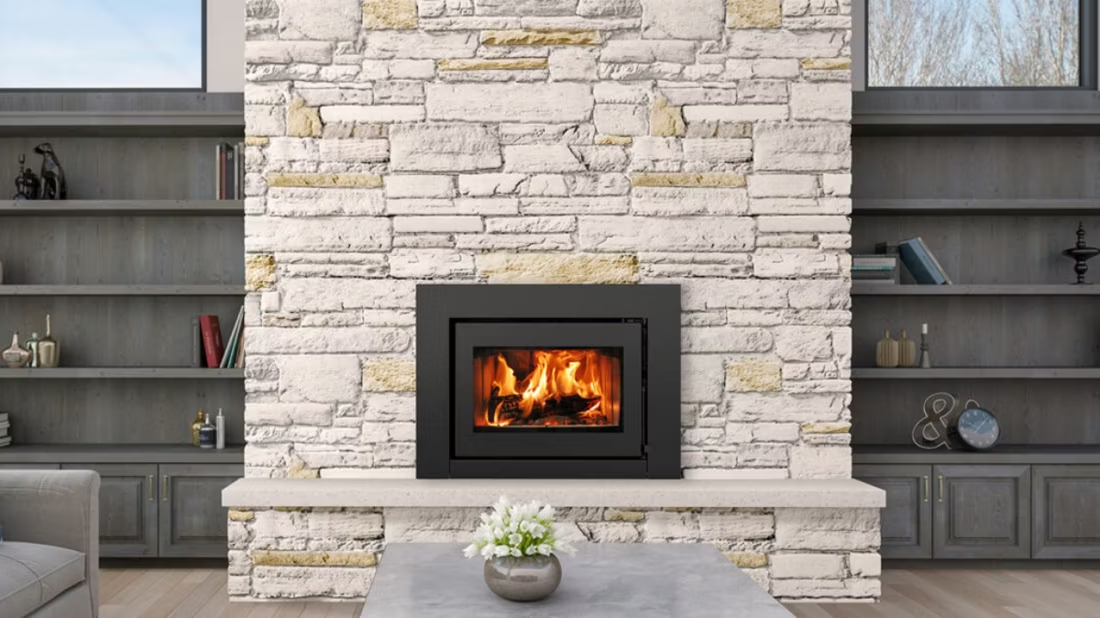
An insert does two things: it seals the chimney completely, so you stop losing air you already paid to heat, and it radiates warmth into the room through the firebox and glass. Most add a heat-exchange fan that pulls cool room air underneath, wraps it around the hot firebox, and pushes it back out warm. Your home is more efficient before you've even lit the first fire.
Why won't my new wood stove get going like my old one?
New wood stoves are 70%+ efficient, so far less heat goes up the flue—which also means less draft to get a fire established. The rule: build a genuinely hot fire for about 45 minutes before you choke it down. Skip that and you get smoke in the room, creosote in the chimney, and a fire that never takes off. Most performance complaints trace straight back to this.
How much should I budget for a fireplace?
For an average home—covering the fireplace, the vent pipe, and basic installation—a budget between $3,900 and $5,500 gives you a lot of options across wood, gas, and pellet. By the time you add finish work, gas line, and electrical, the average complete installation lands between $5,000 and $12,000 all-in. In a remodel or new build, a good rule is to put about 2.5% of the total project cost toward the fireplace.
Does a fireplace add value to my home?
On average, a fireplace adds back to the home about the same amount you spent installing it. Add the monthly savings from heating the rooms you actually use instead of the whole house—often hundreds of dollars a year—and the value case is strong before you even count what a fire does for how your family uses the room.
Nearby Dealers
Hearth shops serving Severn and the surrounding area. Every listing shows whether it is a WhyFire partner, a dealer we have verified as authorized for the brands we recommend, or a local business carrying hearth products. No manufacturer pays for placement. How we verify dealers →
Complete Chimneys Fireplaces & Grills
Costello's Hearth & Spa - Glen Burnie
Fireside Hearth & Home - Elkridge
Affordable Outdoor Kitchens
Trinity Chimney Service
The Torch Guys
Costello's Hearth & Spa - Pasadena
Masters Pellet Stoves
Westlake Ace Hardware
Belair Engineering & Service Co, Inc
Capitol Chimney Service
Costello's Hearth & Spa - Edgewater
Chimney.com
Ace Of Diamonds Chimney
Hunters Home Center
Watson's Fireplace & Patio
Fireplaces And Stoves Md
Chelsea's Chimney
Cyprus Air
Costello's Hearth & Spa - Rockville
The Fireplace Shop
Find your wood stove or insert in Severn.
Tell us about your home and how you'd use it—backup heat, ambiance, or both—and we'll match you with a trusted local dealer and send a free Project Guide & Parts List built around your Severn address.
Find Your Fireplace →