
Warm Up Without the Woodpile.
Instant, even heat for Pikesville's brick colonials and split-levels—find the right direct-vent fireplace or insert and get matched with a trusted local dealer.
Every Project Starts From One of These Five Situations
Reliable warmth, minus the daily upkeep of wood.
Pikesville sits in Baltimore County's Piedmont corridor at just 523 feet of elevation, in climate zone 4A. Winters here average a low of 27°F with a moderate winter heating season—a real Mid-Atlantic winter, but nowhere near the sustained sub-zero stretches of a place like Burlington, Vermont. That milder profile is exactly why gas has become the default choice for most Pikesville homeowners upgrading their hearth: you get dependable, thermostat-controlled heat without needing a cold-climate wood-burning setup built to survive weeks of single-digit nights.
Wood stoves and pellet stoves are genuinely uncommon here—Pikesville is a dense, established suburb of brick colonials, Tudors, and split-levels on modest lots, and Baltimore County doesn't face the wildfire-smoke or winter-inversion air quality problems that push some Western towns toward wood heat. Baltimore Gas & Electric (BGE) already serves most Pikesville neighborhoods, from Sudbrook Park to the newer construction around Quarry Lake, so a home already piped for a gas furnace or water heater is usually a straightforward add for a gas fireplace or insert. Permits run through the Baltimore County Department of Permits, Approvals and Inspections, and any gas line work requires a licensed gas-fitter—details your installer typically handles for you.
Three steps. No salesperson until you're ready.
Tell us about your project
Your zip code, your situation, and the fuel you're leaning toward—or let the answers point you to one.
See what's actually available
The brands dealers within 100 miles genuinely carry—real options, never a catalog mirage.
Get your dealer & Project Guide
A trusted local dealer, plus the free Project Guide & Parts List that names every component of the job.
Frequently Asked Questions
How much does a gas fireplace installation cost in Pikesville?
Most Pikesville gas fireplace projects fall between $4,000 and $10,000, with the spread driven by unit type and how much gas line or venting work is involved. A direct-vent insert dropped into an existing masonry fireplace with a gas line already nearby sits toward the lower end. A new built-in gas fireplace as part of a remodel—new framing, direct-vent piping through an exterior wall, and a fresh gas line run from the meter—lands in the middle to upper range. Homes without an existing natural gas service line, more common toward the edges of Baltimore County, may need a propane tank installed, which adds to the total. A local dealer will give you a firm number after seeing your home.
Can I convert my existing wood-burning fireplace to gas?
Yes, and in a suburb like Pikesville—full of older colonials and Tudors in neighborhoods like Sudbrook Park with original masonry fireplaces that rarely get used—this is one of the most common upgrades local hearth dealers handle. A gas insert slides into the existing firebox and vents through a stainless liner run up your current chimney, so the exterior of your home doesn't change. Because most of these homes already have gas service for the furnace or water heater, the gas line extension to the fireplace is usually simple work for a licensed gas-fitter, keeping the project toward the lower end of the typical cost range.
Do I need natural gas service, or can I run my fireplace on propane?
BGE (Baltimore Gas & Electric) provides natural gas throughout most of Pikesville, including the 21208 and 21209 zip codes, so if your home already has a gas furnace, range, or water heater, adding a fireplace is a matter of tapping that existing line. Homes in the more rural pockets toward the Baltimore County line that lack a gas main nearby typically run on propane instead, delivered and stored in a tank on the property. Nearly every gas fireplace and insert on the market can be configured for either fuel—your installer sets the correct orifice and regulator for whichever you have.
Will a gas fireplace still work if the power goes out?
Most modern gas fireplaces will, which matters in Pikesville when a Nor'easter or summer storm knocks out BGE service. Units with intermittent pilot ignition (IPI) run on a small battery backup that kicks in automatically, so the fireplace lights and operates normally even with no grid power. Valor fireplaces take a different approach: the pilot's thermocouple generates its own electricity, so there's no battery to remember to replace at all. Either way, ask your local dealer about the ignition system before you buy if backup heat during outages is a priority.
What's the difference between a gas fireplace, insert, and stove?
A gas fireplace is a fully built-in unit framed into a wall—the right call for new construction or a remodel without an existing chimney. A gas insert is sized to slide into an existing masonry firebox, which is the common route for Pikesville's older homes with an original brick fireplace that's currently just decorative. A gas stove is freestanding, sitting out on the floor on its own hearth pad, and works well in a room with no fireplace at all—a finished basement or sunroom, for instance. For most Pikesville homeowners with an existing fireplace, an insert delivers the biggest jump in heat output for the investment.
Do I need a permit to install a gas fireplace in Pikesville?
Yes. Baltimore County requires both a building permit and a gas permit for new gas fireplace or insert installations, issued through the Baltimore County Department of Permits, Approvals and Inspections. The gas line connection itself has to be done by a licensed gas-fitter. Reputable hearth dealers in the area pull these permits and schedule the inspections as part of the installation, so you're not left coordinating separate contractors.
Should I get a vented or vent-free gas fireplace?
Vented (direct-vent) units draw combustion air from outside and exhaust combustion gases back outside through a sealed pipe—they're the standard recommendation and what most Pikesville installers default to. Vent-free gas fireplaces burn without any outside venting at all, releasing some moisture and combustion byproducts into the room; Maryland permits them, but only within strict room-size and ventilation limits, and they're generally better suited to occasional supplemental use than as a primary heat source. For a Pikesville living room or family room used daily through the winter, a direct-vent unit is almost always the better long-term fit.
How often does a gas fireplace need to be serviced?
Plan on an annual inspection, ideally before the fall heating season starts. A technician checks the burner, pilot assembly, gas connections, and venting, and cleans the glass and interior—usually a $150 to $250 visit. It's a lighter lift than sweeping a wood chimney, but skipping it is how pilot and ignition problems go undiagnosed until the coldest night of the year. Several hearth retailers and BGE-affiliated service technicians in the Baltimore area offer this as a standing annual appointment.
Gas vs. electric fireplace—which makes more sense for my Pikesville home?
Gas delivers real, radiant heat—enough to genuinely warm a room, plus the look and sound of an actual flame—and it keeps working during a power outage if it's equipped with battery backup or a self-powering pilot like Valor's. Electric fireplaces plug into a standard outlet, cost far less to install (often under $1,000 versus several thousand for gas), and can go almost anywhere in the house, but they produce comfort heat only, not whole-room heating, and do nothing when BGE service is interrupted. Wood-burning options are genuinely rare in Pikesville's tighter suburban lots and are rarely worth pursuing given how well-served the area is by natural gas. For most Pikesville homeowners, gas wins for a primary living space; electric fits well as an easy add in a bedroom, basement, or home office.
What's the difference between an insert and a zero-clearance fireplace?
An insert is a fireplace that slides into a pre-existing wood-burning fireplace—if you don't have one, there's nothing to insert it into. A zero-clearance fireplace is built into a framed wall, which makes it the answer for remodels and new construction. Simple test: existing masonry fireplace means insert; blank or framed wall means zero-clearance.
Can I put a TV above my fireplace?
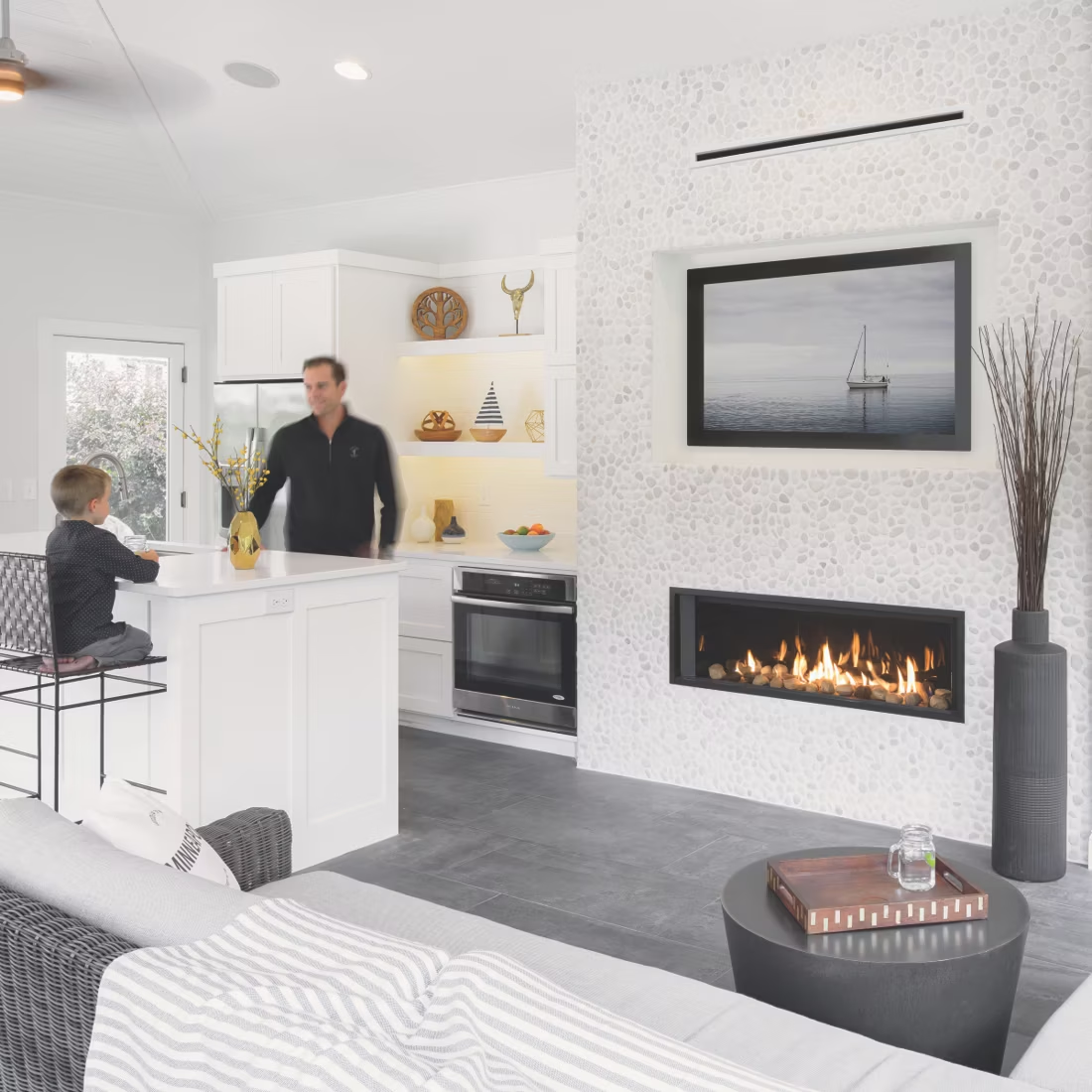
Yes—with an asterisk. Fireplaces are hot and TVs don't like heat. Either put a mantel between them to deflect rising warmth, or choose a fireplace with heat-management technology that creates a cool zone on the wall above—the wall stays around 125 degrees, barely warm, while the room still gets full heat. If you like clean lines and don't want a mantel, heat management is the answer.
How much should I budget for a fireplace?
For an average home—covering the fireplace, the vent pipe, and basic installation—a budget between $3,900 and $5,500 gives you a lot of options across wood, gas, and pellet. By the time you add finish work, gas line, and electrical, the average complete installation lands between $5,000 and $12,000 all-in. In a remodel or new build, a good rule is to put about 2.5% of the total project cost toward the fireplace.
Should the dealer who sells my fireplace also install it?
Ideally, yes. A fireplace project involves vent pipe, gas line, electrical, and often tile or stone. Hire three or four separate trades and you own the liability and the game of telephone between them. One company selling and installing means one accountable party, start to finish—ask about factory training, on-time completion records, and what happens if an inspection fails.
Nearby Dealers
Hearth shops serving Pikesville and the surrounding area.
Start your gas fireplace project in Pikesville.
Tell us about your home and we'll put together a free Project Guide & Parts List—the right unit, the exact parts including the vent kit, and a trusted local Pikesville dealer to install it.
Find Your Fireplace →