
Reliable Gas Heat for Parkville's Mild, Damp Winters.
Clean, on-demand heat for Baltimore County's rowhomes, ranchers, and colonials. Find the right gas fireplace or insert and connect with a trusted local dealer.
Every Project Starts From One of These Five Situations
The default heat source for Baltimore County's suburbs.
Parkville sits just northeast of the Baltimore city line, a community of post-war ranchers, brick colonials, and rowhomes built up steadily since the 1950s. At 348 feet elevation with a heating degree day count around 4,443, winters here are damp and chilly rather than brutal—winter lows average about 27°F, roughly half the heating demand of a place like Duluth, Minnesota. That milder profile is one reason wood heat never took hold the way it did further inland: most Parkville homes with a fireplace have one because the house was built with a chimney, not because anyone's splitting oak or hickory for a woodpile out back.
Natural gas service from Baltimore Gas and Electric Company (BGE) reaches nearly every neighborhood in Parkville, which makes gas the practical, low-maintenance answer for a lot of these homes. A gas insert dropped into an existing masonry firebox turns a decorative, rarely-used fireplace into real supplemental heat with the flip of a switch—no wood handling, no ash, no chimney sweeping every fall. For homes without an existing fireplace, a direct-vent gas unit can go into nearly any wall with the right venting run, adding zone heat that takes pressure off the furnace during a cold snap or a winter storm knocking out power along the BGE grid.
Three steps. No salesperson until you're ready.
Tell us about your project
Your zip code, your situation, and the fuel you're leaning toward—or let the answers point you to one.
See what's actually available
The brands dealers within 100 miles genuinely carry—real options, never a catalog mirage.
Get your dealer & Project Guide
A trusted local dealer, plus the free Project Guide & Parts List that names every component of the job.
Frequently Asked Questions
How much does a gas fireplace installation cost in Parkville?
Most gas fireplace installations in Parkville run between $3,500 and $9,500. A direct-vent gas insert into an existing masonry fireplace—common in Parkville's older ranchers and colonials—tends to land on the lower half of that range, especially when the home already has a gas line nearby. A new built-in gas fireplace for a remodel or addition, requiring fresh venting and a longer gas line run from the meter, sits toward the higher end. Local BGE-authorized retailers will size the job and give a firm number after seeing your chimney or wall layout in person.
Can I convert my existing wood fireplace to gas?
Yes, and it's one of the most requested projects among Parkville homeowners. Because wood-burning fireplaces here tend to be original to the house and rarely used for actual wood fires, converting the firebox to a gas insert is often the single biggest upgrade to a home's comfort and resale appeal. A stainless liner runs up the existing chimney to vent the new insert, and the cost typically falls between $3,500 and $8,000 depending on the insert model and whether a gas line needs to be extended to the fireplace location. The masonry surround and mantel stay exactly as they are.
Do I need natural gas, or would propane make more sense?
Natural gas from BGE covers nearly all of Parkville, so the vast majority of installations here run on natural gas rather than propane. If your home already has a gas furnace, water heater, or range, adding a fireplace usually just means running a new branch line off the existing service. Propane is really only a consideration for the rare property on the edge of the county that BGE's gas lines don't reach—in that case a local propane supplier can set a tank and most gas fireplace models can be configured to run on propane instead.
Will my gas fireplace still work if the power goes out?
For most models, yes. Gas fireplaces with intermittent pilot ignition (IPI) include a battery backup—usually a few AA batteries tucked inside the unit—that keeps the igniter working when BGE's grid goes down, which happens most often here during summer thunderstorms or the occasional nor'easter. Valor fireplaces take a different approach: their pilot assembly generates its own electricity through the thermocouple, so there are no batteries to remember at all. If keeping heat during an outage matters to you, ask your local dealer which ignition system a given model uses before you buy.
What's the difference between a gas fireplace, gas insert, and gas stove?
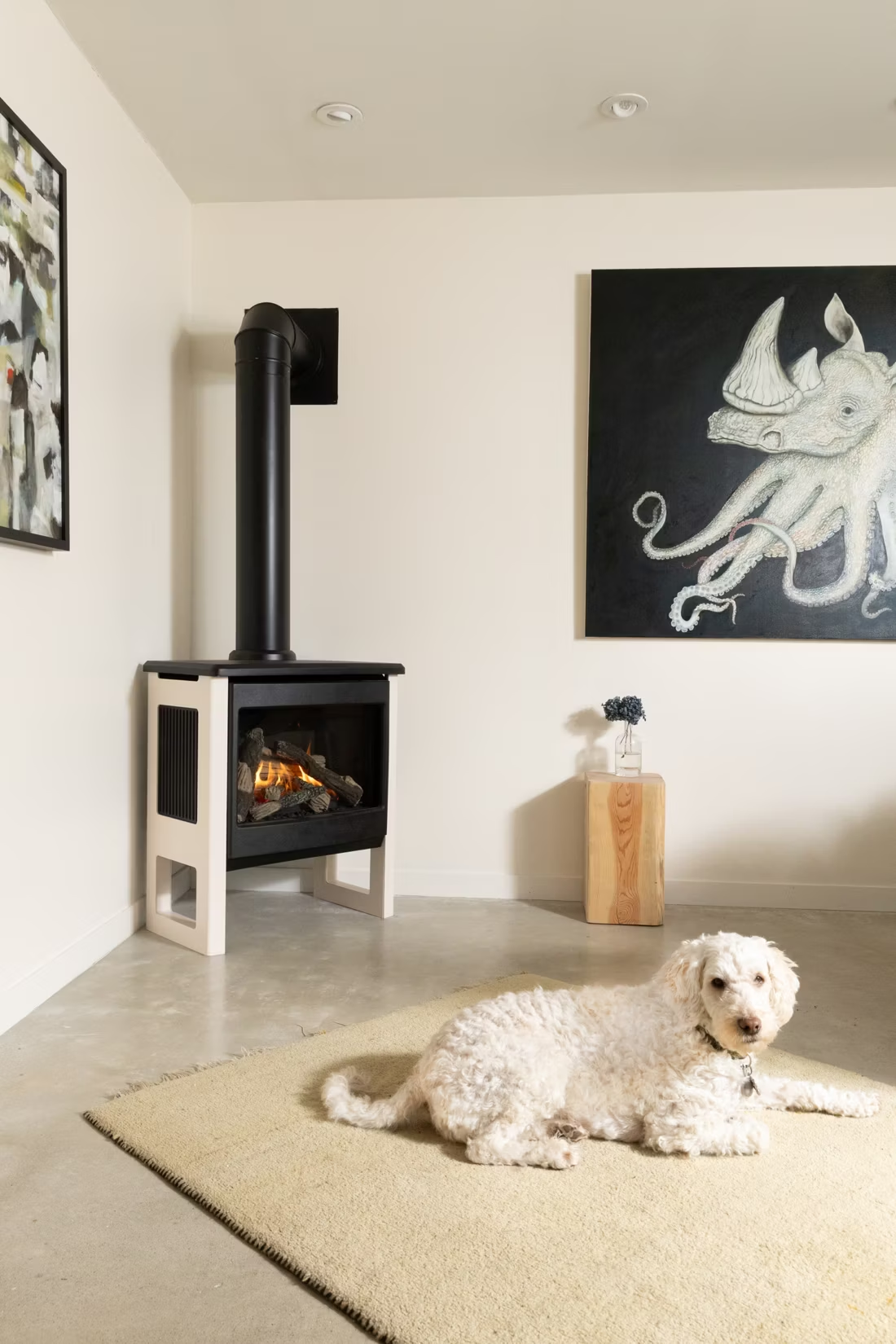
A gas fireplace is a fully framed-in unit built into a wall, typically chosen for new construction or a remodel where no fireplace exists yet. A gas insert is sized to slide into an existing masonry firebox—the option most Parkville homes with an original brick fireplace end up choosing, since it reuses the chimney as the vent path. A gas stove is a freestanding cabinet unit that sits out on the floor, useful in a room without a chimney or existing fireplace opening. For the typical Parkville colonial or rancher with a brick fireplace already in place, an insert is usually the simplest and most cost-effective route.
Do I need a permit to install a gas fireplace in Parkville?
Yes. Baltimore County requires a building permit and a separate gas permit for new gas fireplace work, both handled through the county's Department of Permits, Approvals and Inspections. The gas line connection has to be done by a licensed gas fitter, which is one reason it pays to use an established hearth dealer rather than a general contractor—they coordinate the gas hookup, venting, and county inspection as one job instead of leaving you to manage separate trades.
What's the difference between vented and vent-free gas fireplaces?
Vented gas fireplaces (direct-vent or B-vent) pull combustion air from outside and exhaust the byproducts back outside through a sealed pipe—the cleanest and most universally accepted option. Vent-free units burn gas directly into the room without any outside venting; Maryland permits them, but only under strict room-size and ventilation rules, and they release some water vapor and combustion byproducts into your living space. For Parkville's older homes, which often have less air infiltration than newer construction, most local dealers steer customers toward direct-vent units for both comfort and indoor air quality reasons.
How often should my gas fireplace be serviced?
Plan on an annual inspection, ideally before the fireplace sees heavy use each fall. A technician checks the pilot, burner, gas connections, and venting, and cleans the glass and interior—a much quicker job than a wood chimney sweep, but just as important for safety. BGE-authorized service providers and local hearth retailers in the Parkville area typically charge $150 to $225 for this visit.
Should I even consider wood, or is gas really the better fit here?
For nearly every Parkville home, gas is the more realistic choice. Wood-burning fireplaces and stoves are uncommon in this part of Baltimore County—there's no local firewood-cutting culture, no permit system for cutting your own oak or hickory nearby, and most existing fireplaces were built as an architectural feature rather than a primary heat source. Gas delivers instant, consistent heat with none of the ash, smoke, or storage that wood requires, which is why the overwhelming majority of local fireplace projects—new builds and wood-to-gas conversions alike—end up running on natural gas from BGE.
Is my gas fireplace wasting gas?
If it was installed more than 15 years ago, probably. Older gas fireplaces keep a standing pilot light burning all the time, and that little flame can cost a couple hundred dollars a year. Newer models use pilot-on-demand ignition—the pilot lights only when you use the fireplace and goes out when you turn it off.
What's the difference between an insert and a zero-clearance fireplace?
An insert is a fireplace that slides into a pre-existing wood-burning fireplace—if you don't have one, there's nothing to insert it into. A zero-clearance fireplace is built into a framed wall, which makes it the answer for remodels and new construction. Simple test: existing masonry fireplace means insert; blank or framed wall means zero-clearance.
Can I install a fireplace myself?
If you're putting a fire in your house on purpose, it's best to work with an expert. Unless you're genuinely experienced in framing, gas line, vent pipe, and the national code on clearances to combustibles, have a professional do it—and ideally the same company that sells you the fireplace, so warranty, service, and liability all live under one roof.
How much should I budget for a fireplace?
For an average home—covering the fireplace, the vent pipe, and basic installation—a budget between $3,900 and $5,500 gives you a lot of options across wood, gas, and pellet. By the time you add finish work, gas line, and electrical, the average complete installation lands between $5,000 and $12,000 all-in. In a remodel or new build, a good rule is to put about 2.5% of the total project cost toward the fireplace.
Nearby Dealers
Hearth shops serving Parkville and the surrounding area.
Find your gas fireplace in Parkville.
Tell us a bit about your home and we'll match you with a trusted local dealer and send you a free Project Guide & Parts List—the exact parts, vent kit, and installer recommendation for your Parkville gas fireplace project.
Find Your Fireplace →