
Warm your historic Annapolis home without a woodpile.
Sea-level winters along the Severn River call for clean, reliable gas heat—not a chimney full of firewood. Find the right fireplace or insert and connect with a trusted local dealer.
Every Project Starts From One of These Five Situations
Mild winters, historic homes, and modern gas convenience.
The 21402 zip code sits at sea level where the Severn River meets the Chesapeake Bay, home to the U.S. Naval Academy and the surrounding officer, faculty, and historic Annapolis housing in Anne Arundel County. At climate zone 4A with an average winter low around 30°F and a moderate winter heating season, winters here are real but far milder than inland or northern climates—think a fraction of what a home in Burlington, Vermont deals with over a season. That moderate profile shapes what actually gets installed: homeowners want dependable zone heat and ambiance, not a wood-burning workhorse sized for sub-zero nights.
Wood stoves and pellet appliances are genuinely rare in this footprint—many of the residences here are historic Federal and Georgian brick homes within or near the Annapolis Historic District, along with military-affiliated housing, where solid-fuel installations run into added review, tight lot lines, and fire-code constraints. Gas is the practical answer instead: Baltimore Gas & Electric (BGE) serves both electric and natural gas in the area, and a direct-vent gas insert dropped into an existing masonry firebox gives these older homes real heat output with the flip of a switch, no ash, and no chimney maintenance beyond an annual check.
Three steps. No salesperson until you're ready.
Tell us about your project
Your zip code, your situation, and the fuel you're leaning toward—or let the answers point you to one.
See what's actually available
The brands dealers within 100 miles genuinely carry—real options, never a catalog mirage.
Get your dealer & Project Guide
A trusted local dealer, plus the free Project Guide & Parts List that names every component of the job.
Frequently Asked Questions
How much does a gas fireplace installation cost near the Naval Academy?
For the Annapolis area, a typical gas fireplace or insert installation runs roughly $4,000 to $9,500, with the low end covering a direct-vent insert into an existing masonry firebox that already has gas nearby, and the higher end covering new gas line runs, custom venting through thick historic brick walls, or a full built-in unit in a remodel. Homes in the Annapolis Historic District sometimes carry added cost if venting has to be routed to stay visually unobtrusive from the street. A local installer will give you a firm number after seeing the fireplace and chimney in person.
Can I convert an existing masonry fireplace to gas in a historic Annapolis-area home?
Yes—it's one of the most common projects for the older brick homes around the Yard and the historic district. A gas insert slides into the existing masonry firebox and uses a stainless liner run up the original chimney, so the exterior appearance barely changes. If your home falls within the Annapolis Historic District, any visible venting change may need a quick look from the Historic Preservation Commission in addition to the standard building permit—your installer can tell you whether your address triggers that review. Homes already piped for natural gas (common where BGE service reaches) are usually the simplest and least expensive conversions.
Do I need natural gas, or is propane more common here?
BGE provides natural gas service through much of the developed Annapolis and Anne Arundel County area, so most homes near the Academy that already have gas appliances can add a fireplace without much extra plumbing. Some waterfront properties along the Severn or Bay that sit outside the natural gas footprint rely on propane tanks instead, which works just as well for a gas fireplace with the right orifice setup. Given BGE's residential electric rate of about 16 cents per kWh, gas heat also tends to be noticeably cheaper to run than electric space heaters for anyone weighing zone-heating options.
Will my gas fireplace still work if the power goes out?
Most direct-vent gas fireplaces with intermittent pilot ignition (IPI) run on a small battery backup that kicks in automatically when the power drops—worth remembering given how often nor'easters and the tail ends of hurricanes knock out power along the Bay. Valor units take it a step further: their pilot generates its own electricity through the thermocouple, so there's no battery to maintain at all. If reliable heat during a coastal power outage matters to you, ask your local dealer which ignition system a given model uses before you buy.
What's the difference between a gas fireplace, insert, and stove for a home like mine?
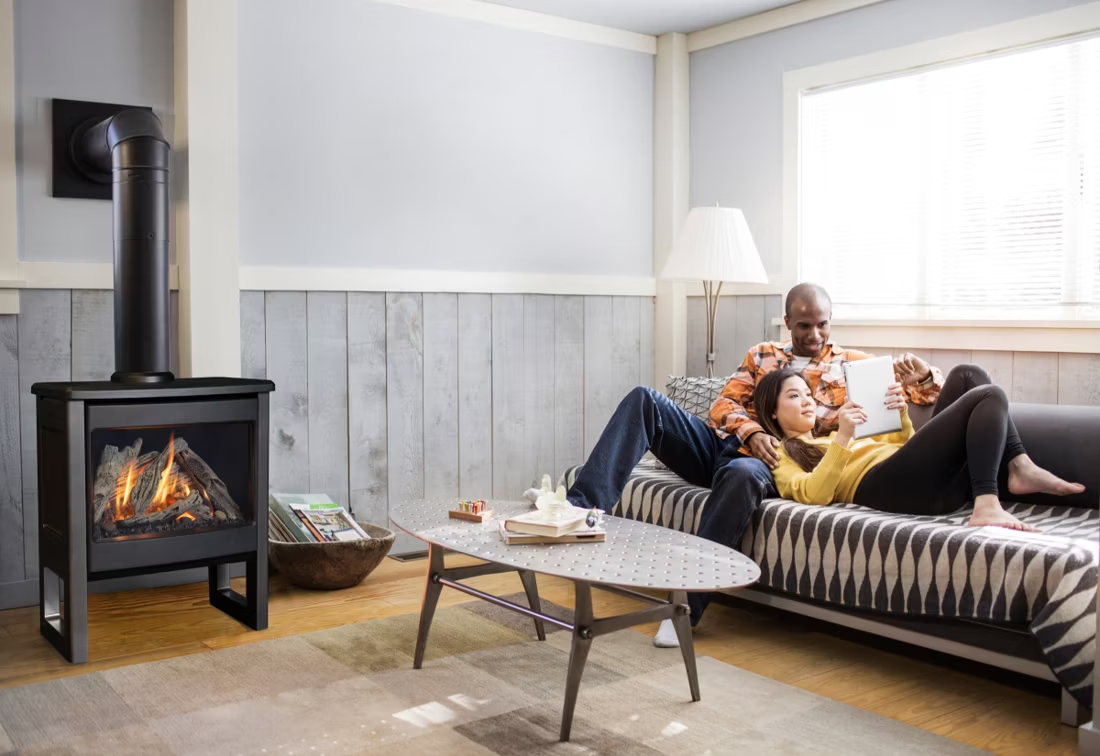
A gas insert fits into an existing masonry firebox—the right call for most of the older homes around the Naval Academy that already have a working fireplace and chimney. A built-in gas fireplace is a fully framed unit for new construction or a remodel where no fireplace currently exists. A freestanding gas stove sits on the floor and can go almost anywhere with the right clearances, which some smaller or historic floor plans find easier to accommodate than a full masonry opening. Your installer will walk you through which fits your specific footprint and existing structure.
Do I need a permit to install a gas fireplace near the Naval Academy?
For residential property in the surrounding civilian community, Anne Arundel County's Department of Inspections and Permits requires both a building permit and a licensed gas-fitter for the line work. If your residence is actually on federal Naval Academy grounds or in government-managed housing, permitting typically routes through Naval Facilities Engineering Command (NAVFAC Washington) rather than the county—worth confirming with base housing before scheduling anyone. Either way, established hearth dealers in the area are used to coordinating whichever permitting path applies.
Should I get a vented or vent-free gas fireplace?
Vented (direct-vent) units draw combustion air from outside and exhaust it back outside, which makes them the safer, more universally recommended choice—especially for the older, tighter-built brick homes common near the Academy where indoor air exchange is already limited. Maryland permits vent-free units under specific room-size and ventilation rules, but for a historic masonry firebox that already has a working chimney, running a liner for a direct-vent insert is usually the simpler and more code-comfortable path. Ask a local dealer to walk through both options against your specific fireplace opening.
How often does a gas fireplace need to be serviced?
Plan on an annual inspection, ideally before the start of the fall heating season. A technician checks the burner, pilot assembly, venting, and gas connections, and cleans the glass and interior—a lighter lift than wood-stove chimney sweeping, but just as important given how much salt-air moisture this coastal area sees, which can accelerate corrosion on venting components. Most local service providers charge in the $150–$250 range for a standard annual visit.
Should I even consider wood instead of gas here?
Realistically, no—wood-burning appliances are uncommon in this part of Anne Arundel County. Between the mild coastal climate (a light winter heating season by national standards), tight historic-district lot lines, and restrictions on solid-fuel installations in and around government and military housing, very few homeowners near the Academy install a wood stove or insert. A handful of older homes keep a decorative wood-burning fireplace for occasional use, but the overwhelming majority of conversions and new installs in this area go straight to gas for the convenience and lower maintenance.
Why is my open fireplace making my house colder?
Open fireplaces suck—literally. As the fire burns, it consumes air your furnace already paid to heat and pulls it out through the chimney, so the house is actually colder after the fire goes out than before you lit it. An insert fixes this: it seals the chimney, puts fixed glass across the front, and turns that hole in your house into a real heat source.
Is my gas fireplace wasting gas?
If it was installed more than 15 years ago, probably. Older gas fireplaces keep a standing pilot light burning all the time, and that little flame can cost a couple hundred dollars a year. Newer models use pilot-on-demand ignition—the pilot lights only when you use the fireplace and goes out when you turn it off.
Can a fireplace actually lower my heating bill?
Yes—by creating a comfort zone. A furnace heats every square foot of the house just to warm the one room you're in; a gas fireplace on low burns roughly a sixth of the gas a typical furnace does. Set the furnace around 55–60 degrees as a baseline, then heat the rooms your family actually uses. Families who heat this way commonly save $20–$60 a month.
How much should I budget for a fireplace?
For an average home—covering the fireplace, the vent pipe, and basic installation—a budget between $3,900 and $5,500 gives you a lot of options across wood, gas, and pellet. By the time you add finish work, gas line, and electrical, the average complete installation lands between $5,000 and $12,000 all-in. In a remodel or new build, a good rule is to put about 2.5% of the total project cost toward the fireplace.
Nearby Dealers
Hearth shops serving Naval Academy and the surrounding area. Every listing shows whether it is a WhyFire partner, a dealer we have verified as authorized for the brands we recommend, or a local business carrying hearth products. No manufacturer pays for placement. How we verify dealers →
Complete Chimneys Fireplaces & Grills
Costello's Hearth & Spa - Edgewater
Costello's Hearth & Spa - Pasadena
Affordable Outdoor Kitchens
The Torch Guys
Costello's Hearth & Spa - Glen Burnie
Masters Pellet Stoves
Belair Engineering & Service Co, Inc
Fireside Hearth & Home - Elkridge
Trinity Chimney Service
Shore Lumber & Millwork
Ace Of Diamonds Chimney
Hunters Home Center
Find your gas fireplace near the Naval Academy.
Tell us a bit about your home and we'll put together a free Project Guide & Parts List—the right unit, the vent kit, and a trusted local dealer near Annapolis who can install it correctly.
Find Your Fireplace →