
Add warmth without touching the Yard's historic walls.
Zone heat and ambiance for officers' quarters, historic rowhomes, and Annapolis-area residences near the Academy—no chimney, no gas line, no exterior venting required.
Every Project Starts From One of These Five Situations
The easiest way to add heat to a National Historic Landmark home.
The 21402 zip code covers the U.S. Naval Academy Yard and the surrounding historic core of Annapolis, sitting at sea level on the Severn River where it meets the Chesapeake Bay. Winters here are mild by national standards—climate zone 4A, an average winter low around 30°F, and a short, mild heating season, just a fraction of what a home in Duluth, MN or Burlington, VT sees in a season. Most homes and quarters here need supplemental zone heat on cold snaps, not a primary furnace replacement.
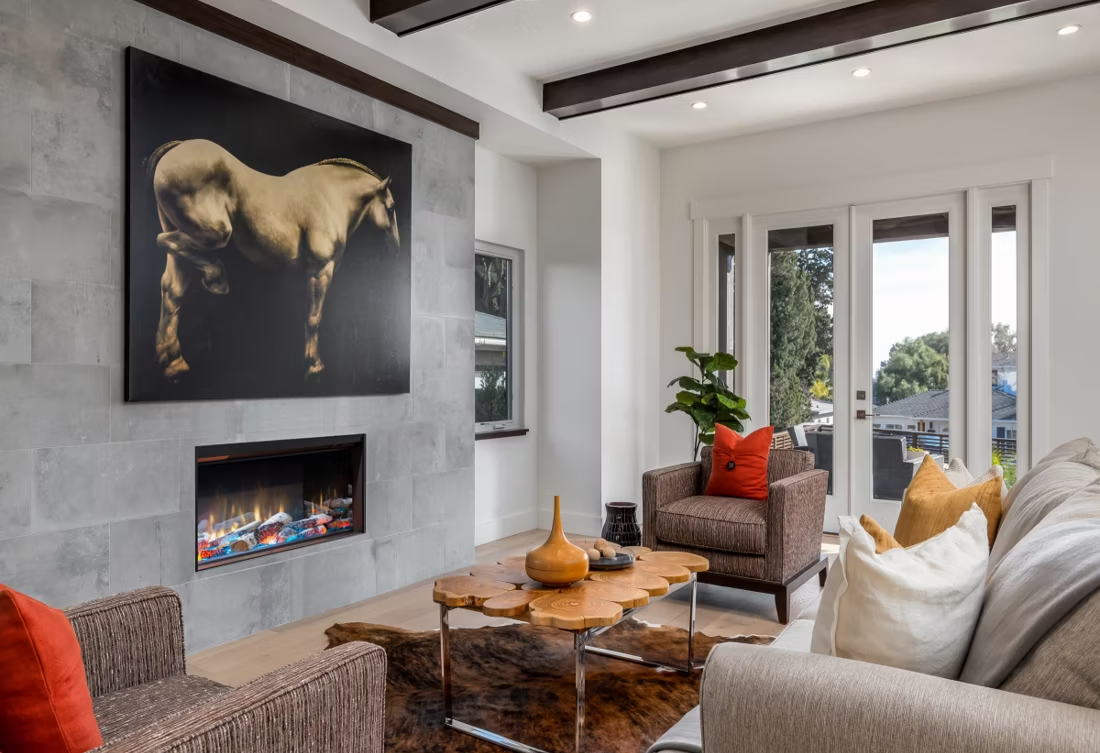
What makes this area unusual is the building stock: Georgian and Federal-style brick buildings on the Yard, officers' quarters, and 18th- and 19th-century rowhomes throughout Annapolis's National Historic Landmark district. Any exterior venting, new chimney construction, or masonry alteration typically triggers review from the Naval Facilities Engineering Command (for on-base structures) or the Annapolis Historic Preservation Commission (for private residences in the historic district). Electric fireplaces sidestep nearly all of that—no flue, no gas line trenching through brick sidewalks, no venting through a landmark facade. Wood stoves aren't practical here either (no local cutting land, and old masonry flues in historic homes often aren't rated for solid-fuel use), so electric fills a real gap: it plugs into an existing circuit, drops into an existing fireplace opening as an insert, or mounts flush to a wall, and it runs on the same Baltimore Gas & Electric service already powering the home.
Three steps. No salesperson until you're ready.
Tell us about your project
Your zip code, your situation, and the fuel you're leaning toward—or let the answers point you to one.
See what's actually available
The brands dealers within 100 miles genuinely carry—real options, never a catalog mirage.
Get your dealer & Project Guide
A trusted local dealer, plus the free Project Guide & Parts List that names every component of the job.
Frequently Asked Questions
How much does it cost to install an electric fireplace near the Naval Academy?
Costs vary widely by unit type. A plug-in electric insert that slides into an existing masonry fireplace opening—common in Annapolis's older rowhomes—typically runs $300 to $1,200 installed, since it uses the fireplace opening you already have and needs no new wiring. A fully recessed, wall-mounted electric fireplace that requires a dedicated 120V or 240V circuit and custom trim to match historic millwork runs closer to $1,500 to $3,500. Because there's no venting or gas line involved, electric installs are consistently the least invasive and least expensive option of any fuel type in this area.
Do I need historic preservation approval to install an electric fireplace here?
In most cases, no—and that's a big part of why electric is popular here. Because electric units don't require a flue, exterior vent, or chimney modification, they generally fall outside the review authority of the Annapolis Historic Preservation Commission, which focuses on exterior alterations and anything that changes a building's historic fabric. If you're on the Yard itself, quarters and barracks work still routes through Naval Facilities Engineering Command, but a plug-in insert or a unit installed inside an existing fireplace opening rarely requires the same sign-off as gas line or masonry work would. Always confirm with the relevant office before cutting into a wall for a recessed unit, since that can trigger review even without venting.
Why don't people install wood stoves near the Naval Academy?
Wood heat isn't practical in this part of Annapolis. There's no nearby public land with cutting permits, firewood storage is impractical on the Yard or in tight historic rowhouse lots, and many of the existing masonry chimneys in 18th- and 19th-century buildings weren't built or maintained to current solid-fuel clearances and liner standards. A handful of historic homes in the wider county do still burn wood, but for the 21402 area specifically, electric and gas have effectively replaced it as the practical heating options.
Should I choose electric or gas for a home near the Academy?
It depends on how much heat you actually need. With a short, mild heating season and average winter lows near 30°F, most homes here use a fireplace for supplemental warmth and ambiance rather than as a primary heat source—electric is well-suited to that role and avoids any gas line work or venting review. If you want a unit that can meaningfully offset furnace use on the coldest nights, natural gas (standard and available through most of the area) puts out significantly more BTUs. Many owners of historic homes choose electric specifically because it preserves the existing masonry fireplace opening untouched, then rely on central heat or a gas furnace elsewhere in the house for the bulk of winter heating.
What does it cost to run an electric fireplace with BGE rates?
Baltimore Gas & Electric's residential rate runs about $0.1612 per kWh in this area. Most electric fireplaces draw around 1,500 watts on high heat, so running one for an evening (roughly 4 hours) costs around $0.97. Many models let you run the flame effect alone, with the heater off, for pennies an hour—useful if you want the look of a fire in the historic parlor without the heat output, which is common in mild-winter Annapolis evenings.
Does the coastal, humid Chesapeake climate affect electric fireplace choice?
It's worth factoring in. Homes near the Severn River and the Bay deal with higher humidity and salt-tinged air than inland Maryland, which can accelerate corrosion on cheaper heating elements and electronics over time. Local dealers generally steer waterfront and Yard-adjacent installs toward units with sealed control boards and coated heating elements, and recommend avoiding installation directly against exterior masonry walls that can carry moisture. It's a minor consideration but one worth raising with your installer given the location.
What size electric fireplace do I need for a historic rowhome or officer's quarters?
Most electric fireplaces are rated to comfortably heat 400 to 1,000 square feet, which covers a single parlor, living room, or bedroom in a typical Annapolis rowhome or Academy quarters. Given the area's mild winter heating needs, sizing here is usually driven by the room you want to heat, not the whole house—a 1,500-watt unit is standard and sufficient for supplemental heat in most single rooms. If you're inserting into an existing fireplace opening, the opening's dimensions (not BTU load) often end up being the limiting factor, since inserts are sized to specific width and height ranges.
How much maintenance does an electric fireplace need?
Very little compared to wood or gas. There's no chimney to sweep, no gas lines to inspect, and no combustion byproducts to vent. Maintenance is limited to occasionally dusting the unit, cleaning the glass front, and replacing the LED ember bed or flame-effect bulbs every several years as they age—most modern units use LED arrays rated for 20,000+ hours. This low-maintenance profile is another reason electric fits well into historic properties where owners want to avoid recurring service visits inside older walls and flues.
What electric fireplace brands are available through local dealers near Annapolis?
Dealers serving the Annapolis and Anne Arundel County area commonly carry Dimplex, Napoleon, Touchstone, and Amantii electric fireplaces and inserts—brands known for realistic flame technology and, in Dimplex and Napoleon's case, a range of trim kits that can be matched to historic mantels and millwork. Because electric fireplaces are resistance heaters rather than efficiency-rated appliances, they generally don't qualify for BGE efficiency rebates the way heat pumps or insulation upgrades do—the value here is lower installation cost and zero venting work, not a utility rebate.
Can I put a TV above my fireplace?
Yes—with an asterisk. Fireplaces are hot and TVs don't like heat. Either put a mantel between them to deflect rising warmth, or choose a fireplace with heat-management technology that creates a cool zone on the wall above—the wall stays around 125 degrees, barely warm, while the room still gets full heat. If you like clean lines and don't want a mantel, heat management is the answer.
Do electric fireplaces actually produce heat?
Yes—most put out around 4,800–5,000 BTUs from a standard outlet, which comfortably warms a bedroom, office, or den as a comfort-zone heater. What they won't do is carry a whole house the way wood, gas, or pellet can. Think of electric as ambiance-first with honest supplemental heat: flames on with no heat in July, flames plus warmth in January.
What is an in-home preview and do I need one?
It's a visit where a hearth professional measures your space, confirms the model you picked actually works in your home, and walks the specs—framing, gas line, venting, finish work—before anything is ordered. Some details you just can't know until you see the house. Never make a down payment without one; it's the single most-skipped step that burns buyers.
Does a fireplace add value to my home?
On average, a fireplace adds back to the home about the same amount you spent installing it. Add the monthly savings from heating the rooms you actually use instead of the whole house—often hundreds of dollars a year—and the value case is strong before you even count what a fire does for how your family uses the room.
Nearby Dealers
Hearth shops serving Naval Academy and the surrounding area. Every listing shows whether it is a WhyFire partner, a dealer we have verified as authorized for the brands we recommend, or a local business carrying hearth products. No manufacturer pays for placement. How we verify dealers →
Complete Chimneys Fireplaces & Grills
Costello's Hearth & Spa - Edgewater
Costello's Hearth & Spa - Pasadena
Affordable Outdoor Kitchens
The Torch Guys
Costello's Hearth & Spa - Glen Burnie
Masters Pellet Stoves
Belair Engineering & Service Co, Inc
Fireside Hearth & Home - Elkridge
Trinity Chimney Service
Shore Lumber & Millwork
Ace Of Diamonds Chimney
Hunters Home Center
Electric Service in Naval Academy
An electric fireplace's heater draws about 1,500 watts—pennies per hour at local rates.
Baltimore Gas & Electric Co
Find your electric fireplace near the Naval Academy.
Tell us a bit about your home—on the Yard, in the historic district, or nearby in Annapolis—and we'll match you with a trusted local dealer and send over a free Project Guide & Parts List with the exact unit, surround or insert kit, and dealer recommendation for your space.
Find Your Fireplace →