
Pellet Heat Isn't Standard Here—But It's Still Possible.
Most Layhill homes run on natural gas or an electric heat pump. For the smaller number of homeowners who want a pellet stove for supplemental heat or backup warmth, we'll connect you with a local dealer who can size and install it correctly.
Every Project Starts From One of These Five Situations
A mid-Atlantic suburb built for gas and electric heat.
Layhill sits in the Wheaton-Aspen Hill corridor of Montgomery County, a dense DC suburb at 383 feet elevation with a climate zone of 4A and a moderate winter heating season lasting a good chunk of the year. Winters here average a low around 27°F—cold enough for a real heating season, but nothing like the extended sub-zero stretches that drive pellet or wood heat adoption in places like Duluth, MN or Burlington, VT. Most homes in Layhill were built with natural gas furnaces or, increasingly, electric heat pumps served by Pepco, and that's what does the day-to-day work of keeping a house warm.
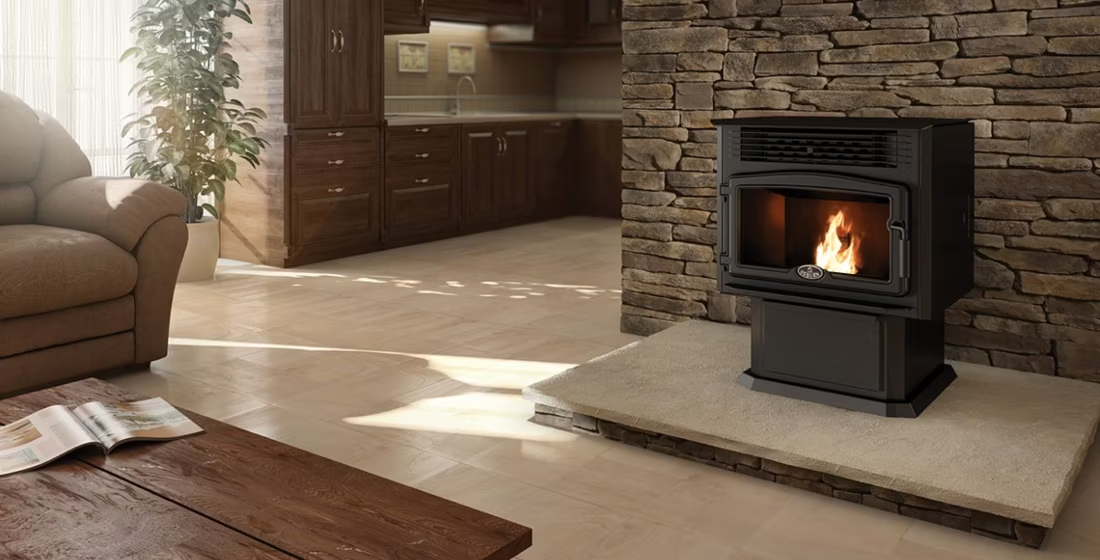
That's why pellet stoves show up here in small numbers rather than as a mainstream choice—there's no regional wood-pellet culture, no timber economy nearby, and no strong tradition of supplemental solid-fuel heat the way you'd find in more rural or colder parts of the country. The homeowners who do install one in Layhill are usually after a specific thing: a family-room focal point with real heat output, a hedge against winter ice-storm power outages, or a cleaner-burning alternative to wood without the hassle of splitting and stacking cordwood on a suburban lot. Regional pellet brands like Energex, Hamer Pellet Fuel, and Greene Team Pellet Fuel are sold through farm-and-home retailers in the broader Maryland market, so fuel supply isn't a barrier—it's just a smaller, more deliberate purchase decision here than it would be further north.
Three steps. No salesperson until you're ready.
Tell us about your project
Your zip code, your situation, and the fuel you're leaning toward—or let the answers point you to one.
See what's actually available
The brands dealers within 100 miles genuinely carry—real options, never a catalog mirage.
Get your dealer & Project Guide
A trusted local dealer, plus the free Project Guide & Parts List that names every component of the job.
Frequently Asked Questions
Are pellet stoves actually common in Layhill?
No—and it's worth being upfront about that. The large majority of homes in Layhill heat with natural gas furnaces or electric heat pumps, and pellet stoves are installed by a relatively small number of homeowners looking for supplemental heat, ambiance, or outage backup. That doesn't mean it's a bad choice, just that you won't find the dealer density or installer familiarity you'd see in a colder, more rural market. A trusted local dealer can still spec, permit, and install one correctly—it's just a more specialized project here than a furnace swap.
How much does a pellet stove installation cost in Layhill?
For a Montgomery County suburb like Layhill, a typical freestanding pellet stove installation runs roughly $3,500 to $6,500, depending on the unit, whether venting can run through an existing wall or needs new penetration, and any electrical work for the auger and blower circuit. A pellet insert into an existing masonry fireplace tends to land in a similar range. Because so few local homes have existing pellet venting in place, expect most of the cost to be in new vent pipe and the electrical outlet rather than the appliance itself.
Do I need a permit to install a pellet stove in Layhill?
Yes—a mechanical or building permit is required through the Montgomery County Department of Permitting Services (DPS) for any new solid-fuel or pellet-burning appliance, along with an electrical permit if a new circuit is needed for the stove's auger and blower. Unlike wood stoves, there's no cutting permit involved since pellet fuel is purchased by the bag or ton rather than harvested—DPS review mainly focuses on venting clearances and the electrical hookup.
Where can I buy pellets in the Layhill area?
Pellet fuel isn't sold on every corner in this part of Montgomery County the way it might be in a rural mill town, but regional brands including Energex, Hamer Pellet Fuel, and Greene Team Pellet Fuel are carried by farm-and-home supply retailers throughout central Maryland. Expect to pay somewhere in the $250-$320 per ton range, and plan on stocking up in fall—smaller suburban markets like Layhill can see local supply tighten during cold snaps when everyone buys at once.
Why would I choose pellet over gas in a Layhill home?
Honestly, for most Layhill homeowners, gas wins on convenience—natural gas service is well established in this part of Montgomery County, and a gas insert or fireplace gives you instant on-off heat with no hopper to load. Pellet makes sense in narrower cases: homes without a gas line to the room where you want heat, homeowners who like the visual of a real flame with wood pellets instead of gas logs, or anyone who wants a heat source that isn't tied to gas utility pricing. It's a legitimate option, just not the default one here the way it would be in a wood-heavy market.
Will a pellet stove work if the power goes out?
Not without a backup power source. Pellet stoves rely on an electric auger to feed fuel and a blower to circulate heat, so a Pepco outage—which does happen in this area during ice storms and summer thunderstorms—will shut the stove down along with everything else. If outage resilience is your main reason for considering solid-fuel heat, a small battery backup or generator sized to run the stove's low-wattage components is worth discussing with your installer, since a pellet stove alone won't function like a wood stove would during a blackout.
What size pellet stove do I need for my Layhill home?
Most Layhill homes are looking for supplemental heat in a single room rather than whole-house heating, so a stove rated for 1,000 to 1,500 square feet is typically plenty for a family room or finished basement. If you're aiming to offset your gas or heat-pump usage across a larger open floor plan, a mid-size unit rated to 2,000 square feet may make sense—but given the area's moderate 27°F average winter low, oversizing is rarely necessary here. A local dealer can size it based on your room layout and insulation during an in-home visit.
How much maintenance does a pellet stove need?
Pellet stoves need the ash pan emptied every few days of use and the burn pot cleaned weekly during the heating season, plus a professional inspection and full cleaning of the venting and internal components once a year—typically before the season starts. Because pellet appliances are less common in Layhill than in wood-heavy regions, it's worth confirming with your installer or a regional hearth service company that they specifically service pellet units, since not every chimney sweep in the DC suburbs handles them regularly.
Pellet vs. wood—is either one a good fit for Layhill?
Between the two, pellet is generally the more practical choice for a dense suburb like Layhill. It doesn't require a cutting permit or cordwood storage on a typical suburban lot, burns cleaner with far less smoke—a real consideration on tighter HOA-governed streets—and the hopper-and-thermostat operation is simpler for occasional use. Wood offers the advantage of working without electricity, but sourcing and seasoning oak, hickory, or maple cordwood is a bigger undertaking here than in a rural market with public land nearby. Neither is mainstream in Layhill, but if you're choosing between them, pellet is the lower-friction option for most homes in this area.
Why is a fireplace insert so efficient?
An insert does two things: it seals the chimney completely, so you stop losing air you already paid to heat, and it radiates warmth into the room through the firebox and glass. Most add a heat-exchange fan that pulls cool room air underneath, wraps it around the hot firebox, and pushes it back out warm. Your home is more efficient before you've even lit the first fire.
What do I measure to size a fireplace insert?
Four numbers tell you what fits: the front width, the front height, the back width, and the overall depth of your existing fireplace opening. Grab a tape measure, jot those down, and snap a photo of the wall—those two things do more to move your project forward than anything else you can do today.
Can a fireplace actually lower my heating bill?
Yes—by creating a comfort zone. A furnace heats every square foot of the house just to warm the one room you're in; a gas fireplace on low burns roughly a sixth of the gas a typical furnace does. Set the furnace around 55–60 degrees as a baseline, then heat the rooms your family actually uses. Families who heat this way commonly save $20–$60 a month.
Does a fireplace add value to my home?
On average, a fireplace adds back to the home about the same amount you spent installing it. Add the monthly savings from heating the rooms you actually use instead of the whole house—often hundreds of dollars a year—and the value case is strong before you even count what a fire does for how your family uses the room.
Nearby Dealers
Hearth shops serving Layhill and the surrounding area. Every listing shows whether it is a WhyFire partner, a dealer we have verified as authorized for the brands we recommend, or a local business carrying hearth products. No manufacturer pays for placement. How we verify dealers →
Chimney.com
Capitol Chimney Service
Cyprus Air
Costello's Hearth & Spa - Rockville
The Fireplace Shop
Chelsea's Chimney
Westlake Ace Hardware
Masters Pellet Stoves
Fireside Hearth & Home - Elkridge
Trinity Chimney Service
Belair Engineering & Service Co, Inc
The Torch Guys
Aspen Green Gasworks
Genesis Chimney Services
Lawn & Leisure
Affordable Outdoor Kitchens
Costello's Hearth & Spa - Glen Burnie
Cyprus Air, Indoor Comfort
Pellet Brands Stocked Around Layhill
Manufacturers will point you to the nearest stocking dealer.
Find your pellet stove in Layhill.
Tell us about your home and we'll match you with a trusted local dealer and send over your free Project Guide & Parts List—a clear plan for your pellet project in Layhill, including the exact parts and vent kit you'll need.
Find Your Fireplace →