
A Straight Answer on Pellet Stoves in Clinton, MD.
Pellet heat isn't the default choice here the way it is in colder, more rural parts of the country—but it still has a place in the right Clinton home. Here's what actually makes sense, and who can install it.
Every Project Starts From One of These Five Situations
Natural gas already covers most of what a pellet stove would do here.
Clinton sits in climate zone 4A at just 174 feet of elevation, with a moderate winter heating season and winter lows that average around 27°F. That's a real Mid-Atlantic winter, but it's a fraction of the heating load you'd see in a place like Burlington, VT or Duluth, MN, where pellet stoves are a genuine primary heat source for months at a stretch. In Prince George's County, most homes already have natural gas or heat pumps handling the base heating load, which is a big reason pellet stoves never became a common secondary appliance here the way they did in colder, more wood-dependent regions.
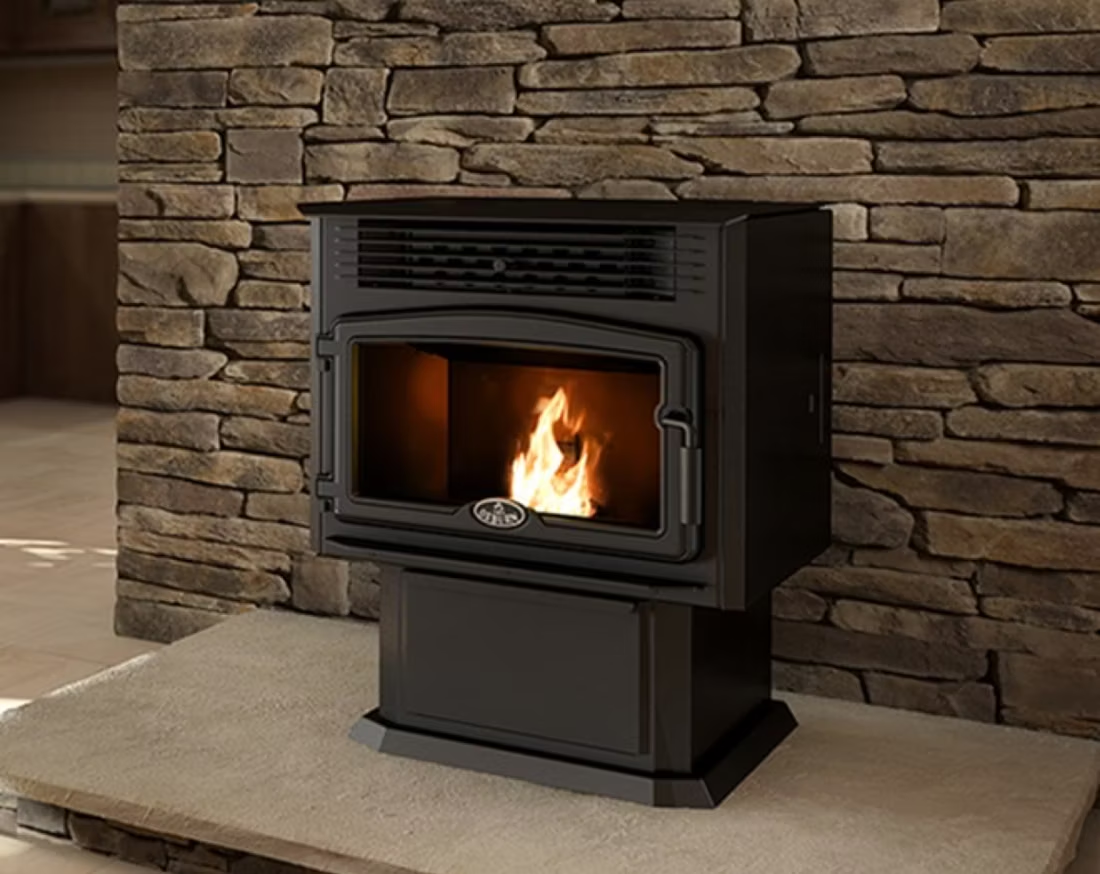
That doesn't mean a pellet stove is off the table—it means it's a deliberate choice rather than a regional default. A small number of Clinton homeowners install one for zone heating in a finished basement or addition, for the low-maintenance alternative to a wood-burning fireplace, or simply because they like the steady, thermostat-controlled heat pellet appliances produce. If that's you, the fuel itself isn't hard to get: regional brands like Energex, Hamer Pellet Fuel, and Greene Team Pellet Fuel are trucked down from Mid-Atlantic and New England mills and stocked seasonally by hearth dealers serving the DC suburbs.
Three steps. No salesperson until you're ready.
Tell us about your project
Your zip code, your situation, and the fuel you're leaning toward—or let the answers point you to one.
See what's actually available
The brands dealers within 100 miles genuinely carry—real options, never a catalog mirage.
Get your dealer & Project Guide
A trusted local dealer, plus the free Project Guide & Parts List that names every component of the job.
Frequently Asked Questions
How much does a pellet stove installation cost in Clinton?
Pellet installs are infrequent enough in Prince George's County that there isn't a deep local sample to quote from, but across the Mid-Atlantic a typical pellet stove or insert installation—unit, venting, hearth pad, and labor—runs roughly $3,000 to $6,500. Converting an existing masonry fireplace to a pellet insert tends to land on the lower end since the chimney chase is already there; a freestanding stove in a room with no existing venting runs higher once wall-thimble or through-roof venting is added. A local dealer matched through Find My Fireplace can give you a firm number after seeing your space.
Why aren't pellet stoves more common in Clinton, MD?
Two things work against pellet heat here: mild winters and easy access to natural gas. With a moderate winter heating season, Clinton's heating season is short compared to the colder climates where pellet stoves earn their keep as a daily-use appliance. Add in Pepco electric service and widespread natural gas availability across Prince George's County, and most homeowners never have a reason to add a hopper-fed appliance and a pallet of pellet bags to the garage. Where pellet stoves do get installed locally, it's usually a homeowner-specific reason—a finished basement without ductwork, or a preference for a visible flame over central heat.
Where can I buy pellets near Clinton?
Hearth shops serving the DC suburbs typically stock bagged pellets from regional producers like Energex, Hamer Pellet Fuel, and Greene Team Pellet Fuel, trucked in from mills in Pennsylvania, New York, and Quebec. Because Clinton isn't near a pellet mill itself, expect to buy by the bag or pallet from a local dealer rather than picking up bulk-delivered ton loads the way you might in New England. Stock up early in fall—regional supply can tighten once cold snaps hit up and down the East Coast.
Will a pellet stove work during a power outage?
Not without backup power. Pellet stoves rely on an electric auger to feed fuel and a blower to distribute heat, so a Pepco outage during an ice storm or nor'easter will shut the stove down even with a full hopper. This is the opposite of a wood stove, which burns without any electrical input. If outage resilience matters to you, plan on a battery backup or small generator sized for the stove's draw—most units pull somewhere between 100 and 400 watts, which at Pepco's residential rate of $0.1874/kWh costs only a few cents per hour to run, but that power still has to come from somewhere when the grid is down.
Pellet stove or gas fireplace—which makes more sense for a Clinton home?
For most Clinton homes, gas wins on convenience: it's piped in, ignites at the flip of a switch, needs no fuel storage, and matches the mild-winter heating load of climate zone 4A without any hands-on effort. A pellet stove asks more of the homeowner—buying and storing bags of fuel, emptying an ash pan, running a hopper—in exchange for a real visible flame and independence from the gas utility. If your home already has gas service and you mainly want ambiance with some supplemental heat, gas is the simpler answer. If you specifically want the fire-tending experience without dealing with cordwood, pellet is worth a look.
Do I need a permit to install a pellet stove in Clinton?
Yes. New solid-fuel appliance installations in Prince George's County go through the Department of Permitting, Inspections and Enforcement (DPIE), which reviews the venting, clearances, and hearth pad specs before sign-off. Most established hearth dealers pull this permit as part of the installation contract, so you generally don't have to file it yourself—but confirm that's included before you sign anything, since it isn't universal among smaller or out-of-area installers.
How does a pellet stove compare to an electric fireplace?
An electric fireplace or electric insert plugs into a standard outlet, produces no real combustion heat (most are supplemental at best), and costs almost nothing to install—often under $1,000 including a simple electric insert. A pellet stove burns real fuel, produces genuine heat output (typically 40,000–60,000 BTU on a larger unit), and requires venting, a hearth pad, and periodic ash removal—but it will meaningfully heat a room the way an electric unit can't. In a mild climate like Clinton's, plenty of homeowners choose electric for the look and ambiance alone and skip the fuel-handling entirely; others want the pellet stove's actual heat output for a chilly basement or sunroom.
What size pellet stove do I need?
Given Clinton's relatively mild heating load, most homeowners here are sizing a pellet stove for a specific room or zone rather than whole-house heat—a 1,200–1,800 square foot space is typically well served by a mid-size unit in the 40,000–50,000 BTU range, while a small den or converted garage can get by with a smaller 25,000–30,000 BTU stove. Because pellet installs are less common locally, sizing conversations benefit from an in-home visit rather than a rule of thumb—insulation, ceiling height, and how open the space is to the rest of the house all matter more than square footage alone.
Since wood and pellet are both uncommon here, what's the real difference?
Wood stoves in Clinton are rare mainly because there's little local infrastructure for it—no nearby public cutting land, and homeowners here typically source hardwood like oak, hickory, and maple from tree services or firewood sellers rather than forest permits. Pellet stoves are rare for a different reason: the mild climate and easy natural gas access mean most people simply don't need a secondary solid-fuel heat source. Practically, wood demands more hands-on work (splitting, stacking, tending a live fire) but runs with no electricity; pellet is more automated and consistent but depends on the grid and on bagged fuel trucked in from Mid-Atlantic mills. For a Clinton homeowner set on a real flame, pellet is usually the lower-maintenance path of the two.
What's the difference between an insert and a zero-clearance fireplace?
An insert is a fireplace that slides into a pre-existing wood-burning fireplace—if you don't have one, there's nothing to insert it into. A zero-clearance fireplace is built into a framed wall, which makes it the answer for remodels and new construction. Simple test: existing masonry fireplace means insert; blank or framed wall means zero-clearance.
Why is my open fireplace making my house colder?
Open fireplaces suck—literally. As the fire burns, it consumes air your furnace already paid to heat and pulls it out through the chimney, so the house is actually colder after the fire goes out than before you lit it. An insert fixes this: it seals the chimney, puts fixed glass across the front, and turns that hole in your house into a real heat source.
How much should I budget for a fireplace?
For an average home—covering the fireplace, the vent pipe, and basic installation—a budget between $3,900 and $5,500 gives you a lot of options across wood, gas, and pellet. By the time you add finish work, gas line, and electrical, the average complete installation lands between $5,000 and $12,000 all-in. In a remodel or new build, a good rule is to put about 2.5% of the total project cost toward the fireplace.
Does a fireplace add value to my home?
On average, a fireplace adds back to the home about the same amount you spent installing it. Add the monthly savings from heating the rooms you actually use instead of the whole house—often hundreds of dollars a year—and the value case is strong before you even count what a fire does for how your family uses the room.
Nearby Dealers
Hearth shops serving Clinton and the surrounding area.
Pellet Brands Stocked Around Clinton
Manufacturers will point you to the nearest stocking dealer.
Get your pellet stove Project Guide & Parts List for Clinton.
Tell us about your home and we'll match you with a trusted local dealer serving Clinton, and send over a free Project Guide & Parts List—the right stove, the correct venting, and a plan built for your space.
Find Your Fireplace →