
Find the right pellet stove for your Charles County home.
Thermostat-controlled, hopper-fed heat for Southern Maryland winters—from La Plata to Waldorf to Indian Head. We'll match you with a trusted local dealer who can size, permit, and install it right.
Every Project Starts From One of These Five Situations
Convenient heat, without the wood-splitting.
Charles County sits in climate zone 4A with an average winter low around 25°F and a moderate mid-Atlantic winter heating season—nothing close to the long, brutal winters you'd see in a place like Duluth, Minnesota, but still enough cold to make supplemental heat worthwhile for months at a stretch. Between the growing suburban corridor around Waldorf and White Plains and the more rural stretches near Bryans Road and Nanjemoy, a lot of Charles County homeowners want real heat output without the chainsaw, splitting maul, and stacked cordwood that wood burning demands.
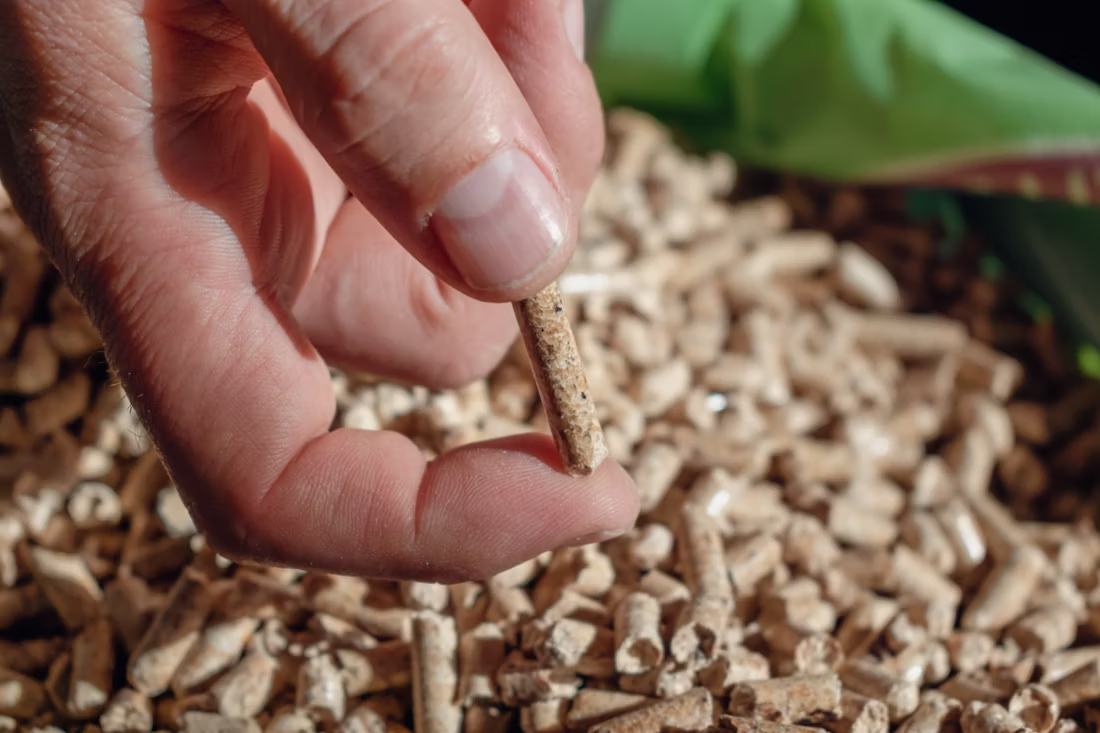
That's the appeal of a pellet stove or insert: load a hopper with bagged fuel, set a thermostat, and let the auger do the work. Regional brands like Energex, Hamer Pellet Fuel, and Greene Team Pellet Fuel are sold and stocked by dealers throughout the Mid-Atlantic, so fuel supply isn't the issue it can be in more remote parts of the country. Charles County also has no air quality non-attainment designation and no winter burn curtailment periods to navigate, unlike some Western counties—which means a pellet stove here is simply a clean, efficient heat source without regulatory hoops to jump through.
Three steps. No salesperson until you're ready.
Tell us about your project
Your zip code, your situation, and the fuel you're leaning toward—or let the answers point you to one.
See what's actually available
The brands dealers within 100 miles genuinely carry—real options, never a catalog mirage.
Get your dealer & Project Guide
A trusted local dealer, plus the free Project Guide & Parts List that names every component of the job.
Frequently Asked Questions
How much does a pellet stove installation cost in Charles County?
Pellet stove and insert installations typically run in the $3,000 to $7,000 range nationally, and Charles County is in line with that—the variables are the unit itself, whether you're venting through an existing masonry fireplace or a fresh wall penetration, and any electrical work needed to run the auger, igniter, and blower. Inserts into an existing fireplace tend to land on the lower end since the masonry chimney (or a simple through-wall vent kit) is already in place. A local dealer will give you a firm number after seeing your home, but expect a much smaller job than a full wood-burning chimney installation.
Do I need electricity for a pellet stove to work?
Yes—this is the trade-off worth understanding before you buy. Pellet stoves rely on an electric auger to feed fuel, a igniter to start the fire, and a blower to circulate heat, so they go dark in a power outage unless you add a battery backup or small generator. Charles County sees occasional outages from nor'easters and summer storms rolling up from the Potomac, so if backup heat during an outage is a priority, ask your local dealer about battery backup options or consider pairing a pellet stove with a wood-burning unit elsewhere in the house.
Where can I buy pellet fuel in Charles County?
Regional brands including Energex, Hamer Pellet Fuel, and Greene Team Pellet Fuel are widely available at hearth retailers and hardware stores throughout the Mid-Atlantic, and most Charles County dealers either stock pellets directly or can point you to a reliable local supplier. Buying by the pallet (roughly a ton) ahead of the season is the standard move to avoid mid-winter shortages—pellet demand spikes during the first hard cold snap, and popular brands can sell out at retail.
What's the difference between a pellet stove and a pellet insert?
A pellet stove is a freestanding unit that sits on the floor and vents through a wall or existing chimney—it can go almost anywhere with a nearby power outlet and a vent path. A pellet insert is built to slide into an existing masonry fireplace opening, converting an old wood-burning fireplace into an efficient, thermostat-controlled heat source using the same chimney. For Charles County homes with an existing fireplace—common in the older neighborhoods around La Plata and Port Tobacco—an insert is usually the simpler, lower-cost path. Homes without an existing fireplace typically go with a freestanding stove instead.
Do I need a permit to install a pellet stove in Charles County?
Most jurisdictions require a building permit for a new solid-fuel appliance installation, including pellet units, and Charles County is no exception—your installer will need to pull a permit and pass inspection to confirm proper venting clearances and electrical connections for the auger and blower. The good news is that pellet installations are generally simpler to permit and inspect than wood stoves, since the venting is smaller-diameter and the appliance itself is UL-listed. Reputable local dealers handle the permitting as part of the installation, so this typically isn't something you manage yourself.
What size pellet stove do I need for my home?
Sizing depends on square footage, ceiling height, insulation, and whether the stove is your primary or supplemental heat source. Given Charles County's moderate winters—average lows around 25°F and a mid-Atlantic heating season—most homes do well with a mid-size unit rated for 1,200 to 2,200 square feet, especially if the pellet stove is supplementing a central HVAC system rather than replacing it entirely. Older, less-insulated homes near Indian Head or Bryans Road may want to size up slightly; newer, tighter construction around Waldorf can often get by with a smaller unit. A local dealer will size this properly during an in-home visit rather than by square footage alone.
How often does a pellet stove need to be cleaned and serviced?
Pellet stoves need more frequent attention than gas but less than wood—the burn pot and ash pan should be cleaned every few days to weekly depending on use, and a full professional service (checking the auger, igniter, blower motor, and venting) is recommended annually, typically before the start of the heating season. Because Charles County doesn't have the wildfire smoke or winter inversion concerns some Western regions face, there's no seasonal burn restriction to work around—just standard annual maintenance to keep the unit running efficiently.
Is a pellet stove a good fit for a mild mid-Atlantic winter like Charles County's?
Yes, and it's one of the more common reasons homeowners here choose pellet over wood. With winter lows averaging around 25°F and a moderate mid-Atlantic heating season, Charles County doesn't need the 20-hour overnight burn times that a Blaze King catalytic wood stove offers in places with much harsher cold—a thermostat-controlled pellet stove that cycles on and off automatically matches the region's shoulder-season and moderately cold nights well. It's a strong fit for supplemental zone heating in a main living area, cutting the propane or electric heating bill without the daily commitment of tending a wood fire.
Pellet vs. wood—which is right for my Charles County home?
Wood offers a lower cost per BTU (especially if you're processing your own oak, hickory, or maple), the authentic fire experience, and heat that works during a power outage. Pellet offers thermostat control, less mess, no splitting or stacking, and cleaner glass—but it needs electricity to run and won't help you during an outage unless you add battery backup. For Charles County's more rural pockets near Nanjemoy and Ironsides where a woodlot might already be on the property, wood can make practical sense. For homes in Waldorf, La Plata, or White Plains where convenience matters more than self-sufficiency, pellet is usually the easier day-to-day choice. Local dealers carry both and can walk through the trade-offs for your specific setup.
What's the difference between an insert and a zero-clearance fireplace?
An insert is a fireplace that slides into a pre-existing wood-burning fireplace—if you don't have one, there's nothing to insert it into. A zero-clearance fireplace is built into a framed wall, which makes it the answer for remodels and new construction. Simple test: existing masonry fireplace means insert; blank or framed wall means zero-clearance.
Can a pellet stove heat a whole house?
It genuinely can. I burned a pellet stove as my only heat source for years after a furnace died, and it kept the entire house warm. Pellets feed automatically from a hopper, so you get wood-heat economics with thermostat-style control. Two honest caveats: it needs weekly cleaning during the season, and most models need electricity to run—ask about battery backup if outages are a concern.
Can a fireplace actually lower my heating bill?
Yes—by creating a comfort zone. A furnace heats every square foot of the house just to warm the one room you're in; a gas fireplace on low burns roughly a sixth of the gas a typical furnace does. Set the furnace around 55–60 degrees as a baseline, then heat the rooms your family actually uses. Families who heat this way commonly save $20–$60 a month.
Does a fireplace add value to my home?
On average, a fireplace adds back to the home about the same amount you spent installing it. Add the monthly savings from heating the rooms you actually use instead of the whole house—often hundreds of dollars a year—and the value case is strong before you even count what a fire does for how your family uses the room.
Stove and Fireplace Dealers in Charles County
Pellet Brands Stocked Around Charles County
Manufacturers will point you to the nearest stocking dealer.
Get your Charles County pellet stove Project Guide & Parts List.
Tell us about your home and we'll match you with a trusted local Charles County dealer and send a free Project Guide & Parts List—the exact parts, including the vent kit, for your pellet stove or insert project.
Find Your Fireplace →