
Steady heat that keeps up with a long Maine winter.
Automated, radiant warmth for Cumberland County's coastal cold—find the right pellet stove or insert, and connect with a trusted local dealer.
Every Project Starts From One of These Five Situations
Automated heat for a coastal city that still gets cold.
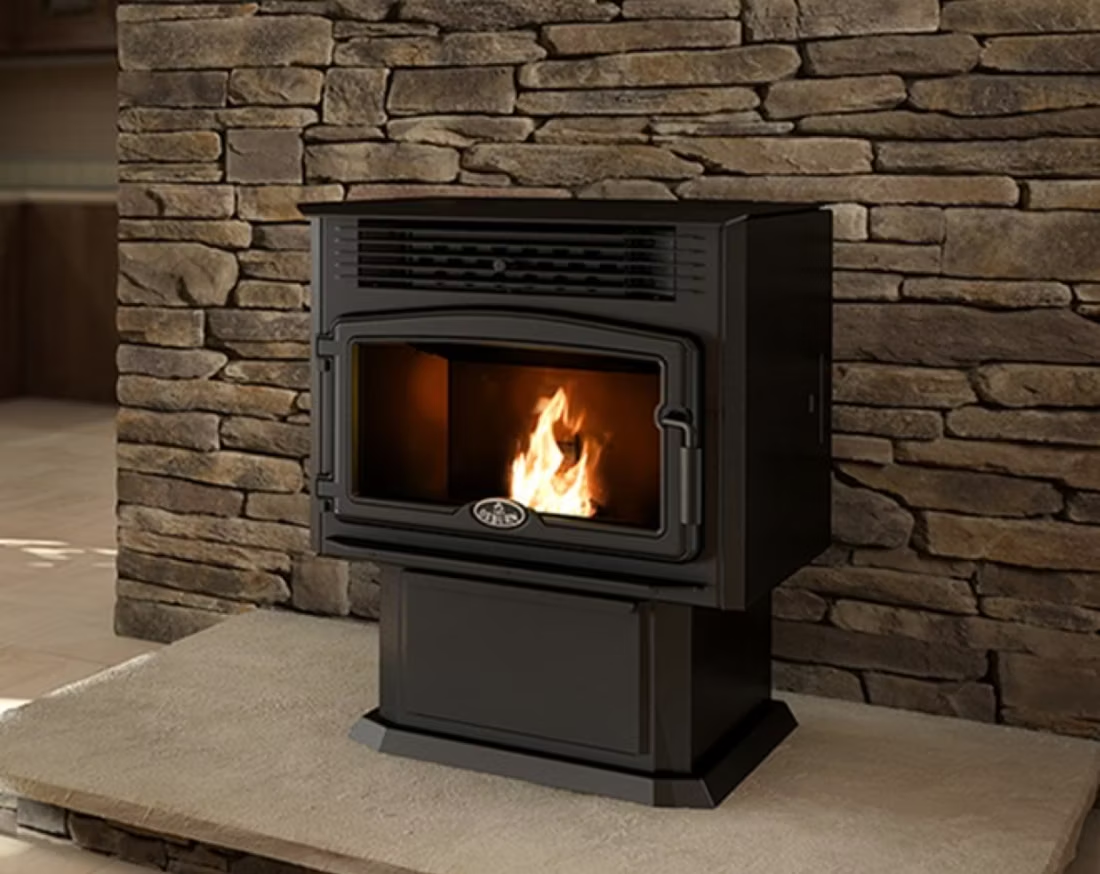
South Portland sits right on Casco Bay at just 33 feet of elevation, which tempers the worst of Maine's cold snaps compared to inland spots—but the winters here are still long and gray, with average lows around 16°F and a heating season about as demanding as Burlington, Vermont's. That's enough sustained cold to make a serious secondary or even primary heat source worth the investment, and pellet stoves have become a common answer in Cumberland County for homeowners who want the radiant, set-it-and-forget-it warmth of a wood stove without splitting, stacking, or feeding a firebox every few hours.
Maine is pellet country in its own right—New England Wood Pellet and Maine Woods Pellet Co. both mill softwood pellets from in-state timber, and Lignetics has a strong New England distribution network, so supply during a hard winter is rarely the issue it can be in regions that import pellets from further away. South Portland has no air-quality nonattainment designation and no history of winter burn bans, which means pellet stoves—already among the cleanest-burning solid-fuel appliances on the market—operate here without the curtailment restrictions some western cities impose. And with Central Maine Power's residential rate sitting around 22.4 cents per kWh, well above the national average, a pellet stove's cost-per-BTU usually beats electric resistance heat for anyone using it to zone-heat a living room or finished basement.
Three steps. No salesperson until you're ready.
Tell us about your project
Your zip code, your situation, and the fuel you're leaning toward—or let the answers point you to one.
See what's actually available
The brands dealers within 100 miles genuinely carry—real options, never a catalog mirage.
Get your dealer & Project Guide
A trusted local dealer, plus the free Project Guide & Parts List that names every component of the job.
Frequently Asked Questions
How much does a pellet stove installation cost in South Portland?
A freestanding pellet stove installation in the South Portland area typically runs $3,500 to $6,500, and a pellet insert set into an existing masonry fireplace usually falls between $4,000 and $7,500—the spread mostly comes down to whether the vent run is a simple through-wall installation or requires longer horizontal or vertical pipe runs. South Portland's Code Enforcement Office requires a permit for new solid-fuel appliance installations, and most local hearth dealers include pulling that permit as part of the install price. Homes with an existing masonry chimney and hearth pad generally land on the lower end; new construction or homes needing a fresh hearth pad and dedicated electrical outlet for the unit's auger and blower run higher.
What size pellet stove do I need for a South Portland home?
With winters about as demanding as Burlington, Vermont's and average winter lows around 16°F, South Portland homes need more heating capacity than milder coastal cities further south, even though the bay tempers the extreme cold snaps you'd see inland. A small pellet stove (under 1,000 sq ft) suits a single room or an older Cape's finished attic; a mid-size unit (1,000–1,800 sq ft) covers most South Portland colonials and capes used for zone heating; larger stoves (1,800+ sq ft) can carry more of a whole-house load in well-insulated homes. A local dealer will walk through your floor plan, insulation, and whether you're heating one zone or displacing oil or electric heat house-wide before recommending a model.
Where can I buy pellets locally in South Portland?
Cumberland County is well served by New England's pellet industry—Maine Woods Pellet Co. and New England Wood Pellet both produce softwood pellets from regional timber, and Lignetics pellets are widely stocked through New England distribution. Expect to pay roughly $275 to $350 per ton depending on the brand, bag versus bulk delivery, and time of year—buying in spring or summer before demand peaks is typically the better deal. A ton generally covers four to six weeks of heavy winter use for a mid-size stove, so most households running a pellet stove as their main heat source stock two to three tons for the season.
Pellet stove or wood stove—which fits a South Portland home better?
Wood is the traditional choice here—maple, birch, beech, oak, and spruce are all common in southern Maine's forests, and homeowners with time and storage space can cut their own through a $20-per-cord permit on White Mountain National Forest land during the May-to-October cutting season. But wood means splitting, seasoning, and hauling, and a wood stove needs regular attention to keep a fire going. Pellet stoves trade some of that authenticity for convenience: load the hopper, set the thermostat, and the auger feeds itself for a day or more. For a home where the primary user isn't interested in processing firewood but still wants a real, radiant secondary heat source, pellet is usually the better fit.
Will my pellet stove work if the power goes out?
Not without help. Pellet stoves rely on an electric auger to feed fuel and a blower to distribute heat, so a Central Maine Power outage—which happens often enough along the coast during Nor'easters and ice storms—will shut the stove down along with everything else. Many South Portland pellet stove owners pair the unit with a small battery backup or a portable generator sized for the stove's low draw (most units use under 500 watts), which keeps the auger and igniter running through a multi-hour outage. If uninterrupted heat during outages is the top priority, a wood stove or a gas unit with a standing pilot is a more resilient backup than pellet alone.
Do I need a permit to install a pellet stove in South Portland?
Yes—South Portland's Code Enforcement Office requires a building permit for new solid-fuel appliance installations, covering the unit's clearances, hearth pad, and vent penetration through the wall or roof. Because South Portland has no air-quality nonattainment designation, there are no winter curtailment periods or burn restrictions to plan around, unlike some western cities with inversion-prone air basins. Most hearth retailers handle the permit application as part of the installation quote, so it's rarely something homeowners have to navigate on their own.
How much maintenance does a pellet stove need?
Less than a wood stove, but it's not zero. Plan on emptying the ash pan every few days during heavy use, cleaning the burn pot weekly to keep the igniter working properly, and having the vent pipe and interior components professionally cleaned once a year—typically before the season starts. Pellet stoves don't build creosote the way wood stoves do, since pellets burn hotter and more completely, but the mechanical components (auger motor, blower, igniter) do wear and benefit from an annual service check by a local dealer or technician.
Is a pellet stove cheaper to run than electric heat in South Portland?
Usually, yes. Central Maine Power's residential rate runs around 22.4 cents per kWh, which is well above the national average, making electric resistance heat one of the more expensive ways to warm a room. A pellet stove burning fuel at $275 to $350 a ton typically costs less per BTU delivered, especially when it's displacing electric baseboard heat in a single zone. The exact savings depend on your stove's efficiency and how much of your heating load it's actually carrying, but most South Portland homeowners using pellet stoves to supplement or replace electric zone heat see a real reduction in their CMP bill over a full heating season.
What's the best pellet stove for South Portland's climate?
For a coastal Maine winter as demanding as Burlington, Vermont's, look for a stove rated for continuous, high-output burns rather than one designed mainly for occasional ambiance. Higher-capacity models from established manufacturers like Harman, Enviro, and Lopi are commonly stocked by Maine hearth dealers and hold up well to daily use through a full New England heating season. Ask a local dealer about hopper capacity too—a larger hopper (60+ lbs) means fewer refills during the coldest stretches when the stove is running around the clock.
What's the difference between an insert and a zero-clearance fireplace?
An insert is a fireplace that slides into a pre-existing wood-burning fireplace—if you don't have one, there's nothing to insert it into. A zero-clearance fireplace is built into a framed wall, which makes it the answer for remodels and new construction. Simple test: existing masonry fireplace means insert; blank or framed wall means zero-clearance.
Why is my open fireplace making my house colder?
Open fireplaces suck—literally. As the fire burns, it consumes air your furnace already paid to heat and pulls it out through the chimney, so the house is actually colder after the fire goes out than before you lit it. An insert fixes this: it seals the chimney, puts fixed glass across the front, and turns that hole in your house into a real heat source.
What is an in-home preview and do I need one?
It's a visit where a hearth professional measures your space, confirms the model you picked actually works in your home, and walks the specs—framing, gas line, venting, finish work—before anything is ordered. Some details you just can't know until you see the house. Never make a down payment without one; it's the single most-skipped step that burns buyers.
Can a fireplace actually lower my heating bill?
Yes—by creating a comfort zone. A furnace heats every square foot of the house just to warm the one room you're in; a gas fireplace on low burns roughly a sixth of the gas a typical furnace does. Set the furnace around 55–60 degrees as a baseline, then heat the rooms your family actually uses. Families who heat this way commonly save $20–$60 a month.
Nearby Dealers
Hearth shops serving South Portland and the surrounding area. Every listing shows whether it is a WhyFire partner, a dealer we have verified as authorized for the brands we recommend, or a local business carrying hearth products. No manufacturer pays for placement. How we verify dealers →
Performance Building Supply
Frost N Flame
Waltz & Sons Propane
Frost & Flame
Alternative Heat Source Inc.
Pellet Brands Stocked Around South Portland
Manufacturers will point you to the nearest stocking dealer.
Find your pellet stove in South Portland.
Tell us about your South Portland home and heating goals, and we'll match you with a trusted local hearth dealer—plus a free Project Guide & Parts List with the exact pellet stove or insert, vent kit, and installation plan for your space.
Find Your Fireplace →