
Zone heat for camps and cold rooms—no chimney, no venting required.
From Skowhegan south of the county line up through Bingham and Jackman toward the Canadian border, Somerset County runs long, cold, and sparsely settled. Electric fireplaces won't replace the woodstove or oil furnace carrying the load through a Zone 6A winter, but they're an easy way to add instant warmth and ambiance to a room, a camp, or a finished basement—no chimney, no gas line, no permit hassle for most units.
Every Project Starts From One of These Five Situations
Instant heat for the rooms wood can't reach.
Somerset County is Maine's largest county by land area and one of its least densely populated—a stretch of north woods, lakes, and small river towns running from Skowhegan up through Bingham and The Forks to Jackman near the Canadian border. Winters here sit firmly in Zone 6A, with the kind of sustained cold you'd associate with Caribou or International Falls more than with coastal Maine. Wood, oil, and propane carry most of the real heating load in homes and camps across the county—maple, birch, beech, oak, and spruce are the woods people are actually splitting and burning. Electric fireplaces fill a different, narrower niche: a den or bonus room that's cold six months a year, a seasonal camp on Moosehead Lake that only needs supplemental warmth on weekends, or an ice-fishing shack that wants ambiance without the fuss of a flue.
Most of Somerset County is served by Central Maine Power, and rural stretches near Jackman and the Moose River valley can see multi-day outages after an ice storm or heavy nor'easter—worth knowing, because an electric fireplace has no function without power, unlike a woodstove. That's exactly why most local homes treat electric units as a zone-heating and ambiance layer rather than a primary source. On the upside, installation is far simpler than a wood or gas project: plug-in units need nothing more than a standard outlet, while built-in wall units need a licensed electrician to run a dedicated circuit, sometimes with a simple electrical permit through the town's code enforcement officer in Skowhegan, Bingham, or Jackman. There's no chimney sweep, no venting to size, and—since Somerset has no air quality restrictions to work around—no burn-day concerns either way.
Three steps. No salesperson until you're ready.
Tell us about your project
Your zip code, your situation, and the fuel you're leaning toward—or let the answers point you to one.
See what's actually available
The brands dealers within 100 miles genuinely carry—real options, never a catalog mirage.
Get your dealer & Project Guide
A trusted local dealer, plus the free Project Guide & Parts List that names every component of the job.
Frequently Asked Questions
How much does an electric fireplace installation cost in Somerset County?
A plug-in electric fireplace or insert that runs off a standard 120V outlet typically runs $300 to $800 fully set up, since there's no electrician or permit involved beyond plugging it in. A built-in wall unit or larger insert that needs a dedicated 20-amp circuit run by a licensed electrician usually lands between $800 and $2,500, depending on how far the circuit has to travel and whether wall or hearth surround work is involved. Homes in the more remote reaches of the county—Jackman, The Forks, the Moose River valley—sometimes see a modest travel surcharge added, since fewer electricians and hearth dealers cover that stretch regularly.
What size electric fireplace do I need?
Electric fireplaces are rated for zone heating, not whole-home heat—a standard 1,500-watt unit will comfortably take the edge off a single room up to roughly 400 square feet, which is exactly the use case most Somerset County homeowners are after: a cold den, a finished basement, a camp living room. If you're hoping to offset your primary heating bill in a Zone 6A winter, an electric fireplace supplements a woodstove, oil furnace, or heat pump—it won't replace one. For genuinely cold spaces like an uninsulated camp on Moosehead Lake, plan on the fireplace as ambiance and backup warmth rather than the main heat source.
Do I need a licensed electrician to install an electric fireplace?
For a plug-in model, no—it's a standard household outlet, same as a space heater. For a built-in or wall-mounted unit that requires a dedicated circuit, yes, and Maine requires that wiring work be done by a licensed electrician regardless of where in Somerset County you're located. Local hearth dealers serving the Skowhegan area typically coordinate the electrician as part of the install, which is worth asking about up front—it saves you from managing two separate contractors.
What's the difference between an electric fireplace, insert, and mantel package?
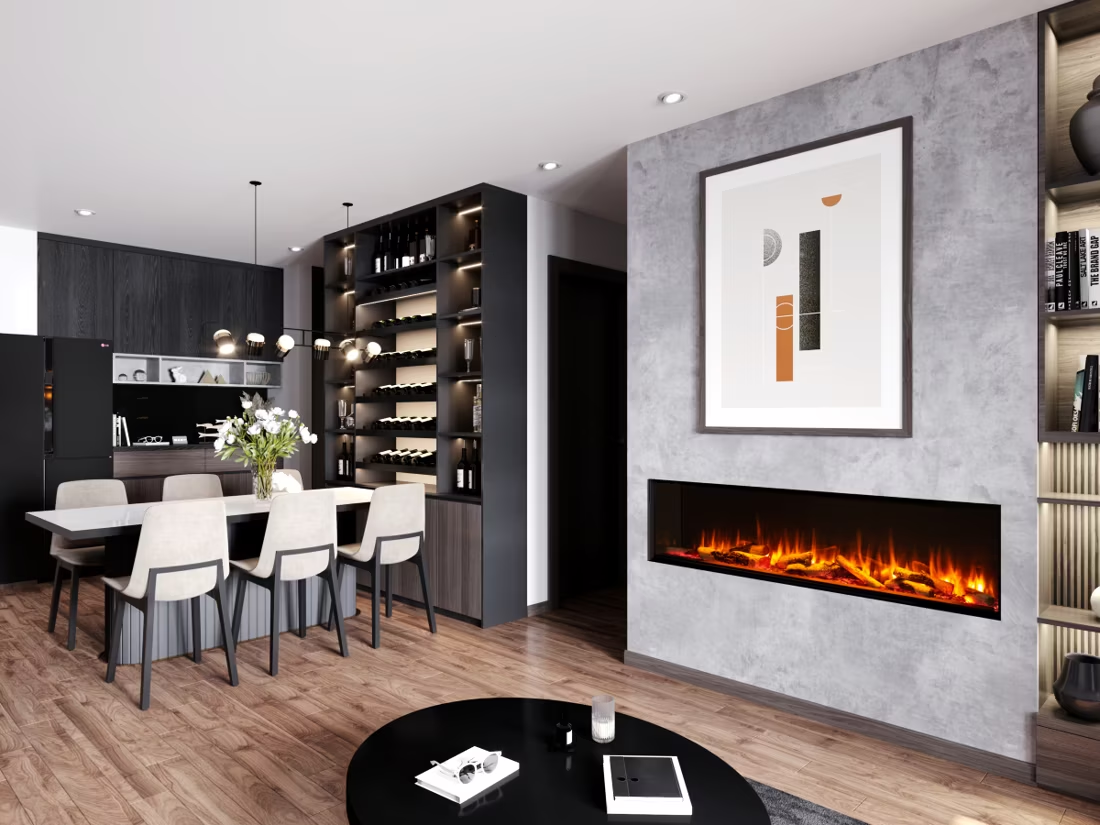
A built-in electric fireplace is designed to be framed into a wall, much like a gas fireplace would be, and gives the cleanest, most permanent look. An electric insert is sized to drop into an existing masonry fireplace opening—a common upgrade for older farmhouses in the county with fireplaces that are drafty or no longer used for wood. A mantel package pairs a freestanding electric unit with a surround and can be moved or swapped out later, which makes it a popular choice for camps and seasonal properties where flexibility matters more than a permanent build.
Do I need a permit to install an electric fireplace in Somerset County?
A simple plug-in unit needs no permit at all. If your installation requires new electrical circuit work—the case for most built-in units—an electrical permit is typically pulled through your town's code enforcement officer, whether that's Skowhegan, Bingham, Jackman, or another town in the county. Unlike a wood or gas installation, there's no building department review of clearances or venting, since electric units generate no combustion byproducts and carry far simpler code requirements.
What's the best electric fireplace for a cold Maine climate?
Look for a unit with a real 1,500-watt heating element rather than a decorative-only insert, and consider an infrared model if you want more focused, immediate warmth in a specific seating area—useful in a drafty camp room where you're trying to counter a Zone 6A chill rather than heat the whole structure. Because electric fireplaces are supplemental by design, pair them with whatever's already carrying your primary heat load—a woodstove burning local maple or oak, an oil furnace, or a heat pump—rather than expecting the fireplace itself to keep a Somerset County home warm through January.
How much maintenance does an electric fireplace need?
Very little compared to a wood or gas system. There's no chimney to sweep and no annual combustion inspection required. Maintenance is mostly dusting the heater vents and, on older models, occasionally replacing an LED light strip or heating element. This is one of the real advantages for a camp or seasonal property in the county that sits empty for stretches—there's nothing to fail from disuse the way a neglected chimney or gas line can.
Will my electric fireplace work during a power outage?
No—and this is the most important thing to understand before relying on one. Electric fireplaces have no function without power, and Somerset County's rural stretches, particularly around Jackman and the Moose River valley, can see outages stretch for days after a significant ice storm on the Central Maine Power grid. If backup heat during outages matters to you, that role needs to be filled by a woodstove or a generator-backed system—the electric fireplace is for everyday comfort and ambiance, not emergency heat.
Electric vs. pellet stove—which is right for my Somerset County home?
A pellet stove burning bagged pellets from Maine Woods Pellet Co., New England Wood Pellet, or Lignetics can genuinely heat a room or a small home, runs cleaner than cordwood, and is a step up in real heat output from anything electric can offer—but like an electric unit, it needs power to run its auger and blower, so it's not an outage-proof option either. An electric fireplace wins on install simplicity and cost, with no hopper to fill and no ash to manage, but it's strictly a zone-heat and ambiance tool. If you're looking for a genuine secondary heat source for a Somerset County camp or home, a pellet stove is the stronger choice; if you just want warmth and a nice-looking fire in a specific room with minimal fuss, electric is the easier path.
Do electric fireplaces actually produce heat?
Yes—most put out around 4,800–5,000 BTUs from a standard outlet, which comfortably warms a bedroom, office, or den as a comfort-zone heater. What they won't do is carry a whole house the way wood, gas, or pellet can. Think of electric as ambiance-first with honest supplemental heat: flames on with no heat in July, flames plus warmth in January.
How much does an electric fireplace cost to run?
With the heater on, a typical unit draws about 1,500 watts—at average electric rates that's roughly 20 cents an hour. Run the flame effect alone and it costs pennies; the flames are LED-driven and use about as much power as a light bulb. There's no pilot light, no fuel delivery, and essentially no maintenance.
Can a fireplace actually lower my heating bill?
Yes—by creating a comfort zone. A furnace heats every square foot of the house just to warm the one room you're in; a gas fireplace on low burns roughly a sixth of the gas a typical furnace does. Set the furnace around 55–60 degrees as a baseline, then heat the rooms your family actually uses. Families who heat this way commonly save $20–$60 a month.
Can I install a fireplace myself?
If you're putting a fire in your house on purpose, it's best to work with an expert. Unless you're genuinely experienced in framing, gas line, vent pipe, and the national code on clearances to combustibles, have a professional do it—and ideally the same company that sells you the fireplace, so warranty, service, and liability all live under one roof.
Find your electric fireplace in Somerset County.
Tell us about your room, your camp, or your home, and we'll match you with a trusted local dealer serving Somerset County—plus a free Project Guide & Parts List covering the unit, mounting kit, and electrical requirements for your specific space.
Find Your Fireplace →