
Built for the coldest stretch of a Maine winter.
Wood, gas, pellet, and electric fireplace resources for every town in Somerset County—from Skowhegan on the Kennebec up through Bingham and Jackman near the Quebec border. Find the right unit and connect with a trusted local hearth retailer.
Every Project Starts From One of These Five Situations
Cold, heavily forested, and largely off the natural gas grid.
Somerset County sits in Climate Zone 6A, and winters here run long and hard—closer in feel to Caribou, Maine than to the coast. The county stretches from the Kennebec River valley around Skowhegan and Madison north through Bingham and The Forks into a vast unorganized territory that reaches the Quebec border near Jackman and Moose River. Hardwood is everywhere: maple, birch, beech, and oak fill the woodlots, with spruce mixed in on the softwood side. Cutting your own firewood, or buying it from a neighbor with a splitter, is simply how a lot of this county heats through January and February.
This hub covers hearth retailers, service technicians, and fuel suppliers working across the county—from Skowhegan and the Madison/Fairfield corridor up to Bingham, The Forks, and Jackman. Because natural gas mains don't reach most of Somerset County, gas fireplace and stove installs here almost always mean propane rather than piped gas. Pick your fuel below to see local dealers, install costs, and recommended units for your specific project—whether that's a farmhouse near Skowhegan or a camp on Moosehead-adjacent land near Jackman.
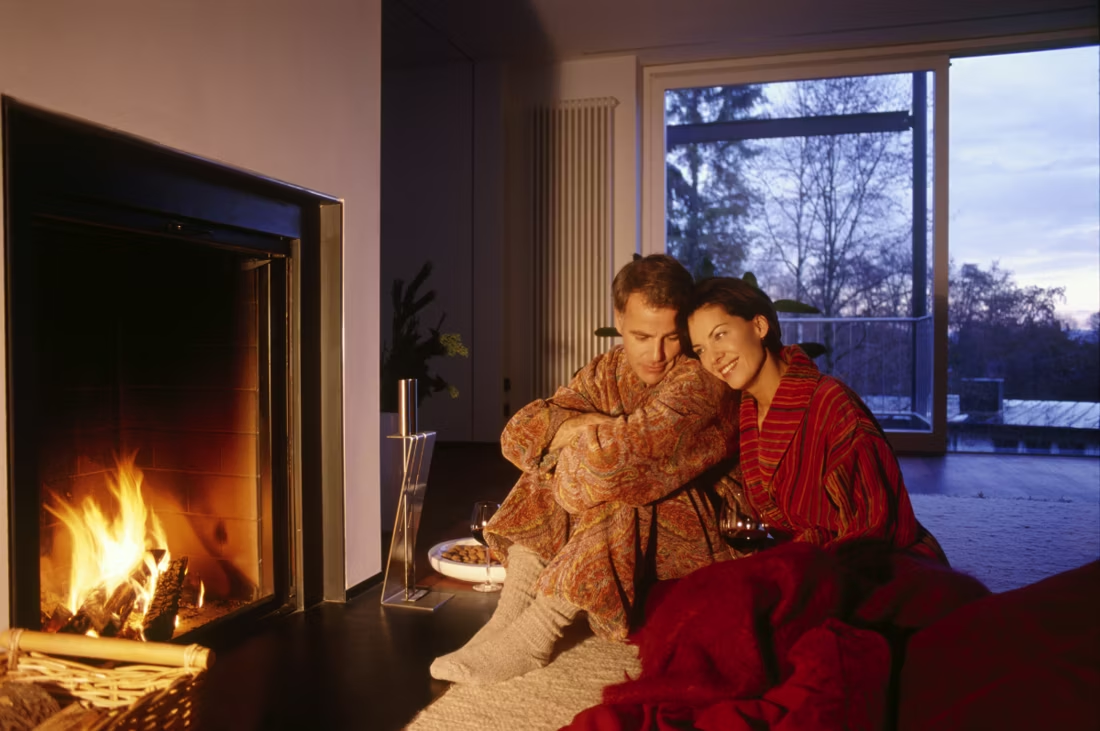
Four fuels. One honest answer for Somerset County.
Three steps. No salesperson until you're ready.
Tell us about your project
Your zip code, your situation, and the fuel you're leaning toward—or let the answers point you to one.
See what's actually available
The brands dealers within 100 miles genuinely carry—real options, never a catalog mirage.
Get your dealer & Project Guide
A trusted local dealer, plus the free Project Guide & Parts List that names every component of the job.
Frequently Asked Questions
Which fuel works best in Somerset County?
Wood remains the backbone fuel across most of Somerset County—the maple, birch, beech, and oak that fill local woodlots burn hot and long, and a lot of households here still cut or buy cordwood the way their parents did. Pellet is a strong second option, especially now that Maine Woods Pellet Co. produces pellets in-state, which keeps supply local and prices steadier than trucked-in product. Gas here almost always means propane rather than piped natural gas, since gas mains don't reach most of the county outside a few village centers—propane fireplaces and inserts give you instant heat without a woodpile. Electric fireplaces are supplemental in this climate—good for a spare bedroom or camp that only needs occasional warmth—but they're not a primary heat source through a Somerset County winter. Most homes here run wood or pellet as the main heater, with propane or electric filling in on the margins.
Do I need a permit to install a fireplace in Somerset County?
It depends on where in the county you are. In organized towns like Skowhegan, Madison, Fairfield, and Bingham, new wood stoves, inserts, propane appliances, and pellet stoves typically require a permit through the town's code enforcement officer, and propane hookups need a licensed gas fitter. In the large unorganized territory that covers much of northern Somerset County—around Jackman, The Forks, and Moose River—there's no town office to issue permits; instead, building activity is regulated by Maine's Land Use Planning Commission (LUPC). Any new wood-burning appliance sold or installed needs to meet current EPA 2020 NSPS emissions standards regardless of which jurisdiction you're in. Most local hearth retailers know which office to file with and handle that step as part of the installation.
Are there air quality restrictions on wood burning in Somerset County?
No—unlike some western basin communities with winter inversion problems, Somerset County has no formal wood-smoke advisories or curtailment periods. This is open, forested, rural terrain without the topography that traps smoke, so there's no equivalent of a yellow or red burn-advisory day here. The main regulation homeowners run into is around outdoor debris burning, which requires a permit from the Maine Forest Service and is separate from heating-appliance use. New wood stoves and inserts sold anywhere in the county still need to meet EPA 2020 NSPS standards, but that's a manufacturing requirement, not a local restriction on when you can light a fire.
Can one local hearth retailer handle all four fuel types?
Several dealers based around Skowhegan and Madison carry wood, propane (gas), pellet, and electric units, which makes them a good stop if you're still deciding between fuels—you can see working displays and talk through trade-offs like woodpile labor versus propane convenience. Smaller shops closer to Bingham or serving the Jackman area sometimes focus on wood and pellet only, since propane installs often route through a separate propane supplier who also handles the tank and line work. If a business you're looking at is really a firewood or pellet supplier rather than a hearth retailer, they typically won't carry appliances or handle installation—the fuel-page listings note which is which.
How does service work in the more remote parts of Somerset County?
Most technicians are based around Skowhegan or Madison and drive out to cover the rest of the county, including Bingham, The Forks, and the unorganized territory up toward Jackman near the Quebec border. Expect a modest travel charge for the farthest calls, and expect fewer techs willing to make emergency mid-winter trips up Route 201 once snow and ice set in. The practical move is booking annual chimney sweeping or propane inspection in September or October, before the first hard cold—trying to schedule a service call in January near Jackman is a much harder ask than the same call in August.
What's the typical cost range for fireplace installation across all fuel types in Somerset County?
Ranges vary by fuel and by how far the crew has to travel. Wood stove or insert installation: roughly $4,500–$9,500 for a typical retrofit, up to $15,000 for new-construction chimney work. Propane fireplace, insert, or stove: about $4,000–$10,000, depending on whether a new tank and line are needed or an existing propane system is already in place. Pellet stove or insert: typically $4,500–$7,500. Electric fireplace: $200–$3,000 for the unit itself, plus $400–$1,200 in labor for anything beyond a simple plug-in setup. Rural travel distance—especially for jobs near Jackman or The Forks—can push labor toward the higher end of these ranges.
Can I install a fireplace myself?
If you're putting a fire in your house on purpose, it's best to work with an expert. Unless you're genuinely experienced in framing, gas line, vent pipe, and the national code on clearances to combustibles, have a professional do it—and ideally the same company that sells you the fireplace, so warranty, service, and liability all live under one roof.
Does a fireplace add value to my home?
On average, a fireplace adds back to the home about the same amount you spent installing it. Add the monthly savings from heating the rooms you actually use instead of the whole house—often hundreds of dollars a year—and the value case is strong before you even count what a fire does for how your family uses the room.
What is an in-home preview and do I need one?
It's a visit where a hearth professional measures your space, confirms the model you picked actually works in your home, and walks the specs—framing, gas line, venting, finish work—before anything is ordered. Some details you just can't know until you see the house. Never make a down payment without one; it's the single most-skipped step that burns buyers.
Wood, gas, pellet, or electric—how do I choose?
Match the fuel to your life, not the other way around. Wood: lowest fuel cost and total power-outage independence, but you're hauling and stacking. Gas: press a button, set a thermostat, no maintenance to speak of. Pellet: wood economics with automatic feeding, in exchange for weekly cleaning and a need for electricity. Electric: plugs in anywhere with honest supplemental heat. Nobody regrets the fuel that fits how they actually live.
Stove and Fireplace Dealers in Somerset County
Listings include WhyFire partner dealers, dealers we have verified as authorized for the brands we recommend, and established local businesses that carry hearth products. Every listing shows which one it is. The ones marked Preferred run on WhyFire's software, so they can show you real pricing and book your appointment right here. No manufacturer pays for placement. How we verify dealers →
Moosehead Trail Home & Hearth
Distribution M.f. Granit Inc.
Rangley Fireplace
Northern Lights Maine, Inc.
Whittemore & Sons
Find your fireplace in Somerset County.
Pick your fuel below to see installation costs, get matched with a trusted local dealer, and receive a free Project Guide & Parts List built for your home and your part of the county.
Find Your Fireplace →