
Instant, chimney-free warmth for the Kennebec Valley's coldest nights.
Zone heat and real flame-look ambiance for the river towns of Sagadahoc County - from Bath's historic sea captain's houses to newer builds in Topsham and Bowdoinham. Find the right unit and connect with a trusted local dealer.
Every Project Starts From One of These Five Situations
Electric heat earns its place alongside wood and oil in Sagadahoc County.
Sagadahoc is Maine's smallest county by land area, tracing the Kennebec River from the shipyards of Bath down through Woolwich, Arrowsic, Georgetown, and Phippsburg to the open Atlantic. Just under 8,800 people live here, spread between Bath's dense historic core and the more rural riverside and coastal communities upriver in Topsham, Bowdoinham, and Richmond. Winters are long and firm: Sagadahoc County's winter climate falls in the same range as Burlington, Vermont, with average lows near 10°F and a heating season that runs roughly from October through April.
Electric fireplaces do real work in a county like this, but rarely as the sole heat source given how long and cold winters run here - most Sagadahoc households pair a heat pump, oil furnace, or wood stove for primary heat and use an electric unit for zone warmth and ambiance. That pairing shows up constantly in Bath's historic district, where Federal-style captain's houses often have masonry fireplaces with flues that were bricked up or never rebuilt to modern code; an electric insert drops into that existing opening without touching the chimney, without a burn permit, and without the annual sweep a wood-burning unit needs. In newer construction around Topsham and Bowdoinham, wall-mounted electric units are a common choice for a den or primary bedroom where running a new gas line or masonry chimney doesn't make sense. Central Maine Power serves electric delivery countywide, and running costs factor into which unit and wattage actually makes sense for a given room.
Three steps. No salesperson until you're ready.
Tell us about your project
Your zip code, your situation, and the fuel you're leaning toward—or let the answers point you to one.
See what's actually available
The brands dealers within 100 miles genuinely carry—real options, never a catalog mirage.
Get your dealer & Project Guide
A trusted local dealer, plus the free Project Guide & Parts List that names every component of the job.
Frequently Asked Questions
How much does an electric fireplace installation cost in Sagadahoc County?
A plug-in electric insert or freestanding unit that uses an existing 120-volt outlet typically runs $200 to $600 installed, since no new wiring is required. A built-in wall unit or a higher-output insert that needs a dedicated 240-volt circuit runs closer to $1,500 to $4,000 once a licensed electrician is involved, including any wall framing or trim work. Electrical permit requirements and fees vary by town in Sagadahoc County - Bath, Topsham, Bowdoinham, Richmond, and Woolwich each handle their own permitting through their local code enforcement or town office, so it's worth confirming with your installer which jurisdiction applies before work starts.
What size electric fireplace do I need for my home?
Most electric fireplaces top out around 1,500 watts, which translates to roughly 5,000 BTU of heat output - enough to comfortably warm a 400 to 600 square foot room with average insulation. That's a meaningful number in a den or bedroom, but it won't carry an entire drafty older home through a Sagadahoc County winter that runs about as long and cold as Burlington, Vermont's. In Bath's older housing stock - plenty of single-pane windows and uninsulated post-and-beam construction - electric units work best as zone heat for one well-used room, paired with a heat pump or oil furnace for whole-house heating. Newer, tighter homes in Topsham and Bowdoinham can sometimes get more mileage out of a single unit for a small addition or finished basement.
Who installs electric fireplaces near me, and do I need an electrician?
Plug-in units don't require an electrician - anyone can set one in place and plug it into an existing outlet. Anything requiring a new circuit, a dedicated 240-volt line, or in-wall wiring needs a licensed Maine electrician, and most hearth retailers serving Sagadahoc County either employ one or work directly with one to handle both the unit and the wiring in a single visit. That matters most in Bath's historic district, where in-wall installations sometimes involve older knob-and-tube wiring that needs to be addressed before a new circuit can be run safely.
What's the difference between an electric insert, a wall-mount unit, and an electric stove?
An electric insert is built to drop into an existing masonry fireplace opening - a common fit for Bath's older homes with fireplaces that no longer have a working flue. A wall-mount or built-in unit is framed into a wall like a flat-screen television, popular in newer construction around Topsham and Bowdoinham where there's no existing fireplace to work with. A freestanding electric stove looks like a small wood stove and can sit anywhere near an outlet, which makes it a flexible option for a rental, a converted barn, or a room where running new wiring isn't practical. All three heat the same way - a resistance heater plus a blower - so the choice comes down to what opening or wall space you're working with.
Do I need a permit to install an electric fireplace in Sagadahoc County?
A plug-in unit generally doesn't need a permit since no wiring changes. A built-in or wall-mount unit that requires a new circuit does need an electrical permit, issued locally rather than at the county level - the City of Bath Code Enforcement Office, the Topsham Planning and Development Office, and the town offices in Bowdoinham, Richmond, and Woolwich each issue their own. Because there's no chimney, venting, or gas line involved, electric installations tend to be the fastest permit to close out of any fuel type - often a single inspection after the wiring is roughed in.
What's the best electric fireplace for a Sagadahoc County winter?
Look past the flame display and check the actual heating spec - a genuine 1,500-watt resistance heater with a real thermostat, not just an LED ember effect. Brands like Dimplex and Napoleon build units rated for real supplemental heat rather than pure ambiance, which matters when average lows sit near 10°F for weeks at a stretch. Given how long and cold winters run in Sagadahoc County, plan on an electric unit as a zone heater paired with a heat pump, oil furnace, or wood stove for the coldest stretches of the season - not as your only heat source in the house.
What does it cost to run an electric fireplace with Central Maine Power rates?
A 1,500-watt unit run at full output for eight hours draws about 12 kilowatt-hours, which at typical Central Maine Power residential rates works out to roughly $2.50 to $3 a day. Most Sagadahoc County households don't run a unit at full output all day - a few hours in the evening in a den or bedroom is more typical, which puts monthly cost closer to $20 to $40 during the heart of the heating season. That's part of why electric fireplaces work best as supplemental zone heat rather than a full replacement for oil or a heat pump in a county where winters run this long and cold.
Electric vs. wood - which is right for my Sagadahoc County home?
Wood remains a working primary or supplemental heat source across the county - maple, birch, beech, oak, and spruce are all common locally, and plenty of Sagadahoc households, especially outside Bath's village core, still burn wood through the coldest months and keep heating oil budgets down. Wood also keeps working if the power goes out, which happens along the coast during winter storms. Electric fireplaces can't do that - no power, no heat - but they win on convenience, zero maintenance, and fit in homes where a chimney doesn't exist or isn't functional, particularly in Bath's historic district where reopening an old flue isn't always practical. Many households in the county end up with both: wood for real backup heat, electric for the room where a plug-in unit is simpler than running a stovepipe.
Electric vs. pellet stove - which should I choose?
Pellet stoves burn compressed wood pellets - locally available from Maine Woods Pellet Co, New England Wood Pellet, and Lignetics - and can genuinely serve as a primary or near-primary heat source, putting out real BTUs that scale with a hopper and auger rather than a fixed wattage ceiling. They need venting through an exterior wall and electricity to run the auger and blower, so they stop working in a power outage unless backed up with a generator or battery. Electric fireplaces need no venting at all, install in an afternoon, and produce zero emissions, but they're capped well below what a pellet stove can deliver and cost more per BTU to run at Central Maine Power's electric rates. For a Sagadahoc County home that wants real heating capacity without a chimney, pellet is usually the better fit; for ambiance and light supplemental warmth in a specific room, electric is simpler and cheaper to install.
Does an electric fireplace need a vent or chimney?
No—that's its superpower. An electric fireplace needs a wall and an outlet, period. No vent pipe, no gas line, no clearances to design around, which is why it works in bedrooms, offices, apartments, and walls where venting a gas or wood unit would be impractical or impossible. Installation is typically the simplest and least expensive of any fireplace type.
Can I put a TV above my fireplace?
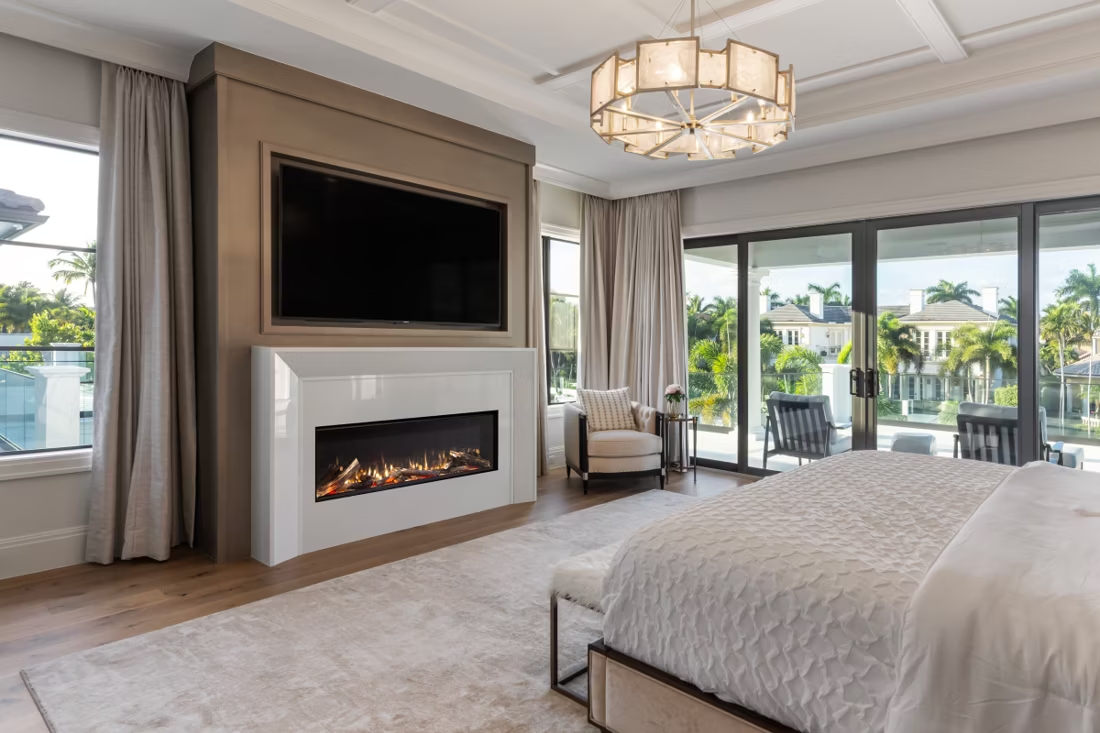
Yes—with an asterisk. Fireplaces are hot and TVs don't like heat. Either put a mantel between them to deflect rising warmth, or choose a fireplace with heat-management technology that creates a cool zone on the wall above—the wall stays around 125 degrees, barely warm, while the room still gets full heat. If you like clean lines and don't want a mantel, heat management is the answer.
What is an in-home preview and do I need one?
It's a visit where a hearth professional measures your space, confirms the model you picked actually works in your home, and walks the specs—framing, gas line, venting, finish work—before anything is ordered. Some details you just can't know until you see the house. Never make a down payment without one; it's the single most-skipped step that burns buyers.
Should the dealer who sells my fireplace also install it?
Ideally, yes. A fireplace project involves vent pipe, gas line, electrical, and often tile or stone. Hire three or four separate trades and you own the liability and the game of telephone between them. One company selling and installing means one accountable party, start to finish—ask about factory training, on-time completion records, and what happens if an inspection fails.
Stove and Fireplace Dealers in Sagadahoc County
Listings include WhyFire partner dealers, dealers we have verified as authorized for the brands we recommend, and established local businesses that carry hearth products. Every listing shows which one it is. The ones marked Preferred run on WhyFire's software, so they can show you real pricing and book your appointment right here. No manufacturer pays for placement. How we verify dealers →
Sagadahoc Stove Co.
Louis Doe Home Center
Damariscotta Hardware Inc.
Find your electric fireplace in Sagadahoc County.
Tell us a bit about your home and we'll match you with the right electric fireplace, insert, or wall-mount unit - and connect you with a trusted local dealer for a free Project Guide & Parts List.
Find Your Fireplace →