
Find the right fireplace for a Sagadahoc County winter.
Wood, gas, pellet, and electric fireplace resources for every town along the Kennebec and Merrymeeting Bay—from Bath and Topsham to the peninsula towns of Georgetown and Phippsburg. Find the right unit and connect with a trusted local hearth retailer.
Every Project Starts From One of These Five Situations
Coastal Maine heating, from the Kennebec to the peninsula towns.
Sagadahoc is Maine's second-smallest county by land area but carries a long, cold heating season—a lengthy winter heating load, roughly on par with Burlington, Vermont, and colder than most of coastal New England. Winter lows average around 10°F, and the season stretches from October well into April. Bath, the county seat and home of Bath Iron Works, anchors the upriver side; Topsham, Bowdoinham, and Richmond sit along the Kennebec; and the peninsula towns—Georgetown, Arrowsic, Phippsburg, and West Bath—reach out toward the open Atlantic. Wood heat has deep roots here: local woodlots supply maple, birch, beech, oak, and spruce, and a well-seasoned cord of hardwood remains a practical hedge against winter power outages along the coast.
What you'll find on this hub: hearth retailers, service technicians, and fuel suppliers serving every community in the county, from the Bath Iron Works corridor to the working waterfronts of Georgetown and Phippsburg. Pick your fuel below to drill into specifics—local dealers, installation costs, recommended units, and the resources that match your project. Whether you're heating a Kennebec farmhouse or a saltwater cottage on Arrowsic, this is the starting point.
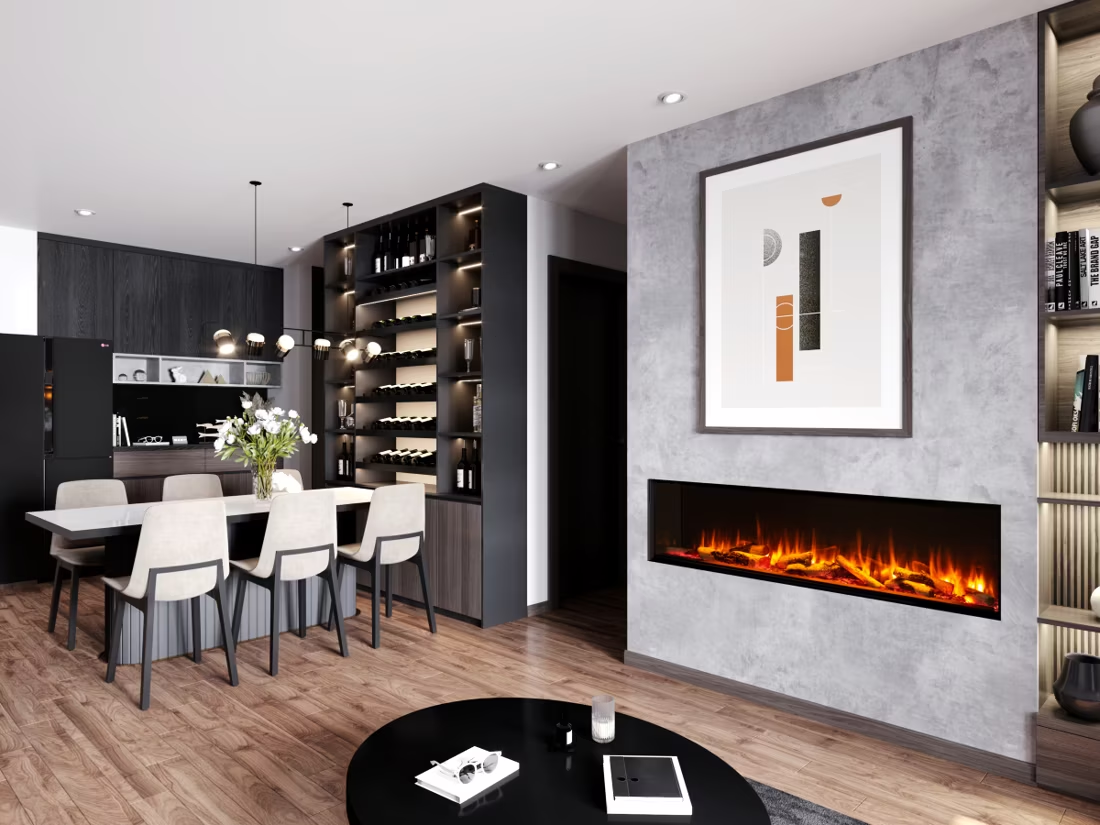
Four fuels. One honest answer for Sagadahoc County.
Three steps. No salesperson until you're ready.
Tell us about your project
Your zip code, your situation, and the fuel you're leaning toward—or let the answers point you to one.
See what's actually available
The brands dealers within 100 miles genuinely carry—real options, never a catalog mirage.
Get your dealer & Project Guide
A trusted local dealer, plus the free Project Guide & Parts List that names every component of the job.
Frequently Asked Questions
Which fuel works best in Sagadahoc County?
It depends on your home and your tolerance for woodpile labor. Wood remains a strong choice countywide—local woodlots produce maple, birch, beech, oak, and spruce, and a properly sized catalytic or non-catalytic stove will hold a fire through a 10°F overnight low without much trouble. Gas is mostly propane here, since piped natural gas is limited to pockets near Bath served by Maine Natural Gas—propane fireplaces and inserts give instant heat with none of the wood-handling. Pellet is a solid middle ground, and with New England Wood Pellet and Maine Woods Pellet Co both producing regionally, fuel supply is reliable and doesn't have to travel far. Electric works well as supplemental heat in bedrooms, sunrooms, and older homes on the peninsula where running new gas or masonry chimney work isn't practical, but it's not typically the primary heat source through a Sagadahoc winter.
Do I need a permit to install a fireplace in Sagadahoc County?
Almost always, yes—but who issues it depends on the town. Maine doesn't have a single county building department; each town in Sagadahoc County (Bath, Topsham, Bowdoinham, Richmond, West Bath, Woolwich, Georgetown, Arrowsic, and Phippsburg) runs its own code enforcement office and reviews permits for wood stoves, inserts, gas appliances, and pellet stoves against NFPA 211 clearance and venting requirements. New wood-burning appliances must meet EPA 2020 NSPS certification. Gas installations typically need a separate permit for the gas line and a licensed propane technician to make the connection. Electric fireplaces usually skip the permit process unless the install involves new wiring or a built-in unit. Most local retailers handle the paperwork with your town's code enforcement officer as part of the installation.
Are there air quality restrictions on wood burning in Sagadahoc County?
No—Sagadahoc County has no non-attainment designation and no seasonal wood-burning curtailment program like you'll find in inland valley regions of the Pacific Northwest. The county's coastal position along Merrymeeting Bay and the Kennebec means sea breeze generally keeps woodsmoke from settling the way it can in an enclosed basin. That said, any new wood stove or insert sold and installed here still needs to meet EPA 2020 NSPS emissions standards, and outdoor burning of brush or debris requires a permit from your town's fire warden, especially during dry spring conditions before the ground greens up.
Can one local hearth retailer handle all four fuel types?
Most hearth retailers serving Sagadahoc County carry at least three of the four fuel types, with dealers based around Bath and Topsham typically stocking wood, gas, and pellet units and offering electric fireplaces as a smaller side line. If you're not sure yet which fuel fits your Kennebec farmhouse or peninsula cottage, a multi-fuel dealer can show you working displays of wood, gas, and pellet stoves side by side and walk through venting and clearance requirements specific to your home's construction—older Sagadahoc homes near the water often have masonry chimneys that change what's practical to install.
How does service work in the peninsula towns of Sagadahoc County?
Most chimney sweeps and gas techs serving Sagadahoc County are based in Bath or Topsham and travel out to Georgetown, Arrowsic, and Phippsburg over the bridges that connect the peninsula to the mainland. Summer tourist traffic on Route 209 can slow scheduling in July and August, so booking your annual sweep or gas inspection in early fall—before the first cold snap—is the more reliable window. If you're heating a seasonal cottage on Arrowsic or Georgetown, it's worth scheduling service around your own opening and closing dates rather than waiting for a mid-winter emergency call.
What's the typical cost range for fireplace installation across all fuel types in Sagadahoc County?
Ranges vary by fuel and by how much chimney or venting work is needed. Wood stove or insert installation: roughly $4,500–$9,500 for a typical install, running higher if new construction requires a full masonry or Class-A chimney. Propane fireplace, insert, or stove: roughly $4,500–$10,500 depending on line work and venting, lower if propane service is already in place. Pellet stove or insert: roughly $4,500–$7,500 for a typical install. Electric fireplace: $200–$3,000 for the unit itself, plus $400–$1,200 in labor for anything beyond a plug-in installation. For details tied to actual local retailer pricing, see the county + fuel pages above.
Can a fireplace actually lower my heating bill?
Yes—by creating a comfort zone. A furnace heats every square foot of the house just to warm the one room you're in; a gas fireplace on low burns roughly a sixth of the gas a typical furnace does. Set the furnace around 55–60 degrees as a baseline, then heat the rooms your family actually uses. Families who heat this way commonly save $20–$60 a month.
Does a fireplace add value to my home?
On average, a fireplace adds back to the home about the same amount you spent installing it. Add the monthly savings from heating the rooms you actually use instead of the whole house—often hundreds of dollars a year—and the value case is strong before you even count what a fire does for how your family uses the room.
How much should I budget for a fireplace?
For an average home—covering the fireplace, the vent pipe, and basic installation—a budget between $3,900 and $5,500 gives you a lot of options across wood, gas, and pellet. By the time you add finish work, gas line, and electrical, the average complete installation lands between $5,000 and $12,000 all-in. In a remodel or new build, a good rule is to put about 2.5% of the total project cost toward the fireplace.
Wood, gas, pellet, or electric—how do I choose?
Match the fuel to your life, not the other way around. Wood: lowest fuel cost and total power-outage independence, but you're hauling and stacking. Gas: press a button, set a thermostat, no maintenance to speak of. Pellet: wood economics with automatic feeding, in exchange for weekly cleaning and a need for electricity. Electric: plugs in anywhere with honest supplemental heat. Nobody regrets the fuel that fits how they actually live.
Stove and Fireplace Dealers in Sagadahoc County
Listings include WhyFire partner dealers, dealers we have verified as authorized for the brands we recommend, and established local businesses that carry hearth products. Every listing shows which one it is. The ones marked Preferred run on WhyFire's software, so they can show you real pricing and book your appointment right here. No manufacturer pays for placement. How we verify dealers →
Sagadahoc Stove Co.
Louis Doe Home Center
Damariscotta Hardware Inc.
Find your fireplace in Sagadahoc County.
Pick your fuel below and we'll match you with a trusted local dealer and send you a free Project Guide & Parts List—the exact parts, vent kit included, and the dealer we recommend for your town.
Find Your Fireplace →