
Add electric warmth to your Franklin County home.
From lake camps around Rangeley to condos at the base of Sugarloaf, electric fireplaces give Franklin County homes instant ambiance and zone heat without a chimney or gas line. Find the right unit and connect with a trusted local dealer.
Every Project Starts From One of These Five Situations
Ambiance and zone heat, not a substitute for wood or pellet.
Franklin County sits in climate zone 6A, western Maine's ski and lake country, with winters as long and demanding as Burlington, VT's. In a county of roughly 2,200 year-round residents spread across Farmington, Wilton, Phillips, Kingfield, Rangeley, and a good deal of unorganized township land, wood is still the backbone of home heating. Maple, birch, beech, oak, and spruce are all cut locally, and a wood or pellet stove—burning Lignetics, New England Wood Pellet, or Maine Woods Pellet Co. product—is what most full-time residents lean on when an ice storm knocks the power out for days.
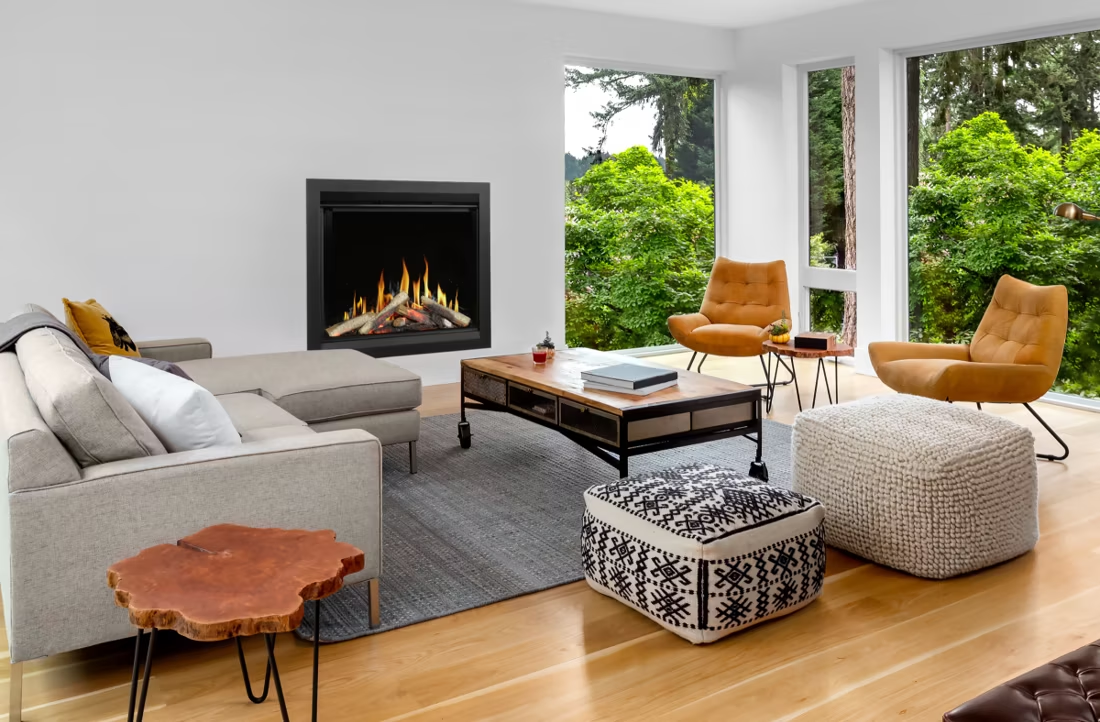
Electric fireplaces fill a different, real need in Franklin County: seasonal camps around the Rangeley Lakes that don't have a chimney, ski condos near Sugarloaf where owners want a clean look with zero maintenance, rental units in Farmington and Wilton where a landlord can't run a flue, and any room where you want instant flame-effect ambiance and a bit of supplemental warmth without opening a wall. No venting, no gas line, no permit hassle in most cases—just a unit that plugs in or gets hardwired by an electrician. It's not the primary heat source in a county this cold, but it's an easy, honest addition to a home that already has wood or pellet covering the hard winter nights.
Three steps. No salesperson until you're ready.
Tell us about your project
Your zip code, your situation, and the fuel you're leaning toward—or let the answers point you to one.
See what's actually available
The brands dealers within 100 miles genuinely carry—real options, never a catalog mirage.
Get your dealer & Project Guide
A trusted local dealer, plus the free Project Guide & Parts List that names every component of the job.
Frequently Asked Questions
How much does an electric fireplace installation cost in Franklin County?
A plug-in electric insert or freestanding electric stove that drops into an existing mantel or opening typically runs $300 to $1,200 installed, since there's no venting or gas work involved. A hardwired wall-mount or built-in unit—common in newer camps and condo remodels near Sugarloaf—runs higher, often $1,000 to $2,500, once an electrician runs a dedicated circuit and the surround is finished. Local dealers serving Farmington, Wilton, and the Rangeley area can quote a firm number after seeing the room and the existing electrical panel.
Do I need a permit to install an electric fireplace in Franklin County?
Usually not for a simple plug-in unit—no venting or gas line means most towns don't require a building permit. If you're hardwiring a built-in unit, an electrical permit is typically needed through your town's code enforcement officer. It's worth noting that a large share of Franklin County is unorganized territory—the woods around Rangeley, Dallas Plantation, and other townships—where permitting for structural or electrical work runs through Maine's Land Use Planning Commission rather than a town office. Your local dealer can tell you which jurisdiction applies to your specific property.
What size electric fireplace do I need?
Electric fireplaces are sized for the room, not the whole house—think 400 to 1,500 watts of supplemental heat for a single bedroom, den, or camp living room in the 150 to 400 square foot range. Larger great rooms or open floor plans common in newer Sugarloaf-area builds may call for two units or a larger wall-mount model rated for 1,500 watts, which is close to the practical ceiling for a standard 15-amp household circuit. Given Franklin County's long, cold season, most buyers pair the fireplace's heat mode with an existing wood or pellet stove rather than expecting the electric unit to carry a room on its own overnight.
Insert, wall-mount, or freestanding stove—which electric style fits my home?
An electric insert drops into an existing fireplace opening or mantel surround—a natural fit for older Farmington and Phillips homes with a masonry fireplace that's no longer used for wood. A wall-mount unit hangs flush on the wall like a flat-screen TV, popular in newer condo builds near Sugarloaf where floor space is tight. A freestanding electric stove mimics the look of a wood stove and works well in camps around the Rangeley Lakes where there's no existing chimney or mantel at all. All three plug into a standard outlet in most models, with hardwired options available for a cleaner installation.
Will an electric fireplace work during a power outage?
No—and this is the most important thing to understand before buying one in Franklin County. Electric fireplaces run entirely on household power, so when an ice storm or nor'easter takes down the lines, they go dark along with everything else. That's exactly why most full-time Franklin County residents who rely on a wood or pellet stove keep it as their real backup heat, and treat an electric unit as a convenience add-on for ambiance and daily zone heat rather than a storm-ready fallback. If you're outfitting a seasonal camp with no other heat source, talk to a local dealer about a wood or pellet option instead, or in addition.
What's the best electric fireplace for a Maine winter?
Look for a unit with a true heater rating (1,500 watts is standard for supplemental room heat) rather than a flame-effect-only decorative model, and check that the heating element is rated for continuous operation—some budget units are built for occasional use and will cycle off if run for hours at a stretch, which matters if you're using it daily through a Franklin County winter. Brands like Dimplex and Napoleon build inserts and wall-mounts with realistic flame technology and dual-function heat/ambiance-only modes, which local dealers stock and can walk you through side by side.
How much does it cost to run an electric fireplace in Franklin County?
A 1,500-watt electric fireplace run on high heat for one hour uses 1.5 kWh. At typical Central Maine Power residential rates, that works out to roughly 30 to 45 cents an hour of heat mode—noticeably more than burning a wood stove loaded with cordwood you cut or bought locally, but with none of the labor. Running it in ambiance-only mode (flame effect, no heat) uses a fraction of that, often under 5 cents an hour, which is how most owners run it most of the time and reserve heat mode for chilly evenings.
Electric vs. pellet stove—which makes more sense for my Franklin County property?
A pellet stove burning Maine Woods Pellet Co., Lignetics, or New England Wood Pellet product delivers real primary or supplemental heat output, runs on a hopper and auger, and can carry a room through a genuinely cold night—but it needs venting, a chimney or through-wall vent kit, and still requires electricity to run its blower and auger, so it's not fully outage-proof either. An electric fireplace needs no venting at all, installs in an afternoon, and is the simpler, cheaper choice for ambiance or light supplemental heat in a room that already has another heat source covering the cold. For a full-time home in Farmington or Wilton, most owners keep wood or pellet for the serious heating load and add electric where convenience matters more than BTUs—a den, a bedroom, a finished basement.
Are electric fireplaces a good fit for camps and seasonal properties near Rangeley?
Yes, often a better fit than any other fuel for a camp that's used mainly in warmer months or on weekends. There's no chimney to maintain over a closed-up winter, no wood to store and dry, and no cutting permits or seasoning time to plan around. Plug in a freestanding electric stove or mount a unit on the wall, and it's ready whenever you arrive—ideal for camps around the Rangeley Lakes that see light, intermittent use rather than full-time winter occupancy. For a camp you plan to heat through the cold months, pair it with a wood or pellet stove as the real heat source and let the electric unit handle ambiance.
Can I put a TV above my fireplace?
Yes—with an asterisk. Fireplaces are hot and TVs don't like heat. Either put a mantel between them to deflect rising warmth, or choose a fireplace with heat-management technology that creates a cool zone on the wall above—the wall stays around 125 degrees, barely warm, while the room still gets full heat. If you like clean lines and don't want a mantel, heat management is the answer.
Does an electric fireplace need a vent or chimney?
No—that's its superpower. An electric fireplace needs a wall and an outlet, period. No vent pipe, no gas line, no clearances to design around, which is why it works in bedrooms, offices, apartments, and walls where venting a gas or wood unit would be impractical or impossible. Installation is typically the simplest and least expensive of any fireplace type.
How much should I budget for a fireplace?
For an average home—covering the fireplace, the vent pipe, and basic installation—a budget between $3,900 and $5,500 gives you a lot of options across wood, gas, and pellet. By the time you add finish work, gas line, and electrical, the average complete installation lands between $5,000 and $12,000 all-in. In a remodel or new build, a good rule is to put about 2.5% of the total project cost toward the fireplace.
Can a fireplace actually lower my heating bill?
Yes—by creating a comfort zone. A furnace heats every square foot of the house just to warm the one room you're in; a gas fireplace on low burns roughly a sixth of the gas a typical furnace does. Set the furnace around 55–60 degrees as a baseline, then heat the rooms your family actually uses. Families who heat this way commonly save $20–$60 a month.
Find your electric fireplace in Franklin County.
Tell us a bit about your camp, condo, or home and we'll match you with the right electric fireplace, insert, or wall-mount unit—plus a free Project Guide & Parts List with your recommended local Franklin County dealer.
Find Your Fireplace →