
Find the right heat source for winters in Franklin County, Maine.
Wood, gas, pellet, and electric fireplace resources for Farmington, Rangeley, Wilton, Kingfield, Phillips, Jay, and every other community in this western Maine mountain county. Find the right unit and get matched with a local hearth retailer who actually installs here.
Every Project Starts From One of These Five Situations
Mountain winters and hardwood heat in rural Franklin County.
Franklin County sits in Maine's western mountains, home to the Rangeley Lakes region and Sugarloaf ski resort, with a year-round population of just over 2,200 spread across small towns and unincorporated townships. The county falls in climate zone 6A—winters here run long, snowy, and cold, with conditions closer to Caribou, Maine than to coastal New England. Sugar maple, yellow birch, beech, oak, and spruce all grow locally, and that mix of hard and softwood is exactly what's stacked in most woodsheds here. Wood heat isn't a novelty in this county—it's how a lot of homes have stayed warm through the mud season and back for generations.
There's no county-wide natural gas utility serving Franklin County, so gas fireplaces and inserts here run almost entirely on propane rather than piped gas—common practice across rural Maine. What you'll find on this hub: hearth retailers, service technicians, and fuel suppliers covering Farmington, Wilton, Rangeley, Kingfield, Phillips, Strong, Jay, and New Sharon. Pick your fuel below to see local dealers, typical installation costs, and the specifics that matter for a mountain-county project like this one.
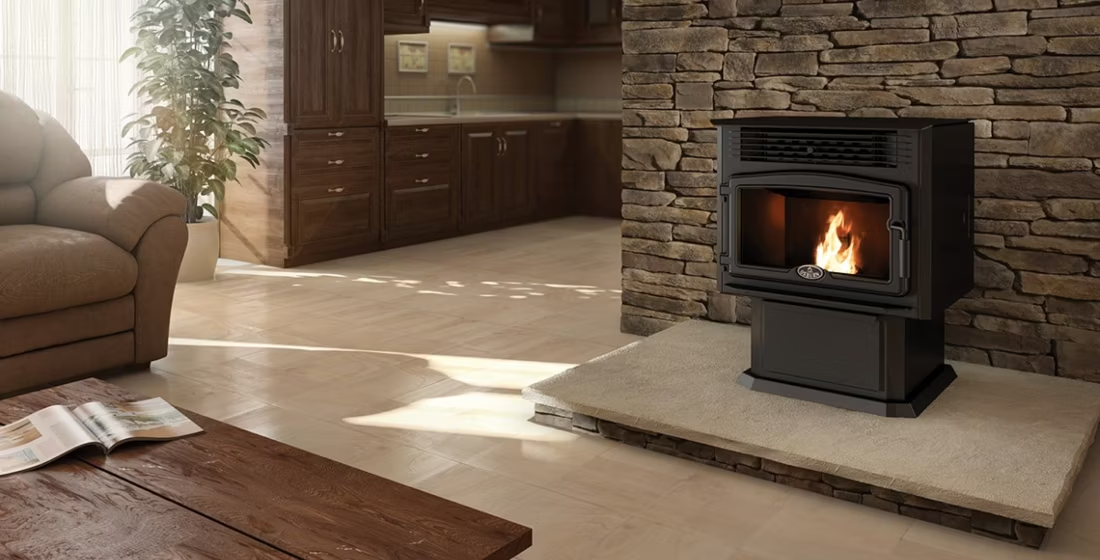
Four fuels. One honest answer for Franklin County.
Three steps. No salesperson until you're ready.
Tell us about your project
Your zip code, your situation, and the fuel you're leaning toward—or let the answers point you to one.
See what's actually available
The brands dealers within 100 miles genuinely carry—real options, never a catalog mirage.
Get your dealer & Project Guide
A trusted local dealer, plus the free Project Guide & Parts List that names every component of the job.
Frequently Asked Questions
Which fuel works best for a home in Franklin County?
It depends on the house and how remote it is. Wood is the traditional primary heat source here—maple, birch, beech, and oak are all cut and split locally, and a well-run wood stove keeps a home warm through zone 6A winters without relying on a fuel delivery truck making it up a mountain road. Gas is workable but runs on propane, not piped natural gas—there's no gas utility infrastructure in the county, so propane tank delivery is the standard setup for gas fireplaces and inserts. Pellet is a strong middle option—Maine Woods Pellet Co produces locally, and pellet stoves handle the cold well with less daily labor than wood. Electric fireplaces show up mostly as supplemental heat in bedrooms, additions, or camps around Rangeley—not as a primary heat source for a Franklin County winter. Most year-round homes here run wood or pellet as primary heat with propane or electric filling in secondary rooms.
Do I need a permit to install a fireplace in Franklin County?
In most cases, yes. Franklin County doesn't have a single county building department—each town, from Farmington to Rangeley to Kingfield, issues its own permits through a local code enforcement officer, so the process and turnaround time varies by town. Wood stoves and inserts installed today need to meet EPA 2020 NSPS emissions standards. Propane fireplace and insert installations typically require both a building permit and sign-off from a licensed propane technician for the gas line and tank connection. Electric fireplaces usually skip the permit process unless the install involves new wiring for a built-in unit. Most local hearth retailers handle the permit paperwork with the town CEO as part of the installation—worth confirming before you sign a contract.
Are there air quality or wood-burning restrictions in Franklin County?
No—Franklin County has no non-attainment designation and no winter burn-ban program the way some western basins do. There's no inversion pattern trapping smoke here, and no mandatory or voluntary curtailment days to watch for. That said, an EPA-certified stove still burns cleaner and more efficiently than an old pre-1990s unit, and it's worth asking your dealer about efficiency ratings if you're heating with wood as a primary source through a full 6A winter—the difference shows up in your woodpile by February.
Can one local hearth retailer handle all four fuel types?
Given how small and rural Franklin County is, the retailers serving it tend to carry two or three fuel types rather than all four—most commonly wood and pellet together, since both rely on similar hearth and venting setups, with propane gas units as a secondary line. Electric fireplaces are often carried as an add-on rather than a core product line. If you're cross-shopping fuels for a new build or major renovation, ask directly which lines a dealer stocks and services before you commit—coverage varies more here than in denser markets.
How does hearth service work in the more remote parts of Franklin County?
Distances matter here—it's roughly 35 miles from Farmington up to Rangeley, and longer still out to some of the unorganized townships. Technicians serving the county typically build routes around Farmington, Wilton, Kingfield, and the Rangeley Lakes area rather than dispatching one-off trips, so scheduling ahead—ideally before the fall push toward ski season—gets you a faster appointment than a mid-winter emergency call. If you're on a seasonal camp or a road that isn't plowed to town standards, flag that when you book, since it can affect service timing.
What's the typical installation cost range across fuel types in Franklin County?
Ranges vary by fuel and by how remote the home is. Wood stove or insert: roughly $4,000–$8,500 for a typical install, more if new chimney or hearth pad work is needed. Propane fireplace, insert, or stove: roughly $4,000–$10,000, with tank setup and gas line work driving the higher end. Pellet stove or insert: roughly $4,000–$7,000 for most installs. Electric fireplace: $200–$2,500 for the unit itself, plus $400–$1,000 in labor for anything beyond a plug-and-play wall mount. Travel time to reach outlying towns can add modestly to labor costs—see the county + fuel pages above for detail tied to specific local retailer pricing.
How much should I budget for a fireplace?
For an average home—covering the fireplace, the vent pipe, and basic installation—a budget between $3,900 and $5,500 gives you a lot of options across wood, gas, and pellet. By the time you add finish work, gas line, and electrical, the average complete installation lands between $5,000 and $12,000 all-in. In a remodel or new build, a good rule is to put about 2.5% of the total project cost toward the fireplace.
Does a fireplace add value to my home?
On average, a fireplace adds back to the home about the same amount you spent installing it. Add the monthly savings from heating the rooms you actually use instead of the whole house—often hundreds of dollars a year—and the value case is strong before you even count what a fire does for how your family uses the room.
What are the biggest mistakes people make buying a fireplace?
Five come up constantly: budgeting for the unit but not the full job (vent, gas line, electrical, finish work); drowning in options instead of starting from style and fuel; buying without an in-home preview; handing installation to a handyman instead of a pro; and giving up out of sheer indecision. Every one is avoidable with a clear plan—step one, step two, step three.
Can a fireplace actually lower my heating bill?
Yes—by creating a comfort zone. A furnace heats every square foot of the house just to warm the one room you're in; a gas fireplace on low burns roughly a sixth of the gas a typical furnace does. Set the furnace around 55–60 degrees as a baseline, then heat the rooms your family actually uses. Families who heat this way commonly save $20–$60 a month.
Stove and Fireplace Dealers in Franklin County
Listings include WhyFire partner dealers, dealers we have verified as authorized for the brands we recommend, and established local businesses that carry hearth products. Every listing shows which one it is. The ones marked Preferred run on WhyFire's software, so they can show you real pricing and book your appointment right here. No manufacturer pays for placement. How we verify dealers →
Rangley Fireplace
Northern Lights Maine, Inc.
Wood Pellet Warehouse
Whittemore & Sons
Area – Errol, Nh
Find your fireplace project in Franklin County.
Pick your fuel below and we'll match you with a trusted local dealer and send a free Project Guide & Parts List—the exact parts, vent kit included, and the recommended installer for your home.
Find Your Fireplace →