
Keep Your Family Warm and Safe—No Matter What
Wood heat is a niche choice in Acadiana, but for the right home it's about ambiance and cold-snap comfort, not survival heat. We'll connect you with a local dealer who knows the difference.
Every Project Starts From One of These Five Situations
Youngsville doesn't need wood heat—but some homes still want it.
Youngsville sits on the flat Gulf coastal plain in Lafayette Parish at just 24 feet of elevation, in climate zone 2A. The city has a light, short winter heating season and an average winter low around 42°F—a fraction of what a place like Duluth, MN or Fargo, ND sees in a single hard month. Freezing nights happen, but multi-day cold stretches are rare, and there's essentially no scenario here where a wood stove is the difference between a warm house and a cold one.
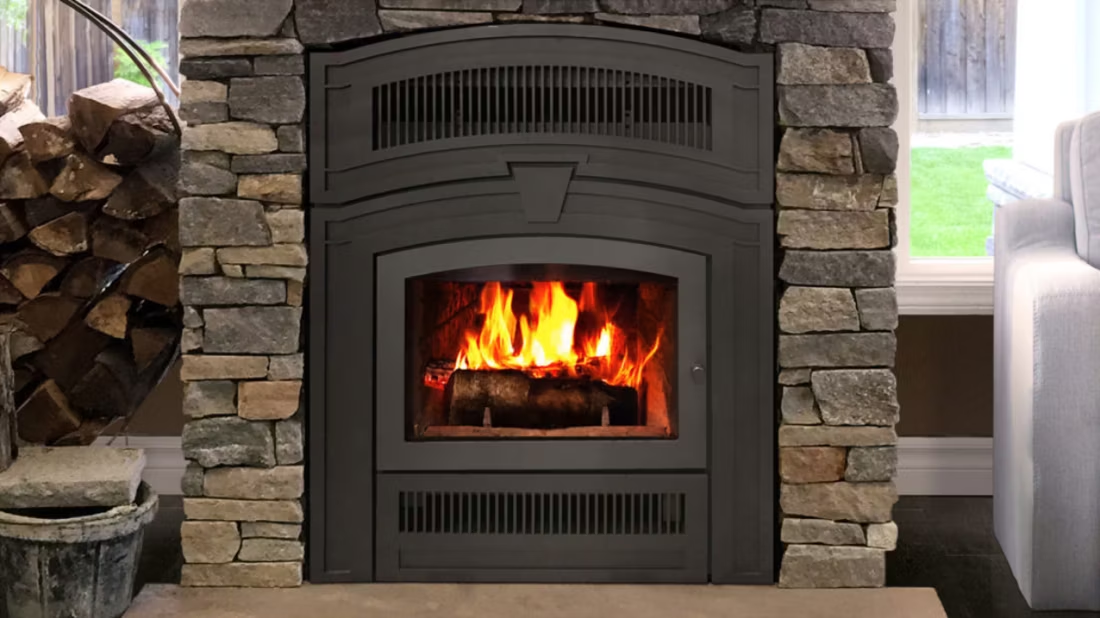
That said, wood-burning fireplaces haven't disappeared from Acadiana. Plenty of Youngsville homeowners keep a wood-burning masonry fireplace or add a decorative unit for the handful of genuinely cold evenings each winter, for the atmosphere of a real fire during the holidays, or simply because it fits an older Acadiana-style home. Local oak and pecan split well and burn hot and clean; cypress is common in this region's landscape but smokier and sappier, so most dealers steer buyers toward oak or pecan for actual burning. With no air quality non-attainment issues in the parish, there are no seasonal burn curtailments to plan around either—burning here is a matter of preference, not regulation.
Three steps. No salesperson until you're ready.
Tell us about your project
Your zip code, your situation, and the fuel you're leaning toward—or let the answers point you to one.
See what's actually available
The brands dealers within 100 miles genuinely carry—real options, never a catalog mirage.
Get your dealer & Project Guide
A trusted local dealer, plus the free Project Guide & Parts List that names every component of the job.
Frequently Asked Questions
How much does a wood-burning fireplace installation cost in Youngsville?
Because wood heat is a specialty request here rather than the norm, most installs are smaller in scope than what you'd see in a colder region—typically a masonry fireplace retrofit or a factory-built wood-burning unit in a new hearth, running roughly $3,000 to $7,500 depending on chimney chase work and hearth construction. Full new masonry chimneys from the ground up push toward the higher end. Because so few local dealers stock heavy wood-burning inventory, expect a bit more lead time on parts than you'd see for a gas insert—get a firm quote from a dealer who's actually installed wood units in the parish before, not just gas.
Does a wood-burning fireplace actually make sense in Youngsville's climate?
For heat alone, not really—with only a light, short winter heating season and winter lows averaging 42°F, a wood stove isn't doing the work it would in a place like Bozeman, MT or International Falls, MN. Where it does make sense is ambiance and backup: a real fire on the handful of nights each winter that dip into the 20s and 30s, or as a power-outage hedge during hurricane season when the electric grid goes down. Most Youngsville homeowners who install one are after the experience of a fire, not primary heat.
Wood vs. gas—which is the better fit for a Youngsville home?
Gas is the far more common choice here, and for good reason: Acadiana's mild winters favor a fireplace you can flip on for twenty minutes on a cool evening without hauling wood or cleaning ash, and natural gas service is well established across Lafayette Parish. Wood still wins for homeowners who want an authentic fire, don't mind the upkeep, or want a heat source that works without electricity during a hurricane-season outage. If instant convenience matters more than ritual, gas is the practical answer for most homes in Youngsville.
What kind of firewood works best around Youngsville?
Oak and pecan are the two most common local species that actually burn well—dense, high-BTU, and available from tree services and firewood sellers throughout Lafayette Parish, especially after storm season when downed limbs are plentiful. Cypress is everywhere in the local landscape and gets suggested sometimes because it's abundant, but it's resinous and tends to smoke and pop more than oak or pecan, so most experienced burners avoid it for indoor fireplace use. Whatever you burn, make sure it's been seasoned at least 6-12 months—Louisiana's humidity keeps green wood wetter for longer than it would stay in a drier climate.
Where do I buy firewood in Youngsville since there's no national forest nearby?
Unlike mountain or forest-adjacent regions where homeowners cut their own wood on Forest Service land, Lafayette Parish has no public forest land or cutting permit system—firewood here is purchased, not self-cut. Local tree services, landscaping companies, and seasonal roadside vendors are the typical sources, usually selling oak or pecan by the rick or truckload rather than the standard 4x4x8 cord measurement used out west. Expect to pay based on load size and species; ask specifically for oak or pecan if you want wood that burns clean.
Do I need a permit to install a wood-burning fireplace in Youngsville?
Yes—new construction of a masonry fireplace or installation of a factory-built wood-burning unit requires a building permit through the City of Youngsville Building Department, or Lafayette Parish's permitting office if you're just outside city limits. The permit covers hearth clearances, chimney height above the roofline, and structural support for masonry construction. Most established hearth dealers or masons handling the install will pull this permit as part of the job, which is worth confirming before you sign a contract.
Can I add a wood-burning insert to an existing fireplace, or do I need new construction?
Both are done here, but because wood-burning demand is limited in Youngsville, retrofitting an existing masonry fireplace with a wood-burning insert tends to be the more common and more cost-effective route—you're using a chimney that already exists rather than building one from scratch. New construction (a factory-built wood-burning fireplace framed into a new wall) is typically reserved for new builds or major remodels of older Acadiana-style homes where a real hearth is part of the architectural intent.
What's different about maintaining a wood fireplace in Louisiana's humidity?
Louisiana's year-round humidity changes the maintenance math compared to a dry climate. Creosote buildup from burning less-than-fully-seasoned wood is a bigger risk here, since ambient moisture keeps split wood wetter for longer even after it's stacked. A chimney cap and crown are essential to keep rain out between the rare burns, and it's worth having a sweep check for moisture damage and any insect activity in the chimney chase, not just soot. Because most units here see light seasonal use rather than daily winter burning, an annual inspection before the first cool snap each fall is usually enough.
Should I get an electric fireplace instead of wood in Youngsville?
It's worth considering. With mild winters and low heating demand, an electric fireplace or insert delivers the visual of a fire and enough supplemental warmth for the cool evenings Youngsville actually gets, without a chimney, venting, or firewood to manage—and installation typically runs a few hundred dollars rather than several thousand. Electric rates through Entergy Louisiana, Southwest Louisiana EMC, and the City of Lafayette's utility all sit around 10-11.5 cents per kWh, making the running cost for occasional use very low. Wood still wins on authenticity and hurricane-outage backup use; electric wins on simplicity and cost for a purely decorative or occasional-warmth application.
Why won't my new wood stove get going like my old one?
New wood stoves are 70%+ efficient, so far less heat goes up the flue—which also means less draft to get a fire established. The rule: build a genuinely hot fire for about 45 minutes before you choke it down. Skip that and you get smoke in the room, creosote in the chimney, and a fire that never takes off. Most performance complaints trace straight back to this.
Why is a fireplace insert so efficient?
An insert does two things: it seals the chimney completely, so you stop losing air you already paid to heat, and it radiates warmth into the room through the firebox and glass. Most add a heat-exchange fan that pulls cool room air underneath, wraps it around the hot firebox, and pushes it back out warm. Your home is more efficient before you've even lit the first fire.
Can a fireplace actually lower my heating bill?
Yes—by creating a comfort zone. A furnace heats every square foot of the house just to warm the one room you're in; a gas fireplace on low burns roughly a sixth of the gas a typical furnace does. Set the furnace around 55–60 degrees as a baseline, then heat the rooms your family actually uses. Families who heat this way commonly save $20–$60 a month.
Does a fireplace add value to my home?
On average, a fireplace adds back to the home about the same amount you spent installing it. Add the monthly savings from heating the rooms you actually use instead of the whole house—often hundreds of dollars a year—and the value case is strong before you even count what a fire does for how your family uses the room.
Nearby Dealers
Hearth shops serving Youngsville and the surrounding area. Every listing shows whether it is a WhyFire partner, a dealer we have verified as authorized for the brands we recommend, or a local business carrying hearth products. No manufacturer pays for placement. How we verify dealers →
Area – Baton Rouge, La
Find your wood fireplace in Youngsville.
Tell us about your home and we'll put together a free Project Guide & Parts List—the right wood-burning fireplace or insert for Youngsville's climate, plus a trusted local dealer who actually installs them here.
Find Your Fireplace →