
Instant Heat for Washington Parish's Short, Mild Winters.
Washington Parish winters are short and mild—average lows near 39°F and only a light dusting of genuinely cold days each year—but a January cold front or ice storm still finds its way down from the north. Find the right gas fireplace or insert, and connect with a trusted local dealer in Franklinton, Bogalusa, or Angie.
Every Project Starts From One of These Five Situations
Ambiance most nights, real heat when a cold front rolls through.
Washington Parish sits in the Gulf South corner of Louisiana, between the Pearl River and the Bogue Chitto, home to roughly 15,246 residents spread across Franklinton (the parish seat), Bogalusa, Angie, Varnado, and the countryside between them. This is climate zone 2A—hot, humid, and mild for most of the year—with an average winter low of just 39°F and a short, light heating season overall. Compare that to Duluth, Minnesota, which faces a long, brutal winter heating season, and it's clear why heating looks different here: central air conditioning does most of the work most of the year, and homes only need supplemental heat for a handful of genuinely cold nights each winter.
That's exactly where a gas fireplace earns its place. It's not the primary heat source in a Washington Parish home, but it's the fastest, most reliable way to take the chill off during an Arctic front—the kind that occasionally ices over roads and knocks out power across the Gulf South—or simply to enjoy a fire on a 45-degree evening. The City of Bogalusa's municipal utility system runs natural gas within city limits; most of the rest of the parish, including the rural stretches around Franklinton where oak, pecan, and cypress stands line the Pearl River, relies on propane delivery instead. Either fuel works fine in a direct-vent gas fireplace or insert, and with no air-quality non-attainment areas or wood-smoke curtailment rules on the books here, homeowners have more flexibility than in a lot of other regions we work with.
Three steps. No salesperson until you're ready.
Tell us about your project
Your zip code, your situation, and the fuel you're leaning toward—or let the answers point you to one.
See what's actually available
The brands dealers within 100 miles genuinely carry—real options, never a catalog mirage.
Get your dealer & Project Guide
A trusted local dealer, plus the free Project Guide & Parts List that names every component of the job.
Frequently Asked Questions
How much does a gas fireplace installation cost in Washington Parish?
Most gas fireplace and insert installations in Washington Parish run between $3,500 and $9,000. The low end covers a direct-vent insert going into an existing masonry fireplace with a gas line already nearby—common in older Franklinton and Bogalusa homes. The higher end applies to new construction or remodels that need a fresh gas line run, new venting through a wall or roof, or a propane tank installation for homes outside Bogalusa's natural gas service area. Rural properties around Angie or Varnado with longer gas line runs typically land toward the higher end. A local dealer will give you a firm number after an in-home look.
Can I convert an existing wood fireplace to gas?
Yes, and it's a common upgrade in the parish's older homes that were originally built to burn oak, pecan, or cypress in an open masonry fireplace. A gas insert slides into that existing firebox and vents through the current chimney with a stainless liner, so you keep the look of the original fireplace while gaining instant, controllable heat. Conversions typically run $4,000 to $8,500 depending on whether you're hooking into Bogalusa's natural gas system or setting up a propane line and tank for a home outside city limits.
Should I use natural gas or propane for my fireplace?
It depends on where you live in the parish. Inside Bogalusa city limits, natural gas is available through the municipal utility system, and if your home already has gas appliances, adding a fireplace is usually a simple tie-in. Outside city limits—which covers most of Washington Parish, including Franklinton, Angie, and Varnado—propane is the standard choice, either from an existing tank or a new one set up by a local propane supplier. Nearly every gas fireplace and insert on the market can be configured for either fuel; your installer just sets the correct orifice and regulator for whichever you're running.
Will my gas fireplace still work if the power goes out?
Most modern gas fireplaces will, which matters in a parish that sees its share of tropical weather and occasional winter ice storms knock out power for days. Units with intermittent pilot ignition (IPI) run on a small battery backup that kicks in automatically when the grid drops, so the fireplace lights and operates just like normal—you just need to keep fresh batteries in the unit. Valor fireplaces skip the battery question entirely: their pilot assembly generates its own electricity through the thermocouple, so the unit works during an outage with no batteries at all. Ask your local dealer about the ignition system on any model you're considering, especially if you're buying this fireplace partly as a storm-season backup.
What's the difference between a gas fireplace, insert, and stove?
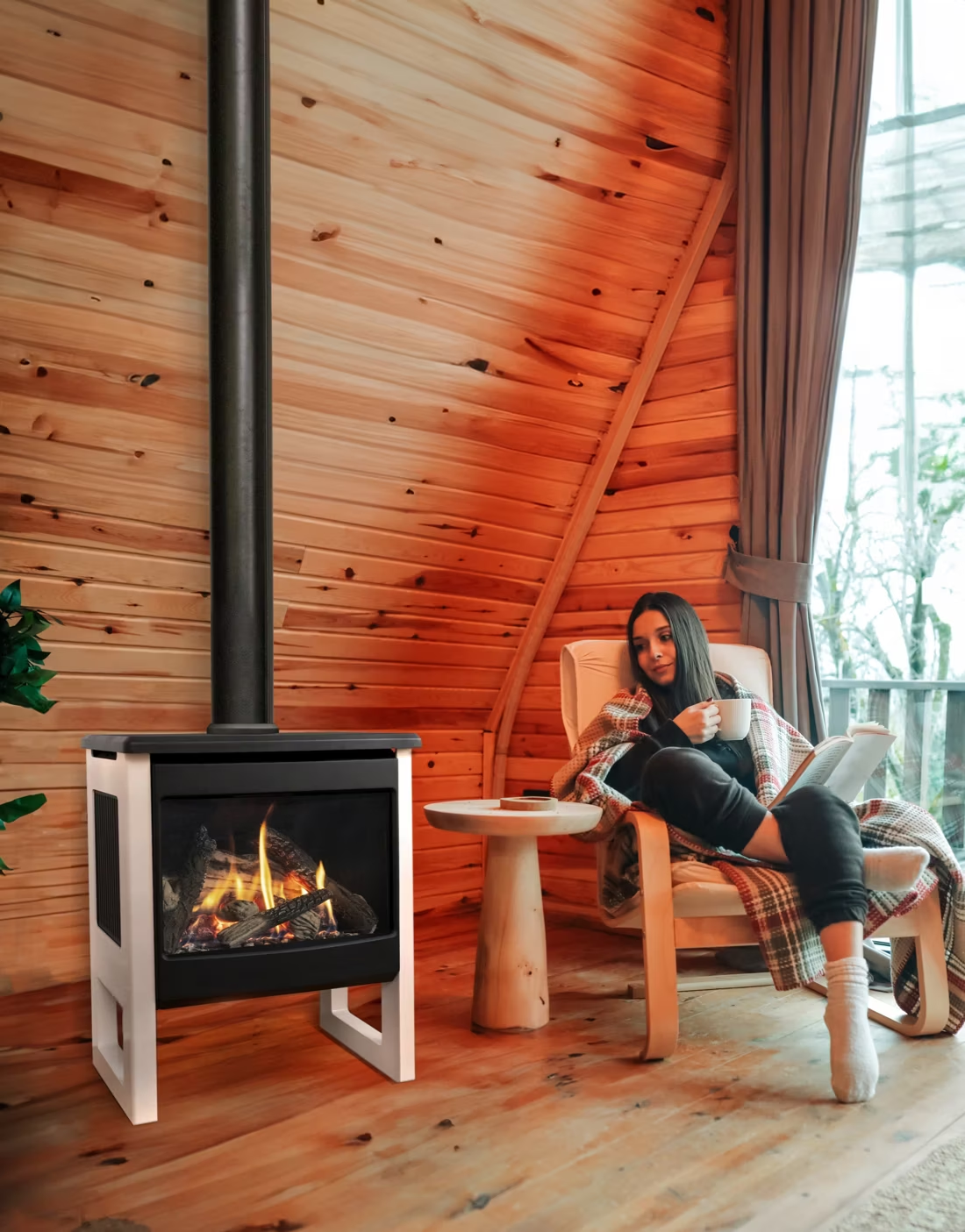
A gas fireplace is a built-in unit framed into a wall, typically chosen for new construction or a full remodel. A gas insert is built to slide into an existing masonry fireplace opening, using the current chimney as a vent path—the most common choice for Washington Parish's older homes that already have a wood-burning fireplace. A gas stove is a freestanding cabinet-style unit that sits on the floor and vents through a wall or roof, a good option for a room that has no existing fireplace at all. Most homeowners here upgrading an old fireplace go with an insert; new rooms or additions usually call for a built-in unit or a freestanding stove.
Do I need a permit to install a gas fireplace in Washington Parish?
Yes. New gas fireplace installations require a building permit through Washington Parish's permit office, and the gas line work itself has to be done by a licensed gas fitter under Louisiana State Plumbing Board rules. Most local hearth dealers coordinate all of this as part of the installation—the permit, the gas line, and the final inspection—so you're not left juggling separate trades and separate paperwork.
Vented or vent-free—which makes more sense here?
Vented (direct-vent) gas fireplaces pull combustion air from outside and exhaust it back outside through a sealed pipe, keeping your indoor air clean. Vent-free units burn without any outside venting and release some water vapor and combustion byproducts into the room instead. Louisiana permits vent-free fireplaces, but in a climate zone 2A parish where indoor humidity is already a fight for most of the year, adding a vent-free unit's moisture output on top of that isn't ideal for a lot of homes. Direct-vent units are the more common and more broadly recommended choice for Washington Parish homeowners, and they deliver real heat output without any indoor air quality trade-offs.
How often does a gas fireplace need to be serviced?
Plan on an annual inspection, ideally before hurricane season or before the first cool front of fall. A technician checks the burner, pilot assembly, gas connections, and venting, and cleans the glass and interior. In a humid Gulf South climate, that yearly check also catches early corrosion on metal components before it becomes a bigger repair. Most local service providers charge $150 to $250 for a standard annual visit.
Gas or wood—which is the better fit for a Washington Parish home?
Wood still has a real following here—Washington Parish has plenty of oak, pecan, and cypress to burn, and a lot of rural properties and hunting camps keep a wood stove or open fireplace going for the ambiance and the occasional cold night. But with such a short, light heating season and average lows around 39°F, most parish homes don't need wood as a serious heat source, and gas fits the actual usage pattern better: flip a switch, get heat for an evening or a cold front, and walk away with no ash, no woodpile, and no chimney maintenance beyond an annual check. For most households in Franklinton, Bogalusa, and the surrounding communities, gas is the more practical everyday choice, with wood reserved for camps, cookouts, and cold-weather nostalgia.
Can I put a TV above my fireplace?
Yes—with an asterisk. Fireplaces are hot and TVs don't like heat. Either put a mantel between them to deflect rising warmth, or choose a fireplace with heat-management technology that creates a cool zone on the wall above—the wall stays around 125 degrees, barely warm, while the room still gets full heat. If you like clean lines and don't want a mantel, heat management is the answer.
Why is my open fireplace making my house colder?
Open fireplaces suck—literally. As the fire burns, it consumes air your furnace already paid to heat and pulls it out through the chimney, so the house is actually colder after the fire goes out than before you lit it. An insert fixes this: it seals the chimney, puts fixed glass across the front, and turns that hole in your house into a real heat source.
Can I install a fireplace myself?
If you're putting a fire in your house on purpose, it's best to work with an expert. Unless you're genuinely experienced in framing, gas line, vent pipe, and the national code on clearances to combustibles, have a professional do it—and ideally the same company that sells you the fireplace, so warranty, service, and liability all live under one roof.
How much should I budget for a fireplace?
For an average home—covering the fireplace, the vent pipe, and basic installation—a budget between $3,900 and $5,500 gives you a lot of options across wood, gas, and pellet. By the time you add finish work, gas line, and electrical, the average complete installation lands between $5,000 and $12,000 all-in. In a remodel or new build, a good rule is to put about 2.5% of the total project cost toward the fireplace.
Stove and Fireplace Dealers in Washington County
Find your gas fireplace in Washington Parish.
Tell us a bit about your home and we'll put together a free Project Guide & Parts List—the right gas fireplace or insert, the exact parts including your vent kit, and a trusted local dealer in Washington Parish to install it.
Find Your Fireplace →