
Find the right pellet stove for St. John the Baptist Parish's mild winters.
Winters along this stretch of the Mississippi River rarely demand supplemental heat—average lows sit near 43°F—but when a cold front does roll through LaPlace, Reserve, or Edgard, a pellet stove can still earn its place. We'll match you with a trusted local dealer who can tell you honestly whether one makes sense for your home.
Every Project Starts From One of These Five Situations
A climate that rarely asks for backup heat.
St. John the Baptist Parish runs along both banks of the Mississippi River between New Orleans and Baton Rouge, taking in LaPlace, Reserve, Edgard, Garyville, and Mount Airy. The parish sits in climate zone 2A—hot and humid nearly year-round—and logs an average winter low of just 43°F with only 1,342 heating degree days annually. Compare that to a place like Duluth, Minnesota, which logs more than 10,000 heating degree days most winters, and it's clear why pellet stoves never became a fixture of River Parish homes the way they did in the upper Midwest or the mountain West.
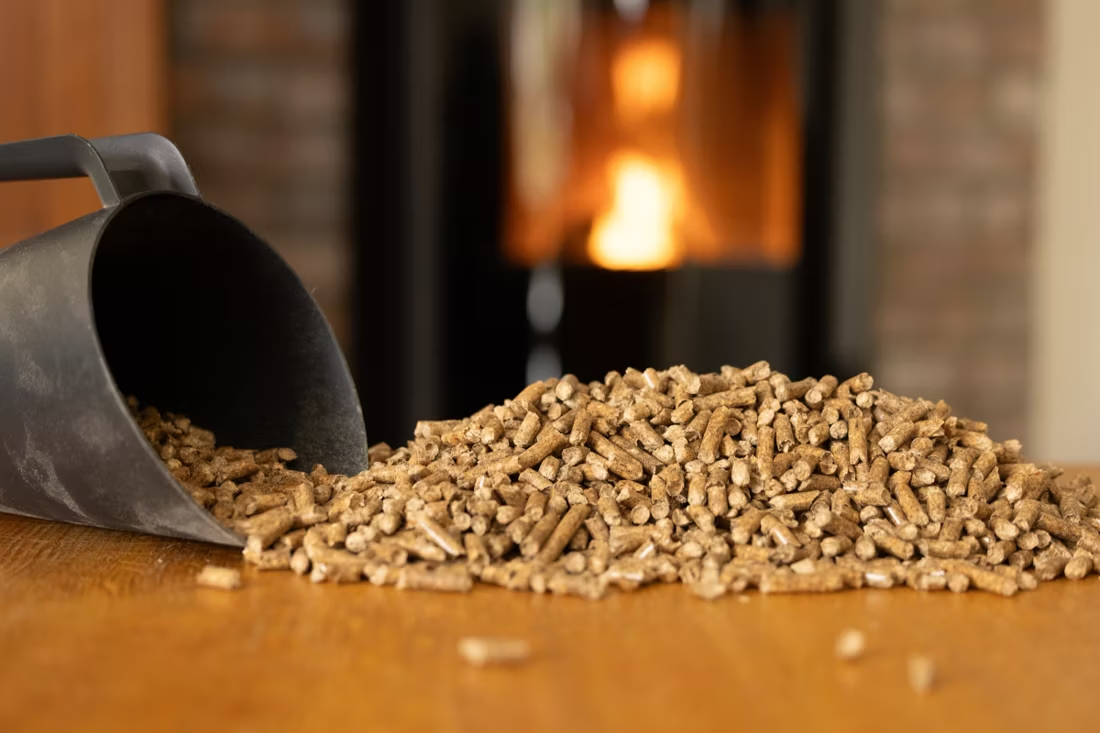
That doesn't mean pellet heat has zero place here. A handful of parish homeowners install a small pellet stove for the ambiance of a real flame, for a camp house along the river or in the swamp where they want heat without hauling firewood, or as backup for the occasional hard freeze—including events like the February 2021 winter storm that dropped Gulf South temperatures into the teens for several days. Pellet stoves do need electricity to run the auger and blower, so they're not a true off-grid backup the way a wood stove is, but for supplemental warmth on the handful of nights a year that call for it, some homeowners still choose one. I'd rather tell you honestly that this is a niche fit for St. John the Baptist Parish than pretend otherwise—but if a pellet stove is genuinely what you want, we can still get you matched with someone who installs them correctly.
Three steps. No salesperson until you're ready.
Tell us about your project
Your zip code, your situation, and the fuel you're leaning toward—or let the answers point you to one.
See what's actually available
The brands dealers within 100 miles genuinely carry—real options, never a catalog mirage.
Get your dealer & Project Guide
A trusted local dealer, plus the free Project Guide & Parts List that names every component of the job.
Frequently Asked Questions
How much does a pellet stove installation cost in St. John the Baptist Parish?
Because pellet stoves are an uncommon request in this climate, there isn't the same dense network of dedicated pellet dealers you'd find in a colder region—most installs here are handled by hearth retailers based in the greater New Orleans or Baton Rouge metro area who also cover the River Parishes. A freestanding pellet stove with venting typically installs for somewhere in the $3,000-$6,000 range nationally, and that's a reasonable starting point for St. John the Baptist Parish, though the final number depends on whether you need a new hearth pad, how the vent routes through your home's siding or brick, and whether the installer has to travel from LaPlace, Reserve, or further out. Ask for an in-home quote rather than relying on a phone estimate.
Does a pellet stove even make sense in St. John the Baptist Parish's climate?
For most homes here, no—not as a primary heat source. With an average winter low around 43°F and only 1,342 heating degree days a year, the parish simply doesn't have the sustained cold that pellet heat is built for. Where a pellet stove does make sense is narrower: camp houses along the river or in the swamp that want supplemental heat on cool evenings, homes that want the look and feel of a real flame without a wood-burning chimney, or households that want a backup heat source for the occasional hard freeze that does hit south Louisiana every few winters. If you're weighing pellet against gas or electric for a primary heating decision, gas and electric fireplaces are a far more common—and typically more practical—choice for this parish.
What size pellet stove do I need in a climate like this?
Smaller than you'd guess if you're used to national sizing charts built around colder climates. Most homeowners in St. John the Baptist Parish who install a pellet stove are heating a single room, a camp, or looking for occasional supplemental warmth—not a whole house—so a small to mid-size unit (rated for 1,000-1,500 sq ft) is usually plenty. Oversizing is a real risk here: a stove sized for a Duluth or Buffalo winter will run at a low, inefficient smolder most nights it's actually lit in south Louisiana's mild climate. A local dealer can size correctly for your specific room and use case during an in-home visit.
Where can I find a pellet stove dealer near LaPlace or Reserve?
There isn't a large dedicated pellet-stove retail presence within St. John the Baptist Parish itself, given how rarely the fuel gets requested locally. Most homeowners end up working with hearth retailers based in the New Orleans or Baton Rouge metro areas that service the River Parishes as part of their regular install territory—expect a modest travel charge folded into the quote. What matters more than proximity is finding an installer with NFI (National Fireplace Institute) pellet-specific certification, since venting and clearance requirements still have to be done correctly even for a stove that only runs a few weeks a year.
Do I need a permit to install a pellet stove in St. John the Baptist Parish?
Most likely yes—a building permit is standard for any new fuel-burning appliance installation, including pellet stoves, and that applies whether you're in LaPlace, Reserve, Edgard, or one of the unincorporated areas of the parish. Your installer should pull the permit as part of the job and coordinate the inspection; that's one of the advantages of working with an established hearth retailer rather than a handyman install. Since air quality concerns are minimal in this parish—there's no non-attainment designation or inversion issue like you'd see in some western cities—permitting here is mostly a straightforward safety and code process rather than an emissions hurdle.
Pellet stove vs. gas fireplace—which is the better fit for my home?
For St. John the Baptist Parish, gas is almost always the more practical choice. Gas fireplaces and inserts are common throughout the parish, work with the push of a button, don't require you to store fuel, and hold up well in a humid climate where bagged pellets can absorb moisture if not stored carefully. Pellet stoves make more sense if you specifically want the visual and feel of a real wood-style flame, or you're heating a camp or outbuilding where running a gas line isn't practical. If you're not sure, tell a local dealer both options are on the table—they can walk you through the tradeoffs for your specific structure.
What pellet brands are actually available in this area?
Regional supply runs through brands like Lignetics, Hamer Pellet Fuel, and Greenway Renewable Energy, all of which distribute into the broader Gulf South. Because pellet heat isn't a high-volume category in St. John the Baptist Parish, you likely won't find pallets stacked at every hardware store the way you might in New England or the Upper Midwest—plan to order ahead through a hearth dealer or feed-and-farm supplier rather than expecting walk-in stock during a cold spell. A ton or two is more than enough for a typical season of occasional, supplemental use here.
How should I store pellets in a climate this humid?
Humidity is the real enemy of wood pellets, and St. John the Baptist Parish's climate zone 2A conditions—hot, humid, and often wet—mean storage matters more here than it would in a dry Western state. Keep bags off a concrete floor (moisture wicks up through slabs), inside a garage or dry outbuilding rather than an open carport, and use pellets within a season or two of purchase rather than stockpiling multiple years' worth. Pellets that absorb moisture turn to mush and won't feed properly through a stove's auger, which is one more reason pellet heat stays a niche choice in a parish this humid.
If pellet heat is rare here, what do most St. John the Baptist Parish homeowners install instead?
Gas and electric fireplaces are far more common choices in the parish, and for good reason—with only 1,342 heating degree days a year and winter lows averaging 43°F, most homes need occasional supplemental warmth rather than sustained heating capacity. A direct-vent gas fireplace or insert delivers instant, low-maintenance heat with no fuel storage at all, and electric units offer flame ambiance with virtually no installation footprint. If your goal is genuine ambiance with the option of real heat on the coldest nights, it's worth asking a local dealer to walk you through gas and electric options side-by-side with pellet before you commit.
Why is a fireplace insert so efficient?
An insert does two things: it seals the chimney completely, so you stop losing air you already paid to heat, and it radiates warmth into the room through the firebox and glass. Most add a heat-exchange fan that pulls cool room air underneath, wraps it around the hot firebox, and pushes it back out warm. Your home is more efficient before you've even lit the first fire.
How often does a pellet stove need cleaning?
A clean pellet stove is a happy pellet stove. Plan on cleaning the burn pot about once a week when you're burning regularly—ash and clinkers gum up the air holes just like a pellet barbecue. Most pellet stove problems trace back to skipped cleaning that nobody explained up front. Some designs make it easy with a trapdoor burn pot: pull a lever and the gunk drops into the ash pan.
Can I install a fireplace myself?
If you're putting a fire in your house on purpose, it's best to work with an expert. Unless you're genuinely experienced in framing, gas line, vent pipe, and the national code on clearances to combustibles, have a professional do it—and ideally the same company that sells you the fireplace, so warranty, service, and liability all live under one roof.
Can a fireplace actually lower my heating bill?
Yes—by creating a comfort zone. A furnace heats every square foot of the house just to warm the one room you're in; a gas fireplace on low burns roughly a sixth of the gas a typical furnace does. Set the furnace around 55–60 degrees as a baseline, then heat the rooms your family actually uses. Families who heat this way commonly save $20–$60 a month.
Pellet Brands Stocked Around St. John the Baptist County
Manufacturers will point you to the nearest stocking dealer.
Find your pellet stove in St. John the Baptist Parish.
Tell us about your home and how you plan to use it, and we'll match you with a trusted local dealer serving the River Parishes—plus a free Project Guide & Parts List with the exact parts, vent kit, and installer recommendation for your pellet project.
Find Your Fireplace →