
Zone Heat Built for Slidell's Mild Winters.
With a short, mild heating season and winter lows averaging in the low 40s, Slidell rarely needs a furnace-level heat source. Find the right electric fireplace or insert, and connect with a trusted local dealer.
Every Project Starts From One of These Five Situations
Mild winters call for simple, on-demand heat.
Slidell sits at just 9 feet of elevation along the north shore of Lake Pontchartrain, in climate zone 2A, where winter lows average around 42°F and the heating season is short and mild—just a fraction of the sustained cold a place like Duluth, MN sees in a single month. That's too little sustained cold for wood heat to make sense here; wood stoves are essentially absent from local building stock, kept alive mostly as decorative oak, pecan, or cypress fires in open masonry fireplaces. It's exactly the kind of climate where a modest electric fireplace or insert covers the handful of genuinely chilly nights St. Tammany Parish gets each winter.
Most Slidell homes are served by CLECO Power or Washington-St Tammany Electric Cooperative, with residential rates running roughly 11.85 to 12.33 cents per kWh—cheap enough that running a 1,500-watt electric insert on the coldest nights costs pennies compared to a full HVAC cycle. Electric units also sidestep two real Gulf Coast headaches: they need no chimney or exterior vent to maintain in a humid, termite-prone climate, and they install cleanly into slab-on-grade homes and the raised, pier-and-beam houses common near the lake and the Pearl River without any structural changes.
Three steps. No salesperson until you're ready.
Tell us about your project
Your zip code, your situation, and the fuel you're leaning toward—or let the answers point you to one.
See what's actually available
The brands dealers within 100 miles genuinely carry—real options, never a catalog mirage.
Get your dealer & Project Guide
A trusted local dealer, plus the free Project Guide & Parts List that names every component of the job.
Frequently Asked Questions
How much does it cost to install an electric fireplace or insert in Slidell?
Because electric units need no chimney, gas line, or exterior venting, installation in Slidell is usually the least expensive hearth project available. A plug-in freestanding unit can be running the same day for a few hundred dollars. A built-in electric insert or wall-mounted unit that requires a dedicated 120- or 240-volt circuit typically runs $800 to $2,000 installed, depending on whether an electrician needs to run new wiring. Compare that to a gas insert conversion, which in Slidell usually starts closer to $3,500 once gas line work is involved.
Electric vs. gas—which fits a Slidell home better?
Gas is the standard heating fuel here for homes with natural gas or propane service, and it makes sense for anyone who wants a fireplace that can run for hours as genuine supplemental heat during a cold snap. Electric fireplaces are the better fit for most Slidell living rooms, bedrooms, and sunrooms where the goal is ambiance and a quick boost of warmth rather than heating a whole home through a Louisiana winter that rarely drops out of the 40s. Many homeowners here choose electric specifically because there's no gas line to run and no combustion byproducts to vent in a humid climate.
Will my electric fireplace work if the power goes out?
No—and this matters more in Slidell than in most places, given how often tropical storms and hurricanes knock out power along the St. Tammany Parish grid for days at a stretch. An electric fireplace is a convenience and supplemental-heat appliance, not a storm-outage backup. If emergency heat during outages is a priority, pair an electric unit with a generator, or consider that a vented gas unit with battery-backup ignition is the more resilient choice for true grid-down heating.
Can I put an electric insert into my existing wood-burning fireplace?
Yes, and it's one of the most common projects local dealers handle in Slidell. An electric insert slides into the existing firebox opening, plugs into a nearby outlet or a new dedicated circuit, and caps the flue to stop drafts and humid outside air from entering the chimney—a real benefit in a climate where an open, unused flue invites moisture, mildew, and the occasional wasp nest. No masonry work or chimney liner is required, which keeps the project simple and affordable.
Do I need a permit to install an electric fireplace in Slidell?
In most cases, no permit is required for a plug-in electric fireplace or insert. If the installation requires a new dedicated electrical circuit, an electrician pulling that wiring will typically need an electrical permit through the St. Tammany Parish Permits Department, or the City of Slidell if the home falls inside city limits. There's no combustion appliance involved, so none of the venting or gas-line inspections that complicate wood or gas installs apply here.
What electric fireplace features matter most in a humid Gulf Coast climate?
Look for units with a sealed cabinet and moisture-resistant electronics—humidity and salt air off Lake Pontchartrain can shorten the life of cheaper models over time. Brands like Dimplex, Napoleon, and Amantii build inserts and wall-mount units that hold up well in coastal Louisiana homes, and local dealers can point you toward models rated for year-round humidity rather than units designed primarily for dry, cold-climate markets.
How much does it cost to run an electric fireplace in Slidell?
At Slidell's typical residential rates—about 12.33 cents per kWh with CLECO Power or 11.85 cents per kWh with Washington-St Tammany Electric Cooperative—a standard 1,500-watt electric fireplace costs roughly 12 to 18 cents per hour on full heat. Given how few genuinely cold days St. Tammany Parish sees each winter, most homeowners find the annual operating cost negligible compared to the comfort it adds during the occasional 30-degree night.
Are wood or pellet stoves ever used in Slidell?
Rarely, and mostly tied to decorative fireplaces rather than heating. With such a short, mild heating season and winter lows averaging in the low 40s, Slidell simply doesn't have the sustained cold that makes wood or pellet heat practical, and storing firewood in this climate invites termites and mold. Some homeowners do still burn local oak, pecan, or cypress occasionally in an open masonry fireplace for atmosphere, but as a primary or supplemental heat source, wood has largely given way to gas and electric options.
Is an electric fireplace a good fit for a raised or manufactured home near the lake?
Yes—electric is often the simplest option for the pier-and-beam and raised homes common near Lake Pontchartrain and the Pearl River, since there's no chimney chase or gas line to route through a raised foundation. Many manufactured and modular homes in the Slidell area also aren't set up for masonry chimneys, which makes a plug-in or hardwired electric insert one of the few options that installs without any structural modification.
Can I put a TV above my fireplace?
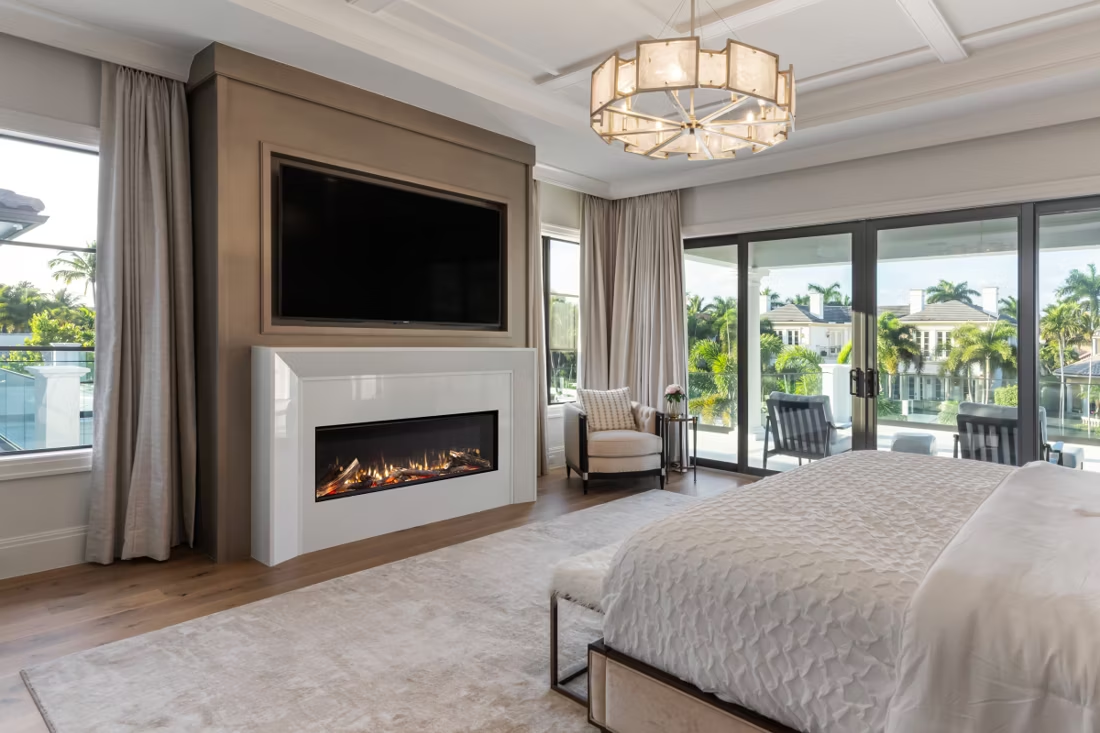
Yes—with an asterisk. Fireplaces are hot and TVs don't like heat. Either put a mantel between them to deflect rising warmth, or choose a fireplace with heat-management technology that creates a cool zone on the wall above—the wall stays around 125 degrees, barely warm, while the room still gets full heat. If you like clean lines and don't want a mantel, heat management is the answer.
Do electric fireplaces actually produce heat?
Yes—most put out around 4,800–5,000 BTUs from a standard outlet, which comfortably warms a bedroom, office, or den as a comfort-zone heater. What they won't do is carry a whole house the way wood, gas, or pellet can. Think of electric as ambiance-first with honest supplemental heat: flames on with no heat in July, flames plus warmth in January.
Can I install a fireplace myself?
If you're putting a fire in your house on purpose, it's best to work with an expert. Unless you're genuinely experienced in framing, gas line, vent pipe, and the national code on clearances to combustibles, have a professional do it—and ideally the same company that sells you the fireplace, so warranty, service, and liability all live under one roof.
Can a fireplace actually lower my heating bill?
Yes—by creating a comfort zone. A furnace heats every square foot of the house just to warm the one room you're in; a gas fireplace on low burns roughly a sixth of the gas a typical furnace does. Set the furnace around 55–60 degrees as a baseline, then heat the rooms your family actually uses. Families who heat this way commonly save $20–$60 a month.
Nearby Dealers
Hearth shops serving Slidell and the surrounding area.
Electric Service in Slidell
An electric fireplace's heater draws about 1,500 watts—pennies per hour at local rates.
Cleco Power LLC
Washington-St Tammany E C, Inc
Find your electric fireplace in Slidell.
Tell us a bit about your home and we'll match you with the right electric fireplace or insert—plus a free Project Guide & Parts List and a trusted local dealer to install it.
Find Your Fireplace →