
Pellet stoves are rare in Shreveport—here's what one would actually take.
With only a short, mild winter heating season and winter lows averaging 37°F, Shreveport rarely needs the kind of sustained heat output a pellet stove is built for. If you still want one, we'll help you understand the real install picture and connect you with a dealer who can actually get it done.
Every Project Starts From One of These Five Situations
Shreveport's mild winters rarely call for a pellet stove.
Shreveport sits at just 236 feet in USDA/DOE climate zone 3A, with a winter heating season that's only a fraction of what a place like Duluth, MN or Burlington, VT experiences each year. Average winter lows hover around 37°F, and hard freezes are the exception rather than the rule. Most Caddo Parish homes are built and heated around central gas or electric HVAC, and that's reflected in the local market: you won't find a row of hearth shops stocking pellet stoves the way you would in a colder region, and dedicated pellet-stove installers are genuinely scarce here.
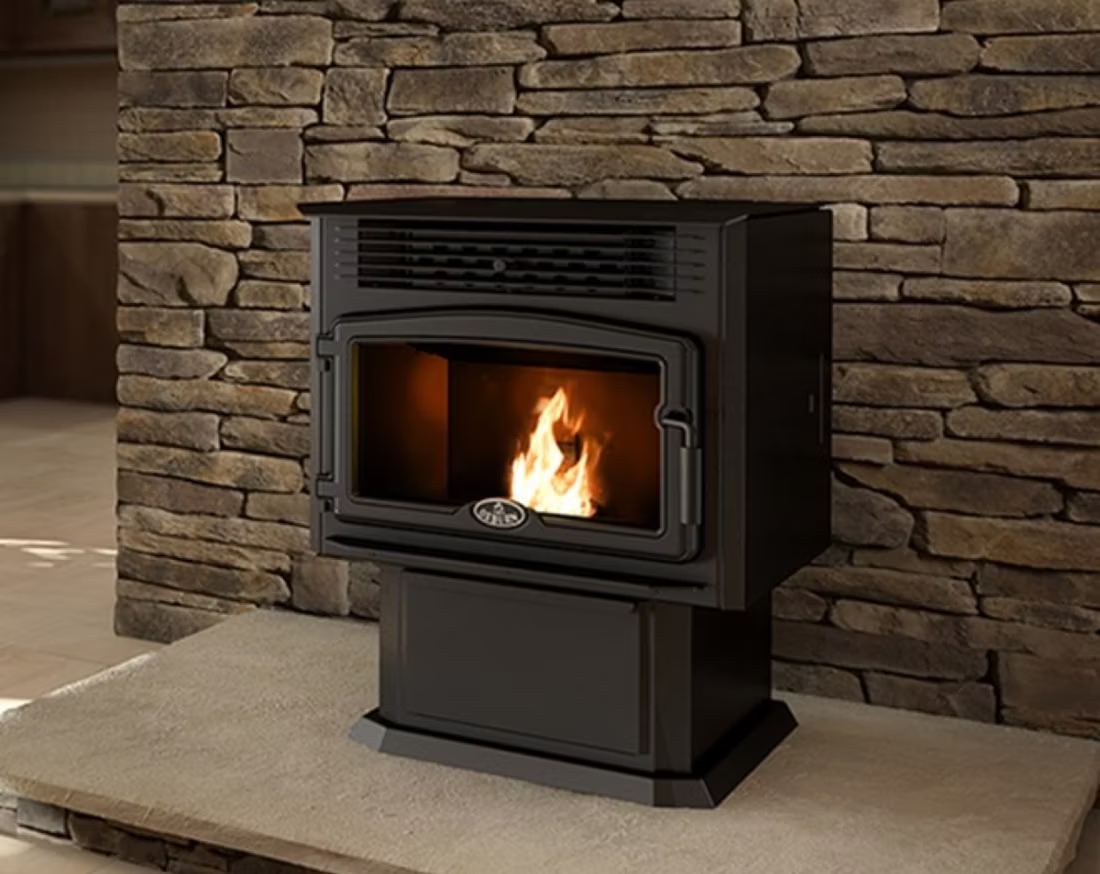
That said, a small number of Shreveport homeowners do install pellet stoves—usually for supplemental heat in a detached workshop or sunroom, for the ambiance of a real flame without wood handling, or as backup heat after events like the February 2021 ice storm that knocked out power across SWEPCO's service territory for days. Regional pellet brands like Lignetics, Hamer Pellet Fuel, and Greenway Renewable Energy are available through farm-supply stores and seasonal stock at big-box retailers, even though local hearth-specific dealers are thin on the ground. If a pellet stove is genuinely what you want, we'll help you find a real installer—even if that means looking a bit outside city limits.
Three steps. No salesperson until you're ready.
Tell us about your project
Your zip code, your situation, and the fuel you're leaning toward—or let the answers point you to one.
See what's actually available
The brands dealers within 100 miles genuinely carry—real options, never a catalog mirage.
Get your dealer & Project Guide
A trusted local dealer, plus the free Project Guide & Parts List that names every component of the job.
Frequently Asked Questions
Does a pellet stove actually make sense in Shreveport's climate?
For most homes, no—not as a primary heat source. With Shreveport's mild winter heating needs and winter lows averaging in the high 30s, central gas or electric heat already covers the load most winters. Pellet stoves earn their keep in places with long stretches of sub-freezing weather, where a hopper-fed stove can run for a day or more unattended. In Shreveport, a pellet stove is more realistically a supplemental or backup option—for a detached space, a large sunroom, or as a hedge against the kind of multi-day outages Caddo Parish saw during the February 2021 ice storm.
What does a pellet stove installation cost in Shreveport?
Because pellet installs are uncommon here, there isn't a deep local pricing history to draw from, but nationally a pellet stove installation with venting typically runs $3,500 to $6,500 depending on the unit and whether you need a new through-wall vent kit versus tying into an existing chimney. In Shreveport specifically, expect the harder cost to be finding an installer at all—many hearth companies here focus on gas and electric fireplaces and may need to bring in the pellet-specific parts. Getting a firm local quote requires an in-home look, since venting length and wall type drive most of the variability.
Where can I buy pellet fuel in Shreveport?
Pellets aren't stocked at every corner store the way they might be in the upper Midwest, but they are available. Regional brands like Lignetics, Hamer Pellet Fuel, and Greenway Renewable Energy show up seasonally at farm-supply stores and some big-box retailers around Caddo Parish, typically in 40-pound bags. Because demand is lower here, it's worth stocking up early in the fall rather than assuming you can restock mid-winter—some retailers only bring in a limited supply and sell out once temperatures drop.
Do I need a permit to install a pellet stove in Shreveport?
Generally yes—any new fuel-burning appliance with venting through an exterior wall or roof typically requires a building permit through your parish or city permitting office in Caddo Parish. Most installers who do this work regularly will pull the permit as part of the job, but given how few pellet installs happen locally, it's worth confirming directly with your installer that they're handling it rather than assuming—this isn't a routine appliance swap for most local permitting desks.
How does a pellet stove vent, and do I need an existing chimney?
No masonry chimney is required. Pellet stoves vent through a small-diameter pipe that can run horizontally through an exterior wall, which is actually one of their advantages in a warm-climate market like Shreveport where many homes were never built with a chimney at all. This makes a pellet stove installable in a workshop, garage, or addition that has no existing flue—you just need a clear path to an outside wall and an electrical outlet, since the auger and combustion blower run on standard household power.
What size pellet stove makes sense for a Shreveport home?
Given how mild the climate is here, most Shreveport installs lean toward smaller units meant for zone or supplemental heating rather than large whole-home stoves sized for sub-zero nights. A small pellet stove (rated for 500-1,200 sq ft) is usually plenty for a den, workshop, or sunroom. Oversizing is a common mistake in warm climates—a stove sized for a Minnesota winter will run at a low, inefficient smolder most nights in Shreveport. A local installer can size it correctly once they see the space.
Will a pellet stove work during a power outage?
Not without a backup power source, and this is worth knowing before you buy. Pellet stoves rely on an electric auger to feed fuel and a blower for combustion air, so they shut down when the power does—including during the kind of extended outages SWEPCO customers saw during the February 2021 ice storm. If backup heat during outages is your main goal, a battery-backup setup or small generator can keep a pellet stove running, but a gas or wood-burning unit with no electrical dependency is generally a more reliable outage strategy in this region.
How much maintenance does a pellet stove need?
Pellet stoves need more routine attention than a gas fireplace but less than a wood stove: emptying the ash pan every few days of use, cleaning the burn pot and glass weekly, and a full professional cleaning and inspection once a year. Because so few Shreveport hearth companies service pellet units regularly, ask about ongoing service availability before you buy—some homeowners end up doing more of the routine cleaning themselves simply because a technician visit means scheduling further in advance than it would in a market with more pellet stoves in circulation.
Pellet vs. gas vs. electric—what's actually the better fit in Shreveport?
For most Shreveport homes, gas or electric is the more practical choice. Natural gas and propane fireplaces offer instant, thermostatically controlled heat with no fuel storage or ash cleanup, and electric fireplaces install almost anywhere off standard household power supplied by SWEPCO or one of the local co-ops. A pellet stove makes sense mainly if you specifically want the visual of a real flame with hopper-fed convenience and don't mind sourcing fuel seasonally. Given the region's mild winter climate, most homeowners here get more everyday value out of gas or electric—pellet tends to be a deliberate, specific-purpose choice rather than a default one.
How often does a pellet stove need cleaning?
A clean pellet stove is a happy pellet stove. Plan on cleaning the burn pot about once a week when you're burning regularly—ash and clinkers gum up the air holes just like a pellet barbecue. Most pellet stove problems trace back to skipped cleaning that nobody explained up front. Some designs make it easy with a trapdoor burn pot: pull a lever and the gunk drops into the ash pan.
Why is my open fireplace making my house colder?
Open fireplaces suck—literally. As the fire burns, it consumes air your furnace already paid to heat and pulls it out through the chimney, so the house is actually colder after the fire goes out than before you lit it. An insert fixes this: it seals the chimney, puts fixed glass across the front, and turns that hole in your house into a real heat source.
Does a fireplace add value to my home?
On average, a fireplace adds back to the home about the same amount you spent installing it. Add the monthly savings from heating the rooms you actually use instead of the whole house—often hundreds of dollars a year—and the value case is strong before you even count what a fire does for how your family uses the room.
How much should I budget for a fireplace?
For an average home—covering the fireplace, the vent pipe, and basic installation—a budget between $3,900 and $5,500 gives you a lot of options across wood, gas, and pellet. By the time you add finish work, gas line, and electrical, the average complete installation lands between $5,000 and $12,000 all-in. In a remodel or new build, a good rule is to put about 2.5% of the total project cost toward the fireplace.
Nearby Dealers
Hearth shops serving Shreveport and the surrounding area. Every listing shows whether it is a WhyFire partner, a dealer we have verified as authorized for the brands we recommend, or a local business carrying hearth products. No manufacturer pays for placement. How we verify dealers →
Custom-Bilt Cabinet & Supply
Acme Brick
Fireplace Specialties
Bradley Brick LLC
O'Neal Gas Inc.
Pellet Brands Stocked Around Shreveport
Manufacturers will point you to the nearest stocking dealer.
See if a pellet stove makes sense for your Shreveport home.
Tell us about your space and goals, and we'll give you an honest read on whether pellet is the right call—plus a free Project Guide & Parts List with the exact venting and parts needed, matched to a trusted local dealer who can actually install it.
Find Your Fireplace →