
Pellet heat isn't common in Monroe—but it's not out of reach.
Ouachita Parish winters average lows in the high 30s, so pellet stoves aren't a mainstream install here. If you still want one—for backup heat, ambiance, or a habit from a colder climate—we'll match you with a dealer who can actually source and install one correctly.
Every Project Starts From One of These Five Situations
Monroe's mild climate makes pellet stoves a niche choice.
Monroe sits at 74 feet in the Ouachita River valley, in climate zone 3A, with an average winter low of 37°F and roughly 2,213 heating degree days a year. Compare that to a place like Duluth, Minnesota, where HDD counts run four to five times higher and pellet stoves are practically a household appliance—and it's clear why Monroe's hearth retailers stock gas logs and gas inserts far more often than pellet units. Most homes here handle winter with central HVAC, and the coldest stretches are short enough that a dedicated biomass appliance doesn't pay for itself the way it does further north.
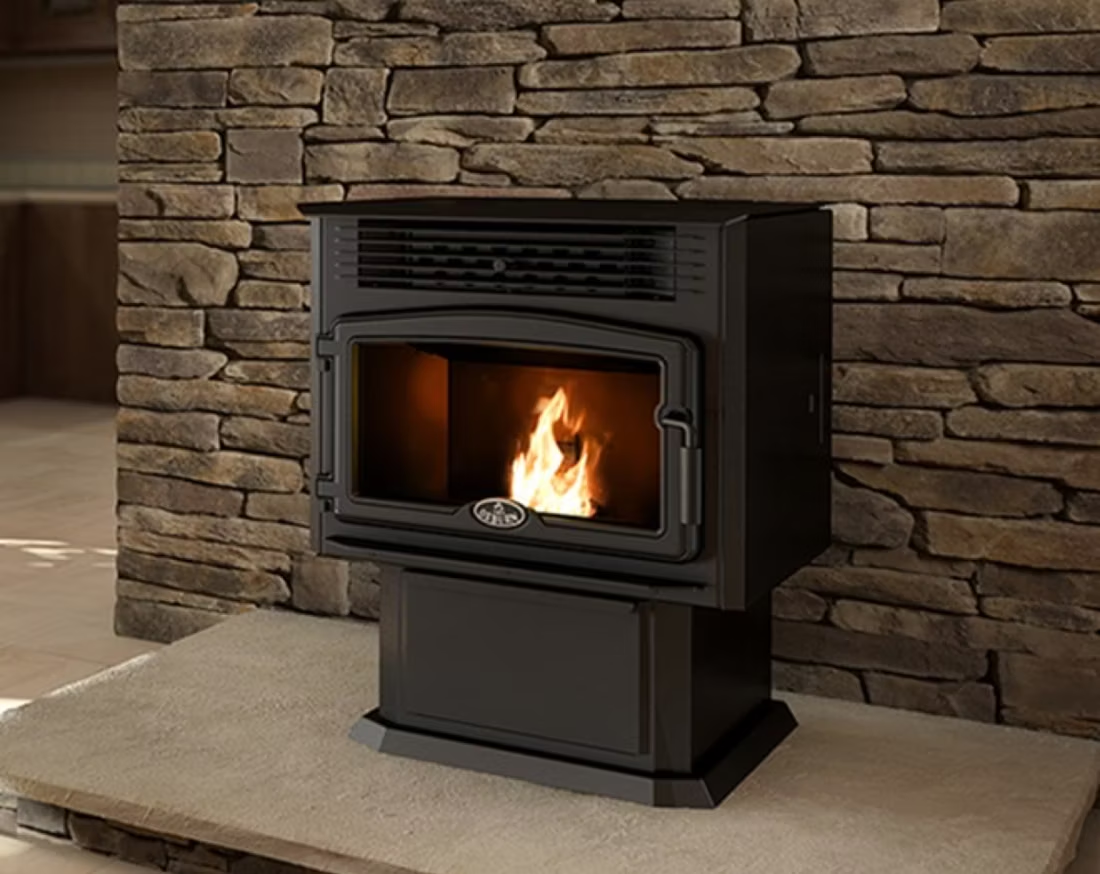
That said, pellet stoves aren't unheard of in Monroe. A handful of homeowners install them for the ambiance of a real flame, as supplemental heat in a sunroom or shop, or because they moved from a colder state and already know how to run one. Pellet fuel itself is reachable through regional suppliers like Lignetics, Hamer Pellet Fuel—based just south in Pollock, LA—and Greenway Renewable Energy, even though local demand is thin. The harder part is finding a dealer who stocks the actual stove, sizes the vent correctly, and understands that this is an uncommon install in this market. That's the gap we help close.
Three steps. No salesperson until you're ready.
Tell us about your project
Your zip code, your situation, and the fuel you're leaning toward—or let the answers point you to one.
See what's actually available
The brands dealers within 100 miles genuinely carry—real options, never a catalog mirage.
Get your dealer & Project Guide
A trusted local dealer, plus the free Project Guide & Parts List that names every component of the job.
Frequently Asked Questions
Are pellet stoves actually available in Monroe, or is this a niche request?
It's a genuine niche. Ouachita Parish's climate—average winter lows around 37°F and about 2,213 heating degree days a year—doesn't create the sustained cold that drives pellet stove adoption in places like Fargo or Bismarck. Most Monroe hearth dealers lean their showroom toward gas fireplaces and log sets because that's what local homeowners actually ask for. Pellet units are still buildable here—the appliances and fuel both exist through regional channels—but you'll want a dealer who's willing to special-order and vent one properly rather than someone improvising on a rare request.
Why would anyone install a pellet stove in a place as mild as Monroe?
The reasons we hear locally are consistent: homeowners who grew up running a pellet stove somewhere colder and want the same setup, rural Ouachita Parish properties without gas service where a pellet unit serves as supplemental heat for a workshop or sunroom, and people who simply like the look and low-maintenance feel of an automated pellet fire more than a wood-burning one. It's rarely the primary heat source in a Monroe home—central HVAC still carries most of the load—but as a secondary or occasional-use appliance, it has a real if small following.
Will a pellet stove keep my house warm during a Monroe power outage?
Not without help. Pellet stoves rely on an electric auger and blower to feed the fire, so when the grid goes down, so does the stove—a real consideration in a region where ice storms have knocked out Entergy Louisiana and Claiborne Electric Coop service for days at a time, as happened across north Louisiana during Winter Storm Uri in February 2021. If backup heat during outages is your priority, a wood-burning appliance or a gas fireplace with a battery-backed ignition system is a more dependable choice in Monroe. A pellet stove paired with a small generator can work, but it's an added layer most local buyers don't plan for.
Where does pellet fuel for a Monroe stove actually come from?
Because pellet stoves are uncommon here, you won't find pallets of fuel stacked at every hardware store the way you might in the Upper Midwest. Regional brands like Lignetics, Hamer Pellet Fuel out of Pollock, and Greenway Renewable Energy supply the broader Gulf South market and can typically be special-ordered or found through farm and feed suppliers. Expect to pay somewhat more per ton than in pellet-heavy regions, simply because of thinner local demand and longer freight distances. A local dealer who already sources pellet units can usually point you toward the most reliable nearby supply.
Are the pellets made from local hardwoods like oak, pecan, or cypress?
Probably not. Oak, pecan, and cypress are the woods Monroe homeowners prize for open burning and outdoor cooking, but most pellet fuel sold regionally—including from Louisiana-based Hamer Pellet Fuel—is manufactured from softwood, typically southern yellow pine byproduct from mill operations. Softwood pellets burn hotter and cleaner in an auger-fed stove than most hardwood pellet blends, so this isn't a downgrade—it's simply a different supply chain than the firewood market most Monroe residents are used to.
Can I find a dealer in Monroe who actually installs pellet stoves?
There are hearth dealers in the Monroe area, but given how few pellet stoves get installed locally, not every one of them regularly handles the appliance. The install itself isn't complicated—pellet stoves vent through a smaller-diameter pipe than wood stoves and don't require a full masonry chimney—but you want someone who's done it before and won't treat your project as a first attempt. We match Monroe homeowners with a trusted local dealer who can confirm they actually carry or can source the unit before you commit to anything.
How much will it cost to run a pellet stove on Monroe electric rates?
The electrical draw itself is minor. A typical pellet stove's auger and blower use somewhere between 100 and 400 watts while running, and at Entergy Louisiana's residential rate of roughly $0.1105 per kWh (Claiborne Electric Coop customers see closer to $0.13), that adds up to only a few dollars a month even with regular use. The bigger cost driver is fuel—pellets themselves—and given Monroe's short heating season, most owners burn far fewer bags per winter than a homeowner in a colder climate zone would.
What's a more practical alternative to a pellet stove for a Monroe home?
For most Monroe homeowners, a gas fireplace or gas insert is the more practical fit—natural gas and propane service are both standard fuel options locally, installation is well understood by area dealers, and a gas unit with battery-backed ignition can still operate during a power outage, unlike a pellet stove. Wood-burning appliances are also uncommon here for the same climate reasons pellet stoves are, but if radiant heat with no electrical dependency matters to you, a wood insert burning local oak or pecan is worth a look alongside pellet.
Pellet vs. gas—which actually makes sense in Ouachita Parish?
Gas wins for most Monroe households. With only about 2,213 heating degree days a year and winter lows that rarely stay below freezing for long, the case for a dedicated pellet appliance is mostly about preference rather than necessity—and gas dealers, parts, and service technicians are simply easier to find locally. Pellet still makes sense if you specifically want that appliance's look and low-maintenance operation, have a workshop or outbuilding without gas service, or are recreating a setup from a colder home. Either way, the right move is confirming with a local dealer what they can actually source and vent before you decide.
How often does a pellet stove need cleaning?
A clean pellet stove is a happy pellet stove. Plan on cleaning the burn pot about once a week when you're burning regularly—ash and clinkers gum up the air holes just like a pellet barbecue. Most pellet stove problems trace back to skipped cleaning that nobody explained up front. Some designs make it easy with a trapdoor burn pot: pull a lever and the gunk drops into the ash pan.
What's the difference between an insert and a zero-clearance fireplace?
An insert is a fireplace that slides into a pre-existing wood-burning fireplace—if you don't have one, there's nothing to insert it into. A zero-clearance fireplace is built into a framed wall, which makes it the answer for remodels and new construction. Simple test: existing masonry fireplace means insert; blank or framed wall means zero-clearance.
Does a fireplace add value to my home?
On average, a fireplace adds back to the home about the same amount you spent installing it. Add the monthly savings from heating the rooms you actually use instead of the whole house—often hundreds of dollars a year—and the value case is strong before you even count what a fire does for how your family uses the room.
Can a fireplace actually lower my heating bill?
Yes—by creating a comfort zone. A furnace heats every square foot of the house just to warm the one room you're in; a gas fireplace on low burns roughly a sixth of the gas a typical furnace does. Set the furnace around 55–60 degrees as a baseline, then heat the rooms your family actually uses. Families who heat this way commonly save $20–$60 a month.
Nearby Dealers
Hearth shops serving Monroe and the surrounding area.
Pellet Brands Stocked Around Monroe
Manufacturers will point you to the nearest stocking dealer.
Find your pellet stove option in Monroe.
Tell us about your home and why you want pellet heat, and we'll match you with a trusted Monroe-area dealer plus a free Project Guide & Parts List—the exact parts, vent kit, and installer recommendation for your project.
Find Your Fireplace →