
Keep Your Family Warm and Safe—No Matter What
Wood heat isn't the default in Lake Charles, but it has a real place here—from cool-evening ambiance to backup warmth when a Gulf storm takes the power out. Find a local dealer who installs it right.
Every Project Starts From One of These Five Situations
Warmth for the few nights that need it.
At just 14 feet of elevation on the Gulf Coast, Lake Charles sits in climate zone 2A with an average winter low around 43°F and a short, mild heating season each year—a fraction of what a cold-climate city like Duluth, MN or Bozeman, MT sees in a single winter. Most Calcasieu Parish homes are built and heated around air conditioning and heat pumps, not wood, and that's the honest starting point: a wood stove here is a supplemental or occasional-use appliance, not a primary heat source.
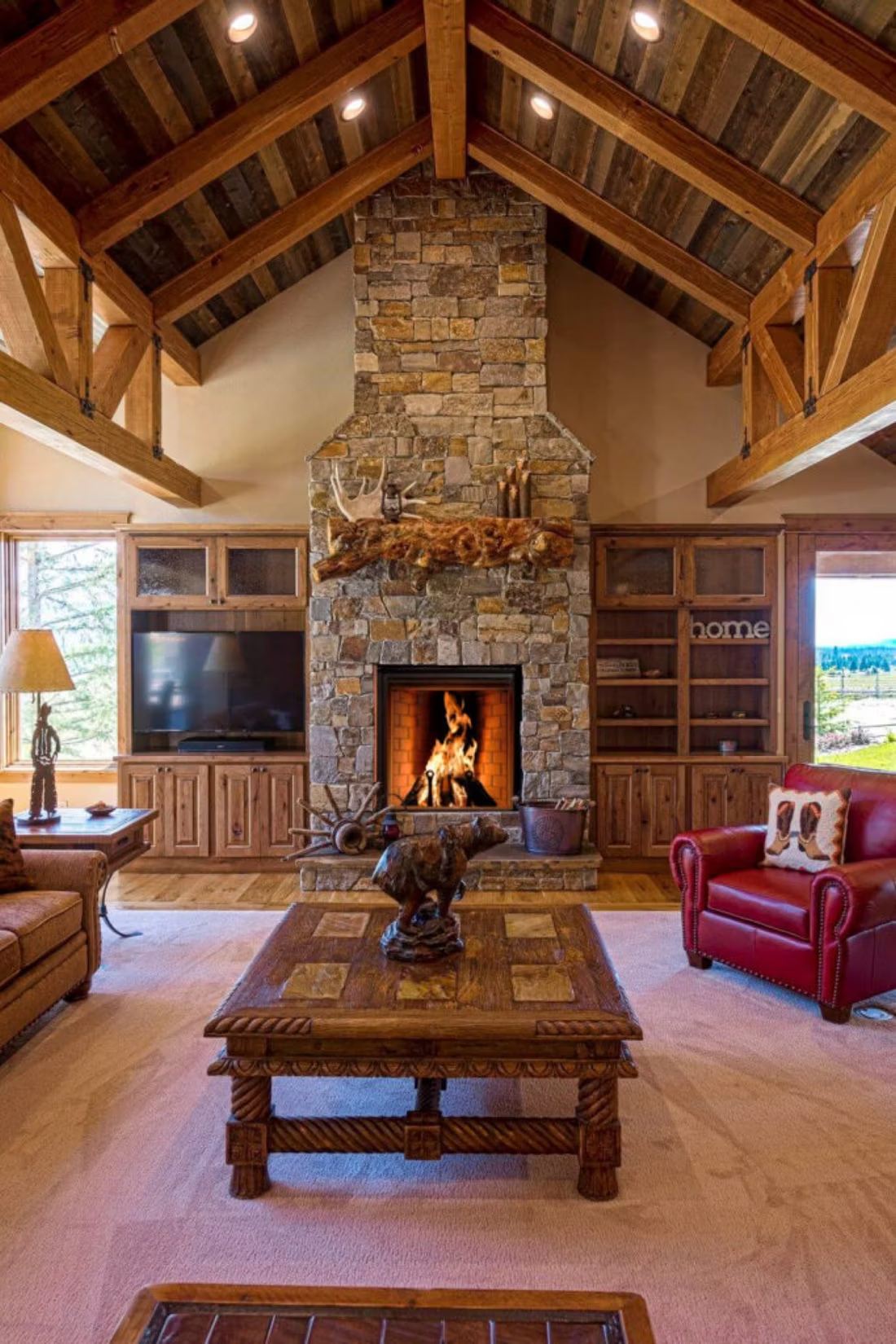
That said, wood still shows up in Lake Charles for two real reasons. First, ambiance—a fireplace on the handful of genuinely cold nights each year, often built from or fed by local oak, pecan, or cypress. Second, and more practically, resilience: Hurricane Laura, Delta, and other Gulf storms have knocked out Entergy Louisiana and Jefferson Davis Electric Cooperative service for days or weeks at a stretch, and a wood-burning stove or insert is one of the few heat and cooking sources that keeps working with zero electricity. Because Lake Charles has no wildfire smoke or winter-inversion air quality concerns, there are no seasonal burn curtailments here like you'd find in parts of the West—when you do burn, there's no advisory to check first.
Three steps. No salesperson until you're ready.
Tell us about your project
Your zip code, your situation, and the fuel you're leaning toward—or let the answers point you to one.
See what's actually available
The brands dealers within 100 miles genuinely carry—real options, never a catalog mirage.
Get your dealer & Project Guide
A trusted local dealer, plus the free Project Guide & Parts List that names every component of the job.
Frequently Asked Questions
Does wood heat even make sense in a climate like Lake Charles?
For most homes, no—not as a primary heat source. With average winter lows around 43°F and only a short, mild heating season each year, Lake Charles is one of the mildest heating climates in the country, nothing like the long, frigid winters of a market such as Duluth, MN or Bismarck, ND where a wood stove runs daily for months. Where wood does make sense here is supplemental and occasional use: a fireplace for the coldest nights of January, a stove in a camp house or hunting cabin, or backup heat for hurricane season. If you're weighing wood purely as your main heat plan, a heat pump or gas system will serve you better; if you want a real fire on cold nights and a heat source that survives a power outage, wood still earns its place.
Why would anyone install a wood stove in Lake Charles when winters are so mild?
The most common reason isn't cold—it's storms. Hurricane Laura and Hurricane Delta both left large parts of Calcasieu Parish without Entergy Louisiana or Jefferson Davis Electric Cooperative power for extended stretches, sometimes weeks in the hardest-hit areas. A wood-burning stove or fireplace insert doesn't need electricity to produce heat, and many models can support basic cooking in a pinch. For homeowners who lived through those outages, that reliability is worth more than BTU output. The second reason is simpler: ambiance. A real wood fire on one of the year's few genuinely cold evenings is something a heat pump can't replicate.
What kind of wood is available locally if I install a stove or fireplace?
Oak, pecan, and cypress are the wood species most commonly available around Calcasieu Parish, whether from your own property, a local tree service, or a firewood seller. All three burn well once properly seasoned, but Gulf Coast humidity means freshly cut wood holds more moisture longer than it would in a drier climate—plan on seasoning split wood for a full six to twelve months under cover, not the three to four months that works in arid regions, or you'll end up with a smoky, inefficient fire and faster creosote buildup.
How much does it cost to install a wood stove or fireplace in Lake Charles?
Because wood-burning installs are uncommon here, pricing varies more than in a wood-heavy market—a lot depends on whether you're adding a freestanding stove to a home with no existing chimney (which means new Class A pipe and roof penetration) or installing an insert into an existing masonry fireplace. Rather than quote a number that won't hold up locally, the honest answer is: get a real quote from a trusted local installer who knows Calcasieu Parish construction—that's exactly what the free Project Guide & Parts List is built to set up.
Do I need a permit to install a wood stove in Lake Charles or Calcasieu Parish?
Most solid-fuel appliance installs require a building permit through your local jurisdiction—the City of Lake Charles Building Department if you're inside city limits, or the Calcasieu Parish Police Jury's permitting office if you're outside them. A licensed installer will typically pull this as part of the job. The good news for Lake Charles specifically: because there's no wildfire smoke or winter-inversion air quality problem here, you won't run into the seasonal burn curtailments that wood-heavy Western cities deal with—once it's installed and permitted, you're free to use it.
Freestanding wood stove or a fireplace insert—which fits a Lake Charles home better?
It depends on what you're starting with. Many newer homes in Lake Charles and the surrounding subdivisions were built without a masonry fireplace at all, since wood heat was never assumed to be primary—for those homes, a freestanding stove with new Class A chimney pipe is usually the only option. Older homes and camp houses that do have an existing masonry fireplace are good insert candidates, since the insert reuses the chimney you already have and turns an open, inefficient fireplace into a real heat source for those cold snaps or storm outages.
What should I look for in a wood stove built for a humid Gulf Coast climate?
Corrosion resistance matters more here than in a dry climate—look for stoves with quality steel or cast-iron construction and stainless steel chimney liners, since Gulf Coast humidity accelerates rust on lower-grade hardware, especially in units that sit unused for most of the year between cold snaps and storm season. Because these stoves won't see daily heavy use like they would in a cold-climate home, ease of restart matters too—a stove that lights reliably after sitting idle for months is more useful here than one optimized purely for 20-hour overnight burns.
Wood vs. gas vs. electric—what do most Lake Charles homeowners actually choose?
Gas and electric are the standard choices in Lake Charles, and for good reason: gas fireplaces offer instant heat with no wood handling, and electric units are simple to install almost anywhere on Entergy Louisiana, Jefferson Davis Electric Cooperative, or Vinton Public Power Authority service. Wood is the minority option, chosen specifically by homeowners who want a fire that works without electricity during hurricane-season outages, or who simply want the experience of a real wood fire on the handful of cold nights each winter. If storm resilience isn't a priority for you, gas or electric will likely serve your home better day to day.
How do I find someone who actually knows how to install a wood stove in a market like this?
That's the real challenge in a low-demand market like Lake Charles—plenty of contractors can hang a gas log set or wire in an electric insert, but far fewer have real experience with Class A chimney runs, proper clearances, and code-compliant wood-burning installs. That's the gap Find My Fireplace is built to close: we're not a manufacturer or retailer, we're a neutral matchmaker that connects you with a trusted local dealer who genuinely installs wood-burning appliances in this area, and hands you a free Project Guide & Parts List so you know exactly what's being installed before anyone shows up.
Why is my open fireplace making my house colder?
Open fireplaces suck—literally. As the fire burns, it consumes air your furnace already paid to heat and pulls it out through the chimney, so the house is actually colder after the fire goes out than before you lit it. An insert fixes this: it seals the chimney, puts fixed glass across the front, and turns that hole in your house into a real heat source.
What's the difference between an insert and a zero-clearance fireplace?
An insert is a fireplace that slides into a pre-existing wood-burning fireplace—if you don't have one, there's nothing to insert it into. A zero-clearance fireplace is built into a framed wall, which makes it the answer for remodels and new construction. Simple test: existing masonry fireplace means insert; blank or framed wall means zero-clearance.
Can a fireplace actually lower my heating bill?
Yes—by creating a comfort zone. A furnace heats every square foot of the house just to warm the one room you're in; a gas fireplace on low burns roughly a sixth of the gas a typical furnace does. Set the furnace around 55–60 degrees as a baseline, then heat the rooms your family actually uses. Families who heat this way commonly save $20–$60 a month.
Can I install a fireplace myself?
If you're putting a fire in your house on purpose, it's best to work with an expert. Unless you're genuinely experienced in framing, gas line, vent pipe, and the national code on clearances to combustibles, have a professional do it—and ideally the same company that sells you the fireplace, so warranty, service, and liability all live under one roof.
Nearby Dealers
Hearth shops serving Lake Charles and the surrounding area. Every listing shows whether it is a WhyFire partner, a dealer we have verified as authorized for the brands we recommend, or a local business carrying hearth products. No manufacturer pays for placement. How we verify dealers →
Herman Brown Brick Co.
Below The Mantle
Pico Propane And Fuels
Tri-Supply - Beaumont
Balboa Company - Beaumont
Find your wood fireplace in Lake Charles.
Tell us about your home and your reasons for wanting wood heat—ambiance, storm backup, or both—and we'll match you with a trusted local dealer and a free Project Guide & Parts List built for your project.
Find Your Fireplace →