
Pellet heat in a parish that barely needs it.
With only 1,618 heating degree days and winter lows averaging 42°F, Jefferson Davis Parish rarely calls for a hopper-fed heat source. If you still want one, we'll match you with a local dealer who can tell you honestly whether it makes sense.
Every Project Starts From One of These Five Situations
Southwest Louisiana just doesn't get cold enough.
Jefferson Davis Parish sits in climate zone 2A, in the flat rice-and-crawfish country between Lake Charles and Lafayette. Winters here average a low of 42°F, and the parish logs roughly 1,618 heating degree days in a typical year—a small fraction of what a place like Duluth, MN or Fargo, ND racks up. That's the entire reason pellet stoves don't have much of a foothold in Jonesboro, Welsh, Lake Arthur, or the rural stretches of the parish: there simply aren't enough cold days to justify a hopper, an auger, and a season's worth of 40-pound bags stacked in the garage.
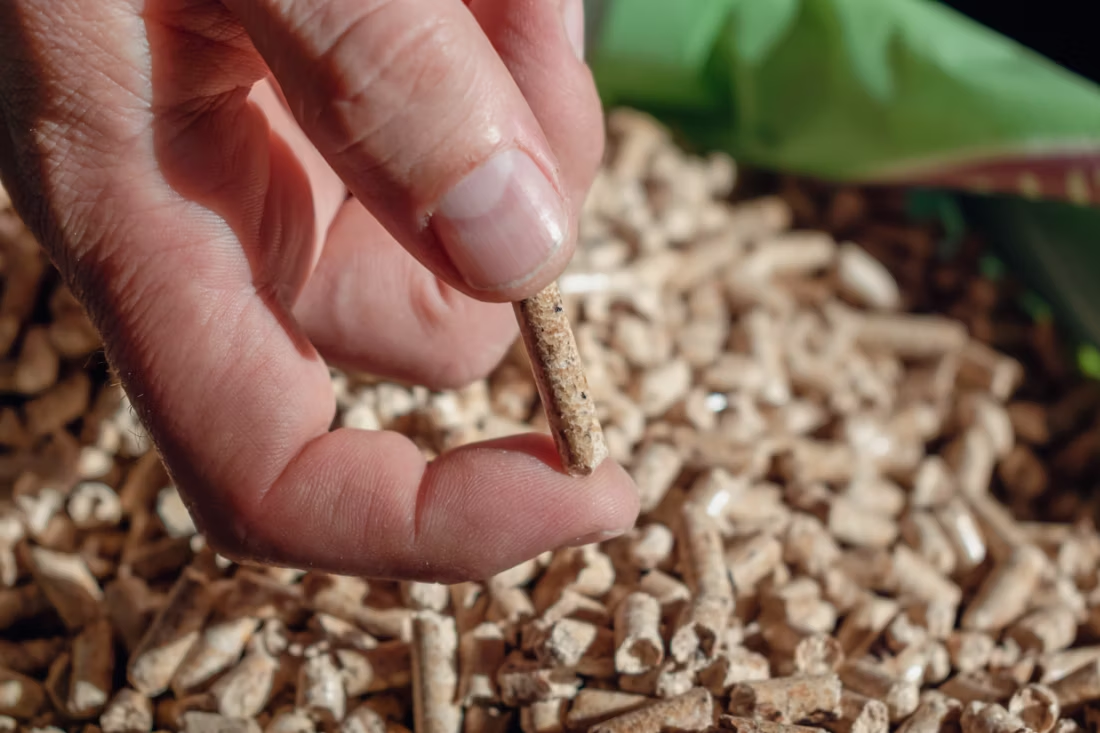
That doesn't mean pellet heat is off the table—it means it plays a different role here than it does up north. A handful of Jefferson Davis Parish homeowners install a pellet stove for the look of a real flame, for a cozy accent in a den or camp house, or as a backup heat source for the rare hard freeze that rolls through on an Arctic front. If that's your goal, a local dealer can size a small unit appropriately and set realistic expectations. For most parish homes, though, gas or electric fireplaces are the more practical everyday choice—and we'll say so plainly rather than push a pellet stove where it doesn't fit.
Three steps. No salesperson until you're ready.
Tell us about your project
Your zip code, your situation, and the fuel you're leaning toward—or let the answers point you to one.
See what's actually available
The brands dealers within 100 miles genuinely carry—real options, never a catalog mirage.
Get your dealer & Project Guide
A trusted local dealer, plus the free Project Guide & Parts List that names every component of the job.
Frequently Asked Questions
Does a pellet stove make sense in Jefferson Davis Parish?
For most homes, not really—and it's worth saying that directly. With winter lows averaging 42°F and only about 1,618 heating degree days per year, Jefferson Davis Parish rarely sees the sustained cold that makes a pellet stove's fuel and electricity costs worthwhile. A handful of homeowners still install one for the visual of a real flame or as backup heat during a hard freeze, but the parish's mild climate means gas or electric units generally deliver more practical everyday value. If you're set on pellet, a local dealer can size a small unit and be upfront about how often you'll actually run it.
What would a pellet stove installation cost in Jefferson Davis Parish?
Because pellet demand is low locally, pricing isn't as standardized as it is for gas or electric units—expect a wider range depending on the dealer and how far they're traveling from Lake Charles or Lafayette. Budget for the stove itself, a compliant vent kit, and hearth pad work if you don't already have a suitable surface. Given how rarely these get installed in the parish, get a firm in-home quote rather than relying on a national average—a local dealer will tell you honestly what a small unit costs to install and run here.
Can I even find pellets locally in Jefferson Davis Parish?
Sourcing is the real catch. Brands like Lignetics, Hamer Pellet Fuel, and Greenway Renewable Energy circulate through parts of Louisiana, but with so little local demand in Jonesboro, Welsh, or Lake Arthur, retailers don't always keep pellets in stock year-round. Most parish homeowners who go with pellet end up ordering ahead of the (short) cold season or picking up bags on trips toward Lake Charles or Lafayette. If pellet supply reliability worries you, that's a real mark in favor of gas or electric instead.
Why doesn't wood or pellet heat show up much in Jefferson Davis Parish?
It comes down to degree days. At roughly 1,618 heating degree days a year, the parish needs a fraction of the heating that a northern climate zone requires—for comparison, a town like Burlington, VT logs well over 7,000. Local hardwoods like oak, pecan, and cypress are plentiful, but they're used for smokers and outdoor cooking far more than home heating. Wood and pellet stoves simply don't pencil out as primary or even reliable supplemental heat sources here, which is why gas and electric fireplaces dominate the local market.
What do most Jefferson Davis Parish homeowners install instead of pellet?
Gas fireplaces and inserts are the standard choice across the parish, offering instant heat on the occasional cold night without the fuel storage or auger maintenance a pellet stove requires. Electric fireplaces are also common, especially for ambiance in living rooms and dens where homeowners want the look of a fire without any venting at all. Both options match the parish's mild climate far better than a hopper-fed pellet appliance that would sit unused most of the year.
If I still want a pellet stove, what should I ask a local dealer?
Ask about sizing down—a small-hopper unit rather than a whole-home model, since you're heating for occasional cold snaps rather than a long season. Ask how they source pellets locally and whether they can point you to a supplier who stocks Lignetics, Hamer, or Greenway reliably. And ask them to be honest about realistic run-time expectations given the parish's 42°F average winter low. A good local dealer will tell you if a smaller electric or gas unit would actually serve you better.
Do I need a permit for a pellet stove in Jefferson Davis Parish?
Most standalone pellet stove installations require a building permit through the parish or the relevant municipal building department (Jennings, Welsh, or Lake Arthur, depending on where you live), primarily to confirm proper venting clearances and hearth pad compliance. Because these installations are uncommon locally, it's worth calling ahead to confirm the exact process rather than assuming—a local dealer who's pulled permits here before can walk you through it.
How does a pellet stove compare to a gas fireplace for a parish home?
A pellet stove needs bags of fuel stored somewhere dry, a hopper refilled regularly, and electricity to run the auger and blower—none of which are big burdens in a cold climate, but all of which are extra steps for a fuel source you might only need a handful of nights a year in Jefferson Davis Parish. A gas fireplace, by contrast, switches on instantly and requires no fuel handling at all. For a parish where winter lows average 42°F, the lower-maintenance option usually wins, which is a big part of why gas is far more common locally.
Are there any air quality restrictions on pellet stoves in Jefferson Davis Parish?
No—the parish has no air quality non-attainment designations or wood-burning curtailment programs like you'd find in a western wildfire-smoke region or a high-inversion basin. Pellet stoves burn cleanly compared to cordwood in any case, so this isn't a meaningful factor locally. The bigger question for most homeowners here isn't emissions, it's simply whether a pellet stove's fuel and maintenance needs make sense in a climate this mild.
What's the difference between an insert and a zero-clearance fireplace?
An insert is a fireplace that slides into a pre-existing wood-burning fireplace—if you don't have one, there's nothing to insert it into. A zero-clearance fireplace is built into a framed wall, which makes it the answer for remodels and new construction. Simple test: existing masonry fireplace means insert; blank or framed wall means zero-clearance.
Why is a fireplace insert so efficient?
An insert does two things: it seals the chimney completely, so you stop losing air you already paid to heat, and it radiates warmth into the room through the firebox and glass. Most add a heat-exchange fan that pulls cool room air underneath, wraps it around the hot firebox, and pushes it back out warm. Your home is more efficient before you've even lit the first fire.
What is an in-home preview and do I need one?
It's a visit where a hearth professional measures your space, confirms the model you picked actually works in your home, and walks the specs—framing, gas line, venting, finish work—before anything is ordered. Some details you just can't know until you see the house. Never make a down payment without one; it's the single most-skipped step that burns buyers.
Can a fireplace actually lower my heating bill?
Yes—by creating a comfort zone. A furnace heats every square foot of the house just to warm the one room you're in; a gas fireplace on low burns roughly a sixth of the gas a typical furnace does. Set the furnace around 55–60 degrees as a baseline, then heat the rooms your family actually uses. Families who heat this way commonly save $20–$60 a month.
Pellet Brands Stocked Around Jefferson Davis County
Manufacturers will point you to the nearest stocking dealer.
Get a straight answer on pellet heat in Jefferson Davis Parish.
Tell us about your home and goals, and we'll match you with a trusted local dealer and send over a free Project Guide & Parts List—including whether pellet is really the right call for your climate, or if gas or electric would serve you better.
Find Your Fireplace →