
Electric heat that fits Franklin Parish's mild winters.
No chimney, no gas line, no venting to plan around—just a fireplace that plugs in or wires into an existing wall and warms the room on the handful of genuinely cold nights Franklin Parish gets each year. Find the right unit and connect with a trusted local dealer.
Every Project Starts From One of These Five Situations
A short heating season built for electric heat.
Franklin Parish sits in the Louisiana Delta along the Boeuf River, with roughly 6,200 residents spread between Winnsboro, Baskin, Gilbert, and the farmland in between. Climate zone 3A means mild, humid winters—the average winter low is 36°F and the parish has a short, mild winter heating season. Compare that to Bismarck, ND, which has a winter heating load roughly four times as long, and it's clear why Franklin Parish homes don't need a furnace running around the clock. What they do need is a way to take the chill off a January morning or add ambiance to a living room without committing to a full wood-burning setup or a gas line install.
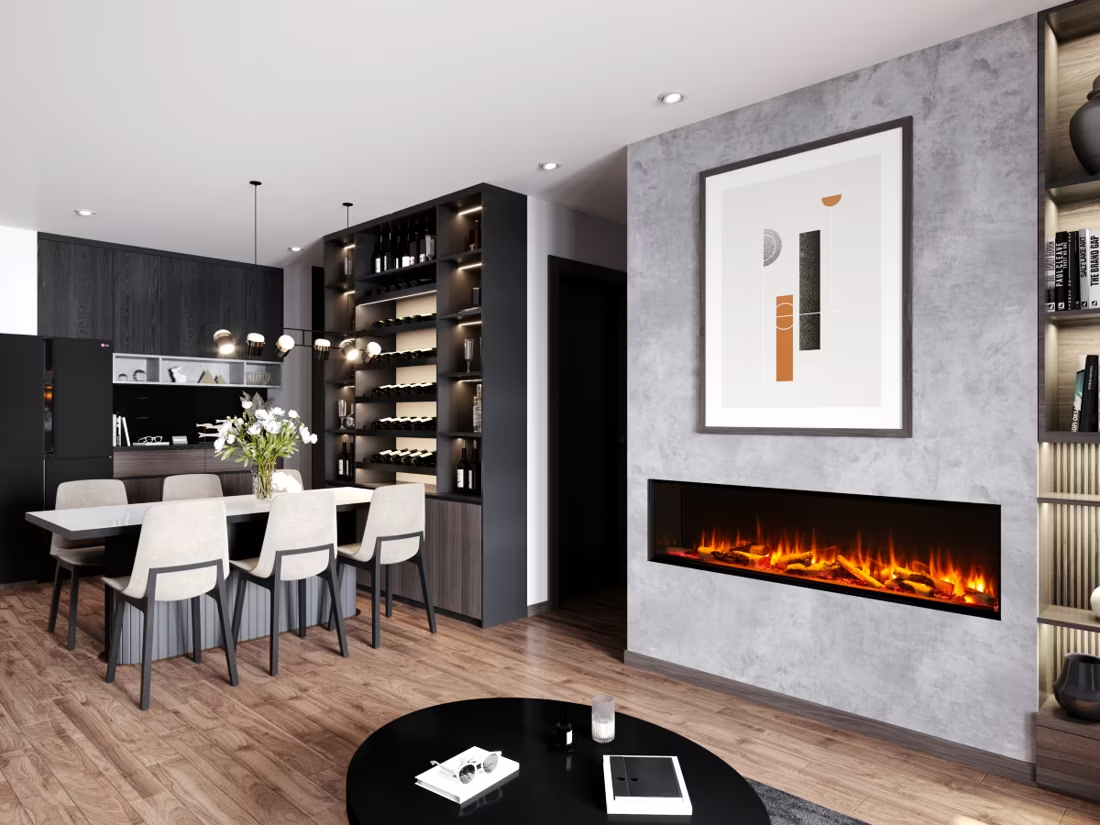
That's where electric fireplaces have carved out a real niche locally. Many homes in the parish—especially older frame houses in Winnsboro and the mobile and modular homes common in the rural areas around Gilbert and Crowville—don't have masonry chimneys or existing gas service, which makes retrofitting wood or gas fireplaces more involved and more expensive. An electric insert or wall-mount unit sidesteps that entirely: no venting, no combustion byproducts, and power draw so modest that CLECO Power customers barely notice it on a bill given how few days actually call for supplemental heat. It's a practical fit for a climate where you want real warmth on the occasional cold front, not a full-time heating system.
Three steps. No salesperson until you're ready.
Tell us about your project
Your zip code, your situation, and the fuel you're leaning toward—or let the answers point you to one.
See what's actually available
The brands dealers within 100 miles genuinely carry—real options, never a catalog mirage.
Get your dealer & Project Guide
A trusted local dealer, plus the free Project Guide & Parts List that names every component of the job.
Frequently Asked Questions
How much does an electric fireplace installation cost in Franklin Parish?
Plug-in electric fireplaces and inserts that use a standard 120V outlet typically run $300 to $1,200 installed, since there's no venting or gas line to add—most of that cost is the unit itself plus mounting. Hardwired units, including larger built-in electric fireplaces or inserts that replace the interior of an existing masonry firebox, run higher, generally $800 to $2,000, because they require a licensed electrician to run a dedicated circuit. Local dealers serving Winnsboro and the surrounding parish can tell you within a few minutes of looking at your outlet situation and breaker panel which category your project falls into.
Do I need a permit or an electrician to install an electric fireplace?
A plug-in electric fireplace or stove needs no permit at all—it works like any other appliance you plug into an existing outlet. A hardwired unit, or any install that requires a new dedicated circuit, does need a licensed electrician and typically a standard electrical permit through the parish or the municipality (Winnsboro, Baskin, and the other incorporated towns each handle their own permitting). Most hearth dealers in the parish either employ a licensed electrician or coordinate with one directly, so you're not left tracking down a separate trade.
Is an electric fireplace enough heat for a Franklin Parish winter?
For most homes in the parish, yes—as supplemental or zone heat. With an average winter low around 36°F and a winter heating season that's short and mild, Franklin Parish rarely sees the kind of sustained cold that demands a whole-home heating appliance. A 1,500-watt electric fireplace or insert puts out roughly 5,000 BTUs, which is plenty to take the edge off a living room or bedroom on a cold front. Homes relying on window units or older central systems often use an electric fireplace to warm the room they're actually sitting in, rather than running the whole-house system harder than it needs to.
Electric vs. propane—which makes more sense for my home?
Much of rural Franklin Parish runs on propane rather than natural gas, and a propane fireplace or insert can produce more heat output than an electric unit—useful if you're trying to genuinely heat a space during a hard freeze. But propane means a tank, a fuel delivery relationship, and venting work for most fireplace styles. Electric skips all of that: no tank, no delivery schedule, no venting, and a lower upfront cost. For homes that just want ambiance and light supplemental warmth, especially given how short the cold season runs here, electric is usually the simpler and cheaper choice. For a primary heat source in an older farmhouse with drafty rooms, propane still has an edge.
Electric vs. wood—Franklin Parish has plenty of oak and pecan around. Why go electric?
Oak, pecan, and cypress are all common and easy to source locally, and plenty of Franklin Parish households still burn wood for the same reasons their parents did—cost, ritual, and backup heat during an ice storm outage. But wood means chimney maintenance, ash cleanup, and, for renters or homes without an existing masonry fireplace, a significant install project. Electric fireplaces need none of that. For a den, a bonus room, or a home where nobody wants to split and stack wood for a season that's mostly mild, electric delivers the look and the warmth without the upkeep. Homes that want both often keep a wood stove for real cold-weather backup and an electric unit for everyday ambiance in a secondary room.
What's the best electric fireplace for Louisiana's humidity?
Humidity itself doesn't affect electric fireplace performance the way it can with some gas components, but it's worth choosing a unit with a sealed electronics housing and corrosion-resistant hardware given the Delta's humid summers and the occasional flooding risk along the Boeuf River bottomlands. Wall-mount and built-in units from mainstream brands typically handle Louisiana's climate fine without special modification. The bigger local consideration is placement—avoid exterior walls prone to moisture intrusion in older homes, and a local dealer can flag any home-specific issues during a walkthrough.
Can I put an electric insert into my existing fireplace?
Yes—this is one of the most common projects for older homes in and around Winnsboro that have a masonry fireplace that's gone unused or is expensive to keep functional. An electric insert slides into the existing firebox opening, plugs into a nearby outlet or a new dedicated circuit, and gives you flame effect and heat without touching the chimney or flue. It's a straightforward way to bring a decorative, non-functional fireplace back into use, and it's typically the lowest-cost way to update a fireplace that's been sitting cold for years.
How much does it cost to run an electric fireplace in Franklin Parish?
A typical 1,500-watt electric fireplace costs roughly 15 to 20 cents an hour to run at current CLECO Power residential rates, or a couple dollars for a full evening of use. Because Franklin Parish's heating season is short—nowhere near the long, cold winters of places like Minneapolis, MN—most households run these units occasionally rather than continuously, which keeps the annual operating cost modest even at those rates. It's a meaningful reason electric has become a default choice for ambiance and light supplemental heat rather than gas or wood in homes that don't need serious BTU output.
Electric vs. pellet stove—which fits Franklin Parish better?
Pellet stoves, using bagged fuel from brands like Lignetics, Hamer Pellet Fuel, or Greenway Renewable Energy, put out considerably more heat than an electric fireplace and can serve as genuine supplemental or even primary heat in a well-insulated home. But they require a vent, a hopper to keep filled, and periodic ash removal—real upkeep for a parish where hard winter cold is the exception rather than the rule. Electric fireplaces need none of that upkeep, at the cost of lower total heat output. For most Franklin Parish homes prioritizing convenience and ambiance over raw BTUs, electric wins; for a rural property that wants a legitimate backup heat source with more punch, pellet is worth a look.
Do electric fireplaces actually produce heat?
Yes—most put out around 4,800–5,000 BTUs from a standard outlet, which comfortably warms a bedroom, office, or den as a comfort-zone heater. What they won't do is carry a whole house the way wood, gas, or pellet can. Think of electric as ambiance-first with honest supplemental heat: flames on with no heat in July, flames plus warmth in January.
Can I put a TV above my fireplace?
Yes—with an asterisk. Fireplaces are hot and TVs don't like heat. Either put a mantel between them to deflect rising warmth, or choose a fireplace with heat-management technology that creates a cool zone on the wall above—the wall stays around 125 degrees, barely warm, while the room still gets full heat. If you like clean lines and don't want a mantel, heat management is the answer.
Does a fireplace add value to my home?
On average, a fireplace adds back to the home about the same amount you spent installing it. Add the monthly savings from heating the rooms you actually use instead of the whole house—often hundreds of dollars a year—and the value case is strong before you even count what a fire does for how your family uses the room.
How much should I budget for a fireplace?
For an average home—covering the fireplace, the vent pipe, and basic installation—a budget between $3,900 and $5,500 gives you a lot of options across wood, gas, and pellet. By the time you add finish work, gas line, and electrical, the average complete installation lands between $5,000 and $12,000 all-in. In a remodel or new build, a good rule is to put about 2.5% of the total project cost toward the fireplace.
Stove and Fireplace Dealers in Franklin County
Find your electric fireplace in Franklin Parish.
Tell us a bit about your home and we'll put together a free Project Guide & Parts List for your electric fireplace project—the right unit, the parts you'll need, and a trusted local dealer in Franklin Parish to handle the install.
Find Your Fireplace →