
The Right Hearth for Franklin Parish's Mild Winters.
Wood, gas, pellet, and electric fireplace resources for every community in Franklin Parish—from Winnsboro and Wisner to Baskin and Gilbert. Find the right unit for a Delta winter and connect with a trusted local hearth retailer.
Every Project Starts From One of These Five Situations
Short winters, real cold snaps in the Mississippi Delta.
Franklin Parish sits in the flat bottomland of northeast Louisiana, between the Boeuf River and Bayou Macon, in climate zone 3A. Winters are short—the parish's annual heating load is roughly a third of what a place like Duluth, Minnesota logs, and average winter lows hover around 36°F. But the parish still sees hard freezes and the occasional ice storm most years, and homes here need real heat for weeks at a time, not just decoration. The bottomland hardwood forests and bayou cypress stands that cover much of the parish supply the local wood-heat tradition—oak and pecan for long, dense burns, cypress for quick-catching kindling and shoulder-season fires.
This hub rounds up hearth retailers, service technicians, and fuel suppliers covering every town in Franklin Parish—Winnsboro, Wisner, Baskin, Gilbert, Crowville, and the surrounding farm communities along Highway 15 and Highway 4. Because the parish's population is small, several of the businesses listed below are based in nearby Monroe and travel in for installs and service. Pick your fuel below for local dealers, installed cost ranges, and recommended units for a Delta winter.
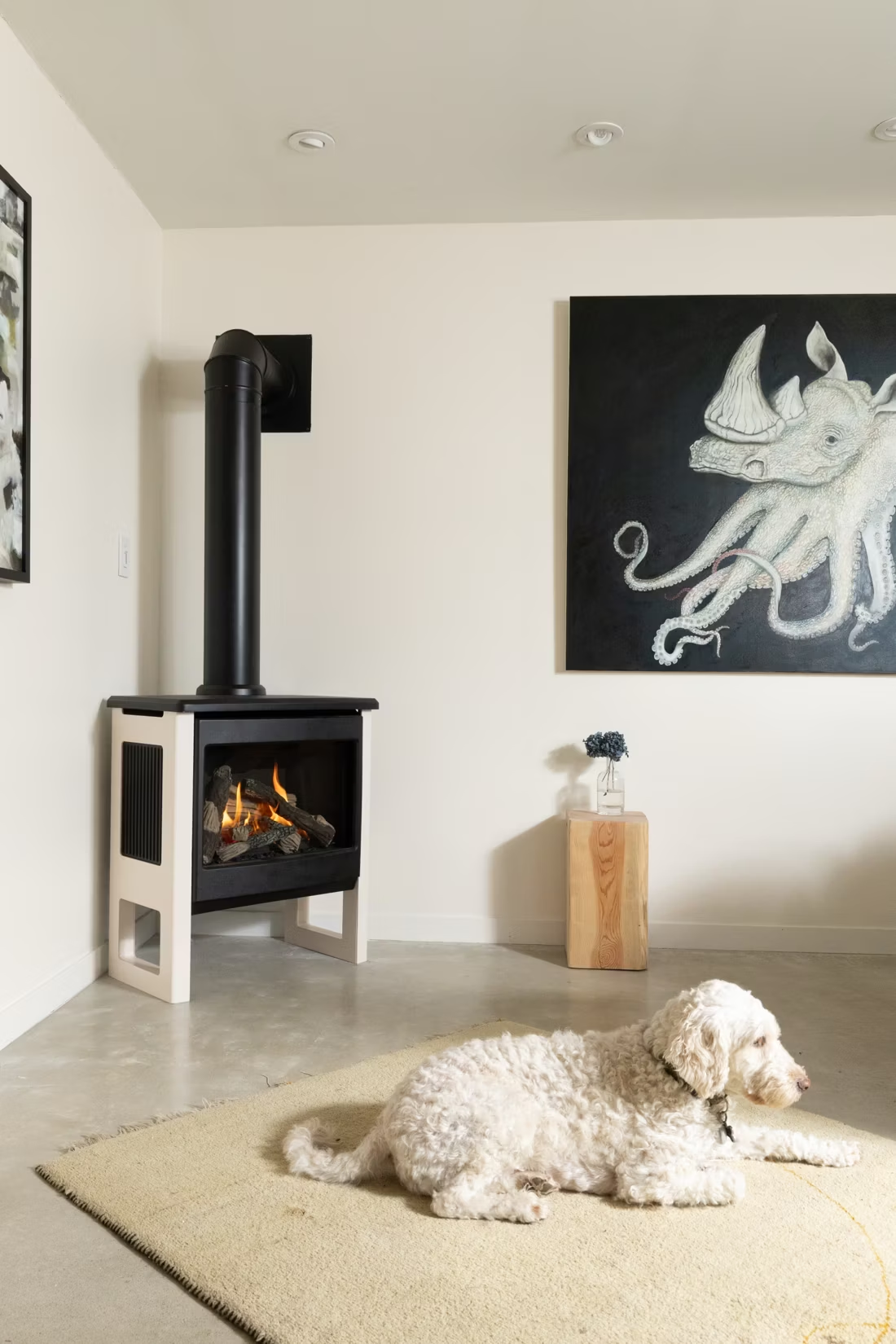
Four fuels. One honest answer for Franklin County.
Three steps. No salesperson until you're ready.
Tell us about your project
Your zip code, your situation, and the fuel you're leaning toward—or let the answers point you to one.
See what's actually available
The brands dealers within 100 miles genuinely carry—real options, never a catalog mirage.
Get your dealer & Project Guide
A trusted local dealer, plus the free Project Guide & Parts List that names every component of the job.
Frequently Asked Questions
Which fuel works best for a home in Franklin Parish?
It depends on how you use your home more than the climate—Franklin Parish's winters are short, so no fuel here is a survival necessity the way it would be in the upper Midwest. Wood remains popular for its low cost and local tradition: oak and pecan from parish bottomland burn long and hot, and cypress catches fast for a quick evening fire. Gas—almost always propane in rural Franklin Parish, since natural gas mains are limited outside town centers—is the convenience choice for instant heat with no wood to split or haul. Pellet stoves are a middle ground, and Hamer Pellet Fuel and Greenway Renewable Energy both have a presence in this part of Louisiana, so supply isn't an issue. Electric fireplaces work well as supplemental heat in guest rooms, camps, and sunrooms where running a flue doesn't make sense. Many Franklin Parish homeowners end up with wood or propane as the primary source and electric in a secondary room.
Do I need a permit to install a fireplace or stove in Franklin Parish?
In most cases, yes—new wood stoves, wood inserts, gas fireplaces, gas inserts, and pellet stoves typically require a building permit under Louisiana's state-adopted building code, administered locally. Gas installations also need a separate line permit and licensed gas-fitter for the propane or natural gas connection. Electric fireplaces usually skip the permit process unless it's a built-in unit that requires new wiring or a dedicated circuit. Local hearth retailers who regularly install in Franklin Parish generally handle the permit paperwork as part of the job, which is worth asking about up front.
Are there any air quality or burn restrictions in Franklin Parish?
No—Franklin Parish has no non-attainment designation, no winter inversion problems, and no mandatory burn-ban program like you'd find in some Western basins. That said, seasoned hardwood (six months to a year of drying for oak and pecan) still matters for a clean, efficient burn and less chimney buildup, and an EPA-certified stove will use noticeably less wood than an older unit for the same heat output. There's simply no regulatory pressure driving that choice here—it's purely about efficiency and safety.
Can one local retailer in Franklin Parish handle all four fuel types?
Some can, but with a parish population under 6,500, Franklin Parish doesn't support the density of large multi-fuel showrooms you'd see in a bigger market. Several homeowners end up working with a retailer based in Monroe, about 40 minutes northwest, that carries wood, gas, pellet, and electric and travels into Winnsboro, Wisner, and Baskin for installs. Smaller local shops in the parish tend to specialize—often wood and gas, with pellet and electric as secondary lines. If you're not sure which fuel fits your home, a multi-fuel dealer can walk you through the trade-offs in person rather than over the phone.
How does installation and service work in the smaller towns and rural areas of Franklin Parish?
Most technicians who service Franklin Parish are based in Winnsboro or Monroe and drive out to Wisner, Baskin, Gilbert, and the farm roads in between—the flat Delta terrain makes those drives quick outside of flood season. During heavy rain, low-lying stretches near the Boeuf River and Bayou Macon can flood and delay a scheduled visit, so it's worth booking service in late summer or early fall, before the first cold front, rather than waiting for a January cold snap when everyone else is calling too.
What's the typical cost range for a fireplace installation in Franklin Parish, across fuel types?
Wood stove or insert: roughly $3,500–$8,000 installed, depending on whether it's a straightforward insert or a full chimney build. Gas fireplace, insert, or stove: about $4,000–$9,000, with propane conversions running toward the lower end if a tank and line are already in place. Pellet stove or insert: typically $4,000–$6,500. Electric fireplace: $200–$2,500 for the unit itself, plus $300–$1,000 in labor for anything beyond a simple plug-in install, which covers most wall-mount and insert units. Exact pricing depends on the retailer and the specifics of your home—see the fuel-specific pages for more detail.
Can a fireplace actually lower my heating bill?
Yes—by creating a comfort zone. A furnace heats every square foot of the house just to warm the one room you're in; a gas fireplace on low burns roughly a sixth of the gas a typical furnace does. Set the furnace around 55–60 degrees as a baseline, then heat the rooms your family actually uses. Families who heat this way commonly save $20–$60 a month.
Can I install a fireplace myself?
If you're putting a fire in your house on purpose, it's best to work with an expert. Unless you're genuinely experienced in framing, gas line, vent pipe, and the national code on clearances to combustibles, have a professional do it—and ideally the same company that sells you the fireplace, so warranty, service, and liability all live under one roof.
How much should I budget for a fireplace?
For an average home—covering the fireplace, the vent pipe, and basic installation—a budget between $3,900 and $5,500 gives you a lot of options across wood, gas, and pellet. By the time you add finish work, gas line, and electrical, the average complete installation lands between $5,000 and $12,000 all-in. In a remodel or new build, a good rule is to put about 2.5% of the total project cost toward the fireplace.
I know I want a fireplace—where do I actually start?
Do two things today: snap a photo of the wall or fireplace you want to transform, and take a tape measure to the space—width, height, depth. Those two artifacts answer most of a hearth professional's first questions. Then settle fuel (wood, gas, pellet, or electric) and set a realistic budget: $3,900–$5,500 covers fireplace, vent, and basic install for most homes.
Stove and Fireplace Dealers in Franklin County
Listings include WhyFire partner dealers, dealers we have verified as authorized for the brands we recommend, and established local businesses that carry hearth products. Every listing shows which one it is. The ones marked Preferred run on WhyFire's software, so they can show you real pricing and book your appointment right here. No manufacturer pays for placement. How we verify dealers →
O'Neal Gas
Acme Brick
Louisiana Stone
O'Neal Gas Inc.
Golsons Gas Logs Lights & Grills
O'Neal Gas
Get Your Franklin Parish Project Guide.
Tell us about your home and we'll match you with a trusted hearth retailer serving Franklin Parish, plus send you a free Project Guide & Parts List—the exact parts, including the vent kit, and the local dealer we recommend for your fuel and your town.
Find Your Fireplace →