
Keep Your Family Warm and Safe—No Matter What
Supplemental warmth for the mild but real winters of north Louisiana—from Homer to Haynesville to the piney rural stretches in between. Find the right stove or insert, and connect with a trusted local dealer.
Every Project Starts From One of These Five Situations
A backup that's also a tradition.
Claiborne Parish sits in north-central Louisiana, climate zone 3A, with a modest winter heating season and average winter lows around 32 degrees. That's a fraction of the heating load a place like Duluth, Minnesota deals with, but it's enough for genuine cold snaps—January mornings in the 20s aren't rare, and ice storms have knocked out power across the parish before. For most Claiborne households, a wood stove or insert isn't the primary heat source; it's the thing that keeps a home warm when the electricity goes out, and it's a way to burn through the oak, pecan, and cypress that comes down on parish land every year.
With no air quality restrictions in Claiborne Parish, there's no curtailment schedule to plan around and no non-attainment paperwork—burn when you want to. That simplicity, paired with abundant local hardwood, is part of why wood heat has stayed relevant here even as the region has warmed and central HVAC has become standard. A properly sized stove or insert in a Homer or Haynesville home does real work during a February freeze, and it adds a kind of resilience that a furnace alone can't match when the power lines come down.
Three steps. No salesperson until you're ready.
Tell us about your project
Your zip code, your situation, and the fuel you're leaning toward—or let the answers point you to one.
See what's actually available
The brands dealers within 100 miles genuinely carry—real options, never a catalog mirage.
Get your dealer & Project Guide
A trusted local dealer, plus the free Project Guide & Parts List that names every component of the job.
Frequently Asked Questions
How much does a wood stove installation cost in Claiborne Parish?
A typical wood stove or insert installation in Claiborne Parish runs in the range most Louisiana hearth dealers quote for a straightforward job—figure roughly $3,500 to $8,000 depending on whether you're installing into an existing masonry fireplace, need new Class A chimney pipe for a freestanding stove, or require a hearth pad for code clearance. Homes without an existing chimney, common in newer construction around Homer, cost more once full venting is factored in. Rural properties outside Homer or Haynesville may see a modest travel charge added by installers based in Ruston or Shreveport.
What size wood stove or insert do I need for my home?
Because Claiborne Parish winters are mild compared to the northern half of the country, most homes here don't need the largest stove on the showroom floor. A small to medium stove (rated for 1,000-1,600 sq ft) is usually plenty for supplemental heating in a typical parish home, especially if central heat handles the bulk of the season and the stove is there for cold snaps and outages. Larger, older farmhouses with poor insulation, common in the rural areas around Lisbon and Junction City, may want a medium-to-large unit to compensate for drafts. Oversizing is the more common mistake in this climate—a stove sized for a Minnesota winter will run too hot and too often in a Louisiana one. A local dealer can size your space correctly during an in-home visit.
Where can I find certified wood stove installers near me?
Look for installers with NFI (National Fireplace Institute) or CSIA (Chimney Safety Institute of America) credentials. Claiborne Parish is a small, rural market, so many homeowners work with hearth dealers based in Ruston, Minden, or Shreveport who service the parish on a route basis—it's worth asking about travel charges up front. Avoid handyman installs for wood-burning appliances; improper clearance-to-combustible work and undersized chimney pipe are the most common causes of house fires in wood-stove installs, and a licensed installer will pull the required permit and get it inspected.
What's the difference between a wood stove and a wood insert?
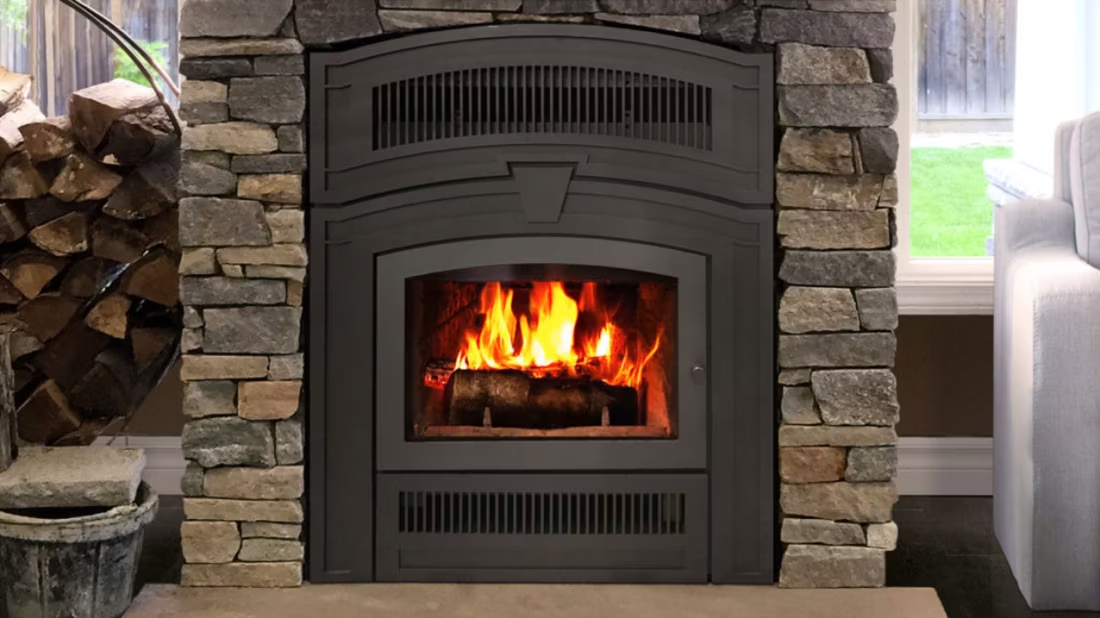
A wood stove is a freestanding unit on its own hearth pad, vented through Class A pipe—it can go almost anywhere with the right clearances. A wood insert slides into an existing masonry fireplace and uses a stainless liner run up the existing chimney, turning a drafty open firebox into a much more efficient heat source. Many older homes in Homer and Haynesville already have a masonry fireplace built for looks rather than heat output—for those, an insert is usually the better upgrade, since it reuses the chimney you already have and dramatically cuts heat loss up the flue.
Do I need a permit to install a wood stove in Claiborne Parish?
Yes—new wood-burning appliance installations generally require a building permit through the parish, and the unit itself needs to meet current EPA emissions standards. Most local hearth dealers handle the permit application and inspection scheduling as part of the installation, so it's rarely something the homeowner has to manage directly. Since Claiborne Parish has no air quality non-attainment status or burn curtailment periods, there's no additional local air-quality permitting layered on top—the process is more straightforward than in parishes or states with active winter inversion problems.
What's the best wood stove for Claiborne Parish's climate?
For a mild, humid climate like Claiborne Parish, a mid-sized non-catalytic stove from a brand like Pacific Energy or Lopi is usually a better fit than an oversized catalytic model built for sub-zero climates—you want efficient heat for shorter cold spells rather than a 20-hour overnight burn designed for places like Bozeman, Montana. Non-catalytic stoves are also generally simpler to maintain, which matters if the stove sits unused for long stretches during the parish's long warm season. If you're burning primarily oak or pecan, look for a firebox depth that accommodates the longer splits those hardwoods are typically cut into locally.
How often should my chimney be inspected and cleaned?
CSIA recommends an annual inspection for any wood-burning appliance, and that holds even in a mild-winter parish like Claiborne where the stove might only run a few months a year. Late summer or early fall, before the first cold front, is the right time to schedule a sweep. Even light seasonal use can build up creosote, especially if the wood being burned—cypress in particular—hasn't been seasoned long enough. A chimney sweep serving the Homer and Haynesville area can handle both the inspection and the cleaning in one visit.
Where can I get firewood in Claiborne Parish?
Firewood is abundant and often informal in Claiborne Parish—many residents cut their own from parish or family land, and oak, pecan, and cypress are the most common species available locally. For those buying, local sellers typically price by the rick or the cord, and prices are generally lower here than in regions where firewood is trucked in from a distance. If buying, ask how long the wood has been seasoned—cypress and freshly split oak both need real drying time before they burn cleanly, and green wood is the leading cause of chimney creosote buildup in this climate.
Wood stove vs. pellet stove—which is right for me?
Wood stoves burn cordwood, work with no electricity at all—a real advantage in Claiborne Parish, where ice storms have taken down power lines for days at a time—and pair naturally with the free or low-cost oak and pecan many residents already have access to. Pellet stoves, using bagged fuel from brands like Lignetics or Hamer Pellet Fuel, are more convenient to load and burn cleaner, but the auger and blower need electricity, so they go dark in an outage unless paired with a battery backup. Given how often winter storms in this part of Louisiana knock out power alongside the cold, wood tends to be the more resilient choice for parish homeowners who want heat they can count on no matter what the grid is doing.
Why is my open fireplace making my house colder?
Open fireplaces suck—literally. As the fire burns, it consumes air your furnace already paid to heat and pulls it out through the chimney, so the house is actually colder after the fire goes out than before you lit it. An insert fixes this: it seals the chimney, puts fixed glass across the front, and turns that hole in your house into a real heat source.
Why won't my new wood stove get going like my old one?
New wood stoves are 70%+ efficient, so far less heat goes up the flue—which also means less draft to get a fire established. The rule: build a genuinely hot fire for about 45 minutes before you choke it down. Skip that and you get smoke in the room, creosote in the chimney, and a fire that never takes off. Most performance complaints trace straight back to this.
Can I install a fireplace myself?
If you're putting a fire in your house on purpose, it's best to work with an expert. Unless you're genuinely experienced in framing, gas line, vent pipe, and the national code on clearances to combustibles, have a professional do it—and ideally the same company that sells you the fireplace, so warranty, service, and liability all live under one roof.
Should the dealer who sells my fireplace also install it?
Ideally, yes. A fireplace project involves vent pipe, gas line, electrical, and often tile or stone. Hire three or four separate trades and you own the liability and the game of telephone between them. One company selling and installing means one accountable party, start to finish—ask about factory training, on-time completion records, and what happens if an inspection fails.
Stove and Fireplace Dealers in Claiborne County
Get your free Project Guide & Parts List.
Tell us about your home in Claiborne Parish and we'll match you with a trusted local dealer and a free Project Guide & Parts List—the exact parts, including the vent kit, for your wood stove or insert project.
Find Your Fireplace →