
Keep Your Family Warm and Safe—No Matter What
From Arcadia to Gibsland to Saline, wood heat in Bienville Parish is less about surviving brutal cold and more about staying warm and lit when an ice storm takes the power grid down for days. Find the right stove or insert and connect with a trusted local dealer.
Every Project Starts From One of These Five Situations
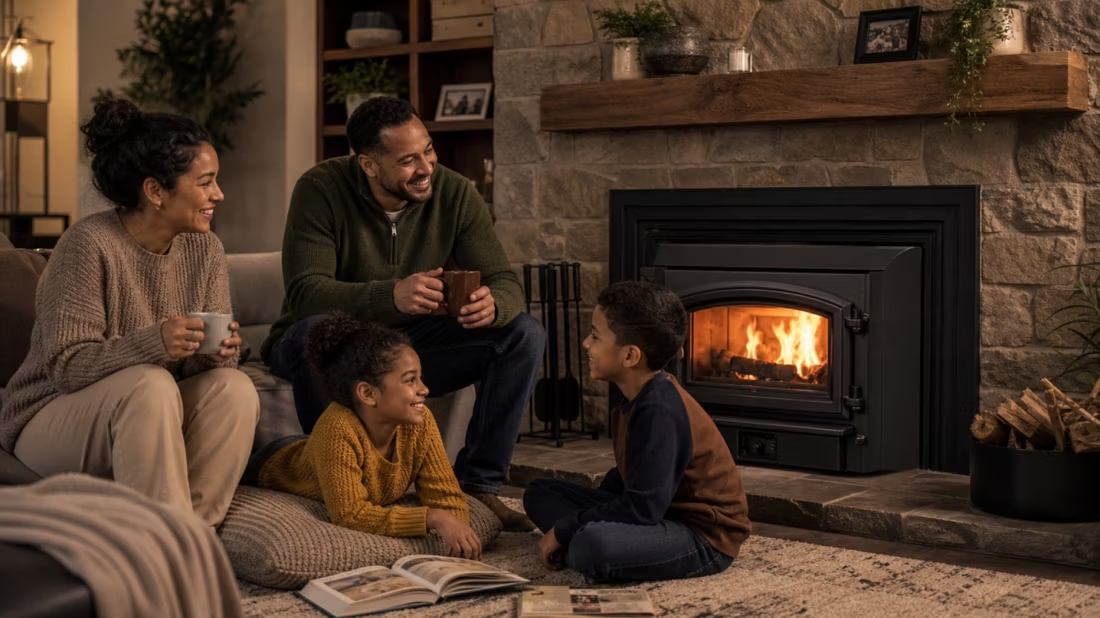
A backup heat source that doubles as a gathering spot.
Bienville Parish is a rural stretch of north-central Louisiana—about 6,400 people spread across Arcadia, Ringgold, Gibsland, Saline, and the timberland in between, with the Caney Ranger District of Kisatchie National Forest covering a meaningful chunk of the parish. Climate zone 3A means winters are short and mild by national standards, averaging around 35°F on the coldest nights, with a fairly light overall heating season—nothing like the deep-freeze stretches you'd see in Duluth or Fargo. But mild doesn't mean irrelevant: north Louisiana gets hit by ice storms often enough that a working wood stove has real value when the grid goes down and the nearest utility crew is an hour or more away on rural roads.
Bienville Parish also sits on serious hardwood country. Oak and pecan are the workhorse species locally—dense, high-BTU, and widely available from private timberland that many parish families already manage or have access to through relatives and neighbors. Cypress, more associated with the parish's creek and lake bottoms, shows up too, though it burns faster and is usually mixed with oak or pecan rather than used alone. There's no non-attainment designation and no winter inversion problem here, so burning wood doesn't come with the air-quality restrictions you'd find in a place like the Klamath Basin—just the standard building permit process through the Bienville Parish Police Jury and a stove that meets current EPA emissions standards.
Three steps. No salesperson until you're ready.
Tell us about your project
Your zip code, your situation, and the fuel you're leaning toward—or let the answers point you to one.
See what's actually available
The brands dealers within 100 miles genuinely carry—real options, never a catalog mirage.
Get your dealer & Project Guide
A trusted local dealer, plus the free Project Guide & Parts List that names every component of the job.
Frequently Asked Questions
How much does a wood stove installation cost in Bienville Parish?
Most wood stove installations in Bienville Parish run in the neighborhood of $3,500 to $7,500, depending on the stove, whether an existing chimney or hearth can be reused, and how much clearance and venting work is needed. Installing an insert into an older brick fireplace—common in the parish's older farmhouses around Arcadia and Ringgold—tends to land on the lower end since the masonry chimney is already in place. A freestanding stove in a home without an existing chimney, including new Class A pipe run through the roof, sits higher. Because Bienville Parish is sparsely populated, installers based near Shreveport or Ruston sometimes add a modest trip charge for jobs out toward Saline or Gibsland—worth asking about up front.
What size wood stove do I need for a home in Bienville Parish?
Given the parish's mild winters—average lows around 35°F and a fairly light overall heating season—most homes here don't need the largest catalytic stoves built for Rocky Mountain or upper-Midwest cold. A small to mid-size stove (rated for 1,000–1,800 sq ft) is usually plenty, even as a primary heat source in a modest rural home. The exception is older, poorly insulated farmhouses or mobile homes, which are common throughout the parish—those leak heat fast enough that sizing up one step, or planning for supplemental space heat in the coldest rooms, makes sense. A local dealer can size your home correctly during an in-home visit rather than guessing off square footage alone.
Where can I find certified wood stove installers near me?
Look for NFI (National Fireplace Institute) or CSIA (Chimney Safety Institute of America) certification—it's the clearest sign an installer knows proper clearances and venting for a wood-burning appliance. Because Bienville Parish's population is small, the closest certified hearth dealers are often based out of Ruston, Minden, or the greater Shreveport-Bossier area and travel into the parish for installs. That's normal here and shouldn't be a red flag—what matters is that the installer, wherever they're based, is certified and familiar with rural Louisiana chimney and framing conditions. Avoid a general handyman for the actual stove hookup; venting mistakes are the leading cause of chimney fires.
Wood stove or wood insert—which fits my Bienville Parish home better?
If your home already has a working masonry fireplace—common in the parish's older homes around Arcadia and Ringgold—an insert is usually the better call. It slides into the existing firebox, uses the chimney you already have, and turns a drafty, inefficient open fireplace into a real heat source. A freestanding stove makes more sense in a home without an existing chimney, in a workshop, camp house, or a newer build where you're starting from scratch. Both options are worth discussing with a local dealer, since the right choice often comes down to what's already built into your house.
Do I need a permit to install a wood stove in Bienville Parish?
Yes—new wood stove and insert installations go through the Bienville Parish Police Jury's building permit process, and the unit itself needs to meet current EPA emissions standards. Most local and regional installers handle the permit paperwork as part of the job, so you generally don't have to file anything yourself. Unlike parishes and counties dealing with winter inversion or wildfire smoke, Bienville Parish has no seasonal burning curtailment periods—there's no air quality advisory system to check before lighting a fire here.
What's the best wood stove for Bienville Parish's climate?
Because winters here are mild—average lows near 35°F rather than the sub-zero nights that justify a 20-hour-burn catalytic stove—a solid mid-size non-catalytic stove from a brand like Pacific Energy or Lopi covers most homes well without overkill. What matters more locally is reliability during power outages: since ice storms are the real cold-weather risk in north Louisiana, a simple, non-electric wood stove that doesn't depend on a blower to put out heat is a practical choice for anyone treating it as backup heat rather than daily-use primary heat. Talk to a local dealer about your home's insulation and whether you want daily-use heat or storm-backup heat—the sizing recommendation differs a bit between the two.
How often should my chimney be inspected in Bienville Parish?
The CSIA recommends an annual inspection for any wood-burning chimney, and that holds true here even with a shorter burning season than colder states. Plan on a sweep and inspection once a year, typically before the first cool nights in late fall. Given how rural much of Bienville Parish is—long drive times from Arcadia out to Saline or the Gibsland area—it's worth scheduling your sweep early rather than waiting until you smell smoke or notice a draft problem, since same-week emergency service can be harder to get out this way.
Where can I get firewood in Bienville Parish?
Oak and pecan are the most common firewood species cut locally, with cypress showing up from creek and lake-bottom properties. Many Bienville Parish households source firewood directly from family land, neighbors, or timber operations rather than buying delivered cordwood, since private timberland is abundant throughout the parish. For those wanting to cut on public land, the Caney Ranger District of Kisatchie National Forest, which covers part of the parish, issues personal-use firewood permits—contact the ranger district directly for current rates and any seasonal restrictions before you head out. Delivered cordwood is available from smaller regional sellers, typically priced by the cord, with oak commanding a bit more than mixed hardwood loads.
Wood stove vs. pellet stove—which is right for Bienville Parish?
Wood stoves burn cordwood, work with zero electricity, and pair naturally with the parish's abundant private oak and pecan supply—a real advantage when an ice storm knocks out power for days, which happens periodically in north Louisiana. Pellet stoves, using bags from regional suppliers like Lignetics, Hamer Pellet Fuel, or Greenway Renewable Energy, are more convenient day to day—no splitting, less ash, steadier heat—but they require electricity to run the auger and blower, so they go dark exactly when a wood stove would keep working. For most Bienville Parish homes, that outage risk tips the scale toward wood as the smarter backup choice, with pellet as a fine option for households with reliable power and a preference for convenience over off-grid capability.
Why won't my new wood stove get going like my old one?
New wood stoves are 70%+ efficient, so far less heat goes up the flue—which also means less draft to get a fire established. The rule: build a genuinely hot fire for about 45 minutes before you choke it down. Skip that and you get smoke in the room, creosote in the chimney, and a fire that never takes off. Most performance complaints trace straight back to this.
What do I measure to size a fireplace insert?
Four numbers tell you what fits: the front width, the front height, the back width, and the overall depth of your existing fireplace opening. Grab a tape measure, jot those down, and snap a photo of the wall—those two things do more to move your project forward than anything else you can do today.
Can I install a fireplace myself?
If you're putting a fire in your house on purpose, it's best to work with an expert. Unless you're genuinely experienced in framing, gas line, vent pipe, and the national code on clearances to combustibles, have a professional do it—and ideally the same company that sells you the fireplace, so warranty, service, and liability all live under one roof.
What is an in-home preview and do I need one?
It's a visit where a hearth professional measures your space, confirms the model you picked actually works in your home, and walks the specs—framing, gas line, venting, finish work—before anything is ordered. Some details you just can't know until you see the house. Never make a down payment without one; it's the single most-skipped step that burns buyers.
Find your wood stove in Bienville Parish.
Tell us a bit about your home and we'll match you with a trusted local dealer and send you a free Project Guide & Parts List—the exact parts, vent kit, and recommended installer for a wood stove or insert project in Bienville Parish.
Find Your Fireplace →