
Keep Your Family Warm and Safe—No Matter What
With such a light overall winter heating load and winter lows that rarely dip below 40°F, wood heat isn't a Baton Rouge necessity—but it still has a place for ambiance, hurricane-season backup, and camps out in the parish.
Every Project Starts From One of These Five Situations
Louisiana's Gulf Coast climate rarely calls for wood heat.
Baton Rouge sits at 48 feet of elevation in climate zone 2A, where the average winter low is a mild 40°F and the city has a light overall winter heating load. Compare that to a place like Fargo, ND, which has a winter heating load more than five times greater—Fargo homes burn wood for months of survival heat, while Baton Rouge homes might see a handful of nights a year cold enough to want a fire going at all. That's the honest starting point: a wood stove here is rarely the primary heat source, and most East Baton Rouge Parish homes rely on central HVAC or gas for daily comfort.
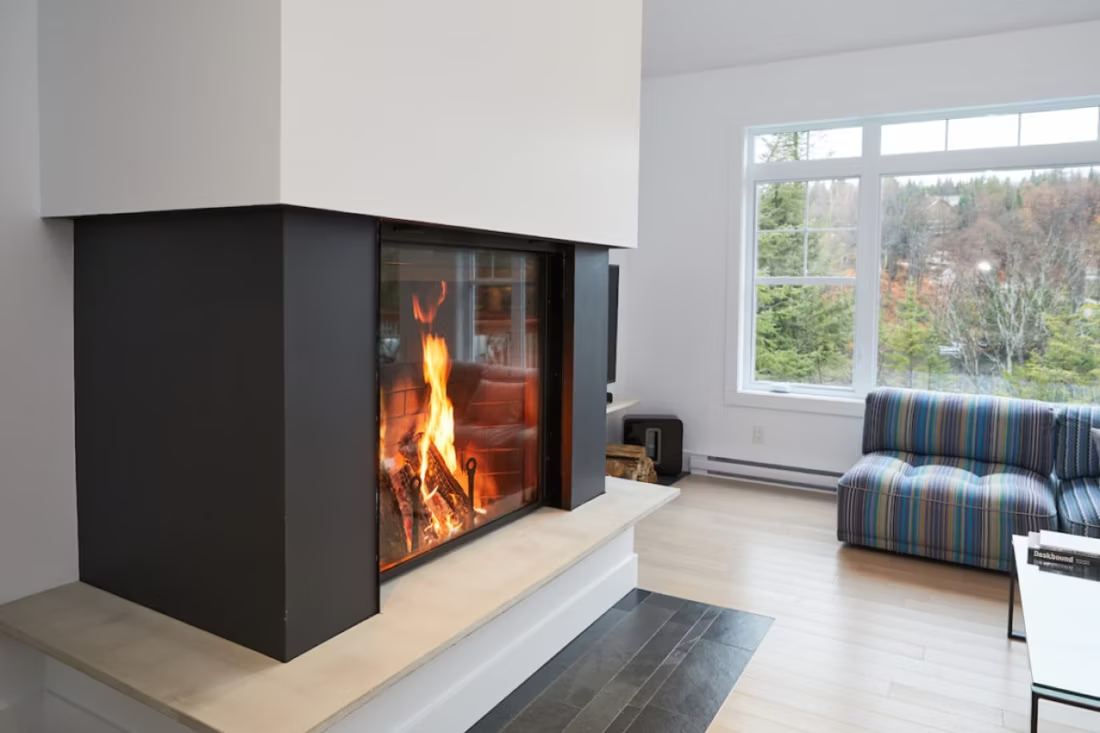
That said, wood heat isn't absent from the market. Homeowners with wooded lots or camp property outside the city—where oak, pecan, and cypress are all common and locally available—sometimes install a stove for weekend use or genuine backup heat. Others want a wood-burning fireplace purely for the atmosphere during Louisiana's rare cold snaps, like the February 2021 freeze that knocked out power across Entergy Louisiana and Dixie Electric Membership Corp service areas for days. With no air quality non-attainment issues or wildfire-smoke concerns in this region, burning wood here isn't regulated the way it is in western states—it's simply a matter of whether it fits your home and how you'll actually use it.
Three steps. No salesperson until you're ready.
Tell us about your project
Your zip code, your situation, and the fuel you're leaning toward—or let the answers point you to one.
See what's actually available
The brands dealers within 100 miles genuinely carry—real options, never a catalog mirage.
Get your dealer & Project Guide
A trusted local dealer, plus the free Project Guide & Parts List that names every component of the job.
Frequently Asked Questions
Does a wood stove actually make sense for a Baton Rouge home?
For most Baton Rouge homes, no—not as a primary heat source. With an average winter low around 40°F and a winter heating load that stays light year-round, the climate simply doesn't demand the kind of sustained wood heat that a place like Duluth, MN needs for half the year. Where a wood stove does make sense here is as a secondary feature: homes with wooded acreage in the parish, camp or hunting properties, or homeowners who specifically want the ambiance and backup capability of a real wood fire during ice storms or hurricane-related outages. If your goal is efficient daily heat, gas is almost always the better fit for this climate.
How much does a wood stove or fireplace installation cost in Baton Rouge?
Because demand is lower here than in colder markets, fewer Baton Rouge dealers stock a deep wood-stove lineup, but a basic freestanding stove installation with Class A chimney work typically runs in the $4,000–$7,000 range, and a masonry fireplace insert conversion tends to land a bit higher once liner and hearth-pad work are included. Expect a wider quote spread than you'd see for gas, since fewer local installers do this work regularly—get two or three in-home quotes before deciding.
What firewood species are available around Baton Rouge?
Oak, pecan, and cypress are the three woods you'll most commonly find from local firewood sellers and on wooded properties around East Baton Rouge Parish. Oak and pecan both burn hot and dense, similar to what you'd want for a stove used for real heat rather than just ambiance; cypress is more common as a regional wood culturally but burns faster and is better suited to open, decorative fires than long overnight burns.
Do I need a permit to install a wood stove in East Baton Rouge Parish?
Yes—any new wood-burning appliance install, whether freestanding stove or insert, requires a building permit through the East Baton Rouge Parish Permits and Inspections Division (or the relevant municipal office if you're in one of the incorporated cities within the parish). The stove itself needs to meet current EPA emissions standards. Most local hearth dealers who do install wood stoves in this market handle the permit paperwork as part of the job—but confirm that up front, since it's less routine here than gas fireplace permitting.
Is a wood stove a good backup heat option for hurricane season?
It can be, and it's one of the more legitimate reasons Baton Rouge homeowners install one. Entergy Louisiana and Dixie Electric Membership Corp customers both saw extended outages during the February 2021 freeze and after major hurricanes, and a wood stove keeps working with zero electricity—no fan, no igniter, no dependence on the grid. If backup heat during storm season is your main driver, prioritize a simple, non-electric stove design over anything with blowers or electronic controls, since those won't function during an outage anyway.
Are there any burning restrictions in Baton Rouge I should know about?
East Baton Rouge Parish has no ongoing air-quality non-attainment designation and no winter inversion issues like you'd see in mountain-basin cities, so there isn't a curtailment program restricting when you can burn. That said, the parish and surrounding areas can issue temporary outdoor burn bans during drought conditions, which is worth checking with the parish before any outdoor wood burning, though it typically doesn't affect an indoor stove or insert.
Should I get a wood stove or a gas fireplace for my Baton Rouge home?
For the vast majority of homes in this climate, gas is the more practical choice—it lights instantly, needs no fuel storage, and matches how mild the winters actually are here. Wood makes sense in narrower cases: a camp property with its own wood lot, a home where you specifically want off-grid backup heat for hurricane season, or a homeowner who simply wants the experience of a real wood fire a few nights a year. If you're on the fence, ask a local dealer to walk through both options for your specific home and usage pattern before committing.
Where can I buy firewood in Baton Rouge?
Local firewood sellers throughout East Baton Rouge Parish typically sell oak, pecan, and cypress by the rick or cord, with prices generally running $150–$275 per cord depending on species and how well-seasoned the wood is. Because wood heat is a smaller market here than in colder states, supply is less standardized than in a place like Bozeman, MT—ask any seller how long the wood has been split and stacked, since properly seasoned wood (6+ months) burns cleaner and hotter than green wood.
What's the best type of wood stove for occasional or backup use in Baton Rouge?
Skip the oversized, cold-climate catalytic stoves built for 20-hour overnight burns in places like Fargo, ND—that capacity is wasted in a climate with such a light overall winter heating load. A smaller, simply-controlled non-catalytic stove is usually the better fit for Baton Rouge: easier to light for occasional use, less expensive up front, and plenty capable of heating a single room or camp cabin during the handful of genuinely cold nights or a storm-related outage. A local dealer can help you avoid buying more stove than this climate will ever ask you to use.
What's the difference between an insert and a zero-clearance fireplace?
An insert is a fireplace that slides into a pre-existing wood-burning fireplace—if you don't have one, there's nothing to insert it into. A zero-clearance fireplace is built into a framed wall, which makes it the answer for remodels and new construction. Simple test: existing masonry fireplace means insert; blank or framed wall means zero-clearance.
Why won't my new wood stove get going like my old one?
New wood stoves are 70%+ efficient, so far less heat goes up the flue—which also means less draft to get a fire established. The rule: build a genuinely hot fire for about 45 minutes before you choke it down. Skip that and you get smoke in the room, creosote in the chimney, and a fire that never takes off. Most performance complaints trace straight back to this.
Can a fireplace actually lower my heating bill?
Yes—by creating a comfort zone. A furnace heats every square foot of the house just to warm the one room you're in; a gas fireplace on low burns roughly a sixth of the gas a typical furnace does. Set the furnace around 55–60 degrees as a baseline, then heat the rooms your family actually uses. Families who heat this way commonly save $20–$60 a month.
Does a fireplace add value to my home?
On average, a fireplace adds back to the home about the same amount you spent installing it. Add the monthly savings from heating the rooms you actually use instead of the whole house—often hundreds of dollars a year—and the value case is strong before you even count what a fire does for how your family uses the room.
Nearby Dealers
Hearth shops serving Baton Rouge and the surrounding area. Every listing shows whether it is a WhyFire partner, a dealer we have verified as authorized for the brands we recommend, or a local business carrying hearth products. No manufacturer pays for placement. How we verify dealers →
Area – Baton Rouge, La
Acoustical Spec & Supply
Woodburners, Inc
Economy Brick Sales
Find your wood fireplace in Baton Rouge.
Tell us about your home and how you'd actually use a wood stove—ambiance, a camp property, or hurricane-season backup—and we'll match you with a local dealer and send over a free Project Guide & Parts List sized to your project.
Find Your Fireplace →