
Warmth on Demand, Without the Wood Smoke.
Baton Rouge winters rarely dip below the 40s, so an electric fireplace delivers real ambiance and instant supplemental heat without a chimney, gas line, or firewood pile. Find the right unit and connect with a trusted local dealer.
Every Project Starts From One of These Five Situations
Mild winters, maximum flexibility.
Baton Rouge sits at just 48 feet of elevation in climate zone 2A, with a heating season so mild it's just a fraction of what a place like Minneapolis or Duluth racks up before Thanksgiving even arrives. Winter lows average around 40°F, with only a handful of nights each year dropping near freezing. That's exactly why wood stoves and pellet appliances are essentially non-existent here—there's no real cutting-permit culture, no cordwood supply chain, and no air-quality mandate pushing homeowners toward EPA-certified wood burners. Electric fireplaces fill the gap perfectly: fire-like ambiance year-round, with genuine heat output on the rare cold snap.
Electric units also solve a practical problem in a city full of raised Acadian cottages, shotgun houses near the LSU campus, and Garden District homes with decorative but non-functional masonry fireboxes: no venting, no chimney sweep, and often no permit at all for a plug-in insert. Both Entergy Louisiana and Dixie Electric Membership Corporation serve the metro area at a residential rate around 11 cents per kWh, which keeps the running cost of even a 1,500-watt unit well under 20 cents an hour. For homeowners who want the look of fire and occasional real warmth without committing to gas line work or firewood storage, electric is the straightforward local answer.
Three steps. No salesperson until you're ready.
Tell us about your project
Your zip code, your situation, and the fuel you're leaning toward—or let the answers point you to one.
See what's actually available
The brands dealers within 100 miles genuinely carry—real options, never a catalog mirage.
Get your dealer & Project Guide
A trusted local dealer, plus the free Project Guide & Parts List that names every component of the job.
Frequently Asked Questions
How much does an electric fireplace installation cost in Baton Rouge?
A basic plug-in electric insert or freestanding stove that drops into an existing masonry firebox typically runs $300 to $900 installed, since it just needs an outlet and a properly fitted surround. A built-in wall unit or linear electric fireplace wired to a dedicated 240V circuit—common in new construction or full remodels in newer subdivisions around Jefferson Highway and Perkins Road—runs $1,500 to $3,500 once an electrician runs the circuit and a carpenter builds the surround. Local dealers will quote a firm number after seeing your wall, framing, and electrical panel capacity.
Does an electric fireplace actually produce heat, or is it just for looks?
Most residential electric fireplaces include a built-in heater, usually rated around 1,500 watts and good for roughly 400 to 500 square feet—enough to take the chill off a living room or sunroom during one of Baton Rouge's occasional January cold snaps. Given the city's mild 40°F average winter low and a heating season that barely registers, an electric unit is rarely asked to be a whole-home heat source the way a wood stove is in a colder climate. Most owners here run the flame effect year-round for ambiance and switch on the heat element only a few weeks a year.
Do I need a permit to install an electric fireplace in Baton Rouge?
A simple plug-in insert or freestanding unit that uses an existing standard outlet typically doesn't require a permit. If you're installing a built-in wall unit that needs a new dedicated circuit, East Baton Rouge Parish's Permits and Inspections Division requires an electrical permit, and the wiring needs to be pulled by a licensed electrician. Most local dealers coordinate this as part of the installation, so you're not left scheduling a separate electrical inspection yourself.
What's the difference between an electric insert, a wall-mount unit, and a freestanding electric stove?
An electric insert is built to slide into an existing masonry firebox, which makes it the natural choice for the many Garden District and Spanish Town homes with decorative fireplaces that no longer see wood or gas. A wall-mount or linear electric fireplace is a flatter, framed-in unit built into new construction or a remodeled accent wall—popular in the newer homes going up around the Highland Road corridor. A freestanding electric stove looks like a traditional cast-iron wood stove but just needs a nearby outlet, making it a fast, no-construction option for apartments or rentals near LSU.
Will my electric fireplace still work during a power outage?
No—unlike a wood stove, an electric fireplace depends entirely on grid power, so it will shut off along with everything else during a hurricane-season outage from Entergy Louisiana or Dixie Electric. If backup heat during storm outages matters to you, a whole-home or portable generator sized to run the unit is the only workaround; battery backup isn't practical for the wattage these units draw. Homeowners who want heat that survives an outage are usually pointed toward a gas fireplace instead, since natural gas service in Baton Rouge isn't affected by grid power the same way.
What's the best type of electric fireplace for an older Baton Rouge home?
For raised Acadian cottages and older homes with a decorative, non-functioning masonry firebox, an electric insert is usually the cleanest fit—it slides into the opening you already have, uses the existing mantel and surround, and requires no chimney work of any kind since the flue can stay capped. For homes without an existing fireplace opening, a slimmer wall-mount or linear unit framed into a stud wall gives the same look without needing masonry at all. A local dealer can measure your firebox opening and tell you within minutes which route fits.
How much does it cost to run an electric fireplace in Baton Rouge?
With Entergy Louisiana and Dixie Electric Membership Corporation both billing residential customers around 11 cents per kWh, a typical 1,500-watt heater setting costs roughly 16 to 17 cents an hour to run, or about $4 for a full 24-hour day if you left it on continuously—which most owners never do. Running just the flame effect without heat draws a fraction of that, often under 100 watts, making year-round ambiance use cheap even outside the cooler months.
How much maintenance does an electric fireplace need?
Very little compared to a wood-burning setup—there's no annual chimney sweep or CSIA inspection required. Basic upkeep is wiping dust off the flame-effect lens, occasionally replacing an LED module if the flame display dims (most last 10+ years), and keeping the heater's air intake and vents free of dust and pet hair for proper airflow. That's largely it; there's no combustion byproduct, ash, or creosote to manage.
Electric vs. gas fireplace—which makes more sense for a Baton Rouge home?
Gas is the better choice if you want a unit that keeps producing real heat during a hurricane-season power outage and you already have natural gas service to the house—common in older neighborhoods like Mid City and the Garden District. Electric is the better choice for rental units, condos, homes without gas lines, or anyone who wants a fast, low-cost retrofit into a decorative firebox without running new gas piping. Given how mild Baton Rouge winters run, plenty of homeowners here choose electric purely for the ambiance and accept that it won't be a storm-outage heat source—while others plumb gas specifically because of hurricane season. A local dealer can walk through both given your home's existing utilities.
Does an electric fireplace need a vent or chimney?
No—that's its superpower. An electric fireplace needs a wall and an outlet, period. No vent pipe, no gas line, no clearances to design around, which is why it works in bedrooms, offices, apartments, and walls where venting a gas or wood unit would be impractical or impossible. Installation is typically the simplest and least expensive of any fireplace type.
Can I put a TV above my fireplace?
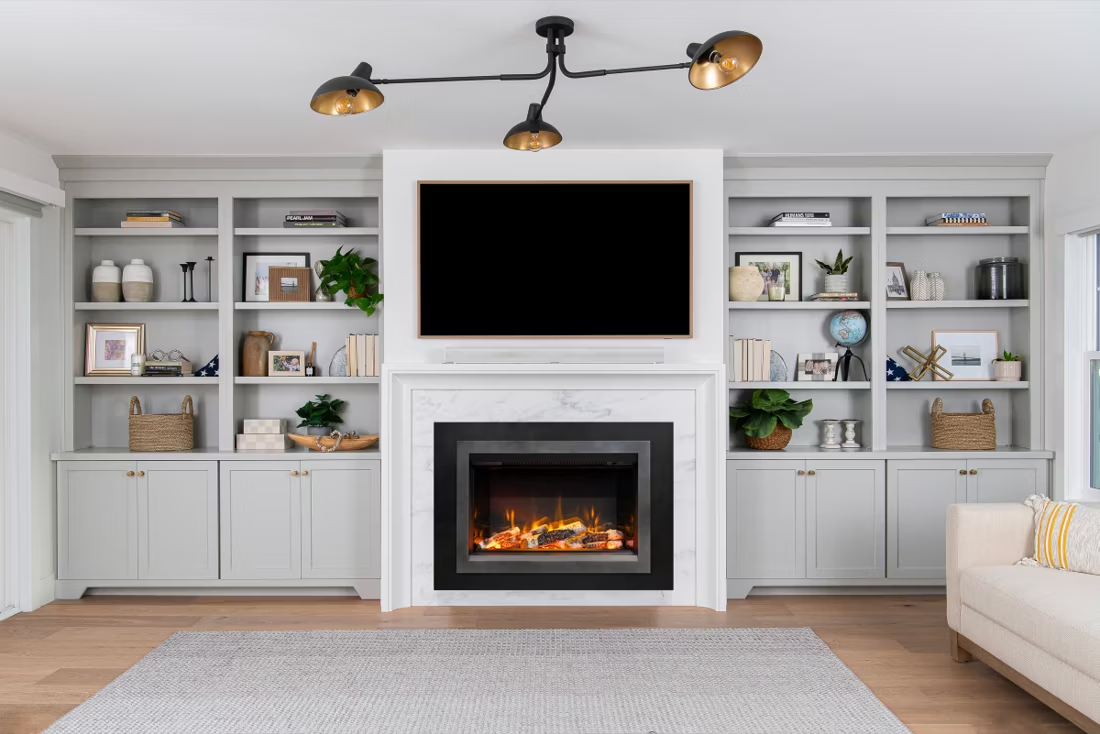
Yes—with an asterisk. Fireplaces are hot and TVs don't like heat. Either put a mantel between them to deflect rising warmth, or choose a fireplace with heat-management technology that creates a cool zone on the wall above—the wall stays around 125 degrees, barely warm, while the room still gets full heat. If you like clean lines and don't want a mantel, heat management is the answer.
How much should I budget for a fireplace?
For an average home—covering the fireplace, the vent pipe, and basic installation—a budget between $3,900 and $5,500 gives you a lot of options across wood, gas, and pellet. By the time you add finish work, gas line, and electrical, the average complete installation lands between $5,000 and $12,000 all-in. In a remodel or new build, a good rule is to put about 2.5% of the total project cost toward the fireplace.
Does a fireplace add value to my home?
On average, a fireplace adds back to the home about the same amount you spent installing it. Add the monthly savings from heating the rooms you actually use instead of the whole house—often hundreds of dollars a year—and the value case is strong before you even count what a fire does for how your family uses the room.
Nearby Dealers
Hearth shops serving Baton Rouge and the surrounding area. Every listing shows whether it is a WhyFire partner, a dealer we have verified as authorized for the brands we recommend, or a local business carrying hearth products. No manufacturer pays for placement. How we verify dealers →
Area – Baton Rouge, La
Acoustical Spec & Supply
Woodburners, Inc
Economy Brick Sales
Electric Service in Baton Rouge
An electric fireplace's heater draws about 1,500 watts—pennies per hour at local rates.
Entergy Louisiana LLC
Dixie Electric Membership Corp
Find your electric fireplace in Baton Rouge.
Tell us a bit about your home and we'll match you with a trusted local dealer and send a free Project Guide & Parts List—sized, wired, and ready for your Baton Rouge installation.
Find Your Fireplace →