
Pellet Heat Is Rare in Baton Rouge, But Not Impossible.
With only a short, mild winter heating season each year and winter lows averaging 40°F, most Baton Rouge homes never need the heat output a pellet stove is built for. For the homeowners who still want one, we'll connect you with a dealer who actually stocks and installs them here.
Every Project Starts From One of These Five Situations
Baton Rouge's climate rarely calls for pellet heat.
Baton Rouge sits at 48 feet elevation in climate zone 2A—hot and humid, with an average winter low of 40°F and just a short, mild winter heating season each year. Compare that to a place like Duluth, Minnesota, where the heating season runs far longer and pellet stoves are a genuine daily-use appliance from November through April. In East Baton Rouge Parish, most winters bring a handful of nights near freezing and little else. That's a real climate, but it isn't one that rewards the investment of a dedicated pellet-burning appliance the way the upper Midwest or interior Northeast does.
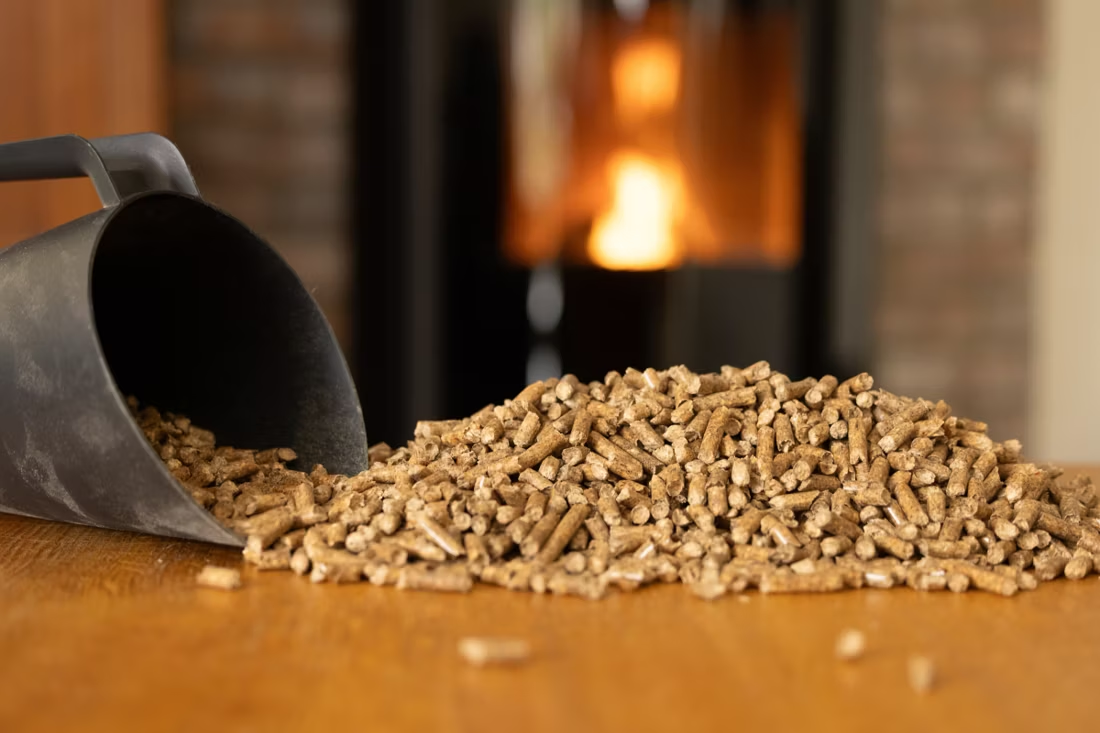
That said, pellet fuel isn't foreign here—regional brands like Lignetics, Hamer Pellet Fuel, and Greenway Renewable Energy do move through farm and feed stores in the area, largely for smokers, grills, and the occasional camp stove. A small number of Baton Rouge homeowners install pellet inserts anyway: for a hunting camp near the Atchafalaya, a converted garage or she-shed, a lake house up toward the Felicianas, or simply because they like the look and low-ash convenience more than they need the BTUs. If that's you, the honest path is matching with one of the few local dealers who actually carry and service pellet equipment, rather than guessing at a big-box unit nobody nearby can service.
Three steps. No salesperson until you're ready.
Tell us about your project
Your zip code, your situation, and the fuel you're leaning toward—or let the answers point you to one.
See what's actually available
The brands dealers within 100 miles genuinely carry—real options, never a catalog mirage.
Get your dealer & Project Guide
A trusted local dealer, plus the free Project Guide & Parts List that names every component of the job.
Frequently Asked Questions
Why aren't pellet stoves more common in Baton Rouge?
Baton Rouge only logs a short, mild winter heating season each year, and the average winter low sits around 40°F—mild enough that most homes rely on a central heat pump or gas furnace for the handful of cold snaps each winter. Pellet stoves are built to run for hours or days at a stretch in places where sub-freezing temperatures are the norm for months. In East Baton Rouge Parish, the appliance rarely pays for itself in fuel savings or comfort the way it does in a place like Fargo or Burlington, which is why you'll find far fewer local hearth shops stocking them compared to gas or electric units.
Can I still get a pellet stove installed in Baton Rouge if I want one?
Yes. It's not a common request, but it's not an unusual one either—camps, secondary structures, and homeowners who simply like pellet heat's low-maintenance burn all install them here. Expect to pay in the same general range you'd see nationally, roughly $3,000 to $6,000 installed, though because so few local dealers stock pellet inserts, pricing tends to be quoted case-by-case rather than off a standard rate card. The bigger challenge is usually finding a technician within a reasonable drive who services pellet auger and hopper systems, not the install itself.
Will a pellet stove keep my house warm if the power goes out during a hurricane?
No—this is one of the more important things to know before buying one in South Louisiana. Pellet stoves rely on an electric auger to feed fuel and a blower to circulate heat, so they shut down the moment power drops, which is exactly when hurricane-season outages tend to happen across Entergy Louisiana and Dixie Electric Membership Corp territory. If backup heat during an outage is the goal, a battery-backed gas fireplace or a generator-fed electric unit is a more realistic solution for this area than a pellet stove.
Where can I buy pellet fuel in Baton Rouge?
Regional brands like Lignetics, Hamer Pellet Fuel, and Greenway Renewable Energy show up at farm and feed retailers and some hardware stores around the parish, though most of that supply is bought for smokers and grills rather than home heating. If you do install a pellet stove, plan on buying by the pallet when you find a supplier carrying hardwood heating-grade pellets, since it's not the year-round staple item here that it is in colder pellet markets up north.
Who actually installs pellet stoves in a climate like Baton Rouge's?
Mostly homeowners with a specific reason: a hunting or fishing camp that needs occasional heat, a detached workshop or she-shed used through the mild winter, a lake house, or someone who simply prefers the look and low-ash convenience of a pellet insert over gas logs. It's a niche use case here compared to the Northeast or upper Midwest, but it's a real one, and the handful of Baton Rouge-area dealers who carry pellet equipment do know how to size and vent it correctly for a Gulf South structure.
Does Baton Rouge have burn bans or air quality restrictions that affect pellet stoves?
No—East Baton Rouge Parish has no listed air quality non-attainment issues or seasonal burn restrictions, so there's no local curtailment schedule to worry about the way there is in wood-smoke-heavy basins out West. That said, any pellet appliance installed here should still be EPA-certified and permitted through the parish building department, both for safety and for resale disclosure down the road.
Should I get a pellet stove or a gas fireplace in Baton Rouge?
For nearly every Baton Rouge home, gas is the more practical choice. It lights instantly, needs no fuel storage, and matches the area's mild winter pattern—a few cold nights rather than a full heating season. Pellet stoves require a standing supply of bagged fuel, routine hopper cleaning, and electricity to run, none of which pencils out well against the convenience of a gas insert here. Pellet still wins for homeowners who specifically want a wood-like flame and ash cleanup without cutting cordwood—but that's a preference call, not a climate-driven one, in this part of Louisiana.
Is an electric fireplace a better fit than pellet for Baton Rouge?
For most homes, yes. With Entergy Louisiana's residential rate around 11 cents per kWh and winters mild enough that supplemental zone heating covers most needs, an electric insert or stove delivers instant ambiance and warmth with no fuel storage, no venting, and no combustion byproducts to manage. Pellet stoves make more sense when the goal is heat output for an off-grid camp or detached structure where running new electric service isn't practical—otherwise, electric is the lower-hassle option for a Baton Rouge home.
If I do install a pellet stove here, what should I watch for?
Humidity is the big one. Baton Rouge's subtropical climate means bagged pellets left in a garage or shed can absorb moisture fast, turning to sawdust and clogging the auger—so plan on airtight, off-the-ground storage rather than the open stacking that works fine in a drier climate. Beyond that, look for an EPA-certified unit, confirm the installer will pull an East Baton Rouge Parish building permit, and ask specifically whether they service pellet equipment year-round, since so few local shops specialize in it.
Why is my open fireplace making my house colder?
Open fireplaces suck—literally. As the fire burns, it consumes air your furnace already paid to heat and pulls it out through the chimney, so the house is actually colder after the fire goes out than before you lit it. An insert fixes this: it seals the chimney, puts fixed glass across the front, and turns that hole in your house into a real heat source.
What's the difference between an insert and a zero-clearance fireplace?
An insert is a fireplace that slides into a pre-existing wood-burning fireplace—if you don't have one, there's nothing to insert it into. A zero-clearance fireplace is built into a framed wall, which makes it the answer for remodels and new construction. Simple test: existing masonry fireplace means insert; blank or framed wall means zero-clearance.
Does a fireplace add value to my home?
On average, a fireplace adds back to the home about the same amount you spent installing it. Add the monthly savings from heating the rooms you actually use instead of the whole house—often hundreds of dollars a year—and the value case is strong before you even count what a fire does for how your family uses the room.
Can a fireplace actually lower my heating bill?
Yes—by creating a comfort zone. A furnace heats every square foot of the house just to warm the one room you're in; a gas fireplace on low burns roughly a sixth of the gas a typical furnace does. Set the furnace around 55–60 degrees as a baseline, then heat the rooms your family actually uses. Families who heat this way commonly save $20–$60 a month.
Nearby Dealers
Hearth shops serving Baton Rouge and the surrounding area. Every listing shows whether it is a WhyFire partner, a dealer we have verified as authorized for the brands we recommend, or a local business carrying hearth products. No manufacturer pays for placement. How we verify dealers →
Area – Baton Rouge, La
Acoustical Spec & Supply
Woodburners, Inc
Economy Brick Sales
Pellet Brands Stocked Around Baton Rouge
Manufacturers will point you to the nearest stocking dealer.
Find your pellet option in Baton Rouge.
Tell us about your camp, workshop, or home, and we'll match you with a local Baton Rouge-area dealer who actually carries and services pellet equipment—plus a free Project Guide & Parts List with the exact parts, including the vent kit, for your project.
Find Your Fireplace →