
Find your electric fireplace in Acadia Parish.
No chimney, no venting, no humidity headaches—just clean supplemental warmth for the mild winters of Crowley, Church Point, Iota, and the rest of Acadia Parish. We'll match you with a trusted local dealer.
Every Project Starts From One of These Five Situations
Mild winters, real ambiance, zero venting hassle.
Acadia Parish sits in climate zone 2A with an average winter low around 42°F and a very light winter heating load—just a fraction of what a cold-climate county like Duluth, MN or Burlington, VT racks up in a single January. Most homes here don't need a serious heat source at all; they need something that takes the edge off a damp 40-degree night in Crowley or Church Point without running the central HVAC harder than it needs to. That's exactly the gap an electric fireplace fills.
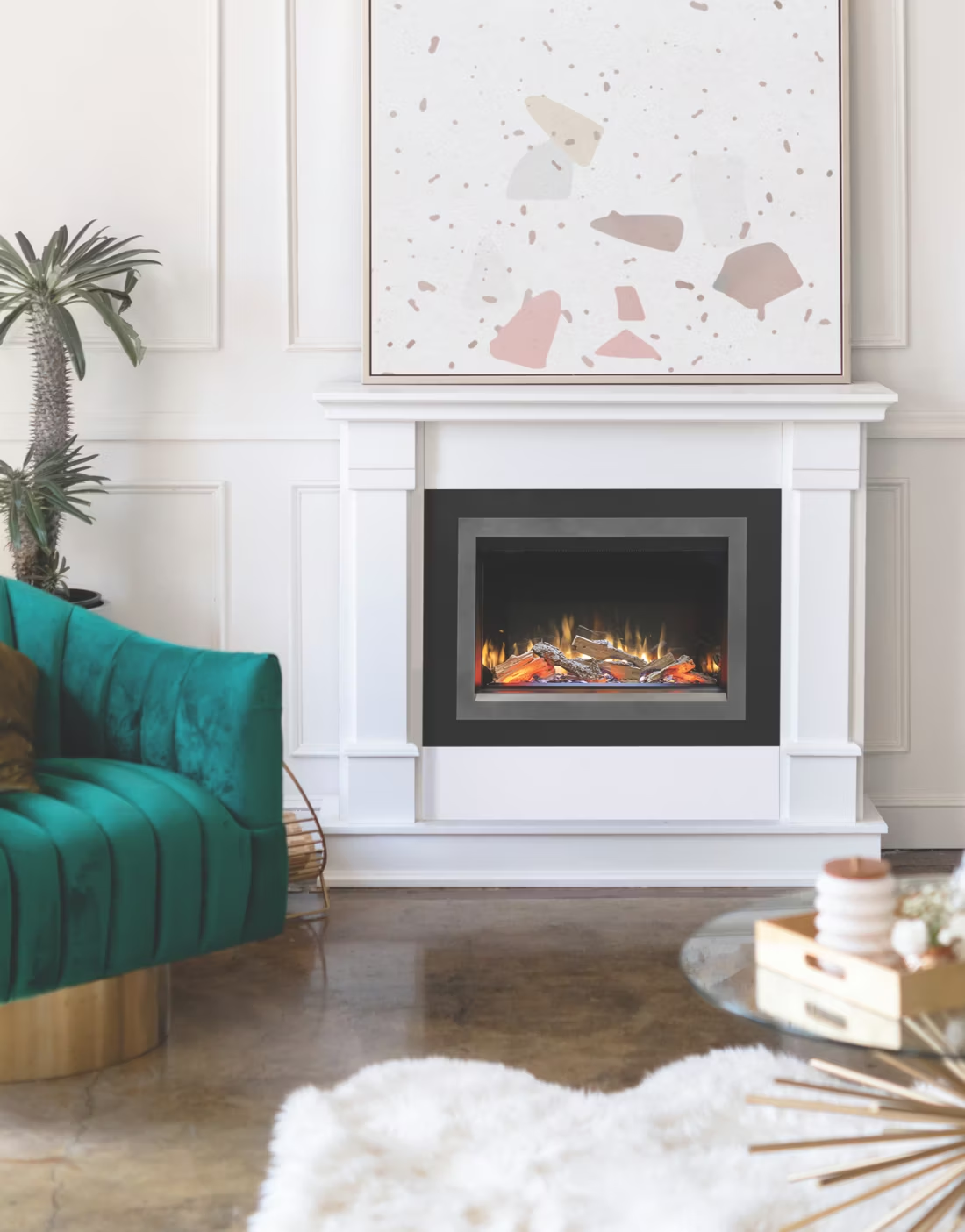
There's also a practical reason electric has caught on across the parish: humidity. Older homes around Crowley and Iota with cypress framing and existing masonry fireboxes deal with enough moisture and pest pressure without adding an unused chimney flue to the mix. An electric insert or wall unit drops into that same opening, or into a new wall, with no combustion byproducts, no flue to maintain, and no creosote risk in a climate where wood rarely gets the sustained cold to burn cleanly anyway. For renters and landlords in the parish's smaller towns, plug-in units also mean no permanent modification at all.
Three steps. No salesperson until you're ready.
Tell us about your project
Your zip code, your situation, and the fuel you're leaning toward—or let the answers point you to one.
See what's actually available
The brands dealers within 100 miles genuinely carry—real options, never a catalog mirage.
Get your dealer & Project Guide
A trusted local dealer, plus the free Project Guide & Parts List that names every component of the job.
Frequently Asked Questions
How much does an electric fireplace installation cost in Acadia Parish?
A plug-in electric insert or freestanding unit that uses an existing outlet typically runs $400 to $900 installed, since there's no wiring work involved. A built-in wall unit or a insert that requires a dedicated 120V or 240V circuit—common when converting an old masonry firebox in a Crowley or Church Point home—usually runs $900 to $1,800 once an electrician runs the new circuit and a local dealer handles the surround and finish work. Prices stay on the lower end here compared to wood or gas installs because there's no venting, chimney, or gas line to account for.
What size electric fireplace do I need for my home?
Because Acadia Parish rarely sees sustained cold, sizing is more about the room than the whole house. Most electric units are rated to comfortably heat 400 to 1,000 square feet, which covers a typical living room or den in a Crowley shotgun house or a bonus room in a newer Church Point or Iota subdivision build. Open floor plans with high ceilings—common in newer construction—may want a slightly higher-wattage unit or a second heat zone, but almost no home in the parish needs a unit sized for whole-house heating the way a homeowner in a much colder climate with a far heavier winter heating load would.
Do I need a permit to install an electric fireplace in Acadia Parish?
A simple plug-in unit that uses an existing standard outlet generally doesn't require a permit. If your installation needs a new dedicated circuit—which is common for built-in wall units or larger inserts—that electrical work needs to be pulled and inspected through the Acadia Parish Building Department, or through the City of Crowley's permit office if you're inside city limits. Most local dealers coordinate with a licensed electrician as part of the install, so the paperwork is handled for you rather than left on your plate.
What's the difference between an electric insert, a wall-mounted unit, and a freestanding electric stove?
An electric insert is built to slide into an existing masonry firebox or fireplace opening—a common project in older Crowley and Estherwood homes that have a fireplace they never use for wood. A wall-mounted or built-in unit is designed for new construction or a remodel where there's no existing opening, often framed into a media wall. A freestanding electric stove sits on the floor like a traditional wood stove but plugs into an outlet, which works well in a den, sunroom, or mobile home where a built-in isn't practical. All three produce the same electric heat and flame effect—the choice comes down to what opening or wall you're working with.
Will an electric fireplace actually keep a room warm, or is it just for looks?
Most electric fireplaces put out a genuine 4,000–5,000 BTU of heat on the high setting, which is enough to noticeably warm a single room during Acadia Parish's cooler nights—the kind that dip into the 30s during a January cold snap. It won't replace central heat for the whole house, and it's not meant to. It's best understood as zone heat: run it in the room you're actually using on a chilly evening and let the central system idle back, or just enjoy the flame effect with the heater off during the parish's many mild winter days.
Will my electric fireplace work during a power outage?
No—and this is worth being upfront about. Electric fireplaces need power to run the heater and flame effect, so during a hurricane-season outage that knocks out SLEMCO or Entergy service to your part of the parish, the unit simply won't function. That's the main tradeoff against wood: a wood stove or fireplace can provide backup heat when the grid goes down, while electric is purely a convenience and ambiance appliance tied to reliable utility service. Given how mild winters are here, most homeowners in Acadia Parish accept that tradeoff gladly—but if backup heat during storm season matters to you, it's worth discussing a wood or propane option for at least one room.
Electric vs. gas vs. wood—which is right for my home in Acadia Parish?
Wood works, and oak, pecan, and cypress are all locally available, but with such a light winter heating load, most parish homes don't burn enough to justify the chimney maintenance and humidity concerns that come with an unused or lightly used flue. Gas offers instant real heat and works during outages if you have propane on-site, which matters more here given hurricane season than it would in a milder-but-storm-free region. Electric is the simplest and cheapest option when the goal is ambiance and light supplemental warmth rather than serious heat load—which describes the vast majority of winters in Crowley, Church Point, and the rest of the parish. Many homeowners here choose electric specifically because it sidesteps venting, moisture, and chimney upkeep altogether.
Can I convert my old masonry fireplace to electric?
Yes, and it's one of the more common projects local dealers handle in Acadia Parish's older housing stock. Many homes around Crowley and Iota have an original masonry firebox that hasn't held a wood fire in years—often because the flue was never properly maintained or because the humidity and pest issues that come with an open chimney outweigh the benefit. An electric insert slides into that same opening, seals off the old flue, and gives you a working fireplace again without any of the chimney liability. Most conversions run on the lower end of the cost range since no venting or gas line work is involved.
How long do electric fireplaces last, and what maintenance do they need?
A quality electric fireplace insert or wall unit typically lasts 10 to 15 years with basic care—occasionally cleaning the glass front and checking that the heating element and fan are free of dust. There's no annual chimney sweep, no creosote, and no combustion byproducts to worry about, which is part of the appeal in a humid climate like Acadia Parish where anything involving a flue tends to invite moisture problems over time. If the LED or flame-effect bulbs dim over the years, most models allow simple replacement without swapping the whole unit.
Can I put a TV above my fireplace?
Yes—with an asterisk. Fireplaces are hot and TVs don't like heat. Either put a mantel between them to deflect rising warmth, or choose a fireplace with heat-management technology that creates a cool zone on the wall above—the wall stays around 125 degrees, barely warm, while the room still gets full heat. If you like clean lines and don't want a mantel, heat management is the answer.
Do electric fireplaces actually produce heat?
Yes—most put out around 4,800–5,000 BTUs from a standard outlet, which comfortably warms a bedroom, office, or den as a comfort-zone heater. What they won't do is carry a whole house the way wood, gas, or pellet can. Think of electric as ambiance-first with honest supplemental heat: flames on with no heat in July, flames plus warmth in January.
Can a fireplace actually lower my heating bill?
Yes—by creating a comfort zone. A furnace heats every square foot of the house just to warm the one room you're in; a gas fireplace on low burns roughly a sixth of the gas a typical furnace does. Set the furnace around 55–60 degrees as a baseline, then heat the rooms your family actually uses. Families who heat this way commonly save $20–$60 a month.
How much should I budget for a fireplace?
For an average home—covering the fireplace, the vent pipe, and basic installation—a budget between $3,900 and $5,500 gives you a lot of options across wood, gas, and pellet. By the time you add finish work, gas line, and electrical, the average complete installation lands between $5,000 and $12,000 all-in. In a remodel or new build, a good rule is to put about 2.5% of the total project cost toward the fireplace.
Get your Acadia Parish electric fireplace Project Guide.
Tell us a bit about your home and we'll put together a free Project Guide & Parts List for your electric fireplace project—sized right for your room, with the exact parts needed—and match you with a trusted local dealer in Acadia Parish.
Find Your Fireplace →