
Fireplace options built for Acadia Parish's short, mild winters.
Wood, gas, pellet, and electric fireplace resources for Crowley, Rayne, Church Point, Iota, Morse, and every rice-country community in Acadia Parish. Find the right unit and connect with a trusted local hearth retailer.
Every Project Starts From One of These Five Situations
Rice-country heat on the Gulf Coast prairie.
Acadia Parish sits on the flat rice and cattle prairie of southwest Louisiana, in climate zone 2A. Winters here are short and mild—the average winter low hovers around 42°F, and the parish sees a light winter heating load overall. Compare that to a place like Duluth, Minnesota, which racks up a winter heating load more than six times as heavy, and the gap is obvious: most Acadia Parish homes need supplemental heat for a handful of cold fronts each winter, not a season-long burn. Oak, pecan, and cypress grow throughout the parish's bayous, tree lines, and rice-field windbreaks, and they're the wood most local homeowners burn when temperatures do drop.
What you'll find on this hub: hearth retailers, service technicians, and fuel suppliers serving every community in the parish—from the parish seat of Crowley out to Rayne, Church Point, Iota, Morse, Estherwood, and Egan. Pick your fuel below to see local dealers, installation costs, and the units that make sense for a short, humid heating season. Whether you want a wood-burning stove for the occasional January freeze or a gas log set that runs at the flip of a switch, this is the starting point.
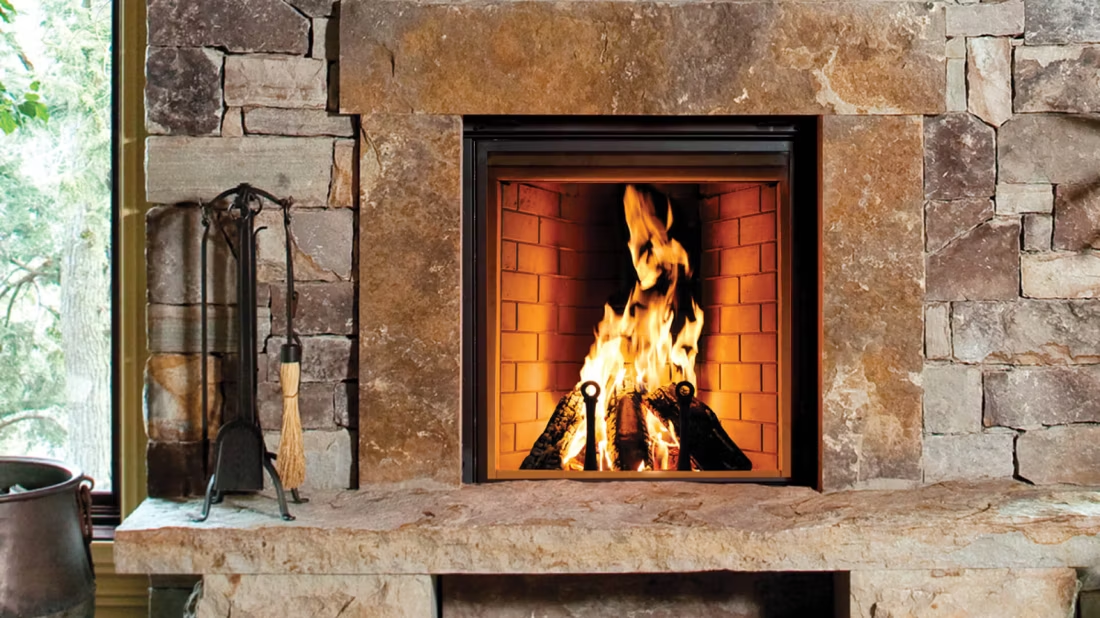
Four fuels. One honest answer for Acadia County.
Three steps. No salesperson until you're ready.
Tell us about your project
Your zip code, your situation, and the fuel you're leaning toward—or let the answers point you to one.
See what's actually available
The brands dealers within 100 miles genuinely carry—real options, never a catalog mirage.
Get your dealer & Project Guide
A trusted local dealer, plus the free Project Guide & Parts List that names every component of the job.
Frequently Asked Questions
Which fuel works best in Acadia Parish?
With such a light winter heating load overall and winter lows that average 42°F, no single fuel dominates the way wood or pellet does in colder regions—all four fuels see genuine use here, just in different roles. Gas logs and gas inserts are popular with Crowley and Rayne homeowners who want instant heat on a cold front without tending a fire—no wood storage, no cleanup. Wood stoves and fireplaces burning local oak, pecan, or cypress are common for ambiance and the handful of genuinely cold nights each winter, but few Acadia Parish homes run wood as a sole heat source. Pellet stoves, stocked through Lignetics, Hamer Pellet Fuel, and Greenway Renewable Energy, appeal to homeowners who want wood-style flame with less mess. Electric fireplaces work well here precisely because the climate is mild—a 1,500-watt unit can supply all the supplemental heat a Gulf Coast winter actually requires.
Do I need a permit to install a fireplace in Acadia Parish?
In most cases, yes. New wood stoves, inserts, gas fireplaces, gas inserts, and pellet stoves typically require a building permit through the parish permitting office, and any gas line work requires a separate permit pulled by a licensed gas-fitter. Wood-burning appliances sold new must meet the federal EPA 2020 NSPS emissions standard regardless of parish. Electric fireplaces usually don't need a permit unless you're doing a built-in installation with new wiring or a dedicated circuit. Most local hearth retailers in and around Crowley handle the permitting paperwork as part of the installation, so homeowners rarely have to navigate it alone.
Are there air quality restrictions on wood burning in Acadia Parish?
No—Acadia Parish has no recorded air quality non-attainment issues, winter inversions, or wildfire-smoke advisories tied to wood burning. That's a real contrast to basin regions out West where wood smoke can pool during winter temperature inversions. On the flat southwest Louisiana prairie, smoke disperses easily and there are no voluntary or mandatory burn curtailment days to plan around. Standard fire-safety codes still apply—proper clearances, a working smoke detector, and a swept chimney—but you won't find yourself checking an air quality advisory before lighting a fire.
Can one local hearth retailer handle all four fuel types?
Many hearth retailers serving Acadia Parish carry more than one fuel line, since demand here is spread fairly evenly across wood, gas, pellet, and electric rather than concentrated in one. If you're not sure which fuel fits your home, a multi-fuel dealer near Crowley can walk you through working displays of gas logs, wood inserts, and pellet units side by side and talk through what actually makes sense given how few genuinely cold days the parish sees each winter. The county + fuel pages above break down which local retailers carry each fuel type in more detail.
How does service work in rural areas of Acadia Parish?
Most technicians serving the parish are based in or near Crowley and drive out to Rayne, Church Point, Iota, Morse, and the smaller farming communities in between for chimney sweeps, gas inspections, and pellet-stove cleanings. Distances across Acadia Parish are short compared to larger, more rural counties, so travel fees are minimal to none in most cases. Because the heating season is compressed into a few cold-front stretches, the busiest service window tends to be right before the first hard freeze in late fall—booking a chimney sweep or gas inspection in October or early November beats waiting until a cold snap is already forecast.
What's the typical cost range for fireplace installation across all fuel types in Acadia Parish?
Costs run lower here than in colder-climate counties, largely because units and venting can be sized for occasional use rather than all-season heat. Wood stove or insert installation: roughly $3,500–$7,500 for a typical retrofit into an existing masonry fireplace. Gas fireplace, insert, or log set: roughly $2,500–$8,000, with ventless gas log sets on the low end and full gas inserts with new venting on the high end. Pellet stove or insert: roughly $4,000–$6,500 installed. Electric fireplace: $200–$2,500 for the unit, plus $300–$900 in labor for anything beyond a plug-and-play wall unit. The county + fuel pages above break these ranges down further by local retailer.
Can I install a fireplace myself?
If you're putting a fire in your house on purpose, it's best to work with an expert. Unless you're genuinely experienced in framing, gas line, vent pipe, and the national code on clearances to combustibles, have a professional do it—and ideally the same company that sells you the fireplace, so warranty, service, and liability all live under one roof.
Wood, gas, pellet, or electric—how do I choose?
Match the fuel to your life, not the other way around. Wood: lowest fuel cost and total power-outage independence, but you're hauling and stacking. Gas: press a button, set a thermostat, no maintenance to speak of. Pellet: wood economics with automatic feeding, in exchange for weekly cleaning and a need for electricity. Electric: plugs in anywhere with honest supplemental heat. Nobody regrets the fuel that fits how they actually live.
How much should I budget for a fireplace?
For an average home—covering the fireplace, the vent pipe, and basic installation—a budget between $3,900 and $5,500 gives you a lot of options across wood, gas, and pellet. By the time you add finish work, gas line, and electrical, the average complete installation lands between $5,000 and $12,000 all-in. In a remodel or new build, a good rule is to put about 2.5% of the total project cost toward the fireplace.
Does a fireplace add value to my home?
On average, a fireplace adds back to the home about the same amount you spent installing it. Add the monthly savings from heating the rooms you actually use instead of the whole house—often hundreds of dollars a year—and the value case is strong before you even count what a fire does for how your family uses the room.
Stove and Fireplace Dealers in Acadia County
Listings include WhyFire partner dealers, dealers we have verified as authorized for the brands we recommend, and established local businesses that carry hearth products. Every listing shows which one it is. The ones marked Preferred run on WhyFire's software, so they can show you real pricing and book your appointment right here. No manufacturer pays for placement. How we verify dealers →
Herman Brown Brick Co.
Find your fireplace in Acadia Parish.
Pick your fuel below to see installation costs, local wood and pellet options, and get matched with a trusted Acadia Parish hearth retailer who can put together your free Project Guide & Parts List.
Find Your Fireplace →