
Steady, low-maintenance heat for Todd County homes and farms.
From Elkton to Guthrie and Trenton, pellet stoves give Pennyrile-region households thermostat-controlled warmth without the splitting and stacking. Find the right unit and connect with a trusted local dealer.
Every Project Starts From One of These Five Situations
Consistent warmth without the wood-splitting work.
Todd County sits in Kentucky's Pennyrile region along the Tennessee border, a landscape of tobacco fields, cattle pasture, and hardwood bottomland running from Elkton down through Guthrie, Trenton, and Allensville. With roughly 3,800 residents spread across mostly rural land, firewood has never been hard to come by—oak, hickory, maple, and cherry are all common in the county's woodlots. Winters here are moderate by national standards: climate zone 4A, an average winter low near 24°F, and a moderate heating season overall, meaning long cold spells are less common than in the Upper Midwest but a reliable heat source still matters for months at a stretch. With no air-quality non-attainment issues or burn restrictions in the county, solid-fuel appliances are a straightforward option here, unlike in parts of the country where winter inversions complicate wood and pellet burning.
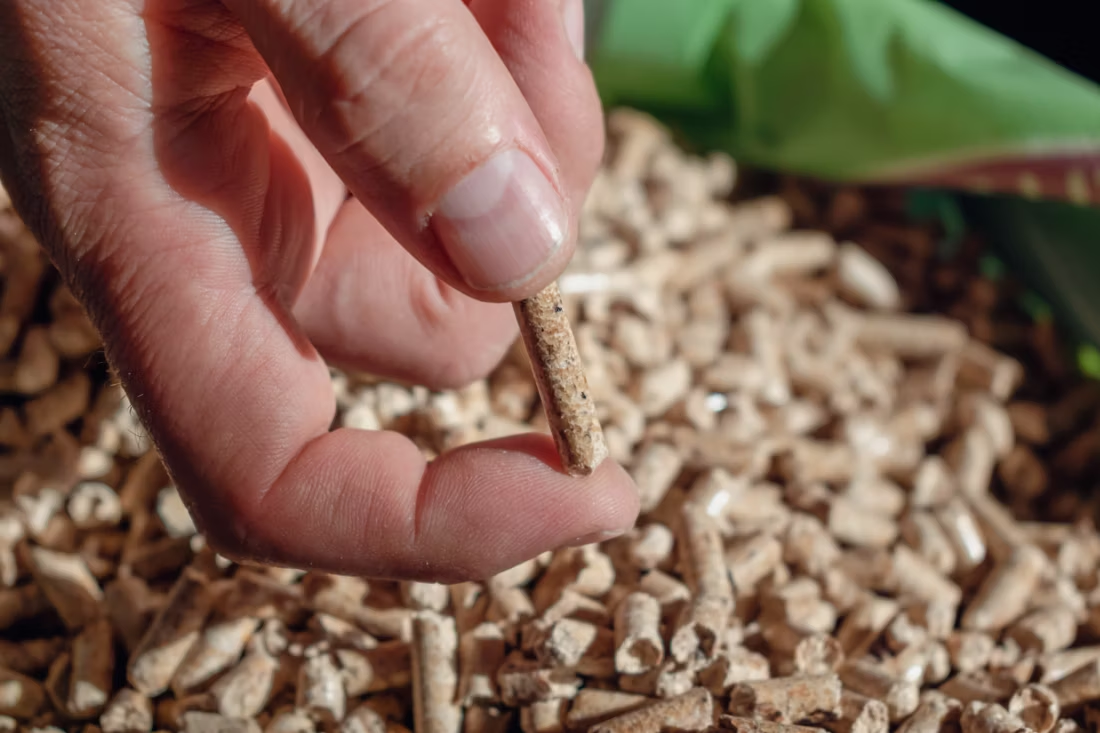
For a lot of Todd County households—especially farm families and retirees who don't want to spend a fall weekend bucking and stacking cordwood—pellet stoves hit a sweet spot: load a hopper, set a thermostat, and let the auger do the rest. Regional suppliers including Lignetics, Hamer Pellet Fuel, and Greenway Renewable Energy keep bagged pellets reasonably accessible in this part of the state, so residents aren't dependent on cross-country shipping the way some regions are. The one tradeoff worth knowing up front: pellet stoves need electricity to run the auger and blower, so if you're on a rural electric cooperative line and outages are a possibility during ice storms, it's worth asking your dealer about battery backup options or keeping a wood stove as a secondary heat source.
Three steps. No salesperson until you're ready.
Tell us about your project
Your zip code, your situation, and the fuel you're leaning toward—or let the answers point you to one.
See what's actually available
The brands dealers within 100 miles genuinely carry—real options, never a catalog mirage.
Get your dealer & Project Guide
A trusted local dealer, plus the free Project Guide & Parts List that names every component of the job.
Frequently Asked Questions
How much does a pellet stove installation cost in Todd County?
Most pellet stove installations run in the $3,000 to $6,000 range once you account for the unit, venting, and a hearth pad if your floor plan requires one. Pellet stoves vent through a smaller-diameter pipe than wood stoves and don't require a full masonry chimney, which keeps install costs on the lower end compared to a wood-burning setup—especially useful in Todd County's older farmhouses that may not already have a chimney. Exact pricing depends on the model, wall or roof penetration for the vent, and any electrical work needed for the outlet the stove requires. A local dealer can give you a firm number after seeing your home.
What size pellet stove do I need for a Todd County home?
With Todd County's winter low averaging around 24°F and a moderate heating season overall, most homes here don't need the largest hopper-capacity units built for far-colder climates—a mid-size pellet stove is usually enough to heat a main living area or serve as primary heat in a well-insulated home. Older farmhouses with less insulation, or homes trying to heat multiple rooms off a single stove, should size up. A local dealer can walk your square footage and layout and recommend a specific model rather than guessing off a chart.
Where can I find a certified pellet stove installer near Todd County?
Look for installers with NFI (National Fireplace Institute) certification, which covers proper venting, clearances, and electrical setup for pellet appliances specifically. In a county as rural as Todd, dealers often cover a wide service radius, so don't be surprised if your installer is based out of a neighboring county and travels in—that's normal here and usually just means scheduling a bit further ahead. Whoever installs your stove should also be comfortable pulling any required local permit and explaining the venting route before work starts.
What's the difference between a pellet stove and a pellet insert?
A pellet stove is a freestanding unit that sits on its own hearth pad and can go almost anywhere in a room with the right clearances—a common choice in Todd County's newer construction or homes without an existing fireplace. A pellet insert is built to slide into an existing masonry fireplace opening, turning a rarely-used open hearth into an efficient, thermostat-controlled heat source while using the existing chimney chase for venting. If you've got an old fireplace in an Elkton or Guthrie farmhouse that mostly sits cold, an insert is often the more practical upgrade than starting from scratch with a freestanding unit.
Do I need a permit to install a pellet stove in Todd County?
Permitting requirements for solid-fuel appliances vary by jurisdiction, and in Todd County that generally means checking in with the county building office before installation, particularly if the project involves new wall or roof penetrations for venting or new electrical circuits. Most established local dealers handle this coordination as part of the installation rather than leaving it to the homeowner, which is one more reason to work with a dealer who regularly installs pellet appliances in this part of Kentucky rather than a general contractor doing it as a one-off.
What's a good pellet stove brand for Todd County's climate?
Because Todd County's winters are moderate rather than extreme—24°F average lows, not the sub-zero nights you'd see further north—you don't need a top-tier, maximum-BTU unit to stay comfortable. Mid-range pellet stoves from established manufacturers like Harman, Enviro, or England's Stove Works generally have plenty of output for a Todd County home, provided the unit is sized to the space. What matters more locally is pellet availability—since Lignetics, Hamer Pellet Fuel, and Greenway Renewable Energy all supply this region, a stove that runs well on standard hardwood or softwood pellets (rather than requiring a premium proprietary fuel) will be easier to keep fed through the winter.
Where can I buy pellets in or near Todd County?
Bagged pellets from regional producers like Lignetics, Hamer Pellet Fuel, and Greenway Renewable Energy are typically available through farm supply stores and hearth dealers serving southwestern Kentucky, and pricing generally falls in line with the national per-ton range rather than the premium pricing homeowners see in areas that have to ship pellets long distances. It's worth buying a season's supply early in the fall—rural stores in a county this size don't always keep large pellet inventories on hand once cold weather hits and demand picks up.
How often does a pellet stove need to be serviced?
Plan on emptying the ash pan every few days during regular use, a deeper interior cleaning of the burn pot and heat exchanger tubes every couple of weeks, and a full professional service and venting inspection once a year—ideally before the fall heating season starts. Pellet stoves produce far less ash and creosote than wood stoves, but the auger, igniter, and blower motor are mechanical parts that benefit from an annual once-over, especially if the stove is running as primary heat through a full Todd County winter.
Pellet stove vs. wood stove—which makes more sense in Todd County?
Todd County has no shortage of oak, hickory, maple, and cherry, and no air-quality restrictions on burning, so wood stoves remain a perfectly practical choice, especially for households with land, a chainsaw, and time to season firewood. Pellet stoves trade some of that self-sufficiency for convenience—no splitting, less ash, and thermostatic heat output—but they depend on electricity to run and on a steady bagged-pellet supply, which regional producers like Lignetics and Hamer Pellet Fuel help keep accessible here. If you're on a rural electric line and outages during ice storms are a real concern, wood offers backup heat that doesn't depend on the grid; if convenience and consistent output matter more, pellet is usually the easier day-to-day appliance to live with. A local dealer can walk through both options for your specific home.
Why is my open fireplace making my house colder?
Open fireplaces suck—literally. As the fire burns, it consumes air your furnace already paid to heat and pulls it out through the chimney, so the house is actually colder after the fire goes out than before you lit it. An insert fixes this: it seals the chimney, puts fixed glass across the front, and turns that hole in your house into a real heat source.
What's the difference between an insert and a zero-clearance fireplace?
An insert is a fireplace that slides into a pre-existing wood-burning fireplace—if you don't have one, there's nothing to insert it into. A zero-clearance fireplace is built into a framed wall, which makes it the answer for remodels and new construction. Simple test: existing masonry fireplace means insert; blank or framed wall means zero-clearance.
Can I install a fireplace myself?
If you're putting a fire in your house on purpose, it's best to work with an expert. Unless you're genuinely experienced in framing, gas line, vent pipe, and the national code on clearances to combustibles, have a professional do it—and ideally the same company that sells you the fireplace, so warranty, service, and liability all live under one roof.
Can a fireplace actually lower my heating bill?
Yes—by creating a comfort zone. A furnace heats every square foot of the house just to warm the one room you're in; a gas fireplace on low burns roughly a sixth of the gas a typical furnace does. Set the furnace around 55–60 degrees as a baseline, then heat the rooms your family actually uses. Families who heat this way commonly save $20–$60 a month.
Stove and Fireplace Dealers in Todd County
Pellet Brands Stocked Around Todd County
Manufacturers will point you to the nearest stocking dealer.
Find your pellet stove in Todd County.
Tell us a bit about your home and we'll match you with the right pellet stove or insert, plus a free Project Guide & Parts List—including the vent kit—from a trusted local dealer serving Todd County.
Find Your Fireplace →