
Find a pellet stove built for Simpson County winters.
Consistent, low-maintenance heat for Franklin and the rest of Simpson County—hopper-fed convenience without the wood-splitting. Get matched with a trusted local dealer who can size and install it right.
Every Project Starts From One of These Five Situations
Steady heat with less hands-on work.
Simpson County sits in climate zone 4A with a moderate winter heating season and average winter lows around 27°F—cold enough to matter, but far short of the deep-freeze demands you'd see in a place like Madison, WI. That's a sweet spot for pellet appliances: they don't need to run 24/7 at sub-zero output, so a mid-size unit can comfortably carry a Franklin living room or a farmhouse out toward the county line through most of the season.
Simpson County has abundant hardwood—oak, hickory, maple, cherry—which makes traditional wood-burning a strong regional option too, but a lot of homeowners here choose pellet specifically to skip the splitting, stacking, and daily tending. Regional pellet brands like Lignetics, Hamer Pellet Fuel, and Greenway Renewable Energy are sold within reasonable driving distance, which keeps fuel sourcing simple rather than something you have to plan a road trip around. A pellet stove or insert gives you thermostat-like control, a hopper that can run 24-plus hours on a load, and far less ash than cordwood—while still delivering real, visible flame.
Three steps. No salesperson until you're ready.
Tell us about your project
Your zip code, your situation, and the fuel you're leaning toward—or let the answers point you to one.
See what's actually available
The brands dealers within 100 miles genuinely carry—real options, never a catalog mirage.
Get your dealer & Project Guide
A trusted local dealer, plus the free Project Guide & Parts List that names every component of the job.
Frequently Asked Questions
How much does a pellet stove installation cost in Simpson County?
Pellet stove and insert installations in Simpson County typically run $4,500 to $7,500 depending on the unit, whether it's a freestanding stove or an insert going into an existing fireplace, and how much venting work is required. Inserts going into an existing masonry fireplace with a serviceable flue tend to land on the lower end. Freestanding stoves in new locations—especially ones that need an electrical outlet run nearby for the auger and blower—cost a bit more. A local dealer will give you a firm number after seeing your space.
What size pellet stove do I need for my Simpson County home?
With Simpson County's moderate winter heating needs, most homes don't need the largest units on the market. A small pellet stove (rated for up to around 1,000 sq ft) handles a single room or a small ranch home well; a medium unit (1,000–2,000 sq ft) covers most Franklin-area living areas; larger units make sense mainly for open floor plans or homes using the stove as a primary heat source rather than supplemental. Older farmhouses with less insulation should size up slightly compared to newer, tighter construction. A local dealer will walk your space and size it based on square footage, ceiling height, and insulation rather than a generic chart.
Where can I buy pellet fuel near Simpson County?
Regional pellet brands including Lignetics, Hamer Pellet Fuel, and Greenway Renewable Energy are distributed in and around Simpson County, and local hearth dealers typically carry or can order bagged pellets by the ton. Buying a full ton (usually 50 forty-pound bags) ahead of the season is the most economical way to go and avoids scrambling for fuel during a cold stretch. Ask your dealer which brands they stock locally—sourcing regionally cuts down on delivery costs compared to ordering from out of state.
Do pellet stoves work during a power outage?
This is the one real tradeoff with pellet appliances: they need electricity to run the auger that feeds pellets and the blower that distributes heat, so a standard pellet stove will not operate during a power outage. Some homeowners pair a pellet stove with a small battery backup or generator specifically for this reason, since outages in Simpson County are typically weather-related and short-lived rather than extended. If backup heat during outages is a top priority, a wood stove is worth comparing—it needs no electricity at all. Ask your local dealer about battery backup options if you want to stick with pellet.
Do I need a permit to install a pellet stove in Simpson County?
Most pellet stove and insert installations require a building permit through the applicable local building department, and any new venting or electrical work (the outlet for the auger and blower) should be pulled through proper channels. Most established hearth dealers in the Franklin area handle this paperwork as part of the installation, so you're not left tracking down permits yourself. Since Simpson County has no air quality non-attainment concerns, there are no curtailment periods or burn restrictions to worry about—pellet stoves here are simply a heating choice, not something regulated around smoke advisories.
What's the best pellet stove for Simpson County's climate?
Given Simpson County's moderate winter lows (averaging around 27°F) and a winter heating season that's moderate overall, you don't need an oversized commercial-grade unit—a well-reviewed mid-size pellet stove or insert from a mainstream manufacturer will comfortably handle most homes here. Look for a unit with a large enough hopper to get you through an overnight burn without a refill, and ask your dealer about auto-ignition and thermostat control if convenience matters most. Homes using the stove as primary heat rather than a supplement should lean toward the higher end of a manufacturer's BTU range for their square footage.
How often should a pellet stove be cleaned and serviced?
Pellet stoves need more frequent attention than their low-maintenance reputation suggests, though it's simpler than chimney sweeping for a wood stove. Plan to empty and clean the ash pot every few days during regular use, clean the burn pot weekly, and have the venting, hopper, and auger mechanism professionally serviced once a year—typically before the season starts each fall. Regular cleaning keeps the auger feeding consistently and prevents the clinker buildup that can choke off a fire mid-burn. Local hearth dealers in the Franklin area typically offer annual service appointments.
Pellet stove vs. wood stove—which is right for my Simpson County home?
Wood stoves need no electricity, run on cordwood you can source locally from Simpson County's abundant oak, hickory, maple, and cherry, and provide backup heat during outages—but they require splitting, stacking, tending the fire, and more frequent chimney cleaning. Pellet stoves offer thermostat-like consistency, a 24-plus hour burn on a single hopper load, and far less ash, but they depend on electricity and require you to buy pellets rather than source fuel yourself. For Simpson County homeowners who want convenience and don't mind an occasional generator for outages, pellet is usually the better fit. For those who want independence from the grid or already have a wood supply, wood stoves remain a strong regional choice.
Pellet stove vs. gas insert—which should I choose?
Gas inserts offer instant on-off operation at the flip of a switch and, with the right ignition system, can run during power outages—a real advantage over standard pellet units. Pellet stoves offer the visual and tactile experience of a real, dancing flame and burn a renewable, often locally sourced fuel, but need electricity and periodic hopper refilling. If you already have access to natural gas or propane and want zero-maintenance daily operation, a gas insert may suit you better. If you like the idea of a live fire and don't mind loading pellets every day or two, pellet remains a strong choice for Simpson County's moderate winters. A local dealer can walk you through both side by side.
How often does a pellet stove need cleaning?
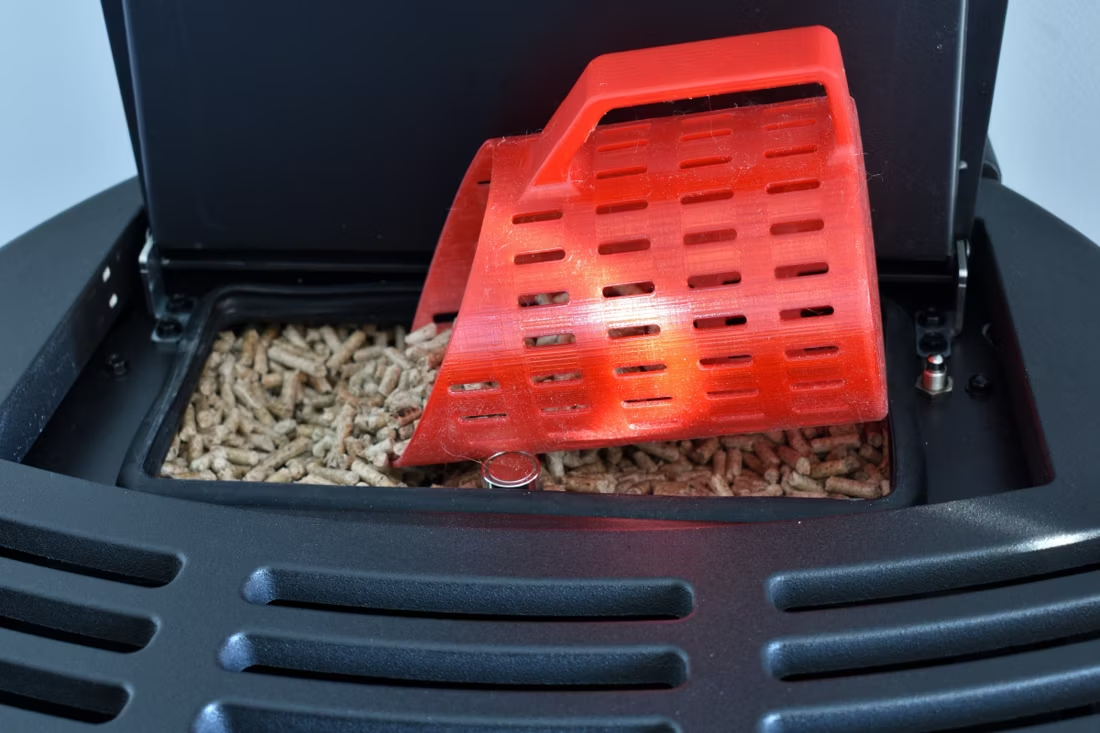
A clean pellet stove is a happy pellet stove. Plan on cleaning the burn pot about once a week when you're burning regularly—ash and clinkers gum up the air holes just like a pellet barbecue. Most pellet stove problems trace back to skipped cleaning that nobody explained up front. Some designs make it easy with a trapdoor burn pot: pull a lever and the gunk drops into the ash pan.
Why is my open fireplace making my house colder?
Open fireplaces suck—literally. As the fire burns, it consumes air your furnace already paid to heat and pulls it out through the chimney, so the house is actually colder after the fire goes out than before you lit it. An insert fixes this: it seals the chimney, puts fixed glass across the front, and turns that hole in your house into a real heat source.
Can I install a fireplace myself?
If you're putting a fire in your house on purpose, it's best to work with an expert. Unless you're genuinely experienced in framing, gas line, vent pipe, and the national code on clearances to combustibles, have a professional do it—and ideally the same company that sells you the fireplace, so warranty, service, and liability all live under one roof.
Can a fireplace actually lower my heating bill?
Yes—by creating a comfort zone. A furnace heats every square foot of the house just to warm the one room you're in; a gas fireplace on low burns roughly a sixth of the gas a typical furnace does. Set the furnace around 55–60 degrees as a baseline, then heat the rooms your family actually uses. Families who heat this way commonly save $20–$60 a month.
Pellet Brands Stocked Around Simpson County
Manufacturers will point you to the nearest stocking dealer.
Find your pellet stove in Simpson County.
Tell us a bit about your home and we'll put together a free Project Guide & Parts List—the right pellet stove or insert, the vent kit it needs, and a trusted local Simpson County dealer to install it.
Find Your Fireplace →