
Set-it-and-forget-it heat for Powell County's Red River Gorge country.
From Stanton to Clay City, Powell County winters run cold enough to matter—a solid, steady heating season most of the year and lows near 23°F most nights. Find the right pellet stove and connect with a trusted local dealer who can size and install it correctly.
Every Project Starts From One of These Five Situations
Convenience heat that keeps up with eastern Kentucky's hardwood country.
Powell County is small—about 4,781 people spread across a county mostly wrapped in the Daniel Boone National Forest, with Stanton as the county seat and Clay City and the Natural Bridge area rounding out the map. It sits in climate zone 4A, with winter lows averaging 23°F and a solid, steady heating season most of the year—cold enough for real heating demand, but not the kind of brutal, sustained cold that eastern Kentucky's mountain counties farther east see. The forests here are thick with oak, hickory, maple, and cherry, which is why wood heat has deep roots locally—but it's also exactly why pellet stoves have found a real foothold.
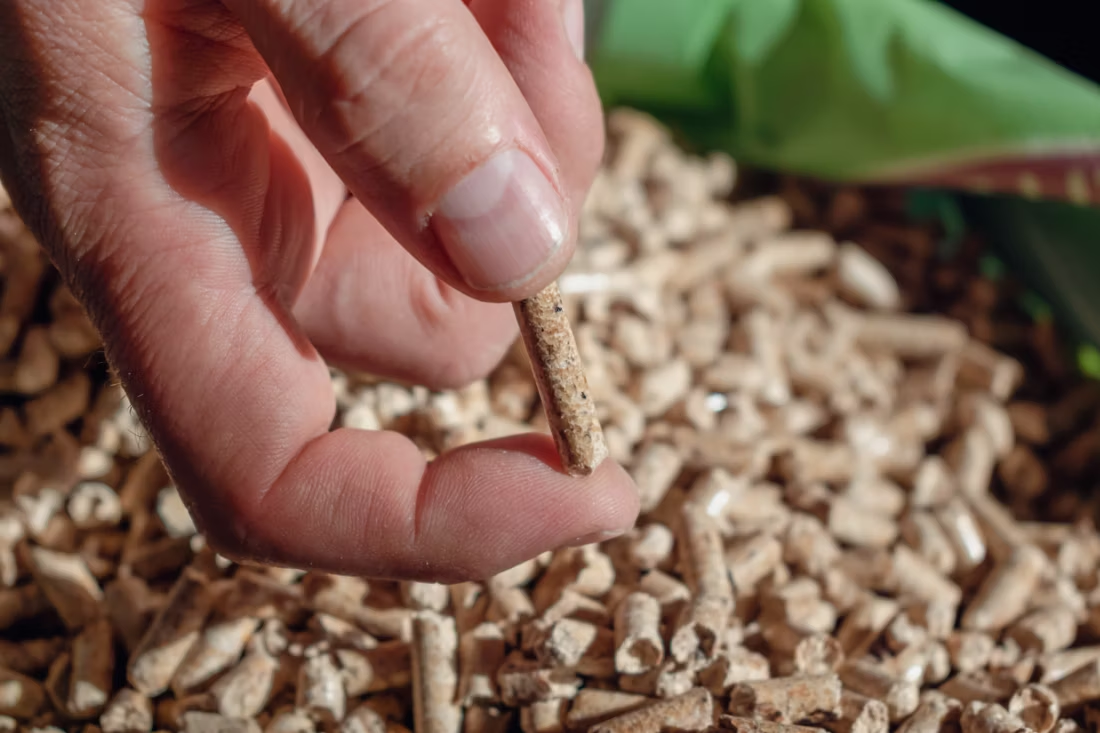
Cutting your own firewood on Daniel Boone National Forest land means a permit ($20 per cord, May through October only) and the physical work of felling, hauling, splitting, and stacking on steep Red River Gorge terrain. Pellet stoves skip all of that. Regional producers—Lignetics, Hamer Pellet Fuel, and Greenway Renewable Energy—supply bagged hardwood pellets that store flat, feed automatically from a hopper, and burn cleanly with none of the smoke management concerns some other parts of the country deal with (Powell County has no air quality non-attainment designation or winter burn curtailment to work around). For retirees, second-home owners near Natural Bridge State Resort Park, or anyone who wants the ambiance of a real fire without the woodpile, pellet is a genuinely practical fit here.
Three steps. No salesperson until you're ready.
Tell us about your project
Your zip code, your situation, and the fuel you're leaning toward—or let the answers point you to one.
See what's actually available
The brands dealers within 100 miles genuinely carry—real options, never a catalog mirage.
Get your dealer & Project Guide
A trusted local dealer, plus the free Project Guide & Parts List that names every component of the job.
Frequently Asked Questions
How much does a pellet stove installation cost in Powell County?
Most pellet stove installations run in the $3,000 to $6,000 range once you account for the unit itself, the vent kit (pellet stoves use simpler PL-vent rather than full masonry chimneys), and any hearth pad work needed for clearance. Freestanding units into an open room are typically on the lower end; converting an existing masonry fireplace with a pellet insert and running a liner through the flue can push toward the higher end. Given how few dealers are based directly in a county this size, expect your installer may be coming from Winchester, Mount Sterling, or the Lexington area—a local dealer match will give you a firm quote after seeing your home.
What size pellet stove do I need for a home in Powell County?
Sizing comes down to square footage, insulation, and whether the stove is your primary or supplemental heat. A lot of Powell County's housing stock includes older farmhouses and cabins near the Gorge with less insulation than newer construction, so don't undersize based on square footage alone—a drafty older home may need a stove rated for more BTUs than the floor plan suggests. Small units (up to around 1,000 sq ft) work for a single living area or seasonal cabin; medium units (1,000–2,000 sq ft) cover most main homes in the county; larger units handle bigger or less-efficient houses. A local dealer will walk through your home and insulation before recommending a model.
Where can I find a certified pellet stove dealer near Powell County?
With a population under 5,000, Powell County itself doesn't support a large hearth retail presence, so most homeowners end up working with dealers based in Winchester, Mount Sterling, or the Lexington metro who service the Stanton and Clay City area. Look for NFI-certified installers—that credential specifically covers pellet appliance venting, clearances, and electrical hookup (pellet stoves need a standard outlet for the auger and blower, unlike wood stoves). We match homeowners here with trusted dealers who already know the drive and the terrain, rather than a big-box installer guessing at it.
Pellet stove vs. wood stove—which makes more sense in Powell County?
Wood is genuinely abundant here—oak, hickory, maple, and cherry cover most of the county, and a Daniel Boone National Forest cutting permit runs just $20 per cord during the May-to-October season. If you're willing to cut, split, and stack, wood is hard to beat on raw fuel cost. Pellet stoves trade that labor for convenience: load a hopper with bagged pellets from a regional supplier like Lignetics or Hamer Pellet Fuel, set a thermostat, and let the auger do the rest. Pellet also burns cleaner with less ash and no chimney creosote buildup. The tradeoff is that pellet stoves need electricity to run the auger and blower, so they're not a backup heat source if the power goes out—something worth weighing given how rural parts of Powell County can see longer outage recovery times after ice storms.
Do I need a permit to install a pellet stove in Powell County?
Powell County is small enough that it doesn't run a large dedicated permitting office the way bigger Kentucky counties do. In practice, permitting and inspection for a solid-fuel appliance install is usually coordinated through your installer, who will confirm what's required at the local level and make sure venting clearances and any electrical work meet current code. Most established local dealers handle this coordination as part of the install so you're not left tracking it down yourself—ask about it directly when you get matched with a dealer.
What's the best pellet stove for Powell County's climate?
With winter lows averaging around 23°F and a solid, steady heating season most of the year, Powell County doesn't need the extreme-cold-rated units you'd see in places like International Falls or Bozeman—a solid mid-size pellet stove from a mainstream manufacturer will comfortably heat most homes here. If the stove is your primary heat source in an older, less-insulated home near the Gorge, size up slightly and look for a model with a larger hopper capacity so you're not refilling constantly during a cold stretch. Your local dealer can match hopper size and BTU output to your specific square footage and insulation.
How often does a pellet stove need maintenance?
Pellet stoves need less maintenance than wood stoves but still require regular attention: a daily or weekly ash pan cleaning during heavy use, a full burn pot and heat exchanger cleaning every few weeks, and an annual professional inspection of the venting and auger system before the season starts each fall. Kentucky's humidity can affect pellet quality if bags are stored improperly, so keeping pellets dry—in a garage or shed rather than an open porch—matters as much as the stove maintenance itself.
Where can I buy pellets near Powell County?
Regional producers supply most of what's sold in this part of eastern Kentucky, including Lignetics, Hamer Pellet Fuel, and Greenway Renewable Energy—all of which distribute through farm supply and hearth retailers in the Winchester and Mount Sterling area that serve Stanton and Clay City. Buying regionally produced pellets generally means lower freight costs than pellets shipped in from farther away, and it's worth asking your local dealer which brands they stock and recommend based on ash content and BTU consistency, since pellet quality does vary by producer.
Pellet stove vs. gas—which fits better in Powell County?
Gas offers instant on-off heat with no fuel to load, but it depends on either natural gas access (limited outside town centers in a rural county like this) or a propane tank and delivery. Pellet stoves need no gas hookup at all—just an electrical outlet and a supply of bagged pellets you can buy locally or have delivered. For homes in Powell County without existing gas service, pellet is often the simpler retrofit. For homes already plumbed for propane or natural gas, a gas insert may be less hands-on day to day. A local dealer can walk through both options against your home's existing utilities.
Why is a fireplace insert so efficient?
An insert does two things: it seals the chimney completely, so you stop losing air you already paid to heat, and it radiates warmth into the room through the firebox and glass. Most add a heat-exchange fan that pulls cool room air underneath, wraps it around the hot firebox, and pushes it back out warm. Your home is more efficient before you've even lit the first fire.
Why is my open fireplace making my house colder?
Open fireplaces suck—literally. As the fire burns, it consumes air your furnace already paid to heat and pulls it out through the chimney, so the house is actually colder after the fire goes out than before you lit it. An insert fixes this: it seals the chimney, puts fixed glass across the front, and turns that hole in your house into a real heat source.
What is an in-home preview and do I need one?
It's a visit where a hearth professional measures your space, confirms the model you picked actually works in your home, and walks the specs—framing, gas line, venting, finish work—before anything is ordered. Some details you just can't know until you see the house. Never make a down payment without one; it's the single most-skipped step that burns buyers.
How much should I budget for a fireplace?
For an average home—covering the fireplace, the vent pipe, and basic installation—a budget between $3,900 and $5,500 gives you a lot of options across wood, gas, and pellet. By the time you add finish work, gas line, and electrical, the average complete installation lands between $5,000 and $12,000 all-in. In a remodel or new build, a good rule is to put about 2.5% of the total project cost toward the fireplace.
Pellet Brands Stocked Around Powell County
Manufacturers will point you to the nearest stocking dealer.
Find your pellet stove in Powell County.
Tell us about your home near Stanton, Clay City, or the Red River Gorge area, and we'll match you with a trusted local dealer and a free Project Guide & Parts List—the exact parts, including the vent kit, for your pellet project.
Find Your Fireplace →