
Pellet heat built for Perry County's mountain winters.
Thermostat-controlled warmth for the ridges and hollows around Hazard—without splitting logs on a steep hillside lot. Find the right pellet stove or insert and connect with a trusted local dealer.
Every Project Starts From One of These Five Situations
Real-fire warmth for a county built on wood and coal.
Perry County sits deep in the Cumberland Plateau, with Hazard as the county seat and a population just over 6,000 spread across steep ridges and narrow hollows. Winters here are moderate by national standards—average lows around 23°F and a heating season similar to a typical Appalachian winter—but cold snaps off the ridgelines can still push a poorly heated home into the 50s overnight. The hillsides are covered in oak, hickory, maple, and cherry, and plenty of Perry County households have burned cordwood for generations, often cut under Daniel Boone National Forest permits (May through October, $20 per cord) or off family land.
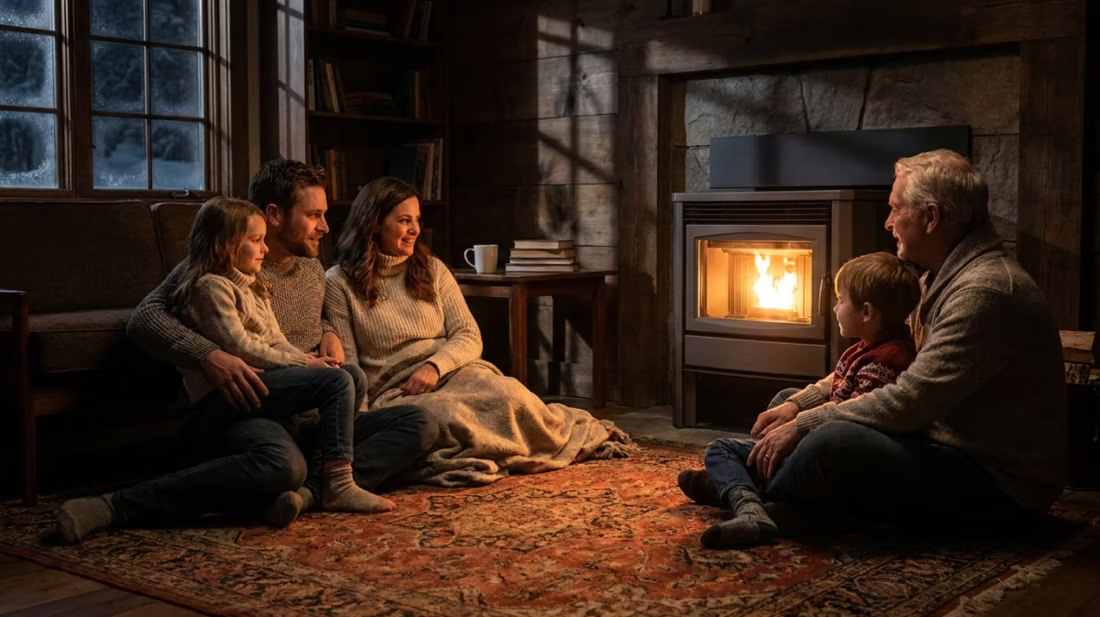
Pellet stoves give that same generation of homeowners the look and radiant feel of a wood fire without the felling, splitting, and stacking—load a hopper with bagged pellets from regional suppliers like Lignetics, Hamer Pellet Fuel, or Greenway Renewable Energy, set a thermostat, and let the auger do the work. The tradeoff is electricity: pellet stoves need power to run the auger and blower, which matters on steep, tree-lined roads in Perry County where ice and wind can knock lines down for a day or more. Most local dealers will walk you through battery-backup options or pair a pellet unit with a wood stove elsewhere in the house for true outage coverage.
Three steps. No salesperson until you're ready.
Tell us about your project
Your zip code, your situation, and the fuel you're leaning toward—or let the answers point you to one.
See what's actually available
The brands dealers within 100 miles genuinely carry—real options, never a catalog mirage.
Get your dealer & Project Guide
A trusted local dealer, plus the free Project Guide & Parts List that names every component of the job.
Frequently Asked Questions
How much does a pellet stove or insert cost to install in Perry County?
A freestanding pellet stove typically installs for $2,500 to $4,500 in Perry County, while a pellet insert going into an existing masonry fireplace usually runs $3,000 to $6,000 once venting and a hearth pad or liner are factored in. Homes without an existing chimney or hearth need more prep work, which pushes costs toward the higher end. Because most Perry County housing stock includes older homes with existing wood fireplaces around Hazard, Krypton, and Viper, an insert conversion is often the more affordable path since it reuses the existing masonry chase. Local dealers will give a firm number after seeing your fireplace or install location in person.
What size pellet stove do I need for my Perry County home?
Sizing depends on square footage, ceiling height, and how drafty the home is—a real concern in older Perry County housing built into hillsides where crawlspaces and older windows let heat escape. As a rough guide: a small pellet stove (under 1,000 sq ft) suits a single room or supplemental use, a medium unit (1,000–2,000 sq ft) covers most Perry County homes as primary heat, and a large unit (2,000+ sq ft) is needed for bigger or leakier houses. Given the county's average winter lows in the low-to-mid 20s, most local dealers size slightly larger than the bare minimum so the stove isn't running at max hopper feed on the coldest nights.
Where can I find certified pellet stove installers near me?
Look for installers with NFI (National Fireplace Institute) certification, which covers pellet-specific venting and clearance requirements—different from wood stove or gas installs. Given Perry County's small population and rural geography, dealers often cover Hazard and the surrounding communities from a single shop, so expect installers to travel to Krypton, Viper, or Buckhorn as part of normal service territory. Having the selling dealer handle installation simplifies warranty claims if the auger motor or igniter needs service down the road, which is common enough on any pellet appliance after a few burning seasons.
What's the difference between a pellet stove and a pellet insert?
A pellet stove is a freestanding unit that sits on a hearth pad and vents through a wall or existing chimney chase—it can go almost anywhere with the right clearances. A pellet insert is built to slide into an existing masonry fireplace opening, which is a common fit for older Perry County homes that already have a wood-burning fireplace but want pellet convenience instead of cutting and hauling firewood. If you've got an existing fireplace around Hazard or the outlying hollows, an insert is usually the simpler and less expensive route since it uses the masonry you already have.
Do I need a permit to install a pellet stove in Perry County?
Yes—a building permit is typically required for a new pellet stove or insert installation in Perry County, covering the venting path and any structural work around the hearth. Perry County has no ongoing air quality restrictions on burning (there are no non-attainment or curtailment rules here, unlike some western states), so once the unit is installed and permitted, there's no seasonal restriction on when you can run it. Most local dealers handle the permit paperwork as part of the installation, so it's rarely something homeowners have to manage themselves.
What's the best pellet stove for Perry County's climate?
With winter lows averaging in the low-to-mid 20s and real cold spells possible on exposed ridges, a mid-size pellet stove in the 40,000–60,000 BTU range covers most Perry County homes without over-firing on milder days. Since power outages from ice and wind are a real risk on the county's rural lines, ask your local dealer about battery-backup kits for the auger and blower—a pellet stove with no backup power is just a decorative box during an outage. Many households in this area pair a pellet unit for daily convenience with a wood stove or fireplace elsewhere in the home as a true off-grid backup, given how much hardwood—oak, hickory, maple, cherry—is available locally.
How often does a pellet stove need cleaning and maintenance?
Pellet stoves need the ash pan emptied every few days to weekly depending on use, and the burn pot scraped out roughly weekly during heavy winter operation. A full professional cleaning and inspection—covering the exhaust venting, auger, and hopper—is recommended once a year, ideally before the start of burning season. This is far less involved than sweeping a wood-burning chimney, which is part of the appeal for Perry County homeowners who want fire heat without the annual creosote inspection wood appliances require.
Where can I buy pellets in or near Perry County?
Regional pellet brands available in this part of eastern Kentucky include Lignetics, Hamer Pellet Fuel, and Greenway Renewable Energy, typically sold by the ton or by the 40-pound bag through hardware stores and farm supply outlets serving Hazard and the surrounding county. Buying a full ton (about fifty 40-pound bags) ahead of winter is the most cost-effective approach and avoids scrambling for pellets during a cold stretch. Stock up early in the season—rural supply in a county this size can tighten up once temperatures drop and demand spikes.
Pellet stove vs. wood stove—which is right for my Perry County home?
Wood stoves work without electricity, which matters when ice storms take down power lines on Perry County's rural routes, and pair naturally with the oak, hickory, maple, and cherry cut locally under Daniel Boone National Forest permits (May–October, $20 per cord). Pellet stoves are more convenient—load the hopper, set a thermostat, less ash, no splitting or stacking—but they need power to run the auger and blower, so they're not a stand-alone option during an outage. If you already cut or buy firewood and want a low-maintenance backup, pellet is a great second heat source; if you want one appliance that works no matter what the power grid is doing, a wood stove is the more reliable single choice for this county.
Why is my open fireplace making my house colder?
Open fireplaces suck—literally. As the fire burns, it consumes air your furnace already paid to heat and pulls it out through the chimney, so the house is actually colder after the fire goes out than before you lit it. An insert fixes this: it seals the chimney, puts fixed glass across the front, and turns that hole in your house into a real heat source.
How often does a pellet stove need cleaning?
A clean pellet stove is a happy pellet stove. Plan on cleaning the burn pot about once a week when you're burning regularly—ash and clinkers gum up the air holes just like a pellet barbecue. Most pellet stove problems trace back to skipped cleaning that nobody explained up front. Some designs make it easy with a trapdoor burn pot: pull a lever and the gunk drops into the ash pan.
How much should I budget for a fireplace?
For an average home—covering the fireplace, the vent pipe, and basic installation—a budget between $3,900 and $5,500 gives you a lot of options across wood, gas, and pellet. By the time you add finish work, gas line, and electrical, the average complete installation lands between $5,000 and $12,000 all-in. In a remodel or new build, a good rule is to put about 2.5% of the total project cost toward the fireplace.
Can a fireplace actually lower my heating bill?
Yes—by creating a comfort zone. A furnace heats every square foot of the house just to warm the one room you're in; a gas fireplace on low burns roughly a sixth of the gas a typical furnace does. Set the furnace around 55–60 degrees as a baseline, then heat the rooms your family actually uses. Families who heat this way commonly save $20–$60 a month.
Stove and Fireplace Dealers in Perry County
Pellet Brands Stocked Around Perry County
Manufacturers will point you to the nearest stocking dealer.
Find your pellet stove in Perry County.
Tell us a bit about your home and we'll match you with a trusted local dealer and send over your free Project Guide & Parts List—a plan for your pellet project in Perry County with the exact parts, including the vent kit, and the dealer we recommend for your install.
Find Your Fireplace →