
Keep Your Family Warm and Safe—No Matter What
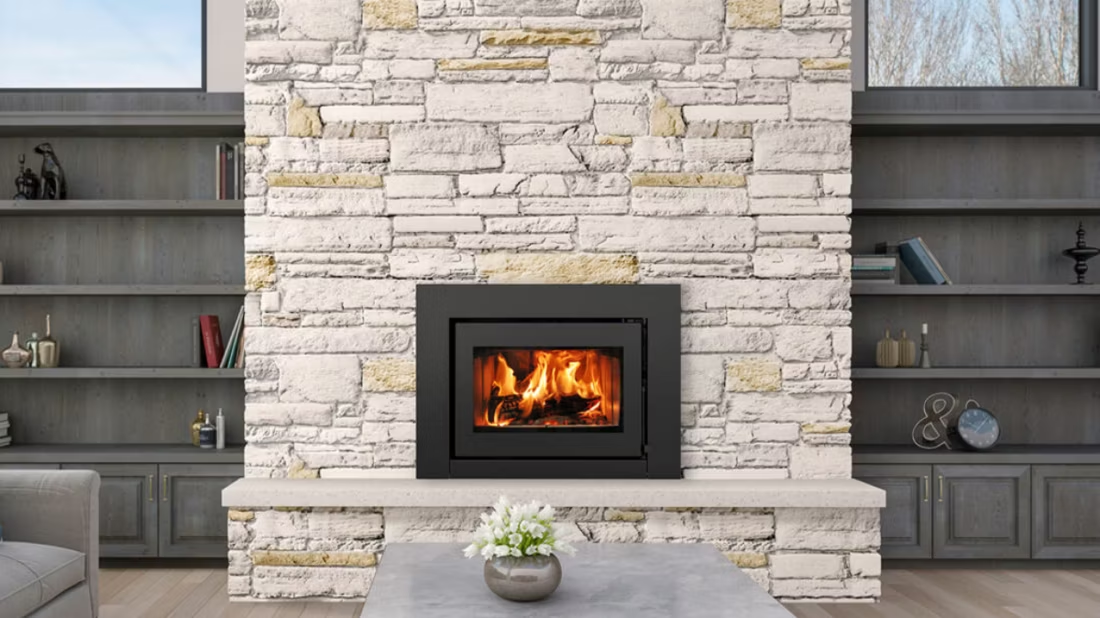
Wood isn't the default heat source in Owensboro the way it is in mountain or forest towns—but for backup heat during ice storms or a wood-burning insert with real ambiance, it still has a place here.
Every Project Starts From One of These Five Situations
Natural gas and electric dominate the Owensboro market—and for good reason.
Owensboro sits in the Ohio River valley at just 413 feet elevation, with a climate zone 4A profile and about 4,358 heating degree days a year—real winter, with average lows around 24°F, but nothing close to the sustained sub-zero stretches you'd see in a place like Duluth or Bismarck. That moderate cold, combined with widely available natural gas service and City of Owensboro municipal electric at a competitive 13.42 cents per kWh, means most Daviess County homes heat with gas furnaces or electric heat pumps as their primary system. Wood heat here is the exception, not the rule.
Part of this comes down to geography: unlike cities ringed by national forest land, Owensboro and Daviess County don't have public timberland with cutting permit programs, so firewood here comes from private property, local tree services, and purchased cords rather than a Forest Service permit desk. What the region does have is excellent hardwood—oak, hickory, maple, and cherry from western Kentucky bottomlands, all dense, high-BTU species that split and burn well. So while wood isn't the go-to system for whole-home heating, it remains a legitimate option for a supplemental stove, a fireplace insert with genuine backup value during ice-storm power outages, or simply the atmosphere of a real fire in a den or finished basement.
Three steps. No salesperson until you're ready.
Tell us about your project
Your zip code, your situation, and the fuel you're leaning toward—or let the answers point you to one.
See what's actually available
The brands dealers within 100 miles genuinely carry—real options, never a catalog mirage.
Get your dealer & Project Guide
A trusted local dealer, plus the free Project Guide & Parts List that names every component of the job.
Frequently Asked Questions
Is wood heat actually practical in Owensboro, or is it mostly decorative?
It can be genuinely practical, just not as a primary heat source for most homes. With Owensboro's moderate 4A climate and reliable natural gas and electric service, few homeowners here are heating a whole house with wood the way you'd see in a colder, more rural climate. Where wood earns its keep locally is as a supplemental heat source for a finished basement or addition, or as a real backup during the ice storms that periodically knock out power along the Ohio River valley. If you want ambiance plus a genuine hedge against outages, a wood stove or insert still makes sense—just go in knowing it's a secondary system, not a replacement for your furnace.
How much does a wood stove or insert installation cost in Owensboro?
Because wood heat is a smaller niche here than in wood-heavy markets, fewer local dealers stock a deep lineup, but installed costs still run in the typical national range: roughly $3,500 to $8,000 for a freestanding stove or insert, depending on whether you're venting through an existing masonry chimney or need a full Class A chimney run installed from scratch. Homes without an existing chimney—common in newer Owensboro subdivisions—tend to land on the higher end once new venting and a hearth pad are factored in. A local dealer can give you a firm number after seeing your specific layout.
What firewood species are available locally, and how well do they burn?
Western Kentucky bottomland forests around Daviess County produce excellent firewood: oak and hickory top the list for heat output and long, steady coals, while maple and cherry burn a little faster but season quickly and smell great in a room. Oak and hickory are the better choice if you're relying on the stove for real overnight heat; cherry and maple are fine for occasional evening fires. Since there's no large public timberland nearby, most homeowners source wood from tree services, farm property, or local firewood sellers rather than cutting permits.
Do I need a permit to install a wood stove in Owensboro?
Yes—a new wood-burning appliance installation typically requires a building permit through your local building and codes office, either the City of Owensboro or Daviess County Fiscal Court depending on your address. The stove itself needs to meet current EPA emissions standards. Most established hearth dealers handle the permit application as part of the installation, so this usually isn't something you have to manage yourself. Since Owensboro has no listed air quality non-attainment issues, there are no seasonal burning curtailments to worry about, unlike some western cities with winter inversion problems.
Will a wood stove keep my house warm during a power outage?
Yes, and this is one of the strongest arguments for wood heat in a market like Owensboro's. Ice storms are a real seasonal risk in the Ohio River valley, and they can take out electric service for days at a time—which also means your gas furnace's blower and electronic ignition go dark along with everything else. A wood stove or insert needs no electricity to produce heat, so it's genuine emergency backup even in a home whose primary system is gas or electric heat pump. This is often the main reason Owensboro homeowners install one at all.
Should I go with wood, or just stick with gas or electric heat?
For most Owensboro homes, gas or electric will remain the primary system—they're clean, low-maintenance, and well-supported by City of Owensboro utilities and area gas providers. Wood makes the most sense as an addition rather than a replacement: it gives you a hedge against ice-storm outages, lower operating cost during the coldest weeks if you have access to free or cheap hardwood, and the ambiance of a real fire. If your priority is simplicity and you don't want to manage firewood, stack space, or annual chimney maintenance, gas or electric alone is a perfectly reasonable choice here—plenty of Owensboro homes never touch wood at all.
How often does a wood stove or chimney need to be inspected here?
The Chimney Safety Institute of America recommends an annual inspection for any wood-burning appliance, and that holds true in Owensboro even though usage tends to be lighter than in primary-heat wood markets. Because most local installs get occasional or backup use rather than daily winter burning, creosote buildup is usually slower—but an annual sweep before the first cold snap each fall is still the right cadence, especially given how much moisture the Ohio River valley's humid summers can leave in an unused flue.
Where can I buy firewood in the Owensboro area?
Firewood here typically comes from local tree services, farm operations clearing land, and independent sellers who advertise seasonally rather than a Forest Service permit system, since Daviess County doesn't have adjacent public timberland. Expect to pay somewhere in the $175 to $275 per cord range for seasoned oak or hickory, delivered—on the lower end for less-seasoned mixed hardwood, higher for well-seasoned, split, stacked wood ready to burn. Buying a season ahead and letting it dry through the summer will get you noticeably better performance than burning green wood bought in November.
What kind of wood stove makes sense for a supplemental or backup setup?
For a home where wood is playing a backup or supplemental role rather than carrying the whole heating load, a small to mid-size EPA-certified stove or insert—sized for the specific room or zone you want to heat—usually makes more sense than an oversized unit meant to heat an entire house. Non-catalytic models from mainstream hearth brands tend to be simpler to operate for occasional use and don't require the same maintenance attention as a catalytic stove running daily. A local dealer can size the unit to your actual space rather than to whole-home square footage, which keeps both cost and complexity down.
What's the difference between an insert and a zero-clearance fireplace?
An insert is a fireplace that slides into a pre-existing wood-burning fireplace—if you don't have one, there's nothing to insert it into. A zero-clearance fireplace is built into a framed wall, which makes it the answer for remodels and new construction. Simple test: existing masonry fireplace means insert; blank or framed wall means zero-clearance.
Why won't my new wood stove get going like my old one?
New wood stoves are 70%+ efficient, so far less heat goes up the flue—which also means less draft to get a fire established. The rule: build a genuinely hot fire for about 45 minutes before you choke it down. Skip that and you get smoke in the room, creosote in the chimney, and a fire that never takes off. Most performance complaints trace straight back to this.
How much should I budget for a fireplace?
For an average home—covering the fireplace, the vent pipe, and basic installation—a budget between $3,900 and $5,500 gives you a lot of options across wood, gas, and pellet. By the time you add finish work, gas line, and electrical, the average complete installation lands between $5,000 and $12,000 all-in. In a remodel or new build, a good rule is to put about 2.5% of the total project cost toward the fireplace.
Can a fireplace actually lower my heating bill?
Yes—by creating a comfort zone. A furnace heats every square foot of the house just to warm the one room you're in; a gas fireplace on low burns roughly a sixth of the gas a typical furnace does. Set the furnace around 55–60 degrees as a baseline, then heat the rooms your family actually uses. Families who heat this way commonly save $20–$60 a month.
Nearby Dealers
Hearth shops serving Owensboro and the surrounding area.
Find your wood heating option in Owensboro.
Tell us about your home and how you'd use a wood stove or insert—primary heat, backup power, or ambiance—and we'll match you with a trusted local Owensboro dealer and send over a free Project Guide & Parts List with the exact parts, including the vent kit, for your project.
Find Your Fireplace →