
Keep Your Family Warm and Safe—No Matter What
Reliable wood heat for the farmhouses and rural properties around Owenton and throughout Owen County—where oak, hickory, and cherry woodlots make self-sufficient heating a practical choice. Find the right stove or insert and connect with a trusted local dealer.
Every Project Starts From One of These Five Situations
Hardwood country makes wood heat a practical choice.
Owen County is a small, rural stretch of Kentucky's Bluegrass region—about 1,832 people spread across farmland and wooded hills centered on Owenton. The climate here is Zone 4A, with 4,392 heating degree days and winter lows averaging 25°F. That's a milder heating load than northern markets like Madison, WI, which racks up closer to 7,300 heating degree days—but Owen County still gets real winter, and rural roads here are prone to ice storms that knock down power lines for days at a stretch. That combination of cold nights and unreliable rural power is exactly why wood heat still matters in a county this size.
The wood itself is part of the equation. Owen County's woodlots and surrounding forestland produce oak, hickory, maple, and cherry—all dense, high-BTU hardwoods that burn hot and long, which is part of why cordwood heating has stuck around here even as it's faded elsewhere. There are no air quality non-attainment issues or winter inversion concerns in this part of Kentucky, so there's no burn-ban season to plan around. For residents who want to cut their own, the Daniel Boone National Forest issues cutting permits at $20 per cord during the May-through-October season—a low-cost option many rural landowners in the area already take advantage of on top of wood harvested from their own acreage.
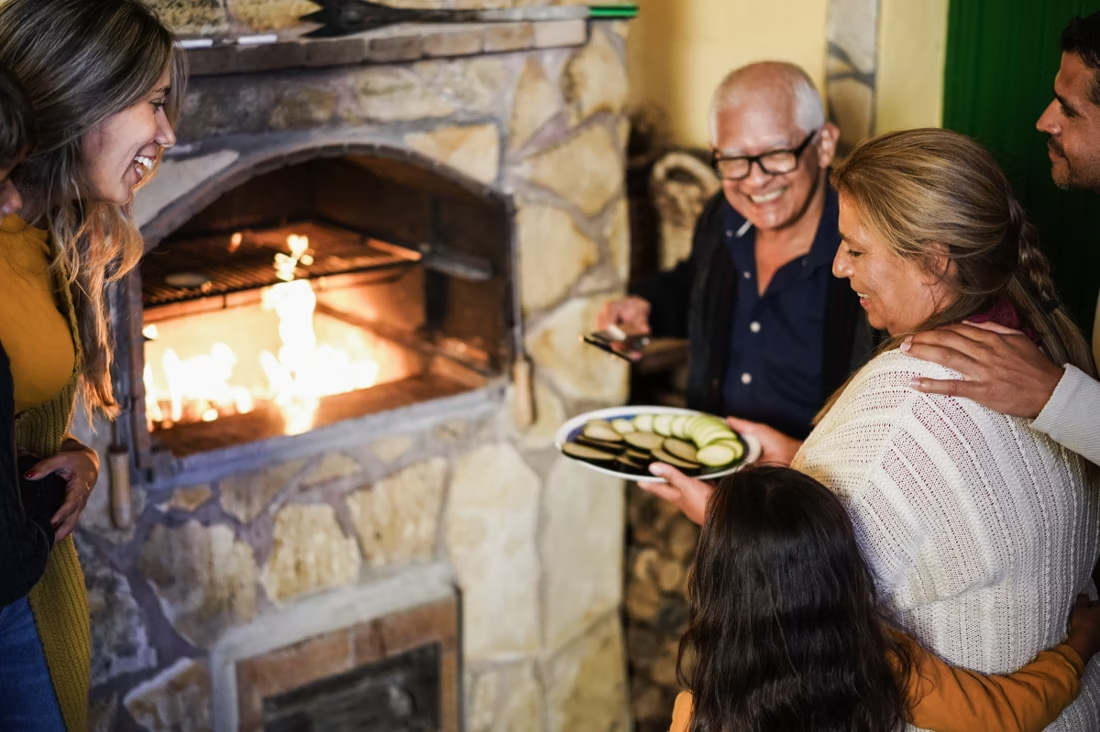
Firewood Cutting Permits Near Owen County
Three steps. No salesperson until you're ready.
Tell us about your project
Your zip code, your situation, and the fuel you're leaning toward—or let the answers point you to one.
See what's actually available
The brands dealers within 100 miles genuinely carry—real options, never a catalog mirage.
Get your dealer & Project Guide
A trusted local dealer, plus the free Project Guide & Parts List that names every component of the job.
Frequently Asked Questions
How much does a wood stove installation cost in Owen County?
Costs depend heavily on whether you're installing into an existing masonry fireplace or starting from scratch. A wood insert that reuses an existing chimney with a stainless liner is typically the least expensive route. A freestanding stove with new Class A chimney pipe and through-roof venting—common in Owen County's older farmhouses that were never built with a chimney in the right spot—runs higher once materials and labor for new venting are factored in. Across rural Kentucky, a full installation commonly lands somewhere between $3,000 and $8,000 depending on the stove model and venting complexity. A local installer can give you a firm number after seeing your chimney or venting path in person.
What size wood stove do I need for a home in Owen County?
Sizing depends on square footage, ceiling height, and insulation, but Owen County's Zone 4A climate—milder than northern cold-climate markets like Minneapolis or Duluth—means most homes here don't need the largest catalytic units built for sub-zero nights. Small stoves suit a single room, cabin, or supplemental setup. Medium stoves handle a typical farmhouse living area. Larger, older farmhouses with drafty original construction and higher ceilings often need to size up a step regardless of square footage, since heat escapes faster through older windows and uninsulated walls common in this part of the county. A local dealer will size your home for free in person rather than off a square-footage chart alone.
Where can I find certified wood stove installers near Owen County?
Look for NFI (National Fireplace Institute) or CSIA (Chimney Safety Institute of America) certification—these credentials indicate specific training in wood-burning appliance venting and clearances, not just general contracting experience. Because Owen County is small and largely rural, some homeowners find their nearest certified hearth dealer is based in a neighboring community rather than in Owenton itself, and a short travel charge for the visit is common. It's worth the trip: improper venting or clearance work on a wood stove is the leading cause of chimney fires, and a dealer who sells and installs the unit will also stand behind the warranty and code compliance.
Wood stove or wood insert—which is right for my Owen County home?
A wood insert slides into an existing masonry fireplace and uses the chimney you already have, which makes it a natural fit for the older farmhouses scattered around Owen County that were built with a fireplace as the original heat source. A freestanding wood stove sits on a hearth pad and can go almost anywhere with the right clearances, which makes more sense for newer construction, additions, or outbuildings without an existing chimney. If you've got a fireplace that's more decorative than functional right now, an insert is usually the more cost-effective upgrade since it skips new chimney construction entirely.
Do I need a permit to install a wood stove in Owen County?
In most cases, yes—a new wood stove installation typically requires a building permit, and the appliance itself needs to meet current EPA emissions standards. Owen County is small enough that it doesn't run its own full-time building department the way larger Kentucky counties do, so permitting can route through the county fiscal court or, for certain work, the state Department of Housing, Buildings and Construction. A local installer who's worked in the county before will know the current process and typically handles the paperwork as part of the job, which is one of the real advantages of hiring locally instead of doing a DIY install.
What's the best wood stove for Owen County's climate?
Because Owen County's winters are moderate—4,392 heating degree days and lows averaging around 25°F, well short of the extreme cold seen in places like Bismarck or Fargo—you don't need the largest overnight-burn catalytic units built for sub-zero climates. A mid-size non-catalytic stove is plenty for most homes here and burns cleanly with the oak and hickory that's locally abundant. Where sizing matters more is backup power: ice storms are a real risk on rural Owen County roads, and a wood stove that can genuinely heat the main living area—not just take the edge off—is worth prioritizing if extended outages are a concern for your property.
How often should my chimney be inspected in Owen County?
An annual inspection is the standard recommendation from the CSIA for any wood-burning appliance in regular use, and it's especially worth keeping up with in a rural county like Owen where dense hardwoods such as oak and hickory are the norm—they burn hot but can build creosote if the stove is run cool or the wood isn't well-seasoned. Plan on a sweep in late summer before the first cold nights hit. Homes burning wood as a primary heat source, or those relying on it as backup during winter power outages, should treat the inspection as non-negotiable rather than optional.
Where can I get firewood in Owen County?
Many Owen County properties sit on enough acreage that landowners cut their own oak, hickory, maple, or cherry directly from their woodlots. For those without their own supply, the Daniel Boone National Forest issues cutting permits for $20 per cord during the May-through-October season, which is a common route for rural residents in this part of Kentucky. Local sellers and neighbors advertising split, seasoned cordwood are also common in a county this size—word of mouth and local classifieds tend to be more reliable than searching for a big commercial firewood yard.
Wood stove vs. pellet stove—which makes more sense in Owen County?
Wood stoves run on the oak, hickory, maple, and cherry that's genuinely abundant around Owen County, and they keep working during a power outage—a real consideration on rural roads prone to ice storms. Pellet stoves are more hands-off day to day, but they need electricity to run the auger and blower, so they go dark in the same outages a wood stove would ride through. Regional pellet brands like Lignetics, Hamer Pellet Fuel, and Greenway Renewable Energy are all available in this part of Kentucky if convenience and low-maintenance operation matter more to your household than off-grid backup capability. Plenty of homes end up choosing based on which fuel is already sitting on their own property.
Why is my open fireplace making my house colder?
Open fireplaces suck—literally. As the fire burns, it consumes air your furnace already paid to heat and pulls it out through the chimney, so the house is actually colder after the fire goes out than before you lit it. An insert fixes this: it seals the chimney, puts fixed glass across the front, and turns that hole in your house into a real heat source.
What's the difference between an insert and a zero-clearance fireplace?
An insert is a fireplace that slides into a pre-existing wood-burning fireplace—if you don't have one, there's nothing to insert it into. A zero-clearance fireplace is built into a framed wall, which makes it the answer for remodels and new construction. Simple test: existing masonry fireplace means insert; blank or framed wall means zero-clearance.
Can a fireplace actually lower my heating bill?
Yes—by creating a comfort zone. A furnace heats every square foot of the house just to warm the one room you're in; a gas fireplace on low burns roughly a sixth of the gas a typical furnace does. Set the furnace around 55–60 degrees as a baseline, then heat the rooms your family actually uses. Families who heat this way commonly save $20–$60 a month.
Should the dealer who sells my fireplace also install it?
Ideally, yes. A fireplace project involves vent pipe, gas line, electrical, and often tile or stone. Hire three or four separate trades and you own the liability and the game of telephone between them. One company selling and installing means one accountable party, start to finish—ask about factory training, on-time completion records, and what happens if an inspection fails.
Find your wood stove in Owen County.
Tell us a bit about your home near Owenton and we'll match you with a trusted local dealer, plus a free Project Guide & Parts List with the exact parts—including the vent kit—for your wood heating project.
Find Your Fireplace →